
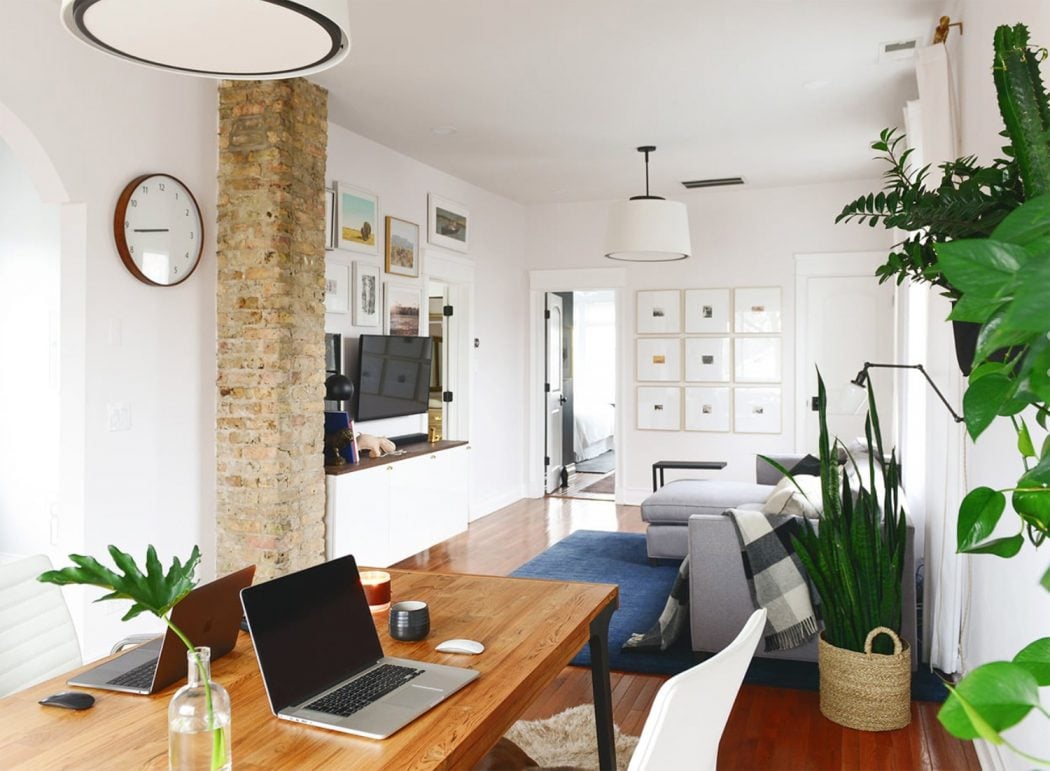
If you’ve ever scrolled through a perfectly styled blogger home tour and thought, “Do people actually live like that?” you’re not alone. Episode #141 of Young House Love Has a Podcast, “When You See Another Blogger’s Home In Person…,” taps right into that feeling. John and Sherry talk about visiting another blogger’s home on a Chicago meet-up and realizing, in real life, that a design “rule” they’d sworn by for their own house might not be so ironclad after all.
Seeing a blogger’s home in person is a totally different experience from double-tapping their photos on your phone. Light behaves differently. Colors shift. Furniture that looked delicate online might be gloriously oversized in real life. And somewhere, just out of frame, there’s probably a laundry basket or a half-eaten granola bar. In other words: it’s still a real house.
Let’s dig into what actually happens when you step inside another blogger’s home, what Young House Love teaches us about “real” decorating, and how you can bring home-touring wisdom back to your own spacewithout losing your mind, your budget, or your sense of humor.
The Magic (and Myth) of Blogger House Tours
Why We’re Obsessed with Other People’s Houses
There’s a reason home toursfrom blogs to glossy magazinespull in millions of views. Sites like Young House Love, Better Homes & Gardens, Apartment Therapy, and HGTV’s online features let us peek into homes we’d never otherwise see. They’re part inspiration board, part escapist fantasy, part “oh good, their entryway is messy sometimes too.”
John and Sherry have built an entire brand around opening their doors to readers and listeners, sharing everything from whole-house renovations to tiny tweaks like swapping art, painting built-ins, or rethinking a hallway light. Their blog documents years of fixing up multiple homes, downsizing to a beach house, and even remodeling a duplex for Airbnb guests. That level of access makes you feel like you know the houseand the people in itpersonally.
Other home bloggers and designers do the same: Emily Henderson’s detailed house tours, Apartment Therapy’s “real home” series, and Better Homes & Gardens’ emphasis on lived-in, approachable rooms all lean into the idea that you can borrow ideas from these spaces while still keeping your life (and kid clutter, and dog hair) firmly intact.
Online vs. In Person: Why It Feels So Different
But as real-estate pros regularly point out, a home often feels very different in person than it does online. Listing photos and blog shots are carefully framed, lit, and edited. They de-emphasize awkward corners, noisy streets, and mysteriously sticky floors. In person, though, you notice everything: the way sunlight hits at 3 p.m., how narrow the hallway really is, and that the “spacious” living room is generous only if you’re a family of two and a goldfish.
That same gap shows up in blogger homes. Before you walk in, you’re carrying mental baggage: all those years of finished photos. When you finally visit, there’s a weird brain lag as your expectations try to load the Instagram version of the room while your eyes are taking in the real one.
This mismatch isn’t a bad thing. In fact, it’s often where the most helpful design lessons live.
Young House Love & the Power of Seeing Design in Real Life
In the Chicago story behind episode #141, Young House Love visits fellow bloggers they’ve known online for years. On paper, they already “knew” those houses: the color palettes, the layouts, the signature moves. But seeing one home in person was enough to completely change their minds about a design rule they’d confidently applied to their own place.
That’s very on brand for John and Sherry. Their whole approach to decorating is iterative: try something, live with it, tweak it, repaint it, or Craigslist it. Over the years they’ve moved from all-DIY-all-the-time to a more balanced approach that includes store-bought pieces, slower upgrades, and a deeper focus on function for their kids, pets, and guests.
They’ve also learned to design for very different properties: a suburban brick house, a beach house, and an old duplex that needed everything from structural work to styling for short-term renters. Seeing how other bloggers handle similar challenges in persontiny rooms, low ceilings, an excess of doors, or way too much beigegives them fresh eyes on their own spaces.
The big takeaway: even professional DIYers with thousands of projects under their belt still change their minds when they see design ideas in real life. So if you’ve ever repainted a room three times in a weekend, you’re in good company.
What Really Happens When You Visit a Blogger’s Home
1. Scale and Proportion Finally Make Sense
Online photos are infamous for distorting scale. Wide-angle lenses make small rooms look enormous. A petite sofa can suddenly feel huge when it’s the only thing in frame. When you visit in person, you finally understand how big everything really isand how much negative space there is between pieces.
In a blogger’s living room, you might realize that the “giant” sectional is actually fairly modest, but the room is arranged to leave clear walkways and cozy zones. Or that the coffee table is bigger than you thought, but it works because the rug is equally oversized and anchors the whole seating area. That visual calibration is priceless when you go home and try to pick furniture that fits your own rooms.
2. You Notice Texture, Patina, and Imperfection
Photos flatten texture. In person, you can see the frayed edge of a vintage rug, the brushstrokes on a painted cabinet, the way a leather ottoman has softened over time. You notice that the “perfect” hardwood floors have scratches from dog claws and scooter wheels, and that nobody is rushing to buff them out.
This is very much in line with current design trends that favor layered textures, vintage finds, and rooms that feel “lived-in, comfortable, and inherently welcoming” instead of staged for a magazine shoot 24/7. A blogger’s home might look curated online, but you’ll usually find the same stuff you have: backpacks by the door, half-read books, and that one plant that’s barely hanging on.
3. You Experience the Flow of the House
Another thing you just can’t grasp from a post is how the house flows. How does the entry connect to the living room? Is the dining table a million miles from the kitchen sink? Does the hallway feel like a runway or a bottleneck?
Real-estate guides often recommend walking through homes with a critical eye toward traffic patterns, natural light, and noise. That same advice works beautifully when touring blogger homes. You might notice how they oriented a sofa to take advantage of a view, or how they used built-ins to carve a reading nook out of an otherwise wasted corner. Those choices show you how the family actually uses the spacenot just how it photographs.
4. Instagram vs. Reality Becomes Very, Very Clear
Home influencers themselves increasingly talk about “Instagram vs. reality.” On social media, many share side-by-side shots of styled rooms versus their everyday chaos to remind followers that those hyper-tidy images usually represent one highly staged moment, not the full truth.
When you see a blogger’s home in person, you get the unfiltered version: the toy bins stashed behind the sofa, the mail pile on the counter, the dog bed that never matches anything but is loved enough to stay anyway. Instead of feeling disappointed, most visitors leave relieved. Perfect homes are exhausting. Real ones are far more interesting.
Design “Rules” That Change Once You’re Standing in the Room
Design advice often gets boiled down to hard rules: every room needs a pop of black, never mix warm and cool metals, keep your palette under three colors, don’t paint small rooms dark, and so on. These rules are helpful starting pointsbut visiting another blogger’s home is where you see all of them being broken beautifully.
- Color rules: A blogger may layer multiple shades of blue, green, and terracotta and it still feels calm because the finishes and textures are cohesive.
- Pattern rules: You might see a floral rug, striped pillows, and a geometric throw happily coexisting because the scale and colors are thoughtfully balanced.
- Layout rules: A sofa might float in the middle of the room instead of hugging a wall, or a bed might be tucked under a window instead of centered on a blank walland it works.
Magazine and blog tours from places like Better Homes & Gardens and Emily Henderson’s site often highlight exactly these kinds of “rule-breaking” moves. The big difference is that in person, you can feel why they work. You sense the coziness, the balance, the way your eye moves naturally around the room. That’s hard to capture in a square photo.
How to Tour a Blogger’s Home Without Losing Your Mind
Whether you’re attending a formal open house, visiting a friend who happens to run a popular home blog, or just walking through a showhouse, it helps to go in with a game plan. Here are a few ways to make the most of it:
1. Treat It Like a Learning Lab, Not a Test
Instead of mentally grading your own home (“Their pantry is labeled, mine is chaos, therefore I am failing”), decide you’re there to collect ideas. Bring a notebook or keep a note on your phone for specific things you love: a paint color, a clever storage trick, a way they handled an awkward corner. You’re not trying to recreate their home; you’re building a toolbox for your own.
2. Pay Attention to the “Invisible” Decisions
Look beyond the obvious pretty elements. How high are the curtain rods hung? What size rug did they choose relative to the room? How many lamps are in the spaceand where? Real-estate and design pros often emphasize these details because they’re the secret sauce that makes a room feel pulled together even before you notice the art or accessories.
3. Ask About What Didn’t Work
If you have the chance to chat with the blogger, ask what they changed after living in the house. Many will happily tell you that they repainted a room three times, sold a dining table that was too precious for their kids, or moved their office because the original spot was too noisy. Those “failures” are often more useful than the picture-perfect after photos.
4. Remember That You’re Seeing a Snapshot in Time
Just like in Young House Love’s story, homes evolve. A buzzy design rule today might be next year’s “what were we thinking?” moment. Treat what you see as one interesting chapter in the life of that house, not the definitive blueprint for yours.
Bringing Real-Life Inspiration Back Home
After visiting another blogger’s home, you might be tempted to throw out half your furniture and start over. Please don’t. Instead, translate what you saw into small, doable changes:
- Start with one room. If their living room layout felt especially welcoming, sketch your own space and play with furniture placement. Could you float the sofa? Move the TV? Add a reading chair?
- Borrow rhythms, not replicas. Maybe you loved their layered textiles: a chunky knit throw, nubby rug, and linen curtains. Use that as a formula, not a shopping list. Find your own versions that fit your budget.
- Adopt their attitude toward imperfection. Many modern home toursand especially family-focused brands like Young House Love and Better Homes & Gardensemphasize enjoyment over perfection. That mindset shift may be the best souvenir you bring home.
If there’s one consistent message across today’s home blogs and magazines, it’s that a great house is less about matching trends and more about reflecting who lives there. The bloggers you admire are doing exactly that for their own families. You get to do the same for yours.
Bonus: Real-Life Experiences from Visiting Blogger Homes
To really bring episode #141 to life, imagine this composite experiencebuilt from the kinds of stories home bloggers, designers, and readers share again and again when they finally meet “internet houses” in person.
You show up a few minutes early because you’re nervous. This is the house whose kitchen made you paint your cabinets white, whose mudroom convinced you that hooks might fix your entire life. You’ve seen the foyer during ten different holidays. You could probably sketch the gallery wall from memory.
The front door opensand the first surprise hits. The entry is actually smaller than you thought, but it feels cozy, not cramped. There’s a simple bench, a basket of shoes, and a real-life cluster of coats on the hooks. On the floor is the rug you’ve eyed in a dozen blog photos, but now you can see the faint wear pattern where the kids cut through to the kitchen.
As you step into the living room, your brain does a double take. The sofa you’d mentally labeled “giant” feels like the right scale after all, because in person you can see the full room: the walkway behind it, the generous coffee table in front, the wide rug anchoring everything. You realize they weren’t decorating for the camera; they were decorating for traffic flow, movie nights, and Lego explosions.
Then come the little revelations. The famous built-ins? Slightly nicked at toddler height. The crisp white walls? Not one but three subtly different shades layered over years of experimenting. The “perfectly styled” shelves from the photos are now holding a school project, a stack of dog-eared paperbacks, and a random action figure that nobody has gotten around to relocating. Weirdly, the room feels even better this waywarmer, more confident, less fragile.
In the kitchen, you notice choices you never caught online. The pendant lights are bigger than they appear in photos, which suddenly makes sense for the tall ceilings. The island stools are sturdier than you’d pictured, with a few dents that confirm kids routinely climb all over them. The counters aren’t entirely clutter-free, either; there’s a bread knife out, a bowl of slightly bruised fruit, and a jar of dog treats taking up valuable real estate near the sink.
You ask what they’d change if they could go back in time. The answers come fast: they’d choose a more durable countertop, skip a certain trendy tile, and add more closed storage in the mudroom. They admit that one beloved paint color photographs beautifully but feels a bit cold on gloomy days, and they’re already considering a warmer shade. Just like that, you’re reminded that no one “nails it” on the first trynot even people whose careers are built on their homes.
On the way out, you realize the most valuable thing you’re taking with you isn’t a specific brand of sconce or exact rug source. It’s reassurance. The house that looked impossibly perfect online is, in reality, a hard-working family home with scuffed baseboards and evolving rooms. The bloggers whose style you admire are still experimenting, still learning, still breaking their own rules when something better comes along.
When you walk back into your own place later that day, you see it differently. The living room you were convinced was “too small” suddenly feels full of possibility. The hand-me-down dresser in your bedroom looks less like a placeholder and more like the start of a collected, personal story. You might still want to repaint, rearrange, or slowly upgrade, but the urgency to keep up with every new reveal fades.
That’s the quiet superpower of seeing a blogger’s home in personand exactly what Young House Love captures in episode #141. It reminds you that homes are allowed to be in progress, that design rules are made to be bent, and that the best rooms are the ones that make real people feel comfortable, not just impressed.
Final Thoughts
When you strip away the filters, hashtags, and perfectly timed reveal posts, you’re left with something simple: a house that’s doing its best for the people who live there. Young House Love’s face-to-face visit with another blogger’s home is a reminder that even seasoned DIYers have their assumptions challenged when they step into a real room instead of scrolling past it.
So the next time you find yourself deep in a house-tour rabbit hole, remember: those images are just the trailer, not the full movie. Real life is messier, cozier, and far more flexible than any design rule. And your homeexactly as it is todayis allowed to be a work in progress.














