
COVID-19 did not politely knock on the door of daily life. It kicked the door open, rearranged the furniture, turned the kitchen table into an office, made sourdough a personality trait, and somehow convinced millions of people that a meeting could have been an emailor worse, a video call with “Can you hear me?” as the opening prayer.
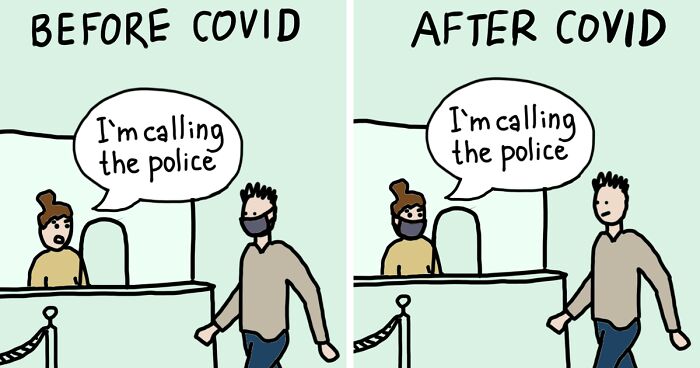
The title “15 More Of My Cartoons That Compare How COVID-19 Has Changed Everything” immediately taps into a familiar kind of pandemic storytelling: the “before and after” comparison. Cartoons are especially good at this because they can shrink huge cultural shifts into one small, funny frame. A masked grocery shopper, a child attending class from bed, a birthday party on Zoom, or a dog quietly celebrating its human’s permanent stay-at-home schedule can say more than a 40-page reportthough, admittedly, with fewer charts and less coffee spilled on the keyboard.
These COVID-19 cartoons are not just jokes. They are little visual time capsules. They compare the world we thought we understood with the strange “new normal” that arrived in 2020 and stayed long enough to leave fingerprints on work, school, travel, family life, mental health, fashion, technology, and even the way we stand in line at a pharmacy. Through humor, the cartoons help us process disruption without pretending it was easy.
Why COVID-19 Cartoons Hit So Hard
The pandemic changed everything because it touched almost every routine at once. Work moved home. Schools moved online. Doctors moved to telehealth. Happy hours moved to screens. Weddings shrank. Airports emptied. Sweatpants became business casual. The phrase “social distancing” entered the vocabulary with the subtlety of a marching band in a library.
Cartoons became a perfect language for that chaos. They use contrast, exaggeration, and visual absurdity to show what changed. A cartoon can place “2019 you” and “2020 you” side by side: one holding a boarding pass and iced latte, the other holding disinfectant wipes like sacred treasure. That contrast is funny because it is true. It is also slightly painful because we remember how quickly normal life became historical footage.
In the United States, pandemic changes were visible in public health guidance, labor statistics, education disruption, consumer behavior, and mental health surveys. People learned to evaluate risk before doing ordinary things: eating indoors, hugging relatives, entering elevators, visiting grandparents, or touching a shopping cart handle without immediately imagining a microscopic horror movie.
15 Everyday Changes COVID-19 Cartoons Capture Best
The charm of pandemic cartoons is that they often focus on ordinary life, not grand historical drama. The pandemic was global, but it was also deeply domestic. It lived in grocery lists, laptop cameras, foggy glasses, hand sanitizer, canceled plans, and the suspicious cough of a stranger two aisles away.
1. The Home Became Everything
Before COVID-19, home was where people returned after work, school, errands, dinners, and vacations. During lockdowns and restrictions, home became the office, classroom, gym, restaurant, movie theater, therapy room, and occasional panic chamber. A strong cartoon might show a person sitting on the same couch labeled “work,” “doctor visit,” “date night,” “vacation,” and “existential crisis.” Funny? Yes. Too accurate? Also yes.
Remote work became one of the most visible shifts. Many employees discovered the joy of skipping commutes and the horror of never fully leaving work. The laptop was always there, glowing softly like a haunted toaster. For some, telework created flexibility. For others, it blurred boundaries until “just one quick email” became a lifestyle.
2. The Office Moved Into the Bedroom
COVID-19 cartoons often show people dressed professionally from the waist up and wearing pajama pants below the camera. This was not merely a joke; it was an entire social contract. Video calls transformed bedrooms, kitchens, and closets into corporate spaces. Bookshelves became personality billboards. Lighting became a career skill. The mute button became both a tool and a trap.
Workplace culture changed too. Meetings multiplied. Casual hallway conversations disappeared. “Let’s hop on Zoom” became the new “let’s circle back,” which was already a phrase society had barely survived. Cartoons captured the digital overload with screens full of tiny faces, frozen expressions, and one person accidentally presenting their grocery list.
3. School Entered the Wi-Fi Zone
Remote learning was one of the pandemic’s biggest social experiments. Students attended class from bedrooms, kitchen tables, cars, and sometimes under blankets. Parents became unofficial IT technicians, lunch staff, hall monitors, and emotional-support mammals. Teachers became digital magicians, trying to keep thirty squares of distracted children engaged while someone’s younger sibling shouted about cereal in the background.
Cartoons about online school work because they reveal the absurdity of emergency adaptation. A child clicking “turn in assignment” while a parent whispers “Please work, please work” to the router is not just comedy. It is documentary realism with a punchline.
4. Masks Became a Social Symbol
Few pandemic objects became as visually powerful as the face mask. In cartoons, masks created endless possibilities: fogged glasses, mismatched outfits, forgotten smiles, and awkward moments of trying to recognize neighbors by forehead alone. Masks also became cultural symbolsof caution, conflict, care, exhaustion, and public responsibility.
Before COVID-19, most Americans did not routinely wear masks in daily life. During the pandemic, masks became part of grocery runs, doctor visits, flights, offices, classrooms, and public transit. Cartoonists used them to show how quickly a medical object became a social accessory. Suddenly, “Do I have my keys, wallet, phone?” became “keys, wallet, phone, mask, backup mask, sanitizer, and emotional stamina.”
5. Grocery Shopping Turned Into a Mission
Once upon a time, grocery shopping was mildly annoying. During the early pandemic, it became a tactical operation. People planned routes, wiped carts, avoided crowded aisles, and treated toilet paper like rare museum currency. Cartoons of shoppers guarding paper towels like dragons guarding gold struck a universal nerve.
The grocery store became a place where fear and comedy met. Floor stickers told us where to stand. Plexiglass appeared overnight. People judged each other’s cart contents with the intensity of reality-show contestants. A person buying six cans of beans was either prepared, hungry, or about to start a very specific hobby.
6. Personal Space Got a Promotion
Before the pandemic, personal space was a preference. During COVID-19, it became a public health strategy. Six feet became a cultural measurement, even for people who previously could not estimate the length of a sofa. Cartoons comparing crowded pre-pandemic elevators with post-pandemic elevator etiquette are instantly recognizable: everyone pressed into corners like polite magnets repelling each other.
Social distancing changed how people moved through the world. Lines stretched outside stores. Friendly hugs turned into waves, elbow bumps, and awkward dances of “Are we hugging? Are we not hugging? Is this a bow now?” Humor helped make these strange rituals feel less lonely.
7. Travel Became a Memory Folder
Travel was one of the most dramatic before-and-after changes. Flights were canceled, vacations postponed, business trips replaced by video calls, and passports sat unused like retired athletes. Cartoons often show a person “traveling” from the bed to the couch, or labeling the backyard as “Europe” because imagination was cheaper than airfare.
The emotional shift mattered too. Travel used to represent freedom, adventure, and escape. During the pandemic, even a trip across town could feel complicated. COVID-19 cartoons transformed canceled vacations into visual comedy: suitcases gathering dust, beachwear worn in the bathtub, and people taking “staycations” so intense they needed a map of the living room.
8. Restaurants Became Takeout Windows
Dining out changed almost overnight. Indoor dining restrictions, outdoor seating experiments, delivery apps, curbside pickup, and QR-code menus became part of the restaurant experience. A cartoon comparing a romantic 2019 dinner with a 2020 dinner eaten from containers in a parked car captures both the sadness and silliness of the moment.
Restaurants adapted creatively, but customers adapted too. People learned to celebrate birthdays with takeout, host “fancy dinner” at home, and pretend that plating fries on a ceramic dish made the meal less like survival cuisine. The pandemic did not kill the desire for shared meals; it simply forced dinner to wear a mask and wait outside.
9. Fitness Got Weirdly Domestic
Gyms closed, reopened, changed rules, and became part of the risk calculation. Meanwhile, living rooms filled with yoga mats, dumbbells, resistance bands, and the quiet shame of unused exercise bikes. COVID-19 cartoons often show people “working out” by walking to the refrigerator or lifting a laptop into another room.
At-home fitness boomed because people needed movement, stress relief, and something to do besides refresh the news. But the home gym was not always glamorous. Pets interrupted planks. Children used yoga mats as roads. Neighbors discovered who was jumping above them at 7 a.m. The pandemic fitness era deserves its own tiny medal, preferably delivered by contactless shipping.
10. Fashion Became Comfort-First
Few transformations were as funny as pandemic fashion. Office clothes hung untouched while sweatpants, slippers, hoodies, and “nice shirts for video calls” took over. A cartoon split between “before: outfit of the day” and “after: laundry pile with ambition” tells the story perfectly.
The pandemic changed how many people thought about appearance. Comfort became practical. Makeup routines shifted. Haircuts became risky adventures or DIY disasters. People learned that bangs cut during emotional uncertainty should perhaps require a waiting period. Fashion did not disappear; it just became more honestand more elastic.
11. Technology Became the Social Lifeline
Video calls, messaging apps, streaming services, online shopping, telehealth, digital classrooms, and remote collaboration tools became essential. Cartoons showed families celebrating holidays through screens, grandparents learning video chat, and friends hosting virtual parties where everyone talked at once and then apologized at once.
Technology helped people stay connected, but it also created fatigue. The screen became a window, workplace, classroom, shopping mall, doctor’s office, and entertainment center. By the end of many days, people were not “online” so much as lightly marinated in pixels.
12. Health Anxiety Became Ordinary
COVID-19 made many people intensely aware of symptoms. A sneeze, cough, sore throat, or slight temperature change could trigger a spiral of questions. Is it allergies? A cold? COVID? Did I touch my face? Why is my throat thinking about being weird today?
Cartoons captured this hyper-awareness by exaggerating the inner monologue. A person coughing once in public might be drawn as if they had set off every alarm in the building. The humor works because the anxiety was real. Public health became personal, and personal health became public.
13. Celebrations Became Smaller and Stranger
Birthdays, weddings, graduations, funerals, baby showers, holidays, and family reunions all changed. Some events moved online. Some became drive-by parades. Some were postponed until calendars looked like puzzle boards. Cartoons about blowing out birthday candles over video chat or waving at grandparents through windows captured the emotional complexity of the time.
These images were funny, but they also carried grief. People missed milestones. Families lost traditions. Children celebrated in unusual ways. Yet many people also found creative forms of connection. A socially distanced graduation may have looked odd, but it still said: “This matters. We are showing up, even if we are six feet apart and wearing foggy glasses.”
14. Pets Became Coworkers
If anyone benefited from remote life, it was probably dogs. Suddenly, humans were home all day, available for walks, snacks, and emotional supervision. Cats, meanwhile, treated remote work as a hostile takeover of their desk territory. COVID-19 cartoons featuring pets interrupting video calls are among the most relatable because they reveal the domestic chaos behind professional life.
Pets became comic symbols of the new normal. A dog wondering why its human never leaves. A cat sitting on the keyboard during a budget meeting. A goldfish quietly judging everyone. These cartoons remind us that the pandemic did not just alter human routines; it changed entire household ecosystems.
15. The Meaning of “Normal” Changed
Perhaps the biggest change COVID-19 brought was psychological. “Normal” stopped being automatic. People began asking which routines were worth restoring and which ones should stay in the past. Did every meeting need to be in person? Was commuting five days a week necessary? Could telehealth improve access? Could sick people stay home without being treated like workplace villains?
Cartoons comparing old normal and new normal work because they show that normal life was never as fixed as it seemed. The pandemic revealed how flexible society can be when forcedand how ridiculous some habits look once we step outside them. That is the secret power of pandemic cartoons: they let us laugh at the strange things we survived while quietly asking what we learned.
The Humor Behind the Hurt
It is important to say clearly: COVID-19 was not funny. It caused death, illness, long-term health complications, economic disruption, isolation, burnout, and grief. Millions of people lost loved ones. Healthcare workers faced extraordinary pressure. Students lost time and structure. Small businesses struggled. Families were separated. The humor in COVID-19 cartoons does not erase any of that.
Instead, pandemic humor often works as relief. It gives people a safe way to recognize shared absurdity. Laughing at a cartoon about a Zoom meeting gone wrong is not laughing at suffering. It is laughing at the tiny human moments inside a massive crisis. Humor helped people say, “This is unbearable, but at least it is also very weird.”
That is why simple visual comparisons became so popular. A cartoon could show “before COVID” as a crowded office and “after COVID” as one exhausted person surrounded by chargers, coffee mugs, and crumbs. The joke is small, but the meaning is large. We all became historians of our own living rooms.
Why “Before and After” Cartoons Are So Shareable
Before-and-after cartoons are built for the internet because they are quick to understand. They do not require a long explanation. The viewer sees two panels, notices the contrast, and instantly recognizes the truth. This format is especially effective for COVID-19 content because the pandemic created clear visual symbols: masks, screens, sanitizer, distance markers, empty streets, delivery boxes, and webcams.
These cartoons also invite people to add their own memories. One viewer sees a cartoon about canceled travel and remembers a missed vacation. Another sees remote school and remembers helping a child upload homework while the Wi-Fi collapsed like a dramatic soap opera character. Another sees a masked grocery shopper and remembers wiping down cereal boxes in 2020, a sentence that would have sounded completely unhinged in 2019.
Shareability comes from recognition. People share content that says, “This is me,” “This is us,” or “I thought I was the only one.” COVID-19 cartoons succeeded because they captured a collective experience without flattening it into a lecture. They gave people a way to connect across distance.
What These Cartoons Teach Us About the Pandemic
The best COVID-19 cartoons are not only funny; they are observant. They show that history is not made only by presidents, scientists, hospitals, and official announcements. History is also made by ordinary adjustments: where we work, how we greet people, what we fear, what we buy, how we celebrate, and what we joke about when life becomes too heavy.
They also reveal how quickly humans adapt. At first, remote work, masks, grocery limits, online school, and virtual holidays felt surreal. Then they became routine. Then some of them became annoying. Then some became permanent. That emotional sequenceshock, adjustment, fatigue, reflectionis exactly what many pandemic cartoons captured.
In this sense, cartoons became a kind of public diary. They recorded not just events, but feelings: confusion, boredom, anxiety, gratitude, irritation, loneliness, hope, and the very specific rage of a frozen video call during an important sentence.
of Personal-Style Experience: Living Inside the Cartoon
Looking back, the strangest part of COVID-19 life was how quickly the absurd became normal. At first, wearing a mask to buy bananas felt like entering a science-fiction movie with poor lighting. Then, after a while, forgetting a mask felt like forgetting pants. The brain adjusted with alarming speed. One day you were casually touching elevator buttons. The next day you were pressing them with your elbow like a spy defusing a bomb.
The cartoons comparing life before and after COVID-19 feel powerful because many of us lived inside those panels. We remember the home office setup that began as “temporary” and slowly became a permanent nest of cables, mugs, notebooks, and suspicious crumbs. We remember video calls where someone’s microphone echoed, someone’s child appeared, someone’s cat became a shareholder, and someone said, “You’re on mute,” with the weary tenderness of a nurse in a battlefield hospital.
We remember grocery trips that felt like expeditions. The list was short, but the emotional preparation was Olympic-level. Hand sanitizer waited in the car like a tiny bodyguard. A stranger standing too close in line could inspire Shakespearean tragedy. Toilet paper became a social status symbol. People who successfully bought flour acted like they had discovered gold in the mountains.
We remember the emotional contradiction of staying home. On one hand, no commute. Wonderful. On the other hand, no separation between work and rest. Terrible. The same table hosted breakfast, spreadsheets, schoolwork, bills, crafts, bad news, good news, and dinner. The couch became a conference room. The bed became a temptation. The refrigerator became a coworker with poor boundaries.
We remember missing people. Not in a poetic, distant way, but in a practical, aching way. We missed hugs, casual visits, crowded restaurants, movie theaters, office jokes, family birthdays, school events, and the simple pleasure of being around others without calculating risk. Even introvertsthose proud indoor cats of humanityeventually discovered that “alone time” feels different when it is required by public health guidance.
We also remember discovering small comforts. Walks became events. Cooking became therapy or at least edible science. Pets became supervisors. Plants became projects. Some people learned new skills. Some learned they did not want new skills and preferred snacks, which is also a valid personal journey. Creativity helped many people cope, and cartoons were part of that. They turned shared stress into shared laughter.
That is why “15 More Of My Cartoons That Compare How COVID-19 Has Changed Everything” works as more than a funny title. It points to a whole emotional archive. Each cartoon is a little mirror. We laugh because we recognize the image. We pause because we remember the feeling. And we keep looking because, somehow, these simple drawings help organize a time when everything felt disorganized.
Conclusion: COVID-19 Changed Everything, and Cartoons Helped Us See It
COVID-19 changed how Americans worked, learned, shopped, traveled, celebrated, dressed, communicated, and cared for one another. It made the ordinary feel fragile and the ridiculous feel routine. It turned kitchen tables into offices, living rooms into classrooms, masks into daily accessories, and Wi-Fi into a household survival tool.
Cartoons comparing life before and after the pandemic matter because they make these changes visible. They show the small details that statistics cannot fully capture: the awkward wave instead of a hug, the child in virtual class, the pet in the meeting, the lonely birthday cake, the pajama-bottom professional, the anxious grocery shopper, and the exhausted human trying to laugh anyway.
The pandemic was serious, but laughter helped people breathe through the seriousness. These cartoons do not minimize what happened. They preserve it. They remind us that history is not only written in official reportsit is also drawn in funny little panels where a person sits on a couch, surrounded by everything they used to leave the house to do.
Editorial note: This article synthesizes real, publicly reported information from U.S.-based public health, labor, education, mental health, and social research sources, including federal agencies and major research organizations. It is written as original commentary and does not reproduce copyrighted cartoon captions or artwork.














