
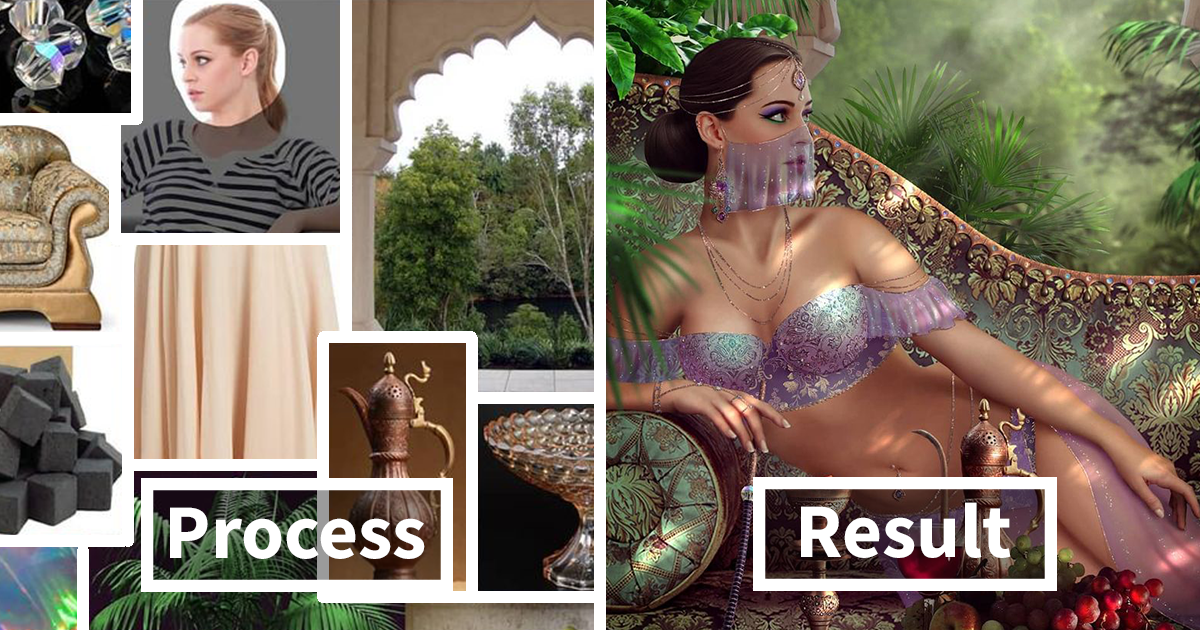
Some artists need a castle, a dragon, three fog machines, and a suspiciously expensive costume budget. Viktoria Solidarnyh, on the other hand, makes a strong case for needing only imagination, patience, and a folder full of regular photos. That is the hook behind these digital fairytale images: they look like they crawled out of a bedtime story, but they begin with the kind of source material most people would scroll past without a second thought.
That contrast is exactly what makes this collection so satisfying. The newest set of 19 images does not just show off Photoshop skill. It shows how composite photography can turn ordinary ingredients into fantasy worlds that feel cinematic, romantic, eerie, and unexpectedly believable. Fairies, witches, knights, dramatic skies, mysterious women, and storybook moods all appear in work that never forgets one important rule: if the illusion feels real, the magic lands harder.
For readers who love digital fairytale images, Photoshop art, photo manipulation, and composite photography, Solidarnyh’s work hits a very sweet spot. It is polished without feeling sterile, whimsical without becoming childish, and dramatic without shouting. In an online world where visual effects often scream, “Look what software can do,” these pieces whisper something better: “Look what imagination can do with regular photos.” That whisper, frankly, is a lot more charming.
Who Is the Ukrainian Photoshop Artist Behind the Images?
Viktoria Solidarnyh is a Ukrainian digital artist whose specialty is building fantasy scenes from multiple everyday images. Her background in design and photography helps explain why her work feels so balanced. She understands the structure of an image the way a designer would, but she also understands mood, lighting, and subject presence the way a photographer would. That combination matters. Plenty of artists can make something surreal. Fewer can make surrealism feel composed.
What makes her approach especially appealing is how grounded it is in craft. Rather than depending on one perfect shot, she works by merging separate photos into a single visual story. Sometimes that means selecting a model first and building the world around that pose or expression. Other times the concept arrives before the materials, and she goes hunting for the right sky, fabric, architecture, landscape, or detail to serve the idea. In other words, she is not just editing photos. She is directing tiny visual theater productions from inside her screen.
That is why this body of work keeps getting attention. It is not only the fantasy aesthetic. It is the discipline behind it. A piece may look effortless when finished, but the illusion depends on perspective, scale, color harmony, believable shadows, smooth masking, and a strong sense of narrative. If one of those ingredients slips, the spell breaks. Solidarnyh usually keeps the spell intact.
Why These 19 Newest Digital Fairytale Images Stand Out
The title promises 19 images, but the real story is how those 19 pieces function as a complete mood board for modern digital fantasy. Instead of treating the set like a random pile of cool edits, it is more useful to read it as a visual collection with recurring obsessions: feminine power, folklore atmosphere, elegant danger, theatrical lighting, and the transformation of everyday source material into something almost mythic.
19 sharp observations about the collection
- It proves that regular photos are not the limitation people think they are. In the right hands, a plain source image is not boring; it is a blank check.
- The collection leans hard into fairytale logic. Not realism in the documentary sense, but realism in the emotional sense. Everything feels like it belongs to a story with rules, history, and a little danger.
- Light does a lot of the storytelling. Glow, mist, moonlight, cool winter tones, and warm dramatic highlights are not decoration here. They are plot devices.
- The images are romantic without becoming sugary. There is beauty, yes, but there is usually an edge beneath it. Think “enchanted forest with consequences,” not “gift shop fairy calendar.”
- Fantasy creatures and folklore cues work because the human figures anchor them. When the subject feels emotionally present, the impossible details feel more convincing.
- The visual language borrows from classic storybooks. Towers, flowing hair, dramatic capes, crowns, moonlit settings, stormy skies, and symbolic animals all help create that narrative shorthand.
- There is a painterly quality even though the work starts with photos. That is one of the most impressive parts. The final scenes often feel illustrated without losing photographic texture.
- Color palettes are carefully disciplined. Instead of throwing every magical color at the wall, many of the images stay inside a narrow emotional range: icy blues, forest greens, smoky grays, or soft golds.
- Costume energy matters. Whether it is fabric, armor, hair, or ornament, the styling gives the eye something to follow through the frame.
- The collection likes strong female archetypes. Viewers are not just getting pretty portraits. They are getting queens, witches, heroines, sirens, and warriors.
- Scale is used for drama. A tower feels taller, a creature feels grander, a landscape feels deeper, and a portrait feels more mythic because compositing lets the artist exaggerate scale with purpose.
- Texture keeps the fantasy from floating away. Hair, fabric, stone, fog, metal, leaves, feathers, and snow all add physicality, which is the secret weapon of believable fantasy art.
- There is a strong cinematic instinct in the framing. Many of these images feel like stills from a movie that does not exist yet, which is honestly a compliment of the highest order.
- The collection understands that beauty needs contrast. Soft skin against rough branches, elegant dresses against harsh weather, luminous faces against dark surroundings; this tension makes the images feel alive.
- Not every image tries to be loud. Some of the strongest moments come from restraint, where a single expression or visual twist carries the whole scene.
- There is room for folklore, fantasy, and a touch of pop-storybook familiarity. That mix widens the appeal. The work can feel both classic and internet-friendly at once.
- The set rewards second looks. On first glance, you notice the beauty. On the next glance, you notice the construction, the details, and the sly visual engineering.
- The “nothing but regular photos” angle is part of the fun. It turns the work into a creative flex. The point is not only that the images are beautiful; it is that the ingredients were ordinary.
- The collection reminds viewers why handmade-looking digital art still hits so hard. Even in a crowded visual culture, careful fantasy photo manipulation still feels special when it is rooted in concept and craftsmanship.
How Regular Photos Become Fairytale Worlds
Here is where the magic stops pretending to be magic and starts looking like skill. Composite photography works by merging multiple images into one scene. That sounds simple until you remember what the artist has to reconcile: light direction, perspective, skin tone, scale, depth of field, atmosphere, color temperature, and edge quality. If those pieces do not cooperate, the final image looks stitched together. If they do cooperate, the final scene feels like it was always meant to exist.
Solidarnyh’s art succeeds because it understands that fantasy is most powerful when it borrows the logic of reality. A moonlit portrait still needs believable shading. A sea-siren image still needs a convincing relationship between skin, water, and atmosphere. A female knight still needs the weight and texture of armor to feel grounded. The image can be impossible in concept, but it cannot be careless in execution.
That is why ordinary source photos are not a disadvantage. In fact, they can be an advantage. Regular stock images offer clean building blocks: a face with the right expression, a piece of fabric with motion, a landscape with usable depth, clouds with mood, or architectural details that can be remixed into something more dramatic. The artist’s job is to stop those pieces from acting like strangers and make them behave like a cast that has rehearsed together for weeks.
The real secret: story first, software second
One reason these digital fairytale images feel richer than average fantasy edits is that they usually seem to begin with a narrative question. Who is this woman? What happened just before this moment? Is she waiting, escaping, ruling, transforming, grieving, enchanting, or threatening? A strong composite does not merely look cool. It suggests a before and after. That narrative pressure is what keeps viewers staring.
It also explains why certain pieces feel memorable even when you cannot immediately describe every technical step. You do not need to know how the hair was blended, how the mist was painted, or how the background was color-graded to sense that the image has intent. And intent is what separates competent Photoshop art from work that actually lingers.
Why Viewers Keep Falling for This Style of Photo Manipulation
There is something deeply satisfying about seeing fantasy built from familiar materials. It gives the viewer two pleasures at once. First, there is the emotional pleasure of entering a dreamlike world. Second, there is the intellectual pleasure of recognizing that the world was made, not discovered. We are not just admiring a beautiful image; we are admiring the transformation of the ordinary into the extraordinary. Humans are suckers for alchemy. Always have been.
This is also why the “uses nothing but regular photos” angle matters so much. It democratizes the wonder. It suggests that fantasy does not always require impossible budgets or giant production teams. Sometimes it begins with a regular portrait, a cloudy sky, a coastline, a forest path, a bird, a dress, and a person stubborn enough to spend hours making them all agree with each other.
And yes, there is a tiny thrill in knowing that the illusion is built rather than found. It turns the work into both image and puzzle. Viewers enjoy the scene, but part of the brain is also asking, “How on earth did she put that together?” When art creates wonder and curiosity at the same time, it is doing something right.
What Other Digital Artists Can Learn from This Collection
If you are a creator, these images offer a useful reminder: originality does not always come from exotic materials. It often comes from unusual combinations, disciplined editing, and a willingness to chase a mood until the picture clicks. Solidarnyh’s work suggests that fantasy photo manipulation becomes more compelling when it is less about adding random spectacle and more about controlling every element so the final frame feels intentional.
Another lesson is that realism and fantasy are not enemies. In fact, the best fairytale composites depend on realism. The more believable the lighting, posture, environment, and texture, the more freedom the artist has to introduce surreal ideas. A viewer will accept a crown of impossible branches or a moon-sized symbol hovering in the sky if the rest of the image feels visually honest. That is the bargain fantasy art makes with the eye.
Finally, there is the lesson of patience. In an era obsessed with speed, these works celebrate slowness. Layer by layer, correction by correction, mood adjustment by mood adjustment, they remind us that polished digital art is often built through dozens of small decisions rather than one giant stroke of genius. Which is rude, honestly. We all want genius. What we usually get is layers.
500 More Words on the Experience of Looking at This Kind of Art
Experiencing a collection like this is not the same as glancing at a nice edited photo and moving on with your day. It feels closer to stepping into a tiny visual doorway. At first, you notice surface beauty: the dramatic hair, the moody sky, the polished skin, the elaborate styling, the almost cinematic lighting. Then, a few seconds later, something else kicks in. Your brain starts trying to map the logic of the world inside the image. That is when the fun really starts.
Good digital art invites attention, but good digital fairytale images reward attention. You begin asking questions without realizing it. Is this character a heroine or a villain? Is she under a spell, causing the spell, or about to break one? Is the setting dangerous, enchanted, lonely, triumphant, haunted, or all of the above? The image never answers in full, and that incompleteness is part of the pleasure. It lets viewers collaborate with the artwork by finishing the story in their own heads.
There is also a strange comfort in the fact that the materials are ordinary. Knowing that the image was made from regular photos changes the emotional experience. The art feels less like a distant miracle and more like a challenge whispered across the internet: “You know all those ordinary images people ignore every day? They are not ordinary if you know what to do with them.” That is an inspiring message for artists, photographers, designers, and even casual viewers who secretly wish they were more creative than they currently allow themselves to be.
Another part of the experience is nostalgia. Fairytale-inspired visuals often tap into the emotional furniture of childhood: castles, forests, storms, heroines, monsters, mystery, transformation. But in contemporary Photoshop composite work, those symbols are polished through an adult lens. The result is not childish fantasy. It is fantasy with mood, melancholy, elegance, and style. It can feel glamorous, eerie, fierce, romantic, or lonely all at once. That complexity is why the images appeal to adults instead of reading like children’s-book leftovers.
There is even a tactile quality to the viewing experience. Strong composites make you feel texture with your eyes. You can almost sense the coldness of metal armor, the dampness of sea air, the softness of fur or fabric, the brittleness of winter branches, the heaviness of fog. That sensory illusion matters because fantasy becomes more immersive when it feels physical. The more convincingly the artist handles surfaces, the more the impossible details seem emotionally real.
And then there is the slower, more thoughtful experience that happens after the wow factor fades. You start appreciating restraint. Not every image needs ten magical effects, six glowing animals, and a moon the size of Nevada. Sometimes what makes a piece memorable is a small shift: the right look in the subject’s eyes, a touch of weather, a carefully placed bird, a dress that moves just enough, or a shadow that suggests hidden power. The viewer starts noticing design choices rather than only spectacle, and that is a sign of art with staying power.
Ultimately, the experience of this topic comes down to transformation. These images transform stock materials into fantasy scenes, but they also transform the viewer’s expectations. After spending time with work like this, it becomes harder to look at an ordinary portrait, sky, coastline, or forest and see it as merely ordinary. You begin to suspect that every image is unfinished raw material waiting for a story. That is a pretty wonderful side effect. It makes the world feel slightly more enchanted, which is not a bad trick for a folder full of regular photos.
Conclusion
The appeal of these 19 newest digital fairytale images is not only that they are beautiful. It is that they make beauty feel constructed, intentional, and surprisingly accessible. Viktoria Solidarnyh’s work shows how Ukrainian Photoshop artist craftsmanship can turn stock materials into emotionally rich fantasy scenes that feel cinematic and story-driven. The collection works because it respects both halves of the formula: the dream and the discipline.
That balance is what keeps viewers hooked. The images are imaginative enough to transport you, but grounded enough to convince you. They use regular photos, yes, but regular is doing a lot of overtime here. In the end, that may be the real fairytale: not that impossible worlds exist, but that someone can build them out of the visual leftovers the rest of us overlook.














