
Note: This article is written for web publication and is based on real horticultural guidance, rewritten in an original, reader-friendly style.
Why Do Hyacinth Flowers Flop in the First Place?
Hyacinths are the dramatic divas of the spring bulb world. They arrive early, smell like someone bottled a flower shop, and stand there with dense, colorful flower spikes that make the rest of the garden look like it is still hitting the snooze button. But sometimes, just when your hyacinths are supposed to be giving “perfect spring postcard,” they lean, bend, or flop over like they have had a very emotional day.
The good news is that flopping hyacinth flowers are usually not a sign that you are a terrible gardener. In most cases, the problem comes down to three practical issues: the bulb was not planted deeply or firmly enough, the plant grew too fast in warm or low-light conditions, or the flower spike became too heavy for the stem. Hyacinths naturally produce thick clusters of small florets on a relatively short stalk, so a little imbalance can turn into a full botanical face-plant.
Whether you are growing hyacinth bulbs outdoors in a spring border, forcing hyacinths indoors in pots, or trying to rescue a grocery-store hyacinth that has started leaning toward the window like it owes the sun money, the fixes are simple. You do not need complicated equipment, a degree in botany, or a tiny plant chiropractor. You need better planting, better growing conditions, and, when necessary, discreet support.
Below are three reliable ways to prevent hyacinth flowers from flopping, plus practical examples, troubleshooting tips, and real-life experience from gardeners who have learned that fragrant spring beauty occasionally requires a bamboo stake and a little humility.
Way 1: Plant Hyacinth Bulbs Deeply Enough for Stronger Support
Give the Stem a Solid Foundation
The first and most important way to prevent hyacinth flowers from flopping is to plant the bulbs at the proper depth. Hyacinths are spring-flowering bulbs, and their success begins months before the flower spike appears. If the bulb sits too close to the soil surface, the plant may not have enough support around the base of the stem. Once the heavy flower head opens, gravity takes one look at the situation and says, “My time has come.”
For outdoor planting, most hyacinth bulbs should be planted about 4 to 6 inches deep, measured from the base of the bulb to the soil surface. Many gardeners also follow the general bulb rule: plant bulbs two to three times as deep as the bulb is tall. In loose, well-drained soil, a slightly deeper planting can help anchor the plant and reduce leaning, especially in windy areas or in gardens where spring rain makes the soil soft.
Think of the soil as the plant’s support system. A hyacinth flower spike is not very tall compared with a sunflower or delphinium, but it is top-heavy. The stem carries a dense column of fragrant florets, and that weight needs a strong base. Planting deeply enough gives the roots room to develop and gives the lower stem more stability as it emerges.
Use Well-Drained Soil, Not a Mud Spa
Depth matters, but drainage matters just as much. Hyacinth bulbs dislike sitting in soggy soil. If the planting area holds water after rain, the bulbs can weaken or rot, and weak bulbs produce weak growth. Weak growth produces floppy stems. Floppy stems produce disappointed gardeners muttering in the yard while holding coffee.
Choose a site with loose, well-drained soil. If your garden soil is heavy clay, improve it with compost or other well-decomposed organic matter before planting. The goal is not to create soil so fluffy that the bulbs float away emotionally, but to give water a way to move through the planting area. Raised beds, sloped borders, and containers with drainage holes can also help if your yard tends to stay wet.
After planting, water the bulbs thoroughly to help roots establish. Then let normal fall and winter moisture do most of the work unless the season is unusually dry. Hyacinths need moisture, but they do not want to live in a swamp. “Moist but well-drained” may sound like a gardening cliché, but for bulbs, it is basically the VIP rule.
Plant at the Right Time
Hyacinth bulbs are usually planted in fall, after the soil has cooled but before the ground freezes. This timing allows the bulbs to grow roots before winter and experience the cold period they need for spring flowering. If bulbs are planted too early in warm soil, they may start growing at the wrong time. If planted too late, they may not establish strong roots before cold weather sets in.
Strong roots help stabilize the plant. A hyacinth with a healthy root system is much less likely to tip over than one that was rushed, stressed, or planted in poor conditions. In other words, preventing flopping starts long before the bloom appears. Spring success is often a fall planning project wearing a floral perfume.
Way 2: Grow Hyacinths in Bright, Cool Conditions
Too Much Warmth Can Cause Weak, Stretchy Growth
The second way to prevent hyacinth flowers from flopping is to manage light and temperature, especially for indoor hyacinths. Hyacinths are cool-season bloomers. Outdoors, they naturally flower in early to mid-spring when temperatures are still mild. Indoors, however, they are often placed in warm rooms, near heat vents, or in dim corners where they stretch toward light like they are auditioning for a plant ballet.
Warm indoor conditions can make hyacinth stems grow quickly. Quick growth is not always strong growth. When a forced hyacinth is kept in a room that is too warm, the stem may become elongated and soft. Add a heavy flower head, and suddenly the plant is leaning sideways across the table, possibly toward your laptop.
For indoor hyacinths, a bright, cool window is usually best. A temperature below 65 degrees Fahrenheit is helpful while the plant is actively growing. After cold treatment, forced bulbs often perform well in a cool, sunny location before being moved to a slightly warmer display spot. Once the flowers open, moving the pot to a cooler room at night can also extend bloom time and reduce stress on the stem.
Light Keeps Stems Stockier
Insufficient light is another major cause of flopping. When hyacinths do not receive enough light, they may become leggy. Leggy growth means the stem stretches longer and weaker than it should. Outdoors, plant hyacinths in full sun to part shade. Full sun often gives the straightest stems and largest blooms, although light shade can still work, especially under deciduous trees that leaf out after the bulbs bloom.
Indoors, rotate the pot every day or two so the flower spike does not lean strongly in one direction. Plants naturally grow toward light. That is normal. But if a hyacinth sits in the same position for a week, it may lean so dramatically that it looks like it is trying to escape the container. Rotating the pot encourages more balanced growth.
If your indoor hyacinth begins leaning, move it closer to a bright window but avoid hot, direct afternoon sun through glass. Bright and cool is the magic combination. Bright and hot can shorten the bloom. Dark and warm can make stems floppy. Dark, warm, and overwatered is basically the villain origin story.
Be Careful with Forced Hyacinths
Forced hyacinths are bulbs that have been chilled and brought indoors to bloom earlier than they would outside. They are popular in winter and early spring because they bring color and fragrance into the home when the outdoor garden is still thinking about waking up. But forced bulbs can be more prone to flopping if they are rushed into warmth too quickly.
For best results, forced hyacinth bulbs need a cold period before bloom. After that chilling period, they should be introduced to bright, cool conditions. If the pot is moved straight from cold storage to a warm living room, the plant may grow too fast. A gradual transition helps the stem develop more normally.
Water carefully, too. Keep the soil lightly moist, but do not let the pot sit in water. If you are growing hyacinths in a bulb vase, keep the water just below the base of the bulb so the roots can reach moisture without the bulb itself sitting in water. A rotting bulb cannot support a proud flower spike. It can only support regret.
Way 3: Stake Heavy Hyacinth Flower Spikes Before They Collapse
Sometimes a Beautiful Bloom Just Needs Backup
The third way to prevent hyacinth flowers from flopping is to support the flower spike. Even when you do everything right, some hyacinths still lean. Large bulbs can produce large flowers, and large flowers can become heavy. Double-flowered varieties, oversized blooms, rain-soaked spikes, or hyacinths planted in exposed areas may need a little help.
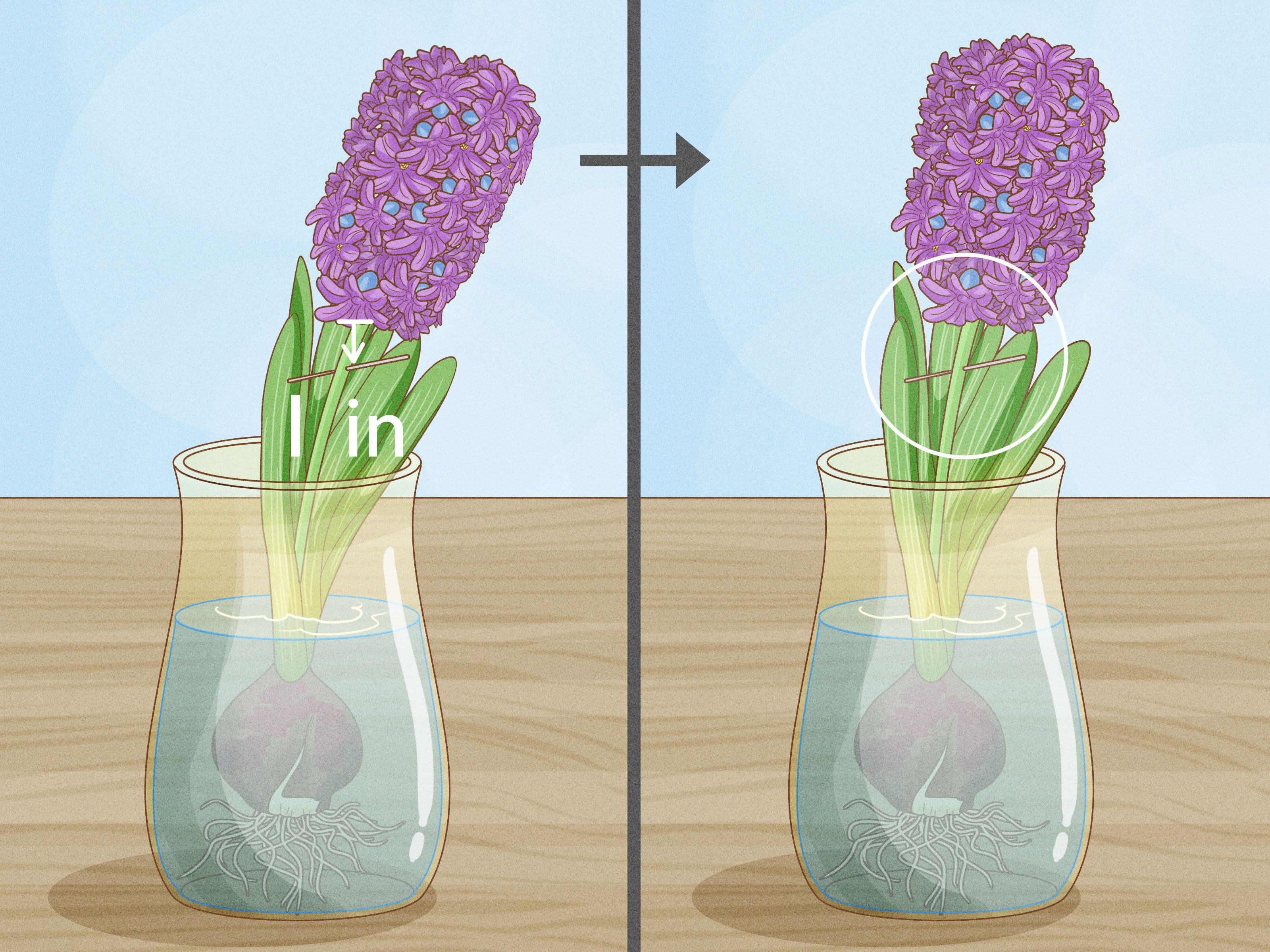
Staking is not cheating. It is gardening with common sense. A short bamboo cane, thin green plant stake, or small twig can support a hyacinth without ruining its appearance. The key is to add support early, before the stem has already bent sharply. Once a stem kinks, it may not stand upright again, even with support.
Place the stake close to the flower stem, being careful not to stab the bulb. Insert it into the soil a short distance from the plant, then loosely tie the stem with soft garden twine, raffia, flexible plant tape, or a twist tie covered with paper. The tie should be snug enough to guide the stem but loose enough that it does not pinch. Hyacinths do not appreciate corsets.
Use Natural Grouping as Support
Outdoor hyacinths often stand better when planted in groups rather than as lonely single bulbs. When bulbs are spaced properly in clusters, the flowers can help support one another. This is also more attractive from a design standpoint. A group of five, seven, or more hyacinths creates a stronger color impact than one isolated plant standing in the mulch like it missed the bus.
Plant bulbs about 5 to 6 inches apart, depending on the variety and the effect you want. They should not be packed so tightly that air circulation suffers, but they can be close enough to create a natural mass. In containers, planting several bulbs together can also create a fuller display and reduce the chance that one stem will lean dramatically into empty space.
Protect Blooms from Wind and Heavy Rain
Weather can turn a sturdy hyacinth into a floppy hyacinth overnight. Spring rain adds weight to the flower spike, and wind can push the stem sideways. If your garden is windy, plant hyacinths near low shrubs, along a walkway, close to a wall, or in a sheltered bed where they still receive good light.
For containers, move pots to a protected spot during storms. A porch, covered entry, or sheltered patio can save blooms from being flattened. This is one advantage of growing hyacinths in pots: when the weather acts like it has personal issues, you can move the flowers out of the drama.
Extra Tips for Stronger, Longer-Lasting Hyacinths
Start with Large, Healthy Bulbs
Bulb quality matters. A plump, firm hyacinth bulb contains stored energy for roots, leaves, and flowers. Avoid bulbs that are soft, moldy, shriveled, or damaged. A weak bulb may still bloom, but the flower spike can be smaller, weaker, or more likely to flop.
When buying bulbs, choose the largest healthy bulbs you can reasonably afford. Larger bulbs often produce stronger stems and fuller flowers. That said, very large flower spikes can sometimes need support because they are heavy. Gardening enjoys irony.
Avoid Too Much Nitrogen
Hyacinths do not need aggressive feeding. Too much nitrogen can encourage soft, leafy growth instead of sturdy, balanced growth. If you fertilize, use a bulb fertilizer according to label directions, usually at planting time or when shoots begin to appear. Do not dump high-nitrogen lawn fertilizer around spring bulbs and expect them to thank you.
Leave the Leaves After Flowering
After hyacinths bloom, remove the faded flower spike if you do not want the plant to spend energy making seeds. However, leave the foliage in place until it yellows naturally. The leaves collect energy and send it back to the bulb for next year. Cutting the leaves too soon weakens the bulb, and weaker bulbs may produce smaller, less sturdy blooms in future seasons.
The fading foliage may not be glamorous, but it is doing important work. If the yellowing leaves bother you, plant hyacinths near perennials that emerge later and help hide the bulb foliage. Daylilies, hostas, hardy geraniums, and ferns can soften the view while the bulbs recharge.
Know That Hyacinths May Decline Over Time
Many modern hyacinths produce their best, fullest flower spikes the first year after planting. In later years, blooms may become smaller or looser. This is normal. Some gardeners treat hyacinths almost like short-lived perennials, enjoying peak performance for a couple of seasons and replacing bulbs when the display weakens.
If older hyacinths begin flopping or producing thin flowers, the issue may not be your care. The bulbs may simply be aging or crowded. You can lift and divide clumps after the foliage dies back, then replant healthy bulbs at the correct depth in fall.
Common Mistakes That Make Hyacinths Flop
Mistake 1: Planting Too Shallow
Shallow planting is one of the easiest mistakes to make. The bulb gets covered, the bed looks finished, and everything seems fine until spring. Then the flower spike opens, and the whole plant leans like a tiny fragrant tower with poor engineering. Use a trowel, bulb planter, or marked stick to measure depth accurately.
Mistake 2: Keeping Indoor Hyacinths Too Warm
A warm living room may be comfortable for people, pets, and anyone wrapped in a blanket watching TV, but it is not always ideal for hyacinths. If indoor stems stretch and flop, move the pot to a cooler, brighter location.
Mistake 3: Overwatering
Overwatering weakens bulbs and roots. Water when the top of the soil begins to feel dry, and always use containers with drainage holes. Decorative cachepots are fine, but do not let the inner pot sit in collected water.
Mistake 4: Waiting Too Long to Stake
Once a hyacinth stem has bent sharply, support can help but may not fully restore the flower. Stake early when buds begin to show weight. A small stake added at the right time is nearly invisible. A rescue operation after the collapse is much more obvious.
Gardener Experience: What Actually Works in Real Life
After growing hyacinths in garden beds, patio pots, and the occasional optimistic windowsill container, one lesson becomes clear: hyacinths are easy, but they are not completely hands-off. They are more like charming houseguests. They smell wonderful, brighten the room, and occasionally need to be told not to lean on the furniture.
The most reliable outdoor results usually come from fall-planted bulbs in a sunny, well-drained border. In one typical spring bed, bulbs planted about 6 inches deep near the front of a walkway tend to stand straighter than bulbs tucked shallowly into a softer, recently amended bed. The difference is not dramatic at first, but once the flower heads open, the deeper-planted bulbs look steadier. They seem to rise from the soil with more confidence, while shallow bulbs are more likely to tilt after rain.
Containers are a little trickier. A pot packed with hyacinth bulbs can look spectacular, especially near a front door where every visitor gets a blast of fragrance. But containers dry out faster, warm up faster, and can tip the balance toward floppy growth if placed in a hot, sheltered corner. The best container displays usually come from pots kept outdoors in cool conditions until the buds are well formed. When the flowers begin opening, moving the pot to a visible spot is fine, but leaving it in hot afternoon sun can shorten the show.
Indoor forced hyacinths are where most flopping adventures happen. A common scenario goes like this: the plant looks adorable at the store, comes home in full bud, gets placed on a warm kitchen counter, and within three days the flower spike is leaning dramatically toward the nearest window. The fix is simple but often ignored. Move it to a cooler, brighter spot, rotate it daily, and use a small stake before the bend becomes severe. A chopstick can work in an emergency, although a slim bamboo stake looks less like the plant is waiting for takeout.
Another useful experience is to support hyacinths before they obviously need it. This feels unnecessary at first. The plant looks fine. The stem is upright. The buds are neat and tight. Then the florets open, the flower gains weight, rain arrives, and suddenly the plant is doing yoga without permission. Adding a discreet stake when the buds first color up prevents the problem rather than reacting to it.
It also helps to accept that not every hyacinth must stand perfectly straight. A slight curve can look natural, especially in cottage-style plantings. The goal is not to turn every flower into a soldier at attention. The goal is to prevent full collapse, broken stems, and blooms lying in the mulch. In garden design, a little movement is charming. A hyacinth face-down in wet soil is less charming.
For repeat blooms, aftercare matters more than many beginners expect. Once the flowers fade, it is tempting to cut everything down and tidy the bed. Resist that urge. Removing the spent flower stalk is fine, but the leaves need time to feed the bulb. When gardeners leave the foliage until it yellows naturally, the bulbs have a better chance of returning with decent growth the following year. When leaves are cut too early, next year’s flowers are often weaker.
The biggest practical takeaway is this: prevent flopping before bloom time. Plant deeply in fall, choose a bright and cool growing location, and keep a few small stakes nearby. Hyacinths may look fancy, but their needs are refreshingly basic. Give them good footing, cool light, and gentle backup, and they will reward you with upright flowers and enough fragrance to make your spring garden smell like it is trying to win an award.
Conclusion
Preventing hyacinth flowers from flopping is mostly about preparation. Plant the bulbs deeply enough in well-drained soil, grow them in bright and cool conditions, and support heavy flower spikes before they bend. These three steps solve most hyacinth leaning problems, whether you are growing them outdoors in a spring border or indoors in a pot.
Hyacinths may be famous for their fragrance, but their structure matters too. A strong root system, a sturdy stem, and a little gardener intervention can keep those colorful flower spikes upright and photo-ready. And if one bloom still leans a little? Call it artistic movement. The garden does not need to know you were worried.














