
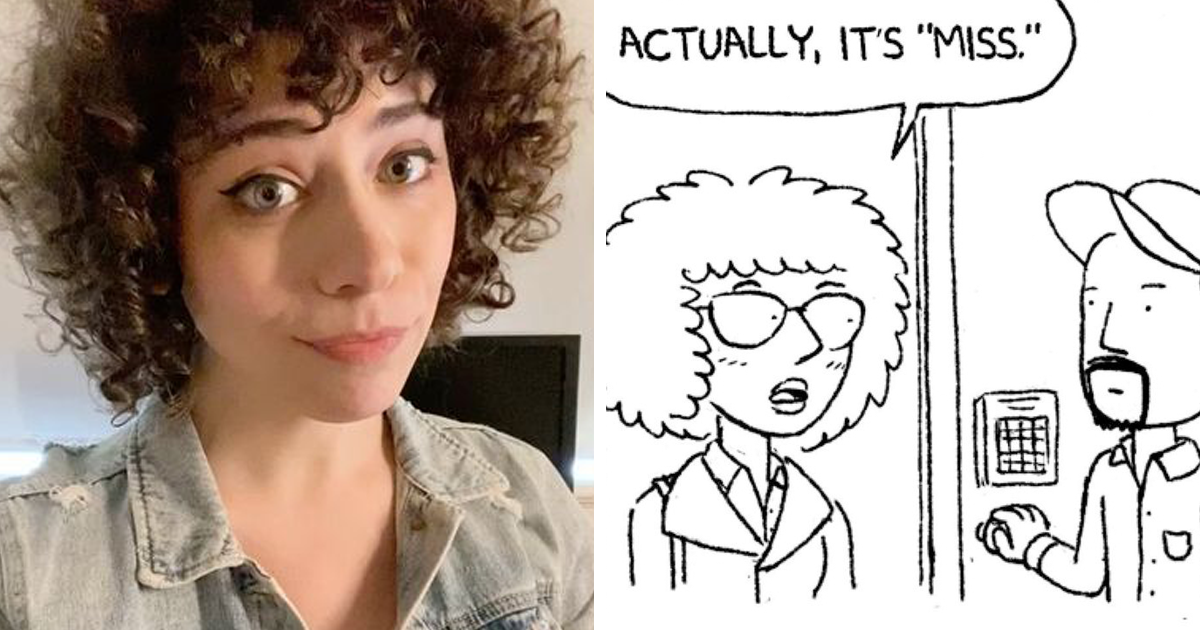
Gender transition is often presented in popular culture as one enormous cinematic moment: a dramatic announcement, a makeover montage, an emotional embrace, and then the credits roll. Julia Kaye’s autobiographical comics politely toss that formula out the window.
Through short, deceptively simple comic strips, Kaye has documented the awkwardness, joy, anxiety, humor, frustration, love, dysphoria, and occasional absurdity of living as a transgender woman. Her work demonstrates that transitioning is not about suddenly becoming another person. It can involve bringing everyday life into closer alignment with a gender identity that was already there.
Kaye began using her Up and Out comic as a personal journal during her transition in 2016. Those strips eventually became Super Late Bloomer: My Early Days in Transition. She later returned to autobiographical comics for My Life in Transition, focusing on something transgender stories often skip: what happens after the supposedly dramatic part is over.
Below are 30 recurring ideas reflected in Kaye’s work and the broader experience her comics illuminate. They are not a universal checklist for transgender peoplebecause no two transitions are identicalbut together they reveal why three little comic panels can sometimes explain more than a 40-minute lecture.
Why Julia Kaye’s Transgender Comics Connect With Readers
Kaye’s drawings are visually economical. There are no superhero battles, exploding planets, or villains announcing evil plans from volcano headquarters. The conflict might instead be a pronoun, a mirror, an uncomfortable conversation, an unexpected compliment, or five seconds of being recognized exactly as she wants to be recognized.
That small scale is precisely what makes the comics powerful. Transition happens alongside laundry, work, dating, family dinners, friendships, bad mornings, great hair days, and the continuing mystery of why phones lose 20 percent of their battery while sitting untouched.
Modern transgender terminology also emphasizes that transition is individualized. It may contain social, legal, or medical elements, and not every transgender person pursues the same steps. Kaye’s comics work best when understood as one woman’s highly personal journal rather than instructions for how everyone should transition.
30 Things Julia Kaye’s Comics Reveal About Gender Transition
-
1. Understanding Yourself Can Take Time
Self-recognition does not always arrive with dramatic orchestral music. Kaye’s work reflects how understanding gender can be gradual, messy, and filled with second-guessing. Sometimes the biggest realization begins as a quiet thought that refuses to leave.
-
2. Transition Does Not Create a Completely New Person
The phrase “change your gender” makes a catchy headline, but transition is usually better understood as living more authentically in relation to one’s gender identity. Personality, terrible jokes, favorite foods, ambitions, and unpaid utility bills do not magically disappear.
-
3. Dysphoria Can Appear in Ordinary Moments
Gender dysphoria does not need a grand occasion. A reflection, photograph, voice, item of clothing, or interaction can suddenly make someone intensely aware of characteristics that feel out of alignment with their identity.
-
4. Gender Euphoria Matters, Too
Transgender stories frequently concentrate on suffering. Kaye gives equal emotional weight to happiness: seeing herself differently, liking an outfit, noticing change, or being recognized correctly. Sometimes the victory is wonderfully smalland still enormous.
-
5. Pronouns Can Carry Surprising Emotional Weight
A tiny word like “she” can become incredibly meaningful when it represents recognition. Correct pronouns may seem routine to outsiders, but Kaye shows why ordinary language can communicate either affirmation or alienation in seconds.
-
6. Misgendering Can Ruin an Otherwise Good Day
Being referred to incorrectly may look like a minor mistake from the outside. Repeated over time, however, it can become exhausting. One uncomfortable interaction can have enough emotional horsepower to hijack an afternoon.
-
7. Appearance Can Become Complicated
Clothes, hair, makeup, body shape, and presentation can offer exciting opportunities for self-expression while simultaneously creating anxiety. The fitting-room mirror, as humanity already knows, is capable of becoming either a best friend or a tiny fluorescent-lit supervillain.
-
8. Transition Requires Patience
Physical and emotional changes do not obey the schedule of someone refreshing a delivery-tracking page. Kaye repeatedly captures the tension between knowing where you want to go and accepting that getting there can take time.
-
9. Comparing Yourself With Other Women Can Hurt
Comparison is hardly exclusive to transgender women, which is part of the point. Kaye’s work moves between specifically transgender insecurities and painfully universal worries about beauty, attractiveness, and whether everybody else somehow received an instruction manual.
-
10. Self-Acceptance Is Not a Straight Line
A person can feel confident on Tuesday and deeply uncertain on Wednesday. Progress does not become fake simply because doubt returns. Emotional growth tends to resemble a scribble more than a beautifully rising corporate earnings chart.
-
11. Family Acceptance Can Be Powerful
Moments when relatives use the correct name or pronouns can carry tremendous significance. They communicate more than linguistic accuracy; they can demonstrate that someone is being seen and respected within relationships that existed long before transition.
-
12. Family Rejection Can Hurt Deeply
Kaye does not pretend every relationship adjusts easily. Tension with biological family appears alongside the comfort she finds elsewhere, showing how transition can expose whether affection is flexible enough to accommodate authenticity.
-
13. Chosen Family Can Become Essential
Friends who listen, affirm, joke, comfort, and simply hang around can become anchors. My Life in Transition places considerable importance on learning to rely on other people rather than carrying every difficult experience alone.
-
14. Coming Out Is Not Necessarily One Event
There may be conversations with family, friends, colleagues, dates, doctors, acquaintances, and strangers. Instead of one giant reveal, living openly can require a long series of decisions about when personal information needs to be shared.
-
15. Other People May Ask Very Personal Questions
Curiosity can rapidly cross into invasive territory. A transgender person’s existence does not transform private medical history or anatomy into a public FAQ section. Kaye’s perspective helps readers understand the difference between supportive interest and interrogation.
-
16. Medical Transition Is Highly Individual
Some transgender people use hormones, some pursue surgery, some use other gender-affirming services, and some pursue no medical interventions at all. Medical procedures are not a membership requirement for having a valid transgender identity.
-
17. Hormones Are Not an Instant Transformation Button
Kaye’s early comics chronicle the anticipation surrounding hormone therapy and gradual physical changes. The process can contain excitement and impatience simultaneouslya combination familiar to anyone who has ever watched progress happen slower than hoped.
-
18. Your Relationship With Your Body Can Change
Transition may produce new feelings about features that once caused discomfort. Kaye’s comics make room for the strange experience of discovering affection for your own reflection after spending years treating the mirror like an argumentative coworker.
-
19. Confidence Can Arrive in Unexpected Bursts
Confidence is not always a permanent upgrade. Sometimes it appears during one outfit, one photograph, one conversation, or one ordinary walk outside. Those temporary moments can nevertheless provide evidence that greater comfort is possible.
-
20. Dating Can Become a Whole New Puzzle
Kaye’s later work deals extensively with attraction, relationships, heartbreak, and modern dating. Being transgender adds particular questions to an activity that was already confusing enough to have generated approximately eight billion dating-advice articles.
-
21. Transition Does Not Immunize Anyone Against Heartbreak
Relationships still end. People still miss former partners. Text messages are still overanalyzed as if they were archaeological inscriptions. Kaye’s comics emphasize that transgender life contains ordinary emotional pain in addition to transition-specific challenges.
-
22. Sexuality and Gender Identity Are Different
Gender identity concerns who someone understands themselves to be; sexual orientation concerns attraction. Kaye’s discussions of dating help illustrate why these concepts should not be treated as interchangeable simply because both may arise in the same relationship story.
-
23. Fear of Other People’s Reactions Can Be Exhausting
Existing in public can involve calculations cisgender people may rarely need to make. How will this stranger react? Is this situation safe? Will somebody make an issue out of something mundane? Constant mental arithmetic consumes energy.
-
24. Humor Can Make Difficult Experiences Easier to Process
Kaye’s approach is often funny without treating serious emotions as jokes. Humor creates breathing room. A three-panel punch line can acknowledge that something hurts while preventing the entire narrative from collapsing under its own emotional weight.
-
25. Art Can Function Like a Journal
Kaye has described turning to comics because a conventional written diary never particularly suited her. Drawing gave her a framework for processing daily emotional highs and lows with unusual honesty.
-
26. Sharing Personal Stories Can Reduce Isolation
What began primarily as self-reflection gained a second purpose when the comics became public. Seeing another person articulate a familiar fear or joy can offer the immensely comforting realization: apparently I am not the only human being who feels this.
-
27. Cisgender Readers Can Learn Without Demanding a Lecture
Autobiographical comics allow readers to observe moments rather than receiving a textbook definition every three sentences. Empathy emerges from context: a face, a reaction, a tiny interaction, and the emotional consequences that follow.
-
28. Transition Does Not Have a Magical Finish Line
My Life in Transition is particularly valuable because it asks what happens after the early transition period. The answer is wonderfully anticlimactic: life. Work, friends, dating, mistakes, growth, insecurity, laughter, and groceries continue.
-
29. Eventually, Being Trans Can Become Less All-Consuming
Kaye has explained that as dysphoria lessened, she gained more capacity to simply live. That distinction matters. A transgender person is not obligated to spend every waking hour starring in an educational documentary about being transgender.
-
30. Ordinary Happiness May Be the Most Radical Ending
Perhaps the strongest message in Kaye’s later comics is that transgender people can have ordinary futures. They can build careers, fall in love, get dumped, find friends, heal, complain, laugh, and worry about tomorrow just like everybody else.
Why Three-Panel Comics Can Explain So Much
The genius of Kaye’s format is compression. Gender transition is an enormous subject involving identity, language, relationships, culture, health care, appearance, and social expectations. Attempting to explain all of it at once can produce something resembling an instruction manual for assembling a Swedish wardrobe.
Kaye instead focuses on moments.
A supportive interaction can occupy one strip. A difficult morning gets another. A joke gets three panels. A painful memory might need no grand explanation at all. When hundreds of these fragments accumulate, readers encounter a recognizable life rather than a collection of definitions.
Professional reviews of Super Late Bloomer have repeatedly noted this combination of simplicity and emotional nuance. The drawings appear approachable, yet their diary-like structure allows contradictory feelings to exist beside one another. Excitement can share space with impatience. Confidence can appear next to dysphoria. Love can exist beside disappointment.
That contradiction is not a flaw. It is probably one of the most realistic things about the entire project.
Experiences and Lessons Readers Can Take From Julia Kaye’s Comics
Spending time with autobiographical comics such as Kaye’s produces a different reading experience from consuming a conventional article about transgender issues. An informational article tends to organize everything neatly: definition here, statistic there, expert quotation in the middle, conclusion at the bottom. Human beings have the inconvenient habit of being considerably messier.
Kaye’s comics ask readers to experience that messiness one ordinary moment at a time.
For a transgender reader early in transition, one of the most meaningful experiences may be recognition. A fear that seemed embarrassingly specific suddenly appears on somebody else’s page. The nervousness surrounding presentation, the desire to be correctly gendered, impatience about physical changes, or an unpredictable episode of dysphoria no longer feels quite as solitary.
That does not mean every transgender reader will identify with everything Kaye experiences. Quite the opposite. Transition is personal. Someone may transition at a different age, have a different relationship with medical care, use another label, come from a more supportive family, or encounter entirely different obstacles. The benefit is not discovering a universal blueprint. It is discovering that intensely personal experiences can be discussed openly.
For cisgender readers, the lesson may be even simpler: stop searching for a single dramatic explanation of what transgender life is “really like.” Everyday experiences provide a better answer.
Imagine repeatedly being called a name that does not feel like yours. Imagine worrying whether a family relationship might change after an honest conversation. Imagine unexpectedly seeing yourself in a mirror and, for once, feeling delighted rather than critical. None of those experiences requires advanced knowledge of endocrinology or gender theory to understand emotionally.
The comics also offer useful lessons for friends and relatives. Support is frequently made from incredibly unglamorous ingredients: using somebody’s correct name, making a sincere effort with pronouns, avoiding invasive questions, listening without immediately turning the conversation into a debate, and continuing to include the person in ordinary life.
In other words, being supportive does not require becoming the world’s leading transgender scholar by Thursday.
Kaye’s later comics add another important experience: the gradual expansion of life beyond transition itself. Early on, gender can occupy enormous mental territory because so much is changing at once. Later, relationships, careers, hobbies, heartbreak, friendships, and ordinary ambitions can retake the stage.
That progression challenges a common weakness in media representations. Stories frequently become interested in transgender people specifically at the moment of coming out and then lose interest once the announcement is finished. But real people inconveniently continue existing after the headline.
My Life in Transition explores precisely that territory. There is no fairy-tale promise that everything becomes easy. Instead, new problems replace old ones. A relationship can fail. Family support can remain complicated. Misgendering can still hurt. Self-confidence can wobble.
Yet there is optimism in the ordinariness.
The ability to have regular problems can itself represent progress. When every day is no longer dominated by questions about whether it is possible to live authentically, there is suddenly room for the same glorious nonsense everybody else worries about: dates, jobs, friendships, exes, appearance, text messages, and what exactly you were supposed to buy at the grocery store.
That may be the deepest experience Kaye’s work communicates. Transition is not a story about abandoning one life and entering a flawless replacement. It is an ongoing process of becoming more comfortable living the life that is already yours.
What Julia Kaye’s Work Adds to Transgender Representation
Representation is especially effective when characters are allowed to become complicated people instead of symbols. Kaye’s autobiographical approach makes that almost unavoidable because she permits herself to appear joyful, anxious, insecure, hopeful, lonely, funny, frustrated, romantic, and occasionally contradictory.
That complexity matters. No demographic benefits from being portrayed exclusively through tragedy, just as relentless inspirational storytelling can become another kind of stereotype. Kaye leaves room for difficulty without suggesting that being transgender is itself a tragedy, and she leaves room for happiness without pretending discrimination or dysphoria magically disappear.
Her comics therefore function on two levels. They preserve an individual diary of transition while also opening a window through which other people can observe experiences they may never encounter personally.
And because the window consists of approachable comic panels rather than a 600-page academic volume, readers are considerably less likely to require coffee, a highlighter, and three business days to get through it.
Conclusion: A Transition Story About Living, Not Just Transitioning
Julia Kaye’s transgender comics endure because they do not attempt to provide one definitive explanation of transgender life. They provide something more useful: one person’s honest collection of moments.
Across Up and Out, Super Late Bloomer, and My Life in Transition, the big themes emerge naturally. Gender dysphoria can hurt. Gender affirmation can feel wonderful. Misgendering matters. Family relationships matter. Friends matter. Medical transition is individual. Self-acceptance takes work. Love remains complicated. Life continues.
Most importantly, transition does not need to end with a spectacular cinematic transformation. Sometimes success looks much less dramatic. It looks like waking up, recognizing yourself, going outside, dealing with whatever ridiculous thing Tuesday has planned, and having enough peace with yourself to continue.
That is difficult to fit into three comic panels.
Julia Kaye somehow keeps doing it anyway.













