
Nothing tests a person’s confidence qhat appears to contain two blurry pictures, a misspelled sentence, and absolutely no recognizable punch line.
You stare at it. You zoom in. You examine the comments for clues. Eventually, you begin wondering whether the joke is hidden in the pixels or whether the internet has quietly changed languages without notifying you.
Fortunately, online communities dedicated to internet jokes explained have turned confusion into a team sport. Users submit mysterious cartoons, niche references, historical memes, visual puns, and screenshots from fandoms they have never encountered. Other people then arrive with context, background information, and occasionally a doctoral dissertation about a frog wearing sunglasses.
One widely shared collection drew its examples from Reddit’s r/PeterExplainsTheJoke, a community named after Peter Griffin from Family Guy. Its central idea is simple: post a confusing meme, summon “Peter,” and hope someone understands why the banana is dressed as a tax attorney. /header>
Why Some Internet Jokes Feel Like Unsolved Crimes
Most jokes create an expectation and then break it. Researchers often describe this through incongruity theory: the setup encourages one interpretation, while the punch line suddenly forces the audience to see something else. Another influential explanation, benign violation theory, suggests that humor frequently appears when something seems wrong, strange, or threatening but is simultaneously understood as harmless.
That mental switch cannot happen when a key piece of information is missing. A joke about an obscure video game is just a picture if you have never played the game. A history meme may resemble nonsense when you do not recognize the date. A musical prank fails when you cannot read sheet music. The punch line exists, but your brain has not received the password.
Memes also mutate as they travel between online communities. Their meanings may depend on earlier versions, familiar image templates, platform-specific slang, or events that were discussed intensely for three days and then abandoned forever. Research into online meme diffusion shows that communities play an important role in creating, adapting, and spreading these cultural symbols. /section>
30 Confusing Memes That Needed an Internet Interpreter
1. The Religious Irony That Required More Than a Quick Glance
A cartoon showed nonreligious people behaving according to principles associated with compassion while loudly religious political figures chased power and profit. The missing ingredient was irony: the people claiming the label ignored the values, while the people rejecting the label practiced them.
2. The Car Dealership Meme About the Invisible Woman
A salesperson addressed the man even though the woman was buying the vehicle. Some viewers saw an ordinary conversation. Others recognized a joke about the frustrating experience of women being ignored during major purchases whenever a male companion is standing nearby looking decorative.
3. The Antidepressant Expectation-versus-Reality Joke
The setup suggested that medication would instantly transform sadness into musical-theater happiness. The punch line showed emotional flatness instead. The joke exaggerated reports that some people experience reduced emotional intensity, replacing the expected rainbow with a calm but thoroughly beige waiting room.
4. The Suspiciously Snow-Free Roof
One house had melted snow while every neighboring roof remained white. Different captions blamed indoor growing equipment, cryptocurrency mining computers, or extremely expensive heating. The joke evolved with technology and energy prices: the roof stayed warm, but the presumed cause kept changing.
5. The Sheet-Music Rickroll
A page claimed to contain a children’s song, but musicians noticed that the notes actually represented Rick Astley’s “Never Gonna Give You Up.” Anyone unable to read music saw innocent notation. Musicians saw a rickroll wearing a tiny classical-music mustache.
6. The Sudden Recovery That Wasn’t Good News
A hospital comic showed relatives celebrating when a gravely ill patient suddenly became alert, while an experienced worker looked concerned. The reference was to terminal lucidity, a reported return of clarity shortly before death. Without that knowledge, the worker merely seemed spectacularly bad at optimism.
7. The Dragon Who Needed a Pill
Knights were repeatedly sent toward a dragon while someone mentioned heartworm medicine. The explanation connected the scene to a familiar pet-owner trick: hiding medication inside food. The knights were not heroes. They were extremely expensive pieces of cheese.
8. Translation Earbuds at the Nail Salon
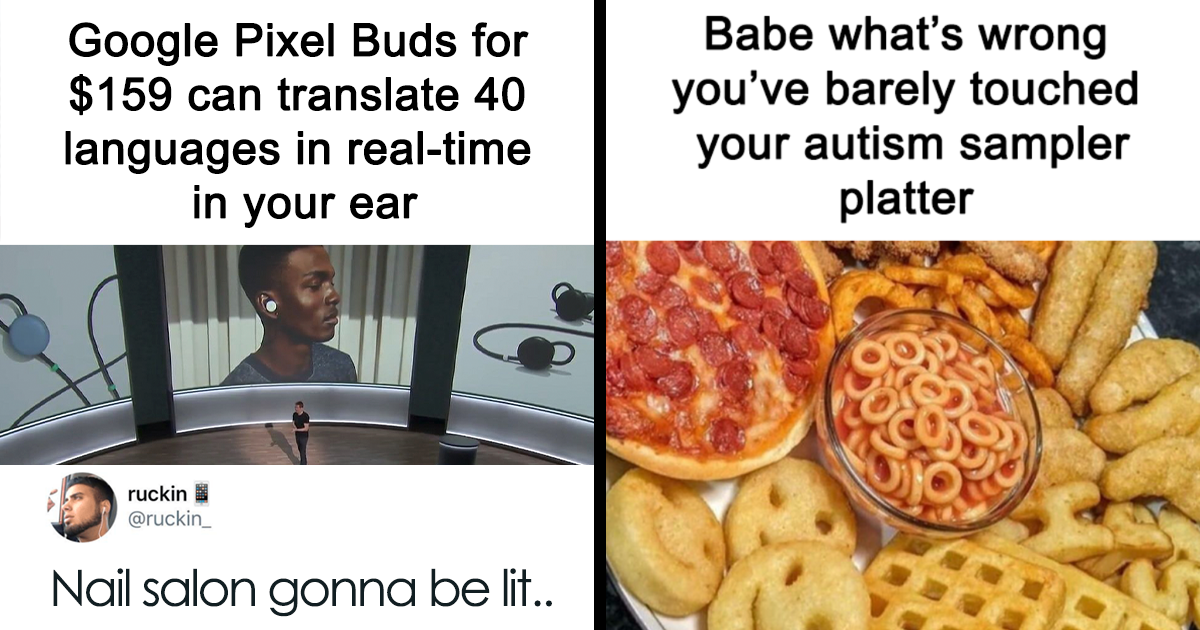
A joke imagined customers becoming nervous when earbuds could translate dozens of languages. It relied on a stereotype that nail technicians secretly discuss customers in another language. The humor came from the customer’s sudden access to a conversation they had always suspected was happening.
9. The Satirical Account That Looked Alarmingly Sincere
Some parody posts are funny because they are only slightly more ridiculous than genuine online opinions. When satire is labeled too clearly, the uncertainty disappears. When it is not labeled at all, half the audience laughs while the other half prepares a 900-word rebuttal.
10. The Roman Pottery “Clumsiness” Lesson
A mockumentary-style joke claimed that archaeologists find broken Roman pottery because Romans were unusually clumsy. The real joke was the narrator’s confident misunderstanding of history. Ancient fragments survived because centuries are hard on dishes, not because Rome employed particularly slippery citizens.
11. Meeting a Partner’s Healthy Family
A reaction meme showed someone discovering that a girlfriend’s family communicated calmly and treated one another kindly. The punch line was painfully relatable: people raised in chaotic homes may not realize how unusual their environment was until they encounter a healthier one.
12. The Streaming Agreement That Apparently Controlled Everything
A legal meme referenced an attempt to use language from a streaming-service agreement in a dispute involving another part of the same corporation. The humor came from the absurd scale of the claim: accepting a free trial appeared to have consequences far beyond watching animated movies in pajamas.
13. The “Alpha Wolf” Time-Travel Joke
A meme mocked men who build their identities around alpha, beta, and sigma rankings. Commenters explained that simplified “alpha wolf” ideas were based heavily on observations of unrelated captive animals. In natural packs, leadership is often closer to parenting than ruling a furry corporation.
14. The Person Whose Exes Were All “Crazy”
One cheerful character announced that a new partner had described every previous partner as unstable. The surrounding characters looked worried. The implied lesson was that when every former relationship allegedly had the same villain, the storyteller may be the recurring cast member causing the trouble.
15. The Historical Portrait with an Unexpected Detail
A period image appeared ordinary until someone identified clothing, posture, or an object that carried a very different meaning in its original era. Historical jokes often demand specialized knowledge, proving that even comedy occasionally requires footnotes and an exhausted museum curator.
16. The “Passport Bro” Destination Map
A map-based meme compared destinations favored by men seeking supposedly more “traditional” partners abroad. Viewers unfamiliar with the slang missed the criticism. The joke targeted the fantasy that another country functions like a romantic vending machine with lower expectations.
17. Architect Versus Engineer
Two solutions completed the same task. The engineering version was plain, cheap, and efficient; the architectural version looked dramatic but required more material. The joke exaggerated professional priorities, ignoring the inconvenient reality that good buildings generally need both groups to cooperate.
18. The “TS 1989” Hoodie
Taylor Swift fans recognized her initials and birth year. Historians saw a combination associated with a politically sensitive event in China. The humor came from two audiences reading the same design in radically different ways, one hearing pop music and the other hearing an archive door slam shut.
19. The Difficulty Levels of Bra Clasps
A visual ranked different bra closures as easy, medium, and hard. Confused viewers needed someone to point out that larger or more supportive garments may contain additional hooks. Suddenly, the meme became less like abstract geometry and more like a late-night dexterity exam.
20. The Family Reunion with an Uncomfortable Photograph
A cartoon depended on knowledge of wartime relationships between foreign soldiers and local women. A family member’s photograph revealed an unexpected connection across generations. Without the historical background, the characters’ horrified expressions seemed like an extreme response to an old snapshot.
21. Heating an Apartment with Cryptocurrency Mining
Someone joked that a freezing apartment could be warmed by mining cryptocurrency. The machines used for intensive computing consume substantial electricity and generate heat. The plan therefore replaces one utility problem with a louder utility problem that may occasionally produce digital coins.
22. The Comfort-Food Sampler
A plate of plain, familiar foods was presented as a special tasting menu. Commenters connected it to “safe foods,” a term often used for foods whose flavor and texture feel predictable. The humor was affectionate: the luxury sampler was essentially a greatest-hits album of reliable snacks.
23. The Reversed “Old Sports Injury” Story
A woman repeated the kind of exaggerated story stereotypically associated with men claiming they nearly became professional athletes before an injury ended everything. Switching the speaker exposed how familiar and theatrical the excuse sounds. Somewhere, an imaginary scout still regrets what could have been.
24. The Goat That Could Climb an Almost Vertical Wall
A frog believed it had escaped by clinging to a steep surface. Then a mountain goat appeared. The joke relied on the extraordinary climbing ability associated with goats: what looked like an impossible wall to the frog looked like a mildly inconvenient sidewalk to its pursuer.
25. The Georgia O’Keeffe Book Hidden Under the Mattress
Parent characters reacted to an art book as though it were forbidden material. The joke referenced interpretations of O’Keeffe’s flower paintings as resembling female anatomy. Viewers unfamiliar with that longstanding discussion saw only parents panicking over botany.
26. The News Meme That Expired in Four Days
A restaurant-worker meme referred to a recent arrest, tip, or viral allegation. Anyone who had taken a weekend away from the news was already lost. Topical humor can age faster than sliced avocado, especially when early reports are corrected after the meme has escaped.
27. Nurses and the Two Meanings of “Body Count”
A meme praised nurses for keeping one body count low while joking that stressful schedules might increase another. The phrase can refer to deaths or sexual partners. The punch line relied entirely on switching definitions halfway through the sentence with no turn signal.
28. The Dating-App Evacuation Helicopter
Married people were portrayed as escaping while single users remained trapped in modern app-based dating. The joke reflected frustration with endless swiping, ghosting, and systems that profit when users remain active. Romance had become a subscription service with unusually emotional software bugs.
29. The Flirting-as-Cybersecurity Attack
A meme suggested that a charming stranger could persuade inexperienced technology workers to reveal sensitive information. The reference was to social engineering, where attackers manipulate people rather than breaking software. Apparently, the weakest component in a secure network may be a lonely administrator with direct messages enabled.
30. The International Healthcare Comparison
A final meme exaggerated familiar criticisms of healthcare systems: high costs in the United States, long waits elsewhere, and difficult end-of-life debates in Canada. It compressed complicated policies into three bleak punch lines, which is efficient comedy but extremely questionable public administration.
Why Joke-Explanation Communities Are Surprisingly Wholesome
Explaining a joke is often treated as comedy’s emergency brake. Once every mechanism is labeled, the original surprise may vanish. Yet explanation communities offer something different: they restore the missing context so people can experience the joke rather than merely dissect it.
They also demonstrate how specialized modern culture has become. One person recognizes a gaming reference immediately. Another understands legal language. Someone else reads music, studies military history, repairs computers, follows celebrity news, or knows far more than seems reasonable about medieval pottery.
Instead of demanding that everyone possess identical knowledge, helpful commenters combine what they know. That cooperative behavior matters because humor can support social connection, relieve tension, and help people navigate awkward or difficult subjects. Memes are lightweight packages, but they still exchange ideas, attitudes, and cultural information. /section>
The Experience of Asking the Internet to Explain a Joke
The experience usually begins with denial. You assume the meme has loaded incorrectly. Perhaps a caption was cropped. Perhaps the creator forgot to include the funny part. Perhaps everyone reacting with laughing emojis is participating in an elaborate experiment designed specifically to make you question your education.
Then comes independent investigation. You inspect every corner of the image. You search for hidden words in the background. You identify the characters, study their facial expressions, and wonder whether a suspiciously placed lamp is symbolic. At this stage, you are no longer viewing a joke. You are analyzing evidence recovered from a very silly crime scene.
Next, you search the comments. This can make matters worse. Early replies often say things such as “I can’t believe people don’t get this” or “Bro has never seen the original.” Neither statement provides information. Both somehow make the confused reader feel as though they missed a mandatory cultural orientation meeting.
Eventually, one kind stranger appears. The explanation may be only two sentences long: the image comes from a television episode, the caption is a line from a video game, and the combination reverses the original meaning. Suddenly, every element clicks into place. The same picture that looked randomly assembled now seems carefully constructed.
That moment is satisfying even when the joke itself is not spectacular. Understanding restores a sense of participation. You may not laugh loudly, but you are no longer standing outside the conversation with your face pressed against the digital window.
Sometimes the explanation is funnier than the original meme. Commenters may role-play as Peter Griffin, write in exaggerated character voices, or provide an absurdly detailed lecture before ending with a ridiculous sign-off. A question about a cartoon duck can produce paragraphs on economics, mythology, linguistics, and why a particular font was popular in 2012.
The experience can also be educational. A joke may introduce readers to an unfamiliar historical event, a scientific concept, a workplace stereotype, or a feature of another language. Memes are not reliable textbooks, of course. They simplify, exaggerate, and occasionally sprint away from accuracy while carrying a stolen traffic cone. Still, the explanation can inspire readers to investigate the real subject.
There is also relief in discovering that hundreds of other people were equally confused. Online culture often creates the illusion that everyone else instantly understands every reference. In reality, the laughing crowd contains plenty of people who opened another tab, searched three phrases, and returned pretending the knowledge had been with them since birth.
The best explanation threads avoid mocking the person who asked. They recognize that knowledge is unevenly distributed. A teenager may not recognize a movie from the 1980s. An American may miss a British political reference. A person who does not play games may have no idea why an image of a campfire, a knight, and the words “YOU DIED” is apparently comedy gold.
By the end, the reader gains more than the punch line. They see how humor depends on shared assumptions and how quickly those assumptions can disappear across age groups, countries, professions, and online communities. Asking for help becomes less embarrassing and more like requesting subtitles for internet culture.
And then, naturally, the newly informed reader sends the meme to somebody elsewithout the explanation. The cycle begins again.
Conclusion: Nobody Understands Every Meme
These confusing memes explained remind us that humor is rarely universal. A punch line can rely on history, music, health, technology, politics, fandom, slang, or a five-second video that disappeared from everyone’s feed two years ago.
Not understanding a joke does not mean someone lacks a sense of humor. It usually means the joke arrived without its cultural luggage. Thankfully, the internet contains enough musicians, historians, nurses, engineers, artists, gamers, and full-time trivia collectors to unpack almost anything.
So the next time a meme flies over your head, skip the fake laugh. Ask what it means. Somewhere online, a helpful stranger is already preparing a detailed explanationand another stranger is preparing to reply, “Peter here,” before making the explanation much weirder than necessary.













