
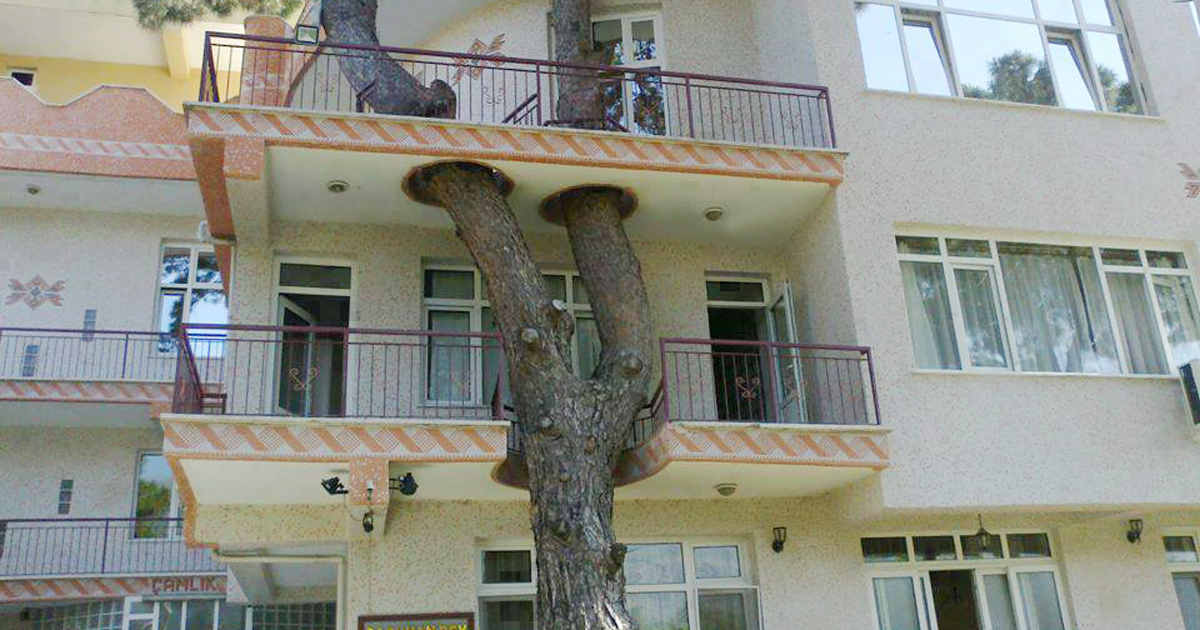
Some architects look at a tree on a construction site and see a problem. The clever ones see a roommate with leaves, roots, shade, personality, and possibly better curb appeal than the entire building. That is the charm behind 34 clever buildings whose architects refused to cut down local trees: they prove that modern architecture does not always need to arrive with a bulldozer and a suspiciously clean patch of dirt.
Instead of treating trees as obstacles, these projects turn them into courtyards, roof openings, living sculptures, natural shade systems, privacy screens, and emotional anchors. A mature tree can take decadesor even centuriesto grow, while a building can be drawn, engineered, and built in a few years. Good architects understand that math. Better architects design around it.
This article explores why buildings built around trees are more than internet eye candy. They are examples of sustainable architecture, smarter site planning, passive cooling, biophilic design, and plain old common sense. Because honestly, cutting down a gorgeous old tree just to install a sad little decorative shrub later is architectural comedy, and not the fun kind.
Why Architects Preserve Local Trees Instead of Cutting Them Down
A tree is not just “landscaping.” It is shade, habitat, stormwater control, soil protection, air filtration, seasonal beauty, and a natural cooling device that does not send an electric bill. In cities and suburbs, mature trees can help reduce heat, soften hard building edges, and make a property feel established from day one.
Preserving trees also changes the design conversation. Instead of asking, “Where can the house go?” the architect asks, “How can the house belong here?” That question leads to more interesting buildings: decks with circular cutouts, glass atriums around trunks, roof gardens that frame canopies, courtyards wrapped around oaks, and schools where children run around a tree instead of staring at one through a fence.
Tree-sensitive architecture also supports long-term value. A mature canopy can improve comfort, reduce glare, protect outdoor rooms from harsh sun, and make a small lot feel larger. When handled correctly, the result is not a building fighting nature. It is a building shaking hands with it.
34 Clever Ways Buildings Have Been Designed Around Local Trees
The following examples and design strategies show how architects around the world have preserved existing trees and turned them into unforgettable features.
1. Kindergarten Around a Zelkova Tree
Fuji Kindergarten in Japan is one of the most beloved examples of architecture around trees. Its famous tree-focused design allows children to move, climb, gather, and learn around preserved zelkova trees. The tree is not decoration; it is part of the school’s daily rhythm.
2. A House Wrapped Around a Pine
In Mexico, House Around a Tree by Espacio EMA treats a middle-aged pine as the organizing point of the home. The structure bends to the tree rather than forcing the tree to surrender. That is not compromise; that is design with manners.
3. A Thai Home Shaded by a Rain Tree
O-Tree House in Bangkok preserves an existing rain tree and uses its canopy as a natural cooling strategy. The concept is beautifully simple: let the tree do what trees already do wellshade, soften, and make outdoor space livable.
4. A Los Angeles House in the Trees
House in Trees by Anonymous Architects was placed among large cedars, preserving a major tree at the center of the site. The building feels less like it landed on the hillside and more like it found a careful gap between trunks.
5. A Courtyard Home Around a 100-Year-Old Pear Tree
Pear Tree House in London celebrates an old fruit tree by making it the heart of a courtyard. The home uses the tree as a living focal point, creating privacy and calm without needing a giant wall that says, “Please do not perceive me.”
6. A House Built Around a Hundred-Year-Old Oak
LuMa House in Argentina places a century-old oak at the center of its architectural idea. The building’s roof, circulation, and courtyard relationship all respond to the tree’s presence, making the oak feel like the oldest and wisest resident.
7. A Garden Room Around a Lebanese Cedar
A Room Around a Tree by Tikari Works shows how small buildings can be sensitive, too. Instead of pouring a heavy foundation through roots, the project uses careful structural planning to protect a mature cedar.
8. A Deck With Tree Cutouts
One of the simplest tree-preserving moves is the circular deck opening. It allows a tree to pass through a terrace while giving people shade and a place to gather. It is practical, attractive, and far better than putting a plastic umbrella where a real canopy already exists.
9. A Restaurant With an Olive Tree Atrium
Kook Osteria & Pizzeria near Rome incorporated an olive tree inside a glass-framed atrium. The result turns dining into an experience of tradition, memory, and greeneryplus pizza, which is already doing heroic work.
10. A Bank Site That Saved More Than 100 Trees
Some commercial projects preserve trees at site scale. Umpqua Bank Century Park in Bend, Oregon, became known for saving more than 100 trees on site, proving that practical business buildings can still respect the landscape.
11. A House Between Trees
House Between Trees in Mexico uses existing vegetation to shape the home’s courtyard and layout. Instead of clearing the land first and designing later, the architects allowed the site to guide the plan.
12. A Forest House Organized Around a Jacaranda
Forest House in Brazil uses a preserved jacaranda tree to define a central void. Rooms connect around this green heart, showing how one tree can organize an entire domestic experience.
13. A Building That Moved Instead of the Tree
The famous Yürüyen Köşk, or “Walking Mansion,” in Turkey is a legendary example of tree respect. Rather than cut a plane tree, the building was moved on rails. Most buildings do not go for walks, but this one had excellent motivation.
14. A Tree Passing Through a Roof
Roof openings around trunks are dramatic and surprisingly logical when detailed correctly. They allow the tree to keep growing while the building frames it like a living column.
15. A Courtyard Around a Live Oak
In warm climates, a courtyard wrapped around a live oak can create shade, filtered light, and outdoor comfort. The tree becomes a natural umbrella that never needs to be folded and jammed into a garage.
16. A Hillside Home Placed Between Mature Cedars
On steep sites, preserving trees can help reduce erosion and visually anchor the architecture. Homes tucked between cedars often feel more private, cooler, and less intrusive from the street.
17. A Classroom That Uses Trees as Learning Tools
When schools preserve trees, children gain a daily relationship with nature. They notice bark, shade, birds, seasons, and weather. That is science class without the fluorescent lighting.
18. A Balcony Built Around Branches
Balconies can be cut, curved, or stepped to avoid branches and trunks. This creates unusual outdoor spaces that feel custom to the tree, not copied from a catalog.
19. A Staircase Spiraling Near a Trunk
Some houses use stairs to move around trees, creating a slow reveal of the canopy. It turns circulation into an experience, not just a way to get from “snacks downstairs” to “laundry upstairs.”
20. A Glass Wall Facing a Preserved Tree
Not every building needs a trunk through the floor. Sometimes the smartest move is placing a large window toward a preserved tree, making the canopy part of the interior atmosphere.
21. A Restaurant Patio Under Existing Shade
Restaurants that keep mature trees gain instant atmosphere. Shade improves comfort, leaves add movement, and the patio feels established instead of looking like it was assembled yesterday with emergency planters.
22. A House With a Tree-Filled Entry Path
Preserving trees along the approach changes the first impression of a building. Guests arrive through shade and texture, not across a scorched driveway that could fry an egg and possibly the mailbox.
23. A Roof Garden Around an Existing Canopy
Green roofs and existing trees can work together when soil, drainage, and structure are properly planned. The roof becomes part of the landscape instead of a hard stop.
24. A Cabin That Slips Between Trunks
Small cabins can often be placed with surgical precision. By narrowing the footprint and lifting portions of the structure, architects can protect roots and maintain the feeling of being inside the woods.
25. A House That Uses Trees for Privacy
Existing trees can replace tall fences, heavy curtains, and awkward “privacy screens” that look like they are hiding a secret laboratory. A leafy buffer is softer, cooler, and usually prettier.
26. A Patio With a Tree as the Centerpiece
A tree-centered patio gives people a natural gathering point. Add a bench, table, or circular seat, and suddenly the outdoor room has a host.
27. A Home Addition That Dips Around Trees
Renovations often face tight constraints, but additions can still preserve trees by bending, narrowing, or stepping around trunks. The odd shape becomes the charm.
28. A Commercial Atrium With a Living Tree
Office buildings, hotels, and shops often use atriums to bring daylight deep inside. Adding a real tree makes the atrium feel less like a lobby and more like a place humans might voluntarily linger.
29. A Porch That Frames the Canopy
Screened porches and shaded verandas are perfect partners for mature trees. The tree cools the porch, the porch protects people from bugs, and everyone wins except mosquitoes, which is acceptable.
30. A Home That Avoids Root Zones
Responsible tree preservation is not only about the trunk. Roots matter. Smart architects work with arborists to protect critical root zones during excavation, foundation work, and utility installation.
31. A Driveway Curved Around a Tree
A slightly curved driveway can save a mature tree and create a more graceful arrival. Straight lines are nice, but so is not destroying a 70-year-old shade provider for the convenience of two fewer steering-wheel turns.
32. A Courtyard That Makes a Tree the View
Courtyard houses can turn inward and make one preserved tree the main view from several rooms. This is especially useful on urban lots where the outside world includes traffic, fences, and that one neighbor’s mysterious tarp collection.
33. A Public Building That Treats Trees as Community Assets
Libraries, schools, banks, museums, and visitor centers can preserve trees to make civic spaces more welcoming. A mature tree tells visitors that the building belongs to a larger place and a longer timeline.
34. A Home That Lets Nature Set the Floor Plan
The cleverest tree-friendly buildings share one idea: the site is not blank. It already has history, shade, roots, wildlife, and character. The architect’s job is not to erase that story, but to write the next chapter carefully.
The Design Benefits of Building Around Trees
Natural Cooling and Energy Savings
Trees reduce heat through shade and evapotranspiration. For buildings, that can mean cooler walls, shaded windows, and more comfortable outdoor rooms. In hot climates, keeping a large tree on the west or south side of a building can be more valuable than adding another gadget to the mechanical system.
Stronger Sense of Place
A preserved tree gives a building instant identity. New architecture can sometimes feel anonymous, but a house built around a giant oak or pine feels rootedliterally and emotionally. It tells visitors, “This place was here before the blueprint.”
Better Outdoor Living
Decks, patios, courtyards, and balconies become more usable when trees provide shade and visual comfort. A bare terrace can feel like a skillet. A terrace under a canopy feels like a destination.
Biophilic Design That Feels Real
Biophilic design connects people with nature through light, plants, natural materials, views, and organic forms. Preserving an actual tree is one of the strongest ways to do that. No offense to leaf-pattern wallpaper, but a living tree wins.
Challenges Architects Must Solve
Building around trees is inspiring, but it is not as simple as cutting a hole in the roof and calling it a day. Trees grow, move in wind, drop leaves, attract insects, and need water, oxygen, and healthy soil. A careless design can harm the tree or damage the building.
Architects must consider root protection, drainage, structural clearance, waterproofing, fire safety, pest control, maintenance access, and long-term growth. A trunk that fits neatly through a deck today may need more space in ten years. Branches that look charming near glass may become less charming during a storm. That is why tree-friendly design works best when architects collaborate with arborists, engineers, landscape architects, and builders from the beginning.
The goal is not to trap a tree like a museum artifact. The goal is to let it continue living while the building adapts around it. A successful project respects both systems: the architecture and the organism.
What Homeowners Can Learn From These Clever Buildings
You do not need a famous architect or a magazine-ready villa to apply these lessons. Before removing a tree, homeowners can ask better questions. Is the tree healthy? Can the building footprint shift? Could the patio curve? Can the driveway move? Would a deck opening work? Can a smaller addition preserve more canopy?
Sometimes removal is necessary, especially when a tree is diseased, dangerously unstable, or too close to critical infrastructure. But “necessary” should not mean “slightly inconvenient.” Mature trees deserve a careful review before the chainsaw gets invited to the meeting.
When preservation is possible, the reward is huge. A saved tree can become the best feature on the property: the thing guests remember, kids gather around, birds use, and homeowners appreciate every hot afternoon.
Personal Experiences and Reflections on Tree-Friendly Architecture
Anyone who has walked into a building designed around a tree knows the feeling immediately. The space slows you down. Your eyes move toward the trunk, then upward to the branches, then outward to the light. Suddenly the building does not feel like a sealed box. It feels like it is breathing with the site.
One of the strongest experiences related to tree-preserving architecture is the change in temperature. Stand on a bare concrete patio at noon, and the sun treats you like toast. Stand under a mature tree next to a house, and the air feels softer. The ground is cooler. The light is gentler. Conversations last longer because people are not quietly planning their escape to the nearest air-conditioned room.
There is also an emotional difference. A new building can be beautiful, but a new building wrapped around an old tree feels layered. It has a past. The tree may have been there before the owners, before the street changed, before the neighborhood filled in. Keeping it says, “We are not the first story here.” That humility is rare in construction, where everything often wants to look brand-new, flawless, and slightly allergic to dirt.
Tree-friendly buildings also teach patience. A tree is not furniture. You cannot move it three inches to the left because the sofa layout feels “more balanced.” You must respond to it. That can be frustrating during design, but it often produces better architecture. Constraints force creativity. A trunk in the middle of a lot can lead to a courtyard. A root zone can lead to a raised walkway. A canopy can lead to a shaded outdoor room. The “problem” becomes the signature feature.
From a homeowner’s point of view, preserving trees can make everyday life richer. Morning coffee under a canopy feels different from morning coffee beside a blank fence. Children invent games around trees without needing instructions. Birds arrive. Leaves mark the seasons. Even maintenancethe sweeping, pruning, and occasional “Why are there so many leaves?” momentbecomes part of living with a landscape rather than merely decorating one.
Of course, the romance should come with responsibility. A tree growing through a deck or beside a house needs professional care. Roots need air and water. Trunks need room. Roof openings need smart flashing. Branches need periodic inspection. The best projects are not careless tree hugs; they are carefully detailed agreements between architecture and biology.
The biggest lesson from these 34 clever buildings is simple: preservation can be more exciting than removal. A blank site may be easier, but easy is not always memorable. When architects refuse to cut down local trees, they often create buildings with more shade, more character, more environmental value, and more soul. And in a world full of cookie-cutter construction, a little soul is worth making room foreven if that room has roots.
Conclusion
34 clever buildings whose architects refused to cut down local trees show that sustainable architecture can be practical, beautiful, and surprisingly playful. Whether it is a kindergarten wrapped around a zelkova, a house organized around a pine, a restaurant built around an olive tree, or a mansion moved to save a plane tree, the message is clear: nature does not have to lose every time humans build something.
The smartest buildings do not erase their sites. They listen to them. They bend, curve, lift, frame, and adapt. They prove that preserving local trees is not a design limitationit is a design opportunity with shade, texture, history, and a much better personality than a parking lot.













