
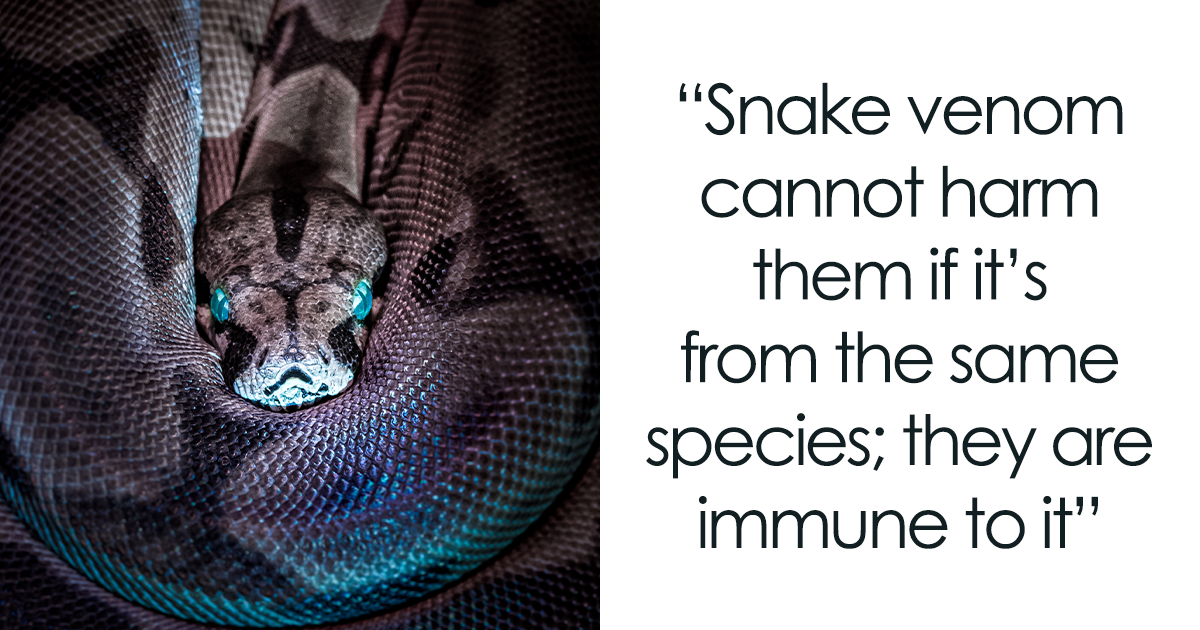
Snakes have starred as monsters, magical symbols, sneaky villains, and occasionally the reason someone abandons a perfectly good hiking trail. Yet the real animals are far more interesting than the myths surrounding them. These legless reptiles can smell in stereo, detect invisible heat, climb trees, swim across oceans, and swallow meals wider than their own heads.
There are thousands of snake species, from tiny burrowers scarcely longer than a paper clip to heavyweight anacondas capable of making a canoe look underdressed. Most want nothing to do with people, and many quietly provide free rodent control. The following snake facts reveal how these misunderstood reptiles sense their surroundings, capture food, move without legs, raise young, and keep ecosystems functioning.
Snake Diversity and Basic Biology
1. Scientists recognize more than 4,000 snake species
Snake taxonomy changes as researchers describe new species and use genetic evidence to reorganize existing ones. Current databases recognize more than 4,000 living species. They include underground threadsnakes, aquatic sea snakes, forest-dwelling vipers, desert specialists, and enormous constrictors. Clearly, evolution became enthusiastic about the long-and-legless design.
2. Snakes live almost everywhere except Antarctica
Wild snakes occur on every continent except Antarctica. They occupy deserts, forests, wetlands, mountains, farms, oceans, and suburban neighborhoods. A few major islands, including Ireland and Iceland, also lack native land snakes. Persistent cold is the main limitation because snakes depend on environmental heat to remain active.
3. Snakes are close relatives of lizards
Snakes belong to the order Squamata, the same reptile group as lizards. Fossils and genetic evidence indicate that their ancestors gradually lost their limbs while developing elongated bodies, highly flexible skulls, and specialized methods of movement. A snake is therefore not an oversized worm; it is an extremely remodeled reptile.
4. They are ectothermic rather than simply “cold-blooded”
A snake cannot maintain a stable internal temperature the way a mammal does. It regulates body temperature behaviorally, perhaps basking on a sunny rock, retreating beneath vegetation, or moving underground. This is why a snake may alternate between sunlight and shade like a very particular vacationer adjusting a beach umbrella.
5. Snake skin is dry, not slimy
Snakes are covered in protective scales made largely from keratin, the material found in human fingernails. Their scales help retain moisture and reduce friction against the ground. Even unusually “scaleless” snakes generally retain abdominal scales needed for movement. The shiny appearance of some species is caused by smooth scales, not slime.
6. Snakes shed an old outer layer of skin
During ecdysis, a new skin layer forms beneath the old one. A snake’s colors may become dull, and its eyes can look cloudy before shedding. It then rubs against rough surfaces and crawls out of the old layer, often turning it inside out. Shedding replaces worn skin and may help remove external parasites.
7. Snakes cannot blink
Instead of movable eyelids, most snakes have a transparent scale called a spectacle or brille covering each eye. It protects the eye while remaining permanently closed and clear. Consequently, a sleeping snake can appear to be staring directly at you, which is impressive considering it may be completely unaware of your dramatic discomfort.
8. They have inner ears but no external ear openings
Snakes lack visible ears and eardrums, but they are not entirely deaf. Their inner-ear structures connect to the lower jaw, allowing them to detect vibrations traveling through soil and other surfaces. Research also shows that snakes can perceive a limited range of airborne sound, particularly lower frequencies, although their hearing differs greatly from ours.
Extraordinary Snake Senses
9. A snake’s tongue collects chemical clues
When a snake flicks its tongue, it gathers microscopic chemical particles from air, water, and surrounding surfaces. The tongue then delivers those particles to the vomeronasal, or Jacobson’s, organ in the roof of the mouth. This system helps the snake locate prey, detect predators, recognize potential mates, and investigate unfamiliar territory.
10. Forked tongues provide directional information
The two tongue tips sample slightly different locations. By comparing the chemical concentration received on each side, a snake can determine where a scent is stronger. In effect, it smells in stereo. Rapid tongue flicking during exploration supplies a stream of directional information without requiring the snake to purchase even one tiny GPS subscription.
11. Some snakes can detect infrared radiation
Pit vipers, many boas, and some pythons possess heat-sensitive facial organs. These pits detect tiny temperature differences and help create a thermal representation of nearby objects. A nocturnal snake can therefore identify the warm body of a mouse even in darkness, giving new meaning to the phrase “dinner is glowing.”
12. Snake eyesight varies dramatically
There is no single answer to how well snakes see. Active daytime hunters often have relatively sharp vision, while underground species may possess tiny eyes that detect little more than changes in brightness. Sea snakes have visual adaptations for aquatic environments, and many nocturnal snakes are especially sensitive to movement in dim conditions.
13. Pupil shape does not reliably identify venomous snakes
Vertical pupils are common among nocturnal ambush hunters, while many active daytime snakes have round pupils. However, harmless and venomous species can possess either shape. Head shape and color patterns can also be misleading. Safe identification requires knowledge of local speciesnot a rushed consultation with a catchy rhyme from summer camp.
How Snakes Eat and Hunt
14. A snake does not dislocate its jaw to eat
The famous “unhinged jaw” explanation is misleading. Snake skulls contain numerous movable joints, and the two halves of the lower jaw are joined by flexible tissue rather than a rigid chin. These adaptations allow the mouth to expand around wide prey without the jaw popping out of place like a poorly assembled action figure.
15. The lower jaws can move independently
A snake can advance one side of its jaw and then the other, gradually drawing prey into its mouth. Backward-pointing teeth help prevent the meal from escaping. This coordinated movement is sometimes described as “walking” the jaws over food, although the prey would probably choose a less cheerful description.
16. Snakes can breathe while swallowing large meals
The opening to a snake’s windpipe, called the glottis, can extend forward inside the mouth. This adaptation helps the animal continue breathing while prey occupies much of its throat. Swallowing can still take considerable time, especially when the meal is large, but the snake is not required to hold its breath throughout dinner.
17. Every snake is a carnivore
No snake grazes on grass or orders a side salad. Depending on the species, snakes consume insects, worms, snails, eggs, fish, frogs, lizards, birds, mammals, and other snakes. Their digestive systems are built for animal prey, although plant material may occasionally be swallowed accidentally along with a meal.
18. Some species have astonishingly specialized diets
Egg-eating snakes can swallow bird eggs and crack them internally with projections from their vertebrae. Certain snail-eating snakes have jaws adapted to pull soft bodies from shells. Other species specialize in earthworms, fish eggs, centipedes, or reptiles. Being a carnivore does not necessarily mean being willing to eat whatever appears nearby.
19. Snakes continually replace their teeth
Teeth are useful for gripping struggling prey, so losing one cannot become a long-term inconvenience. New teeth develop throughout a snake’s life and replace damaged or shed ones. Venomous species also replace their fangs. Nature apparently gave snakes a dental plan with unusually generous replacement coverage.
20. Venom evolved mainly for feeding
Snake venom is a complex biological secretion delivered through specialized teeth or fangs. Different venoms may disrupt nerves, damage tissue, interfere with blood clotting, or combine several effects. Its primary purposes are immobilizing prey and beginning digestion. Defensive bites occur when a snake believes it is threatened and cannot escape.
21. Most snake species are not dangerous to humans
Roughly 600 snake species are considered venomous, and only a fraction can seriously injure people. Even potentially dangerous snakes generally conserve venom and avoid confrontations. Bites often follow deliberate handling, harassment, or accidental contact. The sensible response to an unidentified snake is distance, not an audition for an adventure program.
22. Constrictors primarily stop circulation
Constricting snakes were once said to kill mainly through suffocation. Experimental research with boa constrictors showed that pressure rapidly disrupts circulation, preventing blood from reaching the brain, heart, and other organs. The snake senses the prey’s heartbeat and can adjust its coils, making constriction both powerful and surprisingly controlled.
23. Digestion can be an all-in biological event
After a large meal, a snake’s digestive activity and metabolism may rise dramatically. Strong acids and enzymes break down flesh and many bones, allowing nutrients to be absorbed efficiently. Fur, feathers, claws, and other difficult materials may remain. Between meals, some species reduce digestive activity to conserve energy.
Movement Without Legs
24. Snakes use several kinds of locomotion
Lateral undulation is the familiar S-shaped slither, but snakes also use concertina movement in narrow spaces, rectilinear motion for slow straight-line travel, and sidewinding on loose surfaces. The best method depends on the species and terrain. Lacking legs did not leave snakes with only one transportation setting.
25. Belly scales provide traction
Broad ventral scales grip irregularities in the ground while coordinated muscles and ribs push the body forward. On perfectly smooth surfaces, many snakes struggle because there is little against which to push. Their movement is an interaction among muscles, skeleton, flexible skin, scales, and the texture of the environment.
26. Sidewinding limits slipping on loose ground
Sidewinders lift sections of their bodies while maintaining a few stable contact points with sand. This creates the distinctive parallel tracks seen in deserts. The technique is efficient on shifting surfaces and reduces slipping. Contrary to a popular assumption, sidewinding is not simply a frantic attempt to avoid touching hot sand.
27. “Flying” snakes are accomplished gliders
Flying snakes of the genus Chrysopelea launch from branches, spread their ribs, and flatten their bodies. They undulate in the air, turning the entire body into a constantly changing aerodynamic surface. They do not achieve powered flight, but their controlled glides can carry them between trees with remarkable stability.
28. Sea snakes use paddle-shaped tails
True sea snakes spend most or all of their lives in marine environments. Their vertically flattened tails act like paddles, driving them through the water. Many have valves that close their nostrils while submerged. They still breathe air, however, so even these highly aquatic reptiles must periodically return to the surface.
Reproduction, Defense, and Record Breakers
29. Snakes can lay eggs or give birth to live young
Many species are oviparous and deposit eggs, while others retain developing offspring and produce live young. Live-bearing reproduction is particularly helpful in cool climates because a pregnant female can move between warm and cool areas, controlling the conditions experienced by her developing embryos more effectively than an unattended nest could.
30. Snake eggs usually have flexible shells
Unlike the brittle eggs commonly found in a refrigerator, most snake eggs have leathery, flexible shells. They absorb moisture during development and may become larger. Hatchlings use a temporary egg tooth to cut through the shell. The tooth is soon lost, having completed one extremely important first assignment.
31. Some snake mothers protect their offspring
Although many snakes provide no care after laying eggs or giving birth, notable exceptions exist. Female pythons coil around their clutches, guarding them and helping regulate temperature. Some python species produce heat through muscular contractions. Certain rattlesnakes also remain near newborns for a period after birth.
32. King cobras construct and guard nests
A female king cobra gathers leaves and vegetation into a mound, deposits her eggs inside, and guards the nest. Heat produced by decomposing plant material supports incubation. King cobras are famous for this active nest construction, a rare achievement for an animal with no arms, hands, rake, or access to landscaping equipment.
33. A rattlesnake’s rattle does not reveal its age
Rattles are formed from interlocking keratin segments. A new segment is added when the snake sheds, but snakes may shed several times in one year, and older segments frequently break. Counting them cannot determine age. A rattlesnake may also remain silent, so hikers should never expect a guaranteed acoustic warning.
34. Boas and pythons retain traces of hind limbs
Small structures called pelvic spurs appear beside the cloaca of many boas and pythons. They are external remnants of ancestral hind limbs and may be used during courtship or competition. The spurs provide visible evidence of the evolutionary history hidden inside the streamlined body of a modern snake.
35. Snake sizes range from pocket-sized to prehistoric gigantic
The Barbados threadsnake reaches only about four inches, while the reticulated python is generally recognized as the longest living snake. The green anaconda is the heaviest. Neither approaches the extinct Titanoboa, which lived roughly 58 million years ago and may have measured approximately 45 to 50 feet long.
Why Snakes Matter to Ecosystems
Snakes function as both predators and prey. By eating rodents, insects, amphibians, and other animals, they help regulate populations that might otherwise damage crops or spread disease. Snakes are also food for hawks, owls, mammals, larger reptiles, and even other snakes. Removing them can disturb several levels of a food web.
Their ecological value does not mean people should handle wild snakes or invite one into the laundry room. It means that an outdoor snake deserves space to continue its work. Habitat destruction, road traffic, illegal collection, invasive species, and deliberate killing threaten many populations. Replacing fear with informed caution benefits snakes and people alike.
Experiences That Change How People See Snakes
A quiet encounter on a hiking trail
One of the most useful snake experiences begins when a hiker notices an unexpected curve across the trail. The first reaction may be a rapid heartbeat and an equally rapid mental review of every snake movie ever made. Standing still changes the situation. From several yards away, the animal often looks less like an attacker and more like a cautious traveler deciding whether the large booted mammal ahead is dangerous.
Giving the snake an open escape route usually allows it to move away. This is also an opportunity to observe lateral undulation, camouflage, and frequent tongue flicks without interfering. A zoomed photograph taken from a safe distance may help a local wildlife organization identify the species later. Approaching for a close-up, blocking its path, or trying to move it with a stick can transform a peaceful encounter into a defensive one.
Finding a snake in the backyard
A backyard sighting can feel more personal because the snake has entered a space people consider their own. In reality, it may be following mice, frogs, insects, or shelter rather than plotting a property takeover. Children and pets should be moved indoors while the snake is given time and room to leave. If it remains inside a building or poses an immediate concern, a qualified wildlife removal professional is the appropriate contact.
The experience can also reveal why the animal appeared. Spilled birdseed attracts rodents. Brush piles, cluttered lumber, dense ground cover, and gaps beneath structures create shelter. Addressing those conditions is more effective than scattering unproven snake repellents around the yard. Habitat management quietly communicates that the complimentary rodent-control position is no longer available.
Watching snakes at a zoo or nature center
A reputable zoo, museum, or nature center provides a different experience because visitors can slow down and study details that are difficult to notice outdoors. The transparent eye covering becomes visible. A tongue flick no longer resembles a threat once its sensory role is understood. Watching a heavy-bodied python move in a straight line demonstrates how ventral scales and muscles can create smooth motion without legs.
Educational programs may also explain that a coiled posture, flattened neck, hiss, musk, tail vibration, or rattle is defensive communication. The animal is effectively saying, “Please stop getting closer,” not volunteering for combat. Recognizing those warnings encourages respect rather than panic.
Responding safely instead of dramatically
The best practical lesson is simple: never handle an unidentified wild snake. Wear boots and long pants in suitable habitat, watch where hands and feet are placed, and use a flashlight outdoors at night. If a bite occurs, move away from the snake and seek emergency medical care immediately. Do not cut the wound, apply ice or a tourniquet, attempt to suck out venom, or risk another bite by capturing the animal.
These experiences gradually replace the idea of snakes as lurking villains with a more accurate picture: specialized predators trying to find food, control body temperature, reproduce, and avoid being eaten. Caution remains appropriate, particularly in regions with medically significant species. Fear, however, becomes easier to manage when observation and reliable knowledge take over.
Conclusion
From infrared sensing and stereo smell to gliding flight and carefully guarded nests, snakes demonstrate how much biological complexity can fit inside one streamlined body. They are neither universally harmless nor naturally malicious. They are diverse wild animals equipped with adaptations refined over millions of years.
Understanding these awesome snake facts makes an encounter less mysterious and helps people respond responsibly. Admire wild snakes from a safe distance, protect useful habitat where appropriate, and leave handling to trained professionals. The snake will almost certainly appreciate the arrangementeven if it forgets to send a thank-you card.













