
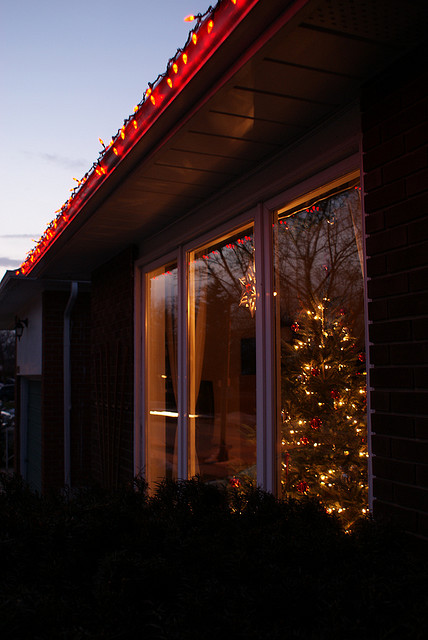
Some holiday moments announce themselves with trumpets, movie soundtracks, and a suspicious amount of glitter. Others sneak up quietly, like the warm glow of a Christmas tree spotted through someone’s window on a cold evening. You are walking home, driving through a neighborhood, or sitting in the passenger seat pretending not to fog up the glass, and suddenly there it is: a tree glowing in the living room like a tiny indoor lighthouse.
Seeing Christmas trees through the window is one of those small, almost accidental joys that proves the season does not need a grand entrance. It can arrive in a square of golden light, framed by curtains, wrapped in mystery, and decorated by people you may never meet. You do not know whether the ornaments are heirlooms, handmade paper stars, glittery dinosaurs, or macaroni masterpieces from preschool. You only know that for a few seconds, a stranger’s home looks like a postcard that forgot to mind its own business.
Why a Christmas Tree in the Window Feels So Magical
A Christmas tree is already a symbol-loaded object. Evergreen branches suggest life in the middle of winter, twinkling lights bring warmth to the darkest part of the year, and ornaments turn memory into décor. But when the tree is seen through a window, the feeling changes. It becomes less like looking at a decoration and more like catching a glimpse of a story.
From the sidewalk, a window tree feels both public and private. The family inside may have decorated it after dinner, argued gently over whether the angel was leaning, and lost three ornament hooks under the couch. But from outside, all that ordinary chaos becomes one peaceful image. The tree glows. The room looks calm. The house seems to say, “Yes, we also surrendered to the season, and yes, there is probably tape stuck to the coffee table.”
This tiny scene works because it combines contrast: cold outside, warmth inside; darkness outside, light inside; silence outside, imagined laughter inside. The window becomes a frame, and the Christmas tree becomes the painting. Unlike a store display, it is not trying to sell you matching napkins or a ceramic reindeer named Gerald. It simply exists, and that is its charm.
A Brief History of the Christmas Tree Tradition
The modern Christmas tree has deep roots, pun very much intended. Evergreen plants have been used for centuries to brighten winter celebrations, long before anyone had to untangle a string of lights while muttering, “I put these away neatly last year.” The Christmas tree tradition as many Americans know it today is often connected to German customs, where families decorated indoor trees with candles, fruit, nuts, paper ornaments, and small treats.
The tradition spread widely through Europe and eventually became popular in the United States during the 19th century. Public attention grew when decorated trees appeared in illustrations, royal homes, churches, schools, and community spaces. By the time American families embraced Christmas trees in large numbers, the tree had become more than a religious or cultural symbol. It had become a household ritual.
Electric Christmas lights changed everything. Before electricity became common, candles on trees were beautiful but risky. Electric lights made it easier and safer for families to enjoy that warm sparkle night after night. Today, a tree in the window can glow with classic white lights, rainbow bulbs, vintage-style LEDs, or smart lights that can probably be controlled by someone’s phone from across the room. The spirit is old; the remote control is very modern.
The Window Effect: Why the View Matters
It Turns a Home Into a Holiday Scene
A Christmas tree placed near a window does something quietly generous. It decorates the home for the people inside, but it also shares a little brightness with everyone outside. Neighbors, delivery drivers, joggers, dog walkers, and kids in the back seat all get a small visual gift.
That is the beauty of window Christmas trees: they make private joy visible without saying a word. Nobody needs to knock. Nobody needs an invitation. You simply pass by, see the lights, and feel the world become one notch softer.
It Sparks Curiosity
A tree through the window invites imagination. Is that a star on top or a very ambitious snowflake? Are those red ornaments or tiny apples? Is the cat sitting under the tree like a furry security guard? Is someone inside watching a holiday movie, wrapping gifts, or eating cookies with the confidence of a person who has decided calories do not count until January?
You only see part of the picture, and that makes it better. The mind fills in the rest. A glimpse becomes a story. A living room becomes a little stage. The tree becomes evidence that somewhere nearby, people are making memories.
It Feels Like Community
During the holidays, neighborhoods often become informal galleries of light. Some homes go all out with roof displays, glowing snowmen, and inflatable characters large enough to apply for local government. Others keep it simple with one tree in the window. Both styles have their place, but the window tree has a special intimacy.
It does not shout. It glows. It says, “Someone lives here. Someone took time to make this room feel special.” In a season that can easily become noisy, busy, and expensive, that quiet message matters.
Real Trees, Artificial Trees, and the Joy They Share
People can become surprisingly passionate about real versus artificial Christmas trees. Real-tree fans love the scent, the texture, the trip to the tree lot, and the annual tradition of discovering pine needles in places pine needles have no legal right to be. Artificial-tree fans appreciate convenience, reusability, symmetry, and the ability to assemble holiday cheer without strapping a fir tree to the roof of a car.
Both can create the same window magic. A real tree may bring the fresh evergreen aroma and natural shape that makes every branch feel unique. An artificial tree may offer easy setup, built-in lights, and a dependable shape that does not have a “bad side” requiring strategic wall placement. From the sidewalk, the debate usually fades. What matters is the glow.
In the United States, millions of real Christmas trees are sold each year, and tree farms grow evergreens specifically for the holiday market. Many real trees can be recycled or composted after the season, while artificial trees can be a practical choice when used for many years. The best option often depends on a household’s budget, storage space, allergies, environmental priorities, and tolerance for vacuuming needles until Easter.
How Christmas Tree Lights Shape the Mood
Lights are the secret sauce. A tree without lights can still be lovely, but a lit tree in the window has emotional superpowers. Warm white lights feel classic and cozy, like hot cocoa in visual form. Multicolored lights feel cheerful and nostalgic, as if childhood plugged itself into the wall. Twinkling lights add movement, though there is a fine line between “festive sparkle” and “tiny disco emergency.”
The glow matters because winter evenings arrive early in many parts of the country. By late afternoon, the world can feel gray and tired. A Christmas tree shining through the window pushes back against that darkness. It reminds people that homes are not just buildings; they are containers for rituals, jokes, snacks, music, and people trying to remember where they stored the tree skirt.
Good holiday lighting also creates layers. The tree lights reflect against glass. Ornaments catch tiny flashes. Curtains soften the edges. If snow is falling outside, the scene becomes almost unfairly charming, like the universe hired a set designer.
Decorations Tell Tiny Family Stories
The most interesting Christmas trees are rarely the most perfect. Designer trees are beautiful, of course, but family trees often have personality. They include the ornament from a first apartment, the handmade star from second grade, the souvenir from a road trip, the tiny frame with a baby photo, and at least one mysterious ornament nobody remembers buying but everyone keeps hanging anyway.
Through a window, you may not see every detail, but you can sense the difference. A tree packed with ornaments looks lived-in. A tree with colorful lights and paper chains feels playful. A minimalist tree with gold and white decorations feels elegant. A tree leaning slightly to the left feels honest.
These decorations turn a tree into a family archive. Every ornament says, “This mattered once,” or “This made us laugh,” or “This survived three moves and one curious dog.” That is why the sight of a Christmas tree through the window can feel emotional even when the home belongs to someone else. It hints at the universal human habit of saving little pieces of joy and hanging them where the light can find them.
The Nostalgia Factor
Holiday nostalgia is powerful because it connects the present with memory. Seeing a Christmas tree through the window may remind someone of childhood car rides, grandparents’ houses, school vacations, church pageants, neighborhood walks, or the thrilling discovery that presents had appeared overnight with suspiciously parental handwriting on the tags.
Nostalgia can be bittersweet. It may bring comfort, but it can also remind people of places or people they miss. That is part of why window trees matter. They do not demand a perfect holiday. They simply offer a small, glowing reminder that beauty can still appear in ordinary places.
In a busy season full of shopping lists, deadlines, travel plans, and social expectations, a Christmas tree in the window asks for almost nothing. Just notice it. Let it be nice. Let it warm the evening for three seconds. Sometimes that is enough.
Safety Behind the Sparkle
The cozy image of a Christmas tree through the window is even better when the tree is safely decorated. For live trees, regular watering helps keep branches from drying out too quickly. Dry trees can become a fire hazard, especially near heat sources. Keeping trees away from fireplaces, radiators, candles, and vents is a simple but important step.
Lights should be checked before they go on the tree. Frayed wires, broken sockets, cracked insulation, and overloaded outlets are not festive; they are holiday gremlins wearing copper hats. LED lights are popular because they use less energy and produce less heat than older incandescent bulbs. It is also wise to turn off tree lights before leaving home or going to sleep.
Safety does not remove the magic. It protects it. The goal is a glowing tree in the window, not a family story that begins with, “Remember the year the extension cord made a noise?”
Why This Small Moment Belongs on a List of Awesome Things
The phrase “awesome things” does not always need to point to big achievements. Sometimes awesomeness is ordinary, quiet, and easy to miss. Seeing Christmas trees through the window belongs in that category because it is free, brief, and strangely restorative.
It makes the world feel less anonymous. Behind those windows are people decorating, celebrating, resting, remembering, or simply trying to make winter feel a little less wintery. The tree becomes a soft signal of shared humanity. We may have different traditions, beliefs, schedules, budgets, and ornament strategies, but many of us understand the comfort of light in a dark season.
There is also something cinematic about it. You do not need snow, though snow certainly knows how to show off. You do not need music, though a distant holiday song helps. You just need a window, a tree, and a moment of attention. Suddenly, the walk home feels warmer. The street looks kinder. The night has a little sparkle tucked into it.
How to Enjoy the Tradition in Your Own Home
Place the Tree Where It Can Be Seen
If your space allows, placing a Christmas tree near a front window can create joy indoors and outdoors. It gives your living room a festive focal point and shares a bit of holiday cheer with the neighborhood. Even a small tabletop tree can create a beautiful glow from the street.
Use Layers of Light
Tree lights are the main event, but the surrounding room matters too. A small lamp, a candle-style LED on the mantel, or a soft garland around the window can make the whole scene feel warmer. Avoid overly bright overhead lighting if you want that cozy evening effect. The goal is “holiday glow,” not “department store dressing room.”
Decorate With Meaning
A window tree does not need to be perfect. In fact, perfection can be a little boring. Mix sentimental ornaments with simple glass balls, handmade decorations, ribbons, stars, or natural textures like pinecones. Let the tree look like real people live there. Real people have crooked ornaments. Real people also accidentally hang two identical snowmen next to each other and decide it is fine.
Make It a Neighborhood Ritual
Take an evening walk during December and notice the trees in your area. Some will be grand, some tiny, some elegant, some wonderfully chaotic. The point is not to judge. The point is to enjoy the quiet parade of windows and remember that holiday beauty often lives in small scenes.
The Emotional Power of Looking In Without Intruding
One of the reasons this moment feels so special is that it gives us a harmless kind of closeness. You are not spying; you are simply passing by. A lit tree near a window is meant, at least partly, to be seen. It is a seasonal wave from one household to the wider world.
In that way, Christmas trees through windows become part of the emotional architecture of a neighborhood. They soften streets. They mark time. They tell children that the holidays are coming and adults that, somehow, another year has made it to December. They make apartment buildings feel warmer, suburban blocks feel friendlier, and long drives feel less dull.
This is especially true in cities, where people live close together but may not know each other. A glowing tree in a high-rise window can feel like a small star in a man-made sky. A row of brownstones with trees in the windows can turn a sidewalk into a storybook page. Even a single tree in a quiet house can change the mood of an entire corner.
Extra Experiences: What It Feels Like to See Christmas Trees Through the Window
There is a particular kind of December evening that makes this experience unforgettable. The air is cold enough to make your nose question your life choices, and the sky turns dark before dinner, as if the sun clocked out early and left everyone else to finish the shift. You walk down the street with your hands in your pockets, maybe carrying groceries, maybe walking the dog, maybe just trying to get from one place to another without thinking too much. Then you look up and see a Christmas tree glowing through a window.
For a second, the whole evening changes. The window might belong to a brick house with a wreath on the door, an apartment above a bakery, or a little home at the end of a quiet street. The tree could be tall and formal, with white lights and silver ornaments placed with museum-level discipline. Or it could be wonderfully messy, with colored bulbs, candy canes, paper snowflakes, and a star that appears to be negotiating with gravity. Either way, it works.
The best part is how much you imagine from so little. You may see only the top half of the tree, a bit of garland, and the reflection of lights in the glass. Still, your mind fills the room with details. Maybe there is a mug on the side table. Maybe someone has holiday music playing softly. Maybe a child is counting the number of days until Christmas with the patience of a squirrel near a bird feeder. Maybe someone is sitting quietly, enjoying the glow after a long day.
Seeing a tree through the window can also pull you backward in time. It may remind you of riding in the car as a kid, pressing your face near the glass and rating neighborhood decorations as if you were a tiny holiday judge. It may remind you of visiting relatives, arriving after dark, and seeing their tree before you even reached the front door. It may remind you of snowy nights, school breaks, baked cookies, or the excitement of seeing wrapped presents appear under the branches.
But the experience does not have to be tied to perfect memories. Even if the season feels stressful, lonely, or complicated, a Christmas tree in the window can still offer comfort. It does not fix everything. It does not pay bills, finish errands, or make family group chats less dangerous. But it does give the eyes somewhere soft to land. It says there is still room for beauty, even in a busy world that often forgets to dim the harsh lights.
In many ways, this small sight captures what people love most about the holidays. Not the pressure. Not the shopping race. Not the battle with wrapping paper that refuses to cut straight. The real magic is in these little flashes of warmth: a tree in a window, a string of lights on a porch, a familiar song in the distance, the smell of pine or cinnamon, the feeling that ordinary life has been gently decorated.
That is why seeing Christmas trees through the window deserves to be called awesome. It is simple, free, and available to anyone willing to notice. You do not need a ticket, a reservation, or a matching family pajama set. You only need a winter evening and a glance toward the light.
Conclusion
Seeing Christmas trees through the window is one of those tiny seasonal pleasures that feels bigger than it looks. It blends history, family tradition, neighborhood charm, nostalgia, design, and light into a single passing moment. The tree may belong to someone else, but the feeling it creates can be shared by anyone who sees it.
In a world that often celebrates the loudest displays, the window Christmas tree proves that quiet beauty still wins. It glows without bragging. It welcomes without opening the door. It reminds us that home is not just a place behind walls; sometimes it is a warm square of light that makes a stranger’s evening better.
So the next time you pass a window and see a Christmas tree shining inside, slow down for a second. Let the lights do their tiny holiday job. Smile if you want. Feel nostalgic if you must. And if the tree is slightly crooked, respect it. That tree is doing its best, just like the rest of us.
SEO Tags
Note
This original article was written for web publication in standard American English and synthesized from reputable background information on Christmas tree history, holiday traditions, decorating safety, environmental considerations, and the emotional value of nostalgia and family rituals.













