
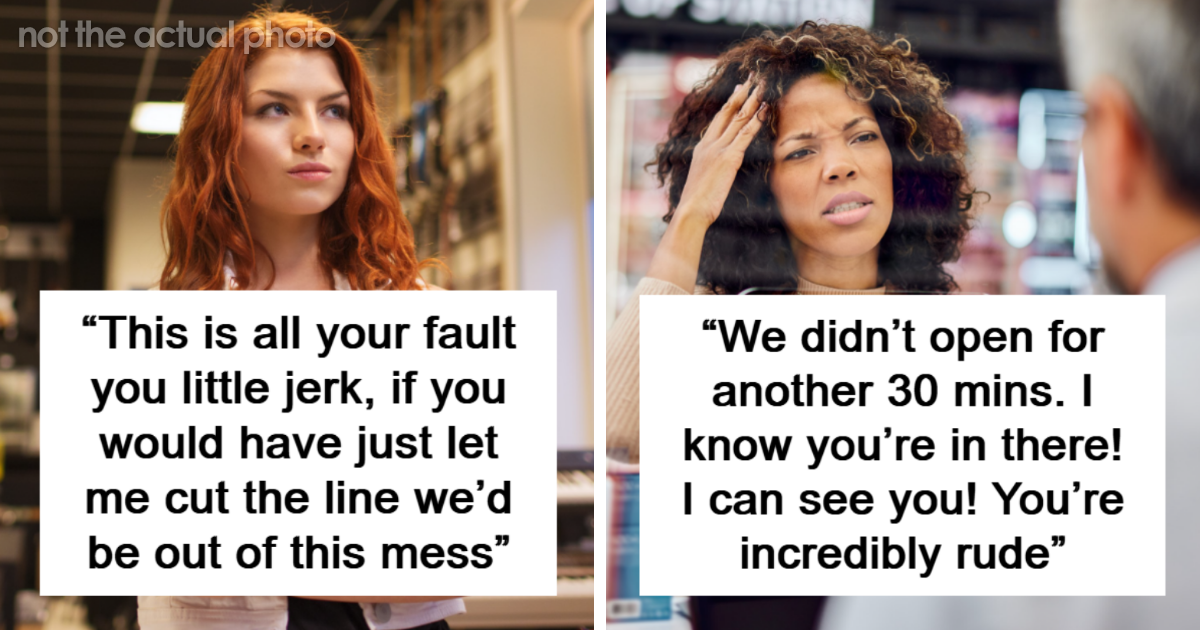
Black Friday has two faces. One is the shiny commercial face: cheerful ads, doorbuster deals, “limited-time savings,” and a suspiciously happy family carrying a television the size of a garage door. The other face is the one retail employees know too well: long lines, panicked shoppers, abandoned carts, mystery spills, coupon arguments, and at least one person acting like a discounted air fryer is the final artifact needed to save civilization.
Every year, retail workers share stories about the wildest things they have seen during Black Friday. Some are funny in a “please never make me work this shift again” kind of way. Others are uncomfortable reminders that crowded shopping events can bring out impatience, entitlement, and behavior that no employee should have to tolerate. The truth is simple: Black Friday may be marketed as a holiday shopping celebration, but for the people working the registers, stocking shelves, answering questions, and trying to keep aisles clear, it can feel like a competitive sport with receipts.
This article looks at the kinds of stories employees often describe, why Black Friday makes shoppers behave so intensely, and what these retail horror stories reveal about modern consumer culture. Spoiler: the real bargain is treating workers like human beings.
Why Black Friday Gets So Chaotic
Black Friday became a major American shopping tradition because it sits right after Thanksgiving, when many people are off work, holiday gift lists are suddenly very real, and retailers are eager to kick off the Christmas shopping season. Over time, deep discounts, limited inventory, early opening hours, and “first come, first served” promotions created the perfect recipe for retail pressure-cooking.
Today, online shopping has softened some of the in-store frenzy, but it has not erased it. Major retailers still promote flash deals, exclusive store offers, and limited-quantity products that make shoppers feel they must act quickly or lose out. That sense of scarcity can turn a normal buying decision into a mini emergency. Suddenly, a toaster is not just a toaster. It is a toaster with 45% off, and apparently that changes everything.
Retail employees often see the emotional side of shopping that customers do not notice. A shopper may be trying to stretch a tight holiday budget. A parent may be hunting for the one toy their child wants. Someone else may simply love the thrill of finding a deal. But when hundreds of people bring stress, sleep deprivation, and bargain fever into the same building, the atmosphere can shift fast.
The Worst Things Employees Say They Have Seen On Black Friday
The title says “46 employees,” but the stories tend to fall into several memorable categories. Across retail forums, employee interviews, social posts, and consumer safety discussions, the same themes appear again and again: crowd surges, fights over merchandise, verbal abuse, coupon chaos, destroyed displays, and shoppers who forget that employees do not personally control corporate pricing.
1. People Fighting Over Products They Did Not Need Yesterday
One of the most common Black Friday employee stories involves customers arguing over electronics, toys, appliances, or limited-stock items. Televisions are a classic example. The moment a store advertises a major discount on a big-screen TV, some shoppers behave as if the television has chosen them personally.
Workers have described customers grabbing boxes from one another’s carts, blocking aisles, racing toward pallets, or demanding that employees “check the back” for products that sold out hours earlier. The phrase “check the back” deserves a lifetime achievement award in retail fiction. Sometimes there is a back room. Often, it contains cardboard, a broken mop, and the employee’s last remaining hope.
2. Shoppers Treating Workers Like Obstacles
During big sales events, employees are often positioned near entrances, checkout lanes, fitting rooms, and high-demand displays. Their job is to answer questions, direct traffic, restock items, and prevent unsafe crowding. Unfortunately, some shoppers act as if employees are traffic cones wearing name tags.
Workers have reported being shoved aside, yelled at for enforcing limits, blamed for sold-out items, and pressured to bend rules. This is where Black Friday stops being funny. A sale should never turn into a situation where someone making an hourly wage has to absorb another person’s meltdown over a blender.
3. The Coupon Courtroom Drama
Black Friday brings out a special kind of customer: the amateur attorney of promotional fine print. Employees frequently describe shoppers arriving with expired coupons, screenshots of old ads, competitor prices from unrelated products, or “my friend got this deal at another location” claims.
Then comes the courtroom performance. The customer presents Exhibit A: a blurry photo of a sale tag from 2018. Exhibit B: a social media post from someone named “DealQueenLinda.” Exhibit C: pure confidence. The employee, who has already heard the same argument 37 times before lunch, must calmly explain that the coupon cannot be used on clearance, electronics, doorbusters, gift cards, furniture, or possibly anything located on Earth.
4. Customers Opening Packages Like Raccoons With Credit Cards
Employees often mention the aftermath: ripped boxes, scattered packaging, missing parts, and displays that look like a tiny retail tornado got bored and moved in. Shoppers want to inspect colors, sizes, features, and accessories, which is understandable. The problem is when they open sealed boxes, remove pieces, abandon the product, and walk away like the mess belongs to a mysterious third party.
By the end of a shift, employees may be cleaning up toys without batteries, appliances without manuals, clothes without hangers, and shelves that look like someone tried to organize them with a leaf blower.
5. The Line Rage
Long lines are part of Black Friday. Everyone knows this. Everyone sees the line. Everyone joins the line. And yet, somewhere around minute 18, a few shoppers begin acting shocked that the line still exists.
Retail employees describe customers complaining loudly, cutting, demanding more cashiers, or accusing workers of moving too slowly. In reality, cashiers are usually scanning as fast as possible while answering questions, handling declined cards, removing security tags, explaining return policies, and smiling with the emotional strength of a lighthouse in a thunderstorm.
6. The “I Know The Manager” Moment
No retail season is complete without someone announcing that they know the manager. Sometimes they do. Often they do not. Occasionally, the manager is standing right there, wearing a badge, wondering when they became a celebrity reference.
Employees say this line appears most often when customers want an exception: a bigger discount, a return without a receipt, a reserved product, or permission to buy more than the stated limit. The problem is that Black Friday rules are usually set to keep the event fair and manageable. When one person demands special treatment, the entire system gets wobblier than a cheap folding table.
What These Stories Reveal About Black Friday Shopping Culture
These employee stories are entertaining because they are extreme, but they also point to something deeper. Black Friday turns shopping into a public performance. People are not just buying gifts; they are competing for deals, comparing savings, and trying to win a limited-time game created by marketing departments.
The pressure comes from several directions. Retailers advertise urgency. Shoppers worry about budgets. Social media celebrates “hauls.” Families expect gifts. Employees are asked to manage the emotional traffic jam that results. It is no wonder the day can become chaotic.
Still, most shoppers are not villains. Many are polite, patient, and grateful. Retail employees often remember kind customers, toothe ones who say thank you, step aside when asked, return unwanted items to the right place, or simply understand that sold out means sold out. A calm customer on Black Friday is basically a limited-edition luxury item.
Safety Is Not Optional During Major Sales Events
Black Friday has a long history of raising concerns about crowd control, worker safety, and store preparedness. Large shopping events require planning: clear entrances, organized lines, trained staff, visible signage, security support, and realistic inventory communication. When stores underestimate crowd behavior, employees and customers can be placed in uncomfortable or unsafe situations.
Good crowd management matters because excitement can shift quickly when people believe a deal is disappearing. Retailers that use ticket systems, online queues, purchase limits, staggered promotions, and pickup options can reduce the “stampede mentality.” Customers also play a role by remembering that no discount is worth pushing, yelling, or creating danger.
The best Black Friday shopping experience is not the one where someone wins the cheapest TV. It is the one where employees finish their shifts safely, customers get what they came for, and nobody has to explain to security why they were wrestling over a waffle maker.
How Online Shopping Changed Black FridayBut Did Not Fix Everything
Online shopping has moved many Black Friday battles from aisles to browsers. That means fewer crowds in some stores, but it does not mean the chaos vanished. It evolved. Now shoppers deal with crashing websites, fake deals, counterfeit stores, phishing emails, misleading ads, and delivery delays. Instead of fighting over a box in aisle seven, people are refreshing a checkout page like it owes them money.
Retail employees still feel the pressure. Many stores now handle both in-person shoppers and online orders at the same time. Workers may be picking items for curbside pickup, answering phone calls, processing returns, restocking shelves, and helping customers who insist the website said “available” even though another shopper bought the last item six minutes ago.
Black Friday has become an all-channel marathon. The sales floor, warehouse, customer service desk, app, website, and delivery system all collide. For employees, that can mean more complexity, not less.
46 Types Of Black Friday Moments Employees Never Forget
Instead of copying individual stories, here is an original, condensed list of the kinds of moments retail employees commonly describe when talking about their worst Black Friday experiences:
- A customer yelling because a doorbuster item sold out before sunrise.
- Two shoppers arguing over the last discounted television.
- Someone abandoning a full cart after seeing the checkout line.
- A shopper trying to use five promotions that clearly cannot be combined.
- Customers opening sealed boxes and leaving the pieces scattered.
- A parent blaming an employee for a sold-out toy.
- People blocking aisles while comparing prices on their phones.
- A shopper cutting the line and pretending not to hear objections.
- Someone demanding a manager over a $3 price difference.
- A display collapsing after too many people grabbed from it at once.
- Customers hiding merchandise in random departments.
- Someone trying to buy more than the posted limit.
- A shopper arguing that an expired ad should still count.
- People leaving coffee cups, food wrappers, and trash on shelves.
- A customer asking employees to hold items “just for a minute” and never returning.
- Shoppers crowding stockroom doors as if secret treasure lives behind them.
- A person getting angry because online inventory was not perfectly updated.
- Customers filming employees instead of listening to store policies.
- Someone blaming the cashier for a declined card.
- A shopper demanding free shipping inside a physical store.
- People arguing over shopping carts before they even enter.
- A customer leaving unwanted frozen food in a clothing section.
- Shoppers asking for “the real discount” after the sale price is explained.
- Someone trying to return last year’s Black Friday purchase during this year’s rush.
- A customer insisting that another location’s deal must apply here.
- People camping outside, then getting angry that others had the same idea.
- A shopper taking items from a restocking cart before employees can shelve them.
- Customers treating fitting rooms like storage lockers.
- Someone asking if the store has “more in the back” after being told no.
- A customer calling corporate while standing in front of the employee.
- Shoppers loudly debating whether a discount is “worth it” while blocking traffic.
- A person demanding a rain check on a clearly limited doorbuster.
- Customers moving signs and then blaming staff for confusion.
- Someone trying to negotiate prices like the store is a yard sale.
- A shopper getting upset that employees cannot personally control the app.
- People leaving carts in the middle of crowded walkways.
- A customer refusing to believe the line starts where the sign says it starts.
- Someone opening a product, deciding against it, and placing it in another department.
- Customers asking exhausted cashiers why they look tired.
- A shopper complaining that “nobody wants to work” to someone currently working.
- People rushing displays before staff finish setting them up.
- A customer trying to reserve a product by standing beside it for an hour.
- Shoppers treating employees like personal shopping assistants during peak traffic.
- Someone insisting a social media rumor is official store policy.
- A customer becoming furious because the “deal” was actually the regular price elsewhere.
- An employee finally clocking out and discovering the parking lot is its own sequel.
Why Retail Workers Deserve More Respect On Black Friday
Retail work requires patience on an ordinary day. On Black Friday, it requires patience, stamina, memory, emotional control, and the ability to explain the same policy so many times that the words begin to feel like a ringtone. Employees are not just ringing up purchases. They are managing expectations, preventing confusion, cleaning messes, calming tempers, and keeping the store moving.
Many workers give up holiday time with family to help other people buy gifts for theirs. That alone deserves respect. A shopper may be tired, stressed, or disappointed, but so is the person behind the counter. The difference is that the employee is expected to stay polite while wearing a name tag and standing under fluorescent lighting that could interrogate a sandwich.
The simplest rule for Black Friday is also the best one: do not make a worker’s day harder than it already is. Say thank you. Read the signs. Keep your receipt. Accept that sold-out items are gone. Put unwanted products back where they belong. And please, for the love of seasonal sanity, do not yell at a cashier because the coupon excludes the exact thing you wanted.
Extra Experiences: What Black Friday Feels Like From Behind The Register
For shoppers, Black Friday may last a few hours. For employees, it can feel like a full season compressed into one shift. The experience often starts before the doors open. Workers arrive early, sometimes in the dark, while parking lots are already filling and customers are lining up with coffee, blankets, and the intense focus of people preparing for a championship game.
Before the first sale, employees are briefed on product limits, register procedures, safety rules, return policies, and where the most requested items are located. Everyone knows the day will be busy. The question is not whether something strange will happen; the question is what flavor of strange the universe has selected.
Once doors open, the store changes instantly. Quiet aisles become crowded lanes. Neatly stacked displays shrink, tilt, and sometimes vanish. Customers ask questions from every direction. One person wants headphones. Another wants a price check. Someone else wants to know why the website says item number 74829 is available, while the shelf says “nice try.” A manager calls for backup at the front. A cashier needs change. A customer needs help loading a huge box into a small car that appears to have been designed for sandwiches, not furniture.
The hardest part is not always the workload. It is the emotional whiplash. One customer may be kind, patient, and grateful. The next may act personally betrayed by a sold-out product. Employees have to reset their tone every few minutes, as if each interaction is fresh. That is exhausting. It is also invisible labor, which is why so many retail workers feel underappreciated after major sales events.
There is also the physical side. Standing for hours, restocking heavy products, walking across large stores, cleaning spills, organizing abandoned merchandise, and handling nonstop checkout lines can leave workers drained. Breaks may be delayed. Meals may be rushed. By the end of the day, employees are not dreaming of deals. They are dreaming of silence, comfortable shoes, and a world where nobody asks whether the last gaming console is “maybe hiding somewhere.”
Still, many retail workers find humor in the chaos. They remember the customer who wore matching holiday pajamas with their entire family. They laugh about the shopper who bought 12 slow cookers and offered no explanation. They swap stories about the person who asked whether a microwave would fit inside a backpack. Humor becomes a survival tool. When the day is absurd, laughing is sometimes the only reasonable response.
The best experiences usually come from customers who understand the situation. A simple “You’re doing great” can mean more than people realize. So can patience when a system freezes, kindness when an item is unavailable, or a smile after a long transaction. These small moments do not erase the chaos, but they remind employees that not everyone sees them as part of the furniture.
Black Friday will probably always be a little wild. Deals create urgency, crowds create pressure, and holiday shopping brings emotions to the surface. But the day does not have to become a retail survival documentary. When shoppers prepare ahead, manage expectations, and treat employees with respect, everyone wins. The cart is calmer. The line moves better. The cashier does not have to summon inner peace over a price match. That, frankly, is the kind of holiday miracle we should all be chasing.
Conclusion: The Real Black Friday Lesson
Black Friday stories from employees are funny, shocking, and sometimes completely unbelievableuntil you remember that retail workers have front-row seats to human behavior under discount pressure. The wildest stories may involve arguments, messes, and dramatic coupon debates, but the bigger message is simple: shopping should never come at the expense of basic respect.
Deals are temporary. A worker’s bad shift can stick with them for years. So the next time Black Friday rolls around, chase the savings if you want, compare prices, build your gift list, and enjoy the thrill of a good find. Just remember that the person helping you is not responsible for inventory shortages, app glitches, expired coupons, or the fact that 900 other people also wanted the same discounted television.
The best deal of the day is free: be patient, be decent, and leave the store without becoming someone else’s horror story.
Note: This article is an original synthesis based on publicly available retail safety guidance, consumer shopping trends, Black Friday history, and recurring employee-reported experiences. It does not copy individual stories verbatim and is written for web publication in standard American English.













