
Before the turkey is carved, before somebody asks whether canned cranberry sauce “counts,” and before the couch claims its first nap victim, America turns its eyes to New York City for one glorious, balloon-filled tradition: the Macy’s Thanksgiving Day Parade. Part street festival, part Broadway sampler, part engineering miracle, and part “How on earth did they get that giant cartoon dog through Manhattan?” the parade has been kicking off the holiday season for generations.
What began in 1924 as a department-store promotion has become one of the most recognizable Thanksgiving traditions in the United States. The parade brings together giant character balloons, elaborate floats, marching bands, dancers, clowns, celebrity performers, Broadway numbers, and Santa Claus himself. It is nostalgic, theatrical, occasionally windy, and always bigger than it reasonably needs to bewhich is exactly why people love it.
Below are 47 fun facts about the Macy’s Thanksgiving Day Parade, covering its history, balloons, route, television legacy, behind-the-scenes secrets, and the small details that make this holiday spectacle feel larger than life.
From Store Promotion to American Tradition
1. The first parade happened in 1924
The very first Macy’s parade marched through New York City on November 27, 1924. It was created to celebrate Macy’s huge Herald Square store and to build excitement for the Christmas shopping season.
2. It was originally called the Macy’s Christmas Parade
Despite taking place on Thanksgiving morning, the event was first promoted as a Christmas parade. Santa’s arrival at the end was the big signal that the holiday shopping season had officially opened.
3. Macy’s was not the first department store to host a Thanksgiving parade
Gimbels in Philadelphia staged a Thanksgiving parade in 1920, several years before Macy’s launched its New York version. Macy’s, however, turned the idea into a national cultural landmark.
4. The original route was much longer than today’s
The early parade route stretched roughly six miles, beginning in Harlem and ending at Macy’s Herald Square. Modern paradegoers follow a shorter route of about 2.5 miles through Manhattan.
5. The first parade featured live animals
Before giant balloons became the stars, the parade included live animals borrowed from the Central Park Zoo. Elephants, camels, bears, and monkeys helped create a circus-like atmosphere.
6. The animals were excitingbut not exactly relaxing
Live zoo animals may sound charming, but crowds, noise, and New York traffic are not exactly a spa day for a camel. The animals were eventually replaced by oversized balloons, which were less likely to have opinions.
7. Felix the Cat was the first character balloon
Felix the Cat made history as the first major character balloon in the parade. He appeared in the late 1920s and helped launch the tradition of pop-culture balloons floating above Manhattan.
8. Early balloons were not always filled with helium
Some early balloons were filled with air and had to be carried along the parade route. Helium later made the balloons float, giving the parade its now-famous sky-high look.
9. Balloons used to be released after the parade
In the early years, Macy’s released some balloons into the sky after the parade. The balloons carried return tags, and people who found them could receive a reward. Fun? Yes. Safe? Not especially.
10. The balloon-release tradition ended for safety reasons
After incidents involving drifting balloons and aircraft, the practice was discontinued. Today, balloons are carefully deflated and stored instead of being sent on mysterious post-parade adventures.
Big Balloons, Bigger Engineering
11. The balloons are designed like flying sculptures
A Macy’s parade balloon is not just a giant inflatable toy. It is a carefully engineered figure made from durable fabric, painted by hand, tested for balance, and designed to move safely through a dense city.
12. Balloon handlers train before parade day
Those people holding the ropes are not just enthusiastic volunteers with strong wrists. Balloon handlers receive training so they can manage wind, turns, signals, and spacing along the route.
13. Wind is one of the parade’s biggest challenges
Giant balloons and strong gusts are a dramatic combination. Parade officials monitor weather carefully, and balloon heights may be adjusted when wind conditions become risky.
14. Balloons can be several stories tall
Many character balloons tower over spectators, sometimes reaching heights comparable to a multi-story building. Seeing one in person can make even a full-grown adult whisper, “Okay, that is huge.”
15. Snoopy has been one of the parade’s most beloved stars
Snoopy has appeared in multiple balloon designs over the decades. His long parade history makes him one of the most recognizable and frequently celebrated characters in Macy’s Thanksgiving tradition.
16. Mickey Mouse made his parade balloon debut in the 1930s
Mickey Mouse joined the parade balloon lineup in 1934, bringing Disney magic to Manhattan long before streaming queues, theme park apps, and mouse-ear fashion became a lifestyle.
17. Balloons reflect pop culture
The parade acts like a floating time capsule. Characters from comics, cartoons, movies, television, video games, and advertising history have all taken turns drifting above the crowds.
18. New balloons often debut with big fanfare
Each year, Macy’s introduces new character balloons alongside returning favorites. Fans often watch the lineup announcements closely to see which characters will make their Thanksgiving morning debut.
19. Balloon inflation is its own event
On the day before Thanksgiving, spectators gather near the American Museum of Natural History area to watch balloons being inflated. It is like a backstage pass, except colder and much more crowded.
20. The balloons are inflated under nets
During inflation, balloons are secured with netting and weights so they do not escape before showtime. Even a cheerful cartoon balloon must obey physics before it gets famous.
Floats, Workshops, and Parade Magic
21. The floats are built outside Manhattan
Many parade floats are created at Macy’s Parade Studio in New Jersey. Artists, carpenters, painters, sculptors, designers, and technicians work for months to bring each concept to life.
22. Floats must fit through the Lincoln Tunnel
One of the funniest engineering realities of the parade is that enormous floats must be designed to fold, collapse, or separate into pieces small enough to travel from New Jersey into Manhattan.
23. Some floats are reassembled overnight
Once the float pieces arrive in New York City, crews rebuild them before the parade. So when viewers see a perfect holiday castle rolling down the street, it may have recently been a compact puzzle.
24. Float design begins long before Thanksgiving
The creative process can start many months ahead of parade day. Designers sketch concepts, build models, test moving parts, paint details, and solve practical problems before the float ever sees a crowd.
25. Some floats include complex moving parts
Modern floats may feature rotating pieces, mechanical characters, lighting, smoke effects, music platforms, and hidden structural systems. The result looks magical because a lot of very serious people did very serious math.
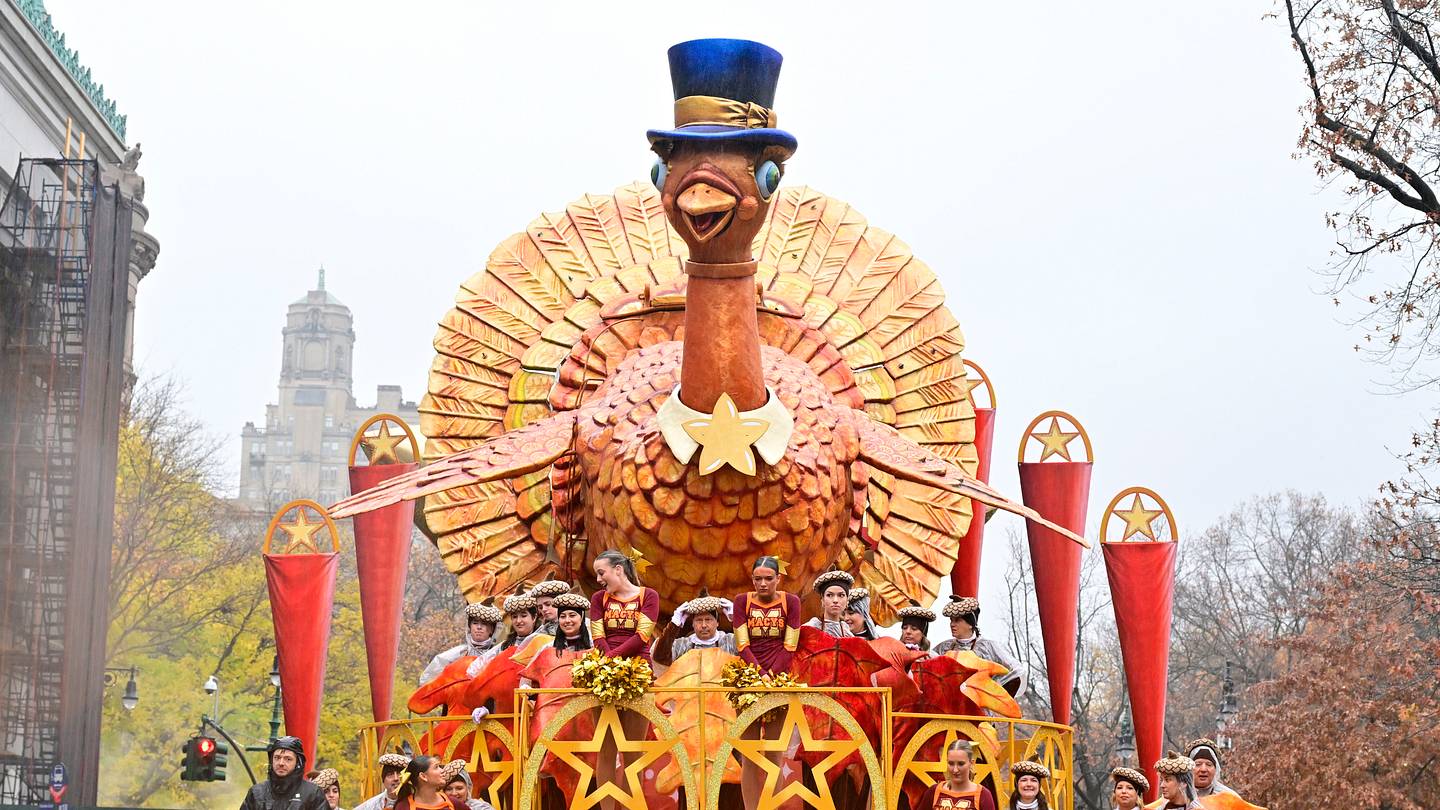
26. Tom Turkey is a parade icon
Tom Turkey is one of the most recognizable floats in the parade. With his proud feathers and cheerful holiday attitude, he is basically Thanksgiving’s unofficial mayor.
27. Santa Claus traditionally closes the parade
The parade usually ends with Santa Claus arriving at Macy’s Herald Square. His appearance marks the symbolic beginning of the Christmas season, at least for everyone who has not been playing holiday music since October.
Music, Marching Bands, and Performers
28. Marching bands have been part of the parade from the beginning
Bands helped provide the soundtrack for the first parade and remain a major part of the event today. High school and college bands from across the country often dream of earning a spot.
29. Parade bands travel from all over the United States
Being selected for the Macy’s Thanksgiving Day Parade is a major honor for student musicians. It requires fundraising, rehearsals, travel, discipline, and the ability to play while trying not to stare at a giant balloon overhead.
30. Broadway performances are a modern highlight
The parade often includes numbers from current Broadway shows. For viewers outside New York, it is a free holiday sampler of musical theaterminus the ticket price and the tiny theater seat.
31. The Radio City Rockettes are a holiday favorite
The Rockettes have become closely associated with the holiday season in New York. Their precision dancing adds classic showbiz sparkle to the parade broadcast.
32. Celebrity performers often ride on floats
Singers, actors, and entertainers frequently perform from parade floats. The performances are usually designed for television, which is why camera angles, timing, and staging matter so much.
33. The parade includes clowns by the hundreds
Clowns have been a parade staple since the early years. Macy’s clown groups add silliness, color, and just enough chaos to remind everyone that this is still a parade, not a board meeting.
Television, Movies, and National Fame
34. The parade became nationally famous through television
Although New Yorkers experienced the parade in person for years, television helped turn it into a national Thanksgiving morning ritual. Families across the country could watch without wearing three pairs of socks on a Manhattan sidewalk.
35. NBC has long been associated with the broadcast
The parade’s television coverage has become a major part of NBC’s holiday programming. Hosts, camera crews, performers, and announcers help translate a moving street event into a polished national show.
36. “Miracle on 34th Street” boosted the parade’s fame
The classic 1947 film “Miracle on 34th Street” helped connect the parade with American holiday nostalgia. The movie gave the event a special place in pop-culture history.
37. The parade is both live event and TV production
For people on the street, the parade is a moving procession. For viewers at home, it is a carefully timed broadcast with performances, interviews, wide shots, close-ups, and commercial breaks.
38. Millions watch from home
The Macy’s Thanksgiving Day Parade draws a huge television audience every year. For many families, it plays in the background while breakfast is made, pies are checked, and relatives debate whether the turkey is “almost done.”
The Route and the New York City Experience
39. The modern route begins on Manhattan’s Upper West Side
The parade typically starts near West 77th Street and Central Park West, then travels south before making its way toward Macy’s Herald Square on 34th Street.
40. The route passes some famous Manhattan landmarks
Spectators may see the parade near Central Park West, Columbus Circle, Sixth Avenue, and Herald Square. The route turns New York City itself into part of the show.
41. People arrive very early for good viewing spots
Serious parade watchers often show up before sunrise. Thanksgiving morning in New York can be cold, so the real MVPs are warm socks, coffee, patience, and someone who remembered snacks.
42. Some areas are closed to spectators
Not every block along the route is open for public viewing. Staging areas, television zones, security needs, and crowd-control plans affect where people can stand.
43. Balloon inflation viewing is popular but crowded
Watching the balloons come to life the day before the parade is a beloved New York tradition. It is also crowded, so visitors should expect lines, security checks, and lots of excited children pointing at half-inflated cartoon faces.
Surprising Parade Details
44. The parade paused during World War II
The parade was suspended from 1942 through 1944 because rubber and helium were needed for the war effort. It returned in 1945, bringing back a sense of celebration after difficult years.
45. The 2020 parade was dramatically reworked
During the COVID-19 pandemic, the parade was redesigned as a mostly television-focused event with fewer participants, shortened logistics, and major safety changes. The balloons still appeared, but the usual crowd experience was not the same.
46. The parade is a massive cleanup operation
After the final float passes, New York City sanitation crews move quickly to clean the route. Confetti, coffee cups, food wrappers, and abandoned gloves do not magically disappear, although New Yorkers may wish they did.
47. The parade keeps changing while staying familiar
New balloons, new floats, new performers, and new broadcast technology appear over time, but the basic formula remains comforting: music, spectacle, children waving, adults pretending they are not emotional, and Santa closing the show.
Why the Macy’s Thanksgiving Day Parade Still Matters
The Macy’s Thanksgiving Day Parade works because it combines several American traditions into one joyful, oversized package. It is a retail event, a New York event, a television event, a family event, and a pop-culture event all at once. That combination gives it unusual staying power.
For kids, the magic is obvious. A giant balloon of a favorite character floats between skyscrapers, and suddenly the world feels playful. For adults, the appeal is more layered. The parade is nostalgia, routine, spectacle, and shared memory. It is something people watched with grandparents, then parents, then siblings, then their own children. The balloons change, but the feeling stays familiar.
The parade also reflects the strange beauty of New York City. It is loud, crowded, ambitious, heavily organized, slightly ridiculous, and somehow beautiful. Where else would a department store help turn a holiday morning into a national performance involving giant balloons, Broadway stars, marching bands, and a turkey float with more confidence than most CEOs?
From an SEO perspective, the topic remains evergreen because people search for Macy’s Thanksgiving Day Parade facts every year. They want to know when it started, where the route goes, who the first balloon was, how floats are built, why Santa appears at the end, and how early they should arrive if they plan to watch in person. The answers tell a bigger story: the parade is not just entertainment. It is a carefully built tradition.
Personal Experiences and Parade-Day Moments
Experiencing the Macy’s Thanksgiving Day Parade, even from a living room, has a very specific feeling. The morning usually begins before the main meal, when the house smells like coffee, cinnamon, butter, or whatever brave dish someone decided to “try differently this year.” The television turns on, the parade music begins, and suddenly the day has a soundtrack. Even people who claim they are “just checking the score later” somehow end up watching a giant balloon float between Manhattan buildings.
Watching from home is comfortable, but it has its own rituals. Someone comments on the size of the balloons. Someone asks whether the singers are really singing live. Someone recognizes a Broadway show and immediately becomes a theater critic. A child points at a character and yells the name as if the balloon can hear them. Meanwhile, the cook in the kitchen keeps one eye on the screen and one eye on the oven, because Thanksgiving multitasking is a competitive sport.
Seeing the parade in person is a different adventure. It is colder, earlier, louder, and far more crowded than the broadcast makes it look. People arrive with blankets, folding chairs, thermoses, gloves, and the determined facial expression of someone who has decided that a good sidewalk spot is worth mild suffering. The first glimpse of a balloon rising above the trees or buildings changes the mood instantly. Everyone lifts their phones. Kids climb onto shoulders. Strangers become temporary teammates in the shared mission of seeing Snoopy, Pikachu, Spider-Man, Bluey, or whichever giant character is currently causing the crowd to cheer.
The funniest part of being there is realizing how much work happens between the polished television moments. Handlers adjust ropes. Police guide crowds. Crew members coordinate movement. Floats pause, turn, and restart. Performers smile through cold weather with the professionalism of people who have clearly made peace with November wind. The parade may look effortless on TV, but in person it feels like a giant machine powered by planning, caffeine, holiday spirit, and a heroic number of hand warmers.
The balloon inflation event the day before Thanksgiving has its own charm. Seeing a massive character lying on the ground, slowly taking shape under nets, is oddly delightful. A flat balloon becomes a face, then a body, then a full personality. Children react like they are watching a superhero wake up from a nap. Adults pretend they are there “for the kids,” while quietly taking just as many photos.
The parade also creates memories because it happens at the edge of two holidays. Thanksgiving is still in progress, but Christmas is waiting at the finish line. When Santa arrives at Herald Square, the message is clear: finish your pumpkin pie, because the next season has entered the building. That transition is part of the magic. The Macy’s Thanksgiving Day Parade does not just fill a morning; it opens a door into the holidays.
Conclusion
The Macy’s Thanksgiving Day Parade has lasted for nearly a century because it knows how to evolve without losing its heart. It began with live animals and store-window promotion, then grew into a national tradition filled with giant balloons, dazzling floats, marching bands, Broadway performances, celebrities, clowns, and Santa Claus. Its charm is not just in its size, but in its reliability. Every Thanksgiving morning, it reminds viewers that joy can be engineered, rehearsed, inflated, folded through a tunnel, marched down Manhattan, and delivered right on time.
Note: This publication-ready HTML article is fully rewritten in original language, based on verified parade history and current parade traditions, and does not include source links or unnecessary content-reference elements.














