
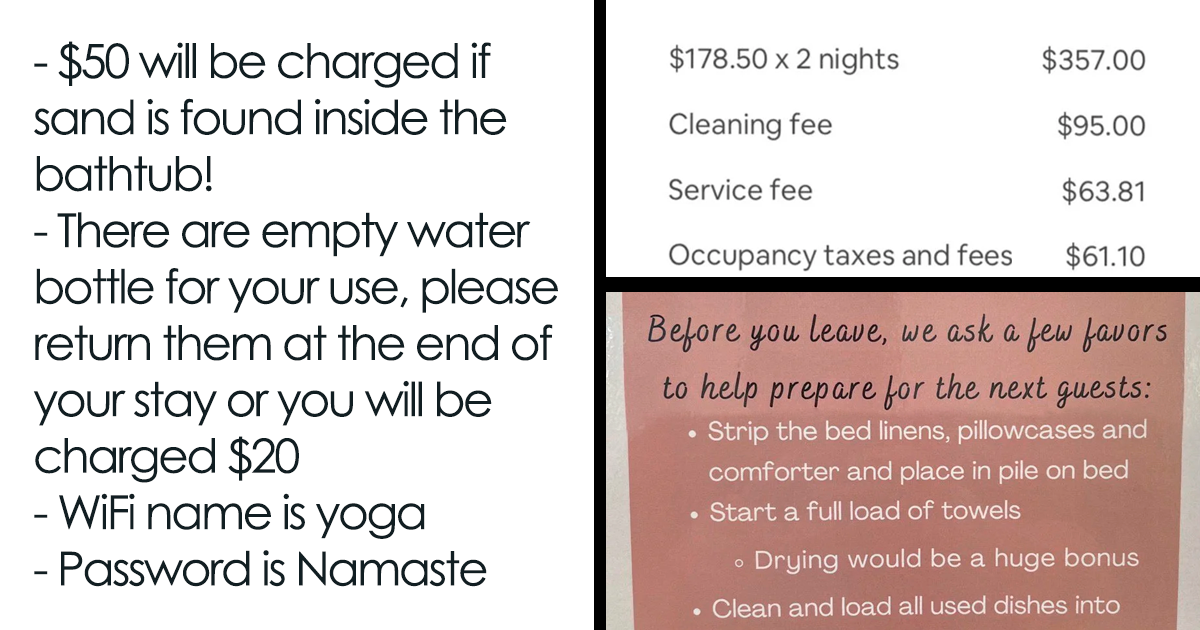
Airbnb once felt like the rebellious, affordable alternative to hotels. Travelers could rent a charming apartment, meet a friendly local, cook breakfast in a real kitchen, and briefly pretend they lived in a neighborhood where every coffee shop sold pastries on handmade ceramic plates.
Then the screenshots started arriving.
There were photos of filthy bathrooms, mattresses held together by optimism, four-page checkout manuals, mysterious cameras, unusable hot tubs, and “ocean-view” balconies overlooking a parking garage. Guests began wondering why they were paying a cleaning fee while receiving enough chores to qualify for part-time employment.
Airbnb has responded to several major complaints. The company made total-price display standard globally in 2025, while the Federal Trade Commission’s rule on deceptive fees covers short-term lodging providers and requires mandatory charges to be presented more transparently.
Still, the frustration is not only about price. It is about unpredictability. A hotel may be boring, but boring becomes attractive when the alternative involves hunting for a lockbox behind a recycling bin at midnight.
The following 49 picture-worthy Airbnb fails capture why some travelers are returning to hotels, traditional vacation rentals, and other Airbnb alternatives.
The Cleaning Fee Hall of Shame
1. The Checkout List Longer Than the Vacation
The first picture shows a laminated checklist with enough instructions to launch a small spacecraft. Strip the beds, wash the towels, load the dishwasher, sweep the floors, empty every trash can, and whisper an apology to the thermostat.
2. A Four-Page Cleaning Manual
One widely reported vacation-rental complaint involved a four-page checkout checklist requiring guests to vacuum and return household objects to exact positions despite an additional cleaning charge. Airbnb’s own rules state that hosts should not impose extra fees simply because guests failed to complete specific checkout chores.
3. The $180 Cleaning Fee for One Night
The nightly price looks irresistible until the checkout screen adds a cleaning fee large enough to have the entire building professionally detailed. Suddenly, the “$99 getaway” costs more than a hotel suite.
4. Dirty Dishes Waiting for the Guest
Nothing says “welcome” like opening the dishwasher and discovering somebody else’s lasagna. The host may call it rustic authenticity. The guest calls it evidence.
5. Used Towels Presented as Fresh Towels
A neatly folded towel loses its charm when it is damp, stained, or decorated with a long strand of unidentified hair. At that point, travelers begin considering air-drying.
6. A Bathtub With Its Own Ecosystem
The listing promised a relaxing soak. The photograph reveals mold, soap residue, and enough biological activity to interest a university research department.
7. Dust Thick Enough to Write a Review In
A guest should not be able to leave a one-star rating by dragging a finger across the nightstand. Airbnb requires hosts to provide clean listings free of hazards such as mold and pests, yet enforcement often begins only after the traveler documents and reports a problem.
8. Trash From the Previous Guests
Overflowing garbage beside a high cleaning fee creates a special kind of anger. It suggests that the fee was less about cleaning and more about adding a second nightly rate wearing a fake mustache.
9. The “Professionally Cleaned” Mystery Stain
A mystery stain on a couch can instantly turn a cozy living room into a forensic investigation. Nobody wants to spend vacation time debating whether a cushion is safe to touch.
When the Listing Photos Enter the Fiction Section
10. The Wide-Angle Lens Apartment
Online, the room appears spacious enough for ballroom dancing. In person, opening the refrigerator blocks the bathroom door, the front entrance, and possibly international shipping.
11. The “Private Pool” Shared With 40 Strangers
Calling a community pool private because it belongs to the apartment complex is like calling a public bus a personal chauffeur.
12. The Ocean View Visible From One Specific Toe Position
The ocean technically exists somewhere beyond two buildings, a utility pole, and a billboard. Guests can see approximately three blue pixels while leaning dangerously over the balcony.
13. The Luxury Bedroom With a Folding Cot
The listing describes “premium sleeping arrangements.” The photo shows a camping cot beside a water heater. Luxury, apparently, is a flexible concept.
14. The Sofa Bed That Is Just a Sofa
A host claims the home sleeps six, but the sixth person is expected to curl up on an armchair and develop a close personal relationship with lower-back pain.
15. The Kitchen Without Cooking Equipment
There is technically a kitchen because a sink and two cabinets are present. Unfortunately, there are no pans, knives, plates, utensils, or objects traditionally associated with preparing food.
16. The Hot Tub That Has Not Been Hot Since 2019
The photograph shows a bubbling spa beneath romantic lights. The real tub is cold, cloudy, and covered with a tarp secured by bricks.
17. The Fireplace That Is Decorative Only
Guests book a snowy cabin for its fireplace and later discover that lighting it is prohibited. It becomes an expensive brick television showing the same channel all weekend.
18. The “Entire Home” Attached to the Host’s Living Room
Privacy expectations collapse when a thin interior door separates guests from a host who can hear every conversation, sneeze, and late-night snack decision.
19. The Rustic Cabin Beside an Eight-Lane Highway
The listing photos focus lovingly on the wooded side of the property. They somehow overlook the freeway roaring twelve feet behind the bedroom.
20. The Balcony That Is Actually a Fire Escape
A metal platform containing an air-conditioning unit and two cigarette cans is not a balcony simply because somebody placed a plastic chair on it.
Safety and Privacy Problems That Are Not Funny
21. The Smoke Detector That Looks Suspiciously Modern
Privacy concerns intensified after reports of guests finding hidden recording devices in short-term rentals. Airbnb now prohibits indoor security cameras and recording devices, even when hosts claim the equipment is turned off. The policy took effect on April 30, 2024.
22. An Undisclosed Camera Facing the Hot Tub
Exterior cameras may be permitted under specific disclosure rules, but a device aimed directly at a private relaxation area can make guests feel watched rather than protected.
23. A Front Door That Does Not Lock
Some travelers arrive to find a broken deadbolt, a loose sliding door, or a lockbox code that appears to have remained unchanged since the invention of Wi-Fi.
24. Exposed Electrical Wiring
A picturesque old house becomes less charming when wires hang from the ceiling and every outlet produces a tiny spark. That is not vintage character. That is an evacuation suggestion.
25. A Carbon Monoxide Detector Without Batteries
Safety equipment should not be decorative. A detector with an empty battery compartment offers roughly the same protection as a motivational poster.
26. A Staircase Without a Railing
The listing calls it “minimalist architecture.” The insurance company may use different terminology.
27. An Emergency Exit Blocked by Furniture
A locked or obstructed exit is not a quirky design choice. It is a serious safety problem that should be photographed, reported, and avoided.
28. A Bedroom Window That Opens Into a Hallway
The listing promises natural light. The window provides a scenic view of another guest walking to the bathroom in socks.
29. A Pool Fence Held Together With String
Families with children book properties based on safety features. Discovering that the “secure fence” is secured by garden twine is more alarming than amusing.
Rules, Fees, and Host Behavior That Test Everyone’s Patience
30. The Thermostat Locked in a Plastic Box
Guests may pay hundreds of dollars per night and still be forbidden to adjust the temperature. Nothing creates vacation memories like sweating politely at 2 a.m.
31. A Fine for Using Too Much Toilet Paper
Some house manuals seem designed by people who view basic supplies as luxury upgrades. Guests should not need to ration bathroom tissue like participants in a survival show.
32. A Curfew for Adults
Quiet hours are reasonable. A rule requiring grown travelers to be inside by 9 p.m. is less a rental policy and more an unexpected return to summer camp.
33. The Host Who Lives Through the Doorbell Camera
Messages arrive immediately: “Who is the person in the blue shirt?” “Why did you return at 10:14?” “Was that pizza authorized?” Constant monitoring can make a legal exterior camera feel invasive.
34. The Surprise Utility Charge
A post-booking request for electricity, water, heating, linens, or community access can destroy trust. Airbnb requires mandatory fees to appear in the appropriate pricing fields or price breakdown, with limited exceptions.
35. A Security Deposit Requested Through Cash App
Off-platform payment demands are a major red flag. Keeping communication and transactions on the booking platform gives travelers a record and access to formal dispute procedures.
36. The Host Who Asks the Guest to Cancel
A host may pressure a traveler to cancel so the host can avoid penalties. Airbnb explicitly tells guests not to cancel on behalf of a host and says host-canceled reservations qualify for a refund or rebooking assistance, depending on availability.
37. The Last-Minute Cancellation During a Major Event
A cancellation becomes financially devastating when hotels are sold out or have tripled their rates. A full refund does not magically create another apartment near the concert, wedding, or championship game.
38. The Host Who Changes the Property After Booking
The traveler reserves a downtown loft and receives a message explaining that a “minor plumbing issue” requires relocation to a basement 40 minutes away. This is the vacation-rental version of ordering steak and receiving directions to a vending machine.
39. The Damage Claim for an Already-Broken Chair
Guests sometimes receive reimbursement requests for damage they say existed at check-in. Photographing every suspicious stain, crack, broken handle, and wobbly chair immediately may feel excessiveuntil the resolution request arrives.
40. A Negative Review Threat Over Normal Use
The two-way review system can make travelers nervous about reporting legitimate problems. Airbnb prohibits retaliatory reviews under defined circumstances, but guests may still fear being labeled “difficult” for mentioning mold, missing amenities, or unsafe conditions.
When Basic Hospitality Goes Missing
41. One Towel for Five Guests
The reservation clearly lists five people. The bathroom contains one towel, half a roll of toilet paper, and a note asking guests to conserve resources.
42. No Hot Water
A cold shower may be refreshing at a wellness retreat. It is less refreshing when it results from a broken water heater the host forgot to mention.
43. Wi-Fi That Exists Only in the Description
Remote workers often choose accommodations based on internet access. “Try standing near the mailbox” is not a serious troubleshooting solution.
44. An Air Conditioner That Is Actually a Fan
The amenities list promises air conditioning. The bedroom contains a small desk fan pointed at a bucket of ice. Technically, air is moving. Legally, questions remain.
45. A Mattress Wrapped in Crinkling Plastic
Every movement sounds like somebody opening a family-size bag of chips. Sleep becomes difficult, but at least the mattress is prepared for flooding.
46. Bedbugs, Roaches, or Rodent Evidence
Pest problems can ruin a trip and follow travelers home. Guests who find serious cleanliness issues should document them promptly and keep communication inside the platform; Airbnb generally requires covered problems to be reported within 72 hours of discovery.
47. A Key Hidden in an Impossible Location
Check-in instructions read like a treasure hunt: enter the alley, locate the third drainpipe, lift the blue flowerpot, ignore the first lockbox, and rotate the second dial while pulling upward.
48. The Fake or Duplicate Listing
Fake listings are not merely internet folklore. Airbnb said it removed 59,000 fake listings and blocked 157,000 attempts to create fraudulent listings during 2023 while expanding address and photo verification. Verification, however, does not guarantee overall quality or neighborhood safety.
49. The House That Does Not Exist
The most infuriating image may be a traveler standing outside an unrelated building with luggage, children, and no place to sleep. At that moment, a hotel front desk begins to look like one of civilization’s greatest achievements.
Why Travelers Are Comparing Airbnb With Hotels Again
Airbnb can still offer advantages. Groups may get multiple bedrooms, families can use full kitchens, and longer stays may be more comfortable in a home than in a standard hotel room. Unique cabins, farm stays, beach houses, and urban apartments remain appealing when the listing is accurately represented and responsibly managed.
The problem is that short stays are especially vulnerable to fees. A flat cleaning charge divided across seven nights may feel reasonable; the same fee attached to a one-night booking can destroy the value proposition. Travel analysts therefore recommend comparing the complete Airbnb priceincluding cleaning and service chargeswith the complete hotel rate rather than comparing advertised nightly prices.
Hotels also provide a level of standardization many exhausted travelers now appreciate. There is usually a staffed front desk, a predictable check-in procedure, dedicated housekeeping, established fire-safety systems, and another room that may be available when something breaks. Guests generally do not communicate with the hotel owner or receive a cleanliness rating after departure.
Local communities have their own complaints. Research has associated increases in short-term rental activity with higher rents in some markets, although the size of the effect and the results of restrictions remain debated. New York City’s Local Law 18 requires qualifying short-term rental hosts to register and prohibits booking platforms from processing transactions for unregistered rentals.
These regulatory battles influence availability, prices, and traveler confidence. A property may appear online even though its legal status is uncertain, while sudden enforcement changes can remove large numbers of listings from a city.
The Experience Behind the Screenshots
Imagine planning a simple weekend trip with three friends. You search for a place that is close to downtown, has two bedrooms, includes parking, and costs less than two hotel rooms. After scrolling through dozens of listings, you find a bright apartment with excellent photographs, a 4.8 rating, and an advertised price that seems almost suspiciously reasonable.
The first surprise appears at checkout. The nightly price is only part of the bill. A cleaning charge, platform fee, taxes, and an additional guest fee push the total far beyond the number that attracted your attention. You hesitate, compare a few hotels, and decide the apartment still wins because it has a kitchen and living room.
Two days before the trip, the host sends the house rules. The message is long enough to require scrolling. No shoes. No visitors. No food in the bedrooms. No thermostat adjustments below 75 degrees. No laundry after 8 p.m. Quiet hours begin at 9 p.m. The parking space is available, but only for compact vehicles and only after moving the host’s trash cans.
Check-in becomes the next challenge. The apartment entrance is behind another building, but the map pin points to a closed restaurant. The lockbox photograph was taken several years earlier, before the wall was repainted. After 20 minutes of searching, the group finds the box behind a drainage pipe. The code does not work.
The host replies 35 minutes later with a different code.
Inside, the apartment looks familiar but smaller and darker than the listing photos. One bedroom has a proper bed. The second contains a thin mattress beneath a sloping ceiling. The advertised parking space is occupied, the Wi-Fi password is incorrect, and a handwritten sign says the dishwasher is temporarily unavailable.
The group tries to remain positive. Nobody travels expecting perfection. They order dinner, open the windows, and laugh about the unusual check-in. Then somebody discovers hair in the shower. Another person finds food in the refrigerator. A third notices that the smoke detector has been removed from its bracket.
Now the guests face a decision. Reporting every issue may consume the evening. Leaving may require paying for an expensive last-minute hotel. Staying means accepting conditions they would never have chosen had the listing been accurate.
At checkout, the chore list requests stripped beds, washed dishes, bagged trash, wiped counters, used towels placed in the washing machine, and the thermostat returned to a precise setting. The guests complete most of it because they worry about a poor review or damage claim. Their relaxing weekend ends with everyone cleaning somebody else’s apartment before an early departure.
A week later, the host leaves a public review saying the group was “generally respectful” but failed to return a decorative pillow to its proper bedroom.
This composite experience explains the emotion behind many viral Airbnb complaint photos. Each individual inconvenience may seem small: a bad lockbox, a missing towel, a confusing rule, or a dusty shelf. Combined, they create uncertainty, labor, and stressthe exact things travelers pay accommodation providers to reduce.
That does not mean every Airbnb is bad. Many hosts operate clean, transparent, thoughtfully equipped properties and provide outstanding service. The lesson is that trust depends on consistency. Travelers can forgive an imperfect lamp or an old sofa. They are less willing to forgive misleading descriptions, hidden costs, unsafe conditions, intrusive monitoring, or rules revealed only after payment.
For Airbnb to retain skeptical guests, the experience must feel like hospitality rather than a negotiation between strangers. Pricing should be obvious, photographs should reflect current conditions, checkout instructions should remain reasonable, and support should act quickly when a stay goes wrong. Otherwise, more travelers will continue choosing the wonderfully unexciting reliability of a hotel key card.
Conclusion
The 49 infuriating Airbnb pictures described here represent a broader shift in traveler expectations. People are not necessarily rejecting vacation rentals as a concept. They are rejecting uncertainty: uncertain prices, uncertain cleanliness, uncertain privacy, uncertain rules, and uncertain support.
Airbnb has introduced meaningful changes, including total-price display, indoor-camera restrictions, stronger listing verification, checkout-rule guidance, and rebooking protections. However, a policy is only as valuable as the consistency with which it is followed and enforced.
A great short-term rental can still be memorable for all the right reasons. A bad one can make guests miss hotel hallways, tiny shampoo bottles, and the beautiful sentence, “Checkout is at 11; just leave the key in the room.”
Editorial note: This article synthesizes documented platform policies, consumer reporting, travel-industry analysis, and commonly reported guest experiences. Conditions vary significantly among individual hosts and properties.














