
Note: This article covers ethical, instructor-approved ways to improve exam performance when preparation time is limited. It does not endorse cheating, unauthorized collaboration, hidden notes, answer-sharing, or any other academic-integrity violation.
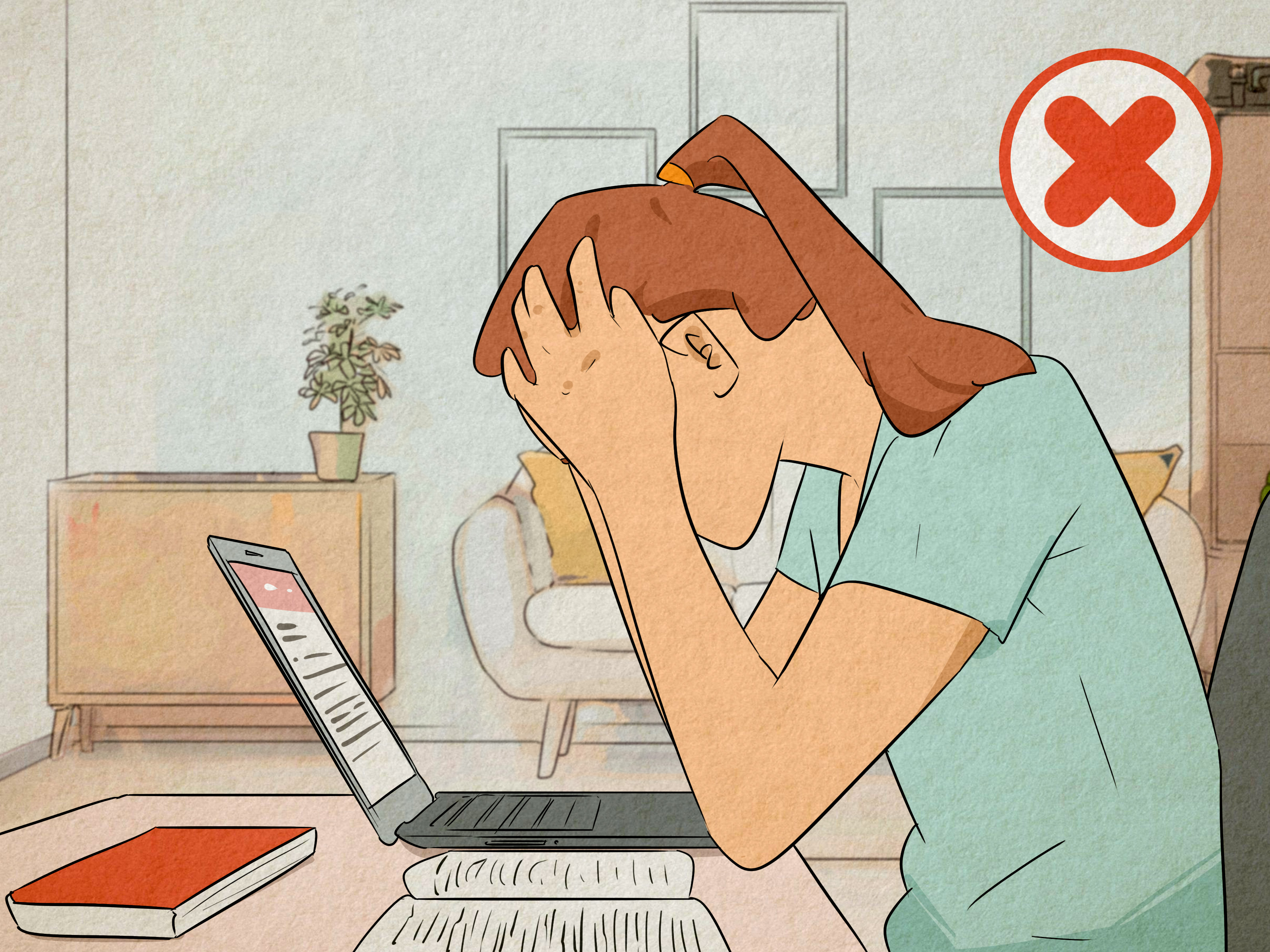
You have an exam tomorrow. Your notebook looks suspiciously untouched. Your textbook is giving you the same disappointed stare as a houseplant you forgot to water. Naturally, you search for “how to pass an exam without studying.”
Before we unleash any magic: there is no reliable way to replace actual learning with a last-minute trick. Anyone promising that is usually selling either a miracle course, a motivational mug, or a very questionable Bluetooth earpiece.
Still, “without studying” can mean different things. Maybe you attended class, did assignments, listened during discussions, and absorbed more than you realize. Maybe work, illness, family responsibilities, or plain old burnout swallowed your study time. Maybe you understand the material but freeze during tests.
In those cases, smart test-taking can help you earn the points your existing knowledge deserves. These five ethical strategies will not turn a blank brain into a genius factory, but they can help you stay calm, read carefully, use your time well, and avoid losing easy points.
The Honest Truth About Passing an Exam With Little Preparation
Passing an exam is not always the same as knowing every answer. Many tests measure several things at once: your understanding of the course, your ability to interpret instructions, your attention to detail, your time management, and your ability to stay functional while a clock stares at you like a tiny digital villain.
If you have participated in class, completed homework, read some material, or practiced skills during the term, you may have more usable knowledge than you think. The goal is to retrieve and apply that knowledge efficiently.
However, if you truly have not encountered the content, the best strategy is not to gamble on shortcuts. It is to be honest with yourself, take the exam fairly, speak with your instructor when appropriate, and create a recovery plan for the next assignment, quiz, project, or retake opportunity.
1. Find Out What “Passing” Actually Requires
When people panic before an exam, they often imagine one dramatic outcome: pass or fail, triumph or academic exile. Real grading systems are usually more complicated than that.
Before the exam begins, look at the syllabus, grading policy, and course portal. Determine how much the exam is worth, what score you need to maintain your target grade, and whether other coursework can offset a less-than-perfect performance.
Use Grade Math Instead of Panic Math
Suppose a final exam is worth 20 percent of your course grade. If you have performed well on homework, labs, attendance, and earlier assessments, you may not need a near-perfect score. You may only need to avoid a disaster.
That changes your mindset. Rather than thinking, “I must know everything,” you can think, “I need to collect as many reliable points as possible.” That is a far more useful mission.
- Check the exam’s percentage of the final grade.
- Look for point values on different sections.
- Identify whether partial credit is available.
- Review any rules about dropped quizzes, make-up work, or extra credit.
- Know whether the exam is cumulative or focused on recent units.
This is not gaming the system. It is understanding the system you are already in. A pilot checks the fuel gauge before takeoff. A student checks the grading breakdown before deciding whether to spend ten minutes on one impossible question.
Example: The Difference Between “Perfect” and “Enough”
Imagine a student named Jordan who has an 88 percent average before a final worth 15 percent of the course grade. Jordan does not need to become a walking encyclopedia overnight. Jordan needs to read questions carefully, earn the straightforward points, and avoid leaving answers blank.
That realistic target can reduce pressure. And lower pressure often leads to better decisions.
2. Treat the Exam Like a Reading Test Before It Becomes a Knowledge Test
A surprising number of lost points come from misreading the question rather than not knowing the material. Exams are full of traps that are not always intentional: words such as except, most likely, best, least, primarily, and all of the following can quietly change what the question is asking.
When time is short, careful reading is one of the highest-return skills available. It costs nothing, requires no secret knowledge, and prevents you from confidently answering a question that was never asked.
Read the Question Stem First
For multiple-choice questions, read the question before looking closely at the answer options. Try to predict the answer in your own words. Then compare your prediction with the available choices.
This prevents the answer choices from dragging your brain into a foggy swamp of “Well, that one sounds familiar.” Familiarity is not the same as correctness. Your old locker combination may sound familiar too, but it will not help you solve a chemistry problem.
Use Elimination, Not Guessing
If you do not know the answer immediately, eliminate choices that are clearly wrong. Often, one or two options conflict with a definition, timeline, formula, or principle you do remember.
- Cross out answers that do not address the question.
- Be cautious with extreme words such as “always” and “never.”
- Look for choices that contradict known facts from class.
- Compare similar answers and identify the detail that separates them.
- Choose the best-supported answer, not merely the most impressive-sounding one.
Elimination is especially helpful when a test does not penalize wrong answers. If there is no guessing penalty, leaving a question blank is usually a guaranteed zero. A thoughtful guess after eliminating two choices gives you a legitimate chance.
For Essays, Answer the Actual Prompt
Essay exams reward relevance. A student can write three paragraphs of intelligent information and still lose points because none of it directly answers the prompt.
Underline the action words: explain, compare, evaluate, analyze, argue, identify, calculate, or defend. Then build a mini-outline before you write. Even thirty seconds of planning can stop your answer from wandering off like a shopping cart with one broken wheel.
3. Use a Three-Pass Time Management Strategy
Tests are partly knowledge contests and partly time-management contests. A student who knows 80 percent of the material can still score poorly by spending half the exam on one difficult question.
Instead of moving through the exam in strict order and wrestling every problem to the ground, use a three-pass strategy.
First Pass: Collect Easy Points
Answer the questions you know quickly and confidently. Do not overthink them. Your first pass should build momentum, lock in points, and reveal how much time remains.
If a question makes you stop and stare into the middle distance, mark it and move on. You are not quitting. You are making a strategic investment in your limited time.
Second Pass: Work the Manageable Problems
Return to questions that require a little thought, calculation, or recall. At this stage, you have already protected the easy points, so your brain has more room to work.
For math, science, accounting, and similar subjects, write down known information, formulas, and units. Even when you cannot finish the problem, showing your process may earn partial credit where allowed.
Third Pass: Make Your Best Decisions
Use the final minutes for hard questions, educated guesses, and a review of your answer sheet or online submission. Check that every response is recorded in the correct place. Nothing is more tragic than solving Question 14 correctly and bubbling it into Question 15.
Set a time limit for difficult questions. For example, if you have 60 minutes for 40 multiple-choice questions, you cannot donate eight minutes to a single mystery question just because it hurt your feelings.
4. Use Every Permitted Resource and Ask for Legitimate Support
Passing an exam without traditional studying does not mean you must do everything alone. Many courses provide legitimate resources, and many students forget to use them because they assume asking for help means admitting defeat.
It does not. Asking an instructor to clarify exam rules is responsible. Using an approved formula sheet is responsible. Taking an exam in an approved reduced-distraction environment is responsible. Bringing a permitted calculator is responsible.
Know What Is Allowed Before Test Day
Some exams allow open notes, open textbooks, approved reference sheets, calculators, dictionaries, equation pages, coding documentation, or other tools. Other exams allow none of these items. Never assume.
Read the instructions early. If something is unclear, ask your instructor before the exam. Do not wait until you are sitting in the classroom with a suspiciously oversized water bottle and a sudden interest in whether your notes count as “personal belongings.”
Use Academic Accommodations When You Qualify
Students with documented disabilities, health conditions, learning differences, or significant test anxiety may be eligible for academic accommodations through their school. These can include extended time, alternate testing spaces, assistive technology, or other approved support.
Accommodations are not unfair advantages. They are intended to help the assessment measure your knowledge and skills rather than barriers unrelated to the subject being tested.
Communicate Before a Crisis Gets Bigger
If illness, a family emergency, a serious personal issue, or a documented technical problem has affected your ability to prepare, contact your instructor as soon as possible. Keep the message direct, polite, and truthful.
Do not invent an elaborate story involving three flat tires, a power outage, a mysterious raccoon, and a meteor shower. Instructors have heard many things. The truth is usually easier to explain and much easier to remember.
5. Protect Your Brain on Exam Day
If you did not study much, the worst possible response is often to sacrifice sleep, skip food, consume enough caffeine to communicate with satellites, and arrive at the exam physically shaky. Your brain needs a functioning body to retrieve information.
You cannot download a semester of knowledge while asleep, but you can make it harder to access what you already know by arriving exhausted and panicked.
Choose Sleep Over Desperate Cramming
If your exam is the next morning, a reasonable night of sleep is often more useful than several extra hours of rereading material you are too tired to process. Sleep supports focus, concentration, and clear thinking. In other words, it is not “doing nothing.” It is maintenance for the equipment.
Create a Simple Pre-Exam Routine
- Pack your materials the night before.
- Confirm the exam time, room, login details, and allowed tools.
- Eat something that will not leave you hungry twenty minutes later.
- Arrive early enough to settle in without rushing.
- Use slow breathing if anxiety starts to spike.
- Avoid conversations with classmates who are loudly listing everything they studied.
That last point matters. Five minutes before an exam is not the time to hear someone whisper, “Did you memorize all seventeen chapters and the optional appendix?” Protect your focus. Nod politely. Walk away. Become one with the hallway.
Reset When Your Mind Goes Blank
If you freeze, do not immediately conclude that you know nothing. Pause for a few slow breaths. Read the easiest question on the page. Write down any formula, definition, date, or keyword you can recall. Often, one familiar detail helps another return.
Think of recall as starting an old car on a winter morning. You do not scream at the engine. You give it a moment, try again, and avoid setting anything on fire.
What Not to Do When You Have Not Studied
There are plenty of bad ideas floating around exam season. They are usually shared by someone who says, “Trust me,” which is a phrase that has never improved anyone’s GPA.
- Do not cheat, copy answers, use hidden notes, or access unauthorized websites.
- Do not use artificial intelligence, message boards, or classmates when the exam rules prohibit outside assistance.
- Do not spend the whole exam trying to remember one obscure fact.
- Do not leave easy questions unanswered because you are chasing perfect answers.
- Do not change correct answers repeatedly because anxiety makes every choice feel suspicious.
- Do not skip the final review of your answer sheet, calculations, or submission screen.
Cheating can lead to failing the assignment, failing the course, disciplinary action, or damage to your academic record. More importantly, it turns a stressful exam into a much larger problem. A low score can be repaired. A trust problem is harder to fix.
Experiences and Lessons From Last-Minute Exam Situations
The following examples are composite situations based on common student experiences. They are not miracle stories. They are reminders that test performance often improves when students stop treating panic as a study method.
The Student Who Thought They Knew Nothing
One student walked into a psychology midterm convinced they were doomed. They had not done a traditional review session, but they had attended lectures, participated in discussions, and completed weekly assignments. During the first few minutes, the questions looked unfamiliar because anxiety made everything seem written in another language.
Instead of rushing, the student used the first pass strategy. They answered questions connected to topics they remembered clearly, such as conditioning, memory, and research methods. As they worked, earlier lectures started coming back. By the time they returned to the harder questions, several answer choices looked less mysterious.
The lesson was not that studying is unnecessary. The lesson was that learning can happen gradually during class, and calm test-taking can uncover knowledge that panic temporarily hides.
The Student Who Spent Too Long on One Math Problem
Another student faced a statistics exam and got stuck on the second question. They knew they had seen a similar problem before, so they kept trying to force the solution. Ten minutes passed. Then fifteen. Meanwhile, the easier problems sat untouched farther down the page, quietly begging for attention.
On the next exam, the student changed tactics. They marked difficult questions, completed the problems they could solve, and returned later. Their score improved not because they suddenly became a statistics wizard, but because they stopped allowing one confusing question to eat the entire clock.
The experience teaches an important exam strategy: points earned early are real points. Protect them.
The Student Who Used an Accommodation
A student with documented attention difficulties used to finish exams in a crowded room, distracted by pencils tapping, chairs scraping, and every cough within a ten-mile radius. They assumed everyone else was simply better at concentrating.
After working with the school’s accessibility office, the student received an approved reduced-distraction testing environment and additional time. The course material did not become easier, and the student still had to learn it. But the test conditions became fairer and more reflective of what the student actually knew.
The lesson is simple: support is not weakness. Using legitimate resources can be the difference between performing under impossible conditions and performing under reasonable ones.
The Student Who Tried to Cram All Night
Many students have experienced the all-night cram session. It usually begins with optimism, turns into caffeine, and ends with a person staring at the same paragraph for twelve minutes while wondering whether words have always looked this strange.
One student tried this before a history final and arrived exhausted. They recognized dates and names but struggled to connect them to the questions. Afterward, they realized that their final few hours of studying had produced very little recall, while the lack of sleep had damaged their focus.
For the next exam, they reviewed a short list of major themes, slept, ate breakfast, and arrived early. They still did not feel perfectly prepared, but they felt capable of thinking. That was enough to make a meaningful difference.
The Student Who Chose Honesty Over a Shortcut
A student facing an online exam was tempted to search for answers in another browser tab. The rules clearly prohibited outside help. Instead, the student completed the exam independently, accepted an imperfect result, and met with the instructor afterward to discuss how to recover in the course.
The result was not magical. There was no cinematic applause. But the student kept their academic integrity, learned where the gaps were, and built a plan for the remaining assignments. By the end of the term, the grade had improved.
That experience matters because an exam score is temporary. Your ability to respond honestly, ask for support, and improve your system is much more valuable over the long run.
Final Thoughts: The Best “No-Study” Strategy Is Better Test Execution
Can you pass an exam without studying? Sometimes, especially when you have learned through class participation, assignments, experience, and attention throughout the course. But there is no ethical shortcut that guarantees a passing score when the material is completely unfamiliar.
Your best move is to use the knowledge you already have, read every question carefully, manage your time, use only approved resources, and show up rested enough to think. Then, no matter what happens, turn the result into information for the next exam.
Because the real academic superpower is not pretending you never need to study. It is learning how to recover when life gets messy, the calendar gets rude, and the final exam arrives faster than expected.














