
Note: This article discusses documented violence, exploitation, forced assimilation, war crimes, and preventable disasters. The purpose is educational, not sensational: history is not less valuable when it is uncomfortable. In fact, that is usually when it is most useful.
History class often comes with polished portraits, clean timelines, and heroic speeches delivered with suspiciously good posture. But the past was not a marble statue sitting quietly in a museum corner. It was messy, loud, unfair, and sometimes so horrifying that textbooks quietly tiptoe away like they just heard a floorboard creak in a haunted house.
The problem is not that history lacks shocking details. The problem is that many of those details are trimmed, softened, or buried under more convenient stories. We remember empires for architecture, wars for strategy, and industrial progress for invention. Then, somewhere in the footnotes, we find the people who were crushed, experimented on, enslaved, erased, locked in unsafe buildings, or treated as disposable.
This article explores six horrifying facts that often get left out of history, not because they are obscure myths, but because they make the familiar version of the past harder to admire. These are real historical events and patterns, backed by serious research. They also remind us that “the good old days” were frequently good only if you were rich, powerful, lucky, or nowhere near the action.
1. Ancient Roman Entertainment Was Not Just Gladiators It Was Public Execution Theater
When people imagine the Roman Colosseum, they usually picture gladiators, dramatic music, and maybe Russell Crowe looking emotionally complicated in sandals. But the real Colosseum hosted much more than armed combat. It was a massive machine of public violence, designed to entertain tens of thousands of spectators with animal hunts, staged killings, executions, and imperial propaganda.
One of the darker facts often skipped in school is that the day’s events could include executions at midday. The condemned might be forced to fight, exposed to wild animals, or placed into theatrical scenes where the ending was death. These were not private punishments hidden from view. They were performances.
Animal hunts, known as venationes, were also part of the spectacle. Exotic animals from across the Roman world were brought into arenas to be killed by trained hunters or used as executioners. Lions, bears, leopards, elephants, and other animals became props in a brutal show of imperial reach. Rome was not merely saying, “Look how entertaining we are.” It was saying, “Look how much of the world we can capture, ship, and destroy before lunch.”
That detail changes the Colosseum from a tourist postcard into something more disturbing: a stadium where human suffering, state power, and crowd pleasure met in the sand. The building is still magnificent, yes. But magnificence and horror can share the same address. History is rude like that.
2. The Middle Passage Was A Floating Graveyard, Not Just A “Trade Route”
Textbooks sometimes summarize the transatlantic slave trade with maps, arrows, and the phrase “triangular trade,” which sounds almost like a geometry lesson with boats. That language can hide the truth: the Middle Passage was a catastrophic human nightmare.
Roughly 12.5 million Africans were forced onto slave ships bound for the Americas, and about 10.7 million survived the Atlantic crossing. That means nearly two million people died during the voyage before even reaching the plantations, mines, cities, and households where bondage continued. These were not unfortunate travel statistics. They were the predictable outcome of a system that treated human beings as cargo.
Captives were packed into ship holds with little space, poor sanitation, inadequate food, disease, violence, and terror. Families were separated. Names, languages, and identities were attacked. The brutality did not begin on the ship, either. Many people had already endured capture, forced marches, imprisonment, and sale before being loaded aboard.
The horrifying fact that often gets left out is how calculated the cruelty was. The trade was not chaotic evil happening by accident. It was organized, insured, financed, recorded, and defended. Investors, merchants, ship captains, colonial governments, and plantation economies depended on it. People died in enormous numbers, and the system continued because the profits continued.
Calling it “trade” without explaining the bodies in the ship holds is like calling a house fire “unexpected indoor weather.” Technically, words are being used. Morally, something has gone very wrong.
3. Native American Boarding Schools Tried To Erase Children’s Identities
Another horrifying fact often left out of American history is the scale and purpose of Native American boarding schools. Beginning in the nineteenth century, many Indigenous children were taken or pressured away from their families and sent to government- or church-operated institutions. The goal was not simply education. It was forced assimilation.
Children were often forbidden to speak their Native languages. Their hair could be cut. Their names could be replaced. Cultural practices were suppressed. The message was clear: survival in the system required becoming someone else.
Recent federal investigation work has confirmed at least 973 deaths of American Indian, Alaska Native, and Native Hawaiian children while attending federal Indian boarding schools, along with marked and unmarked burial sites connected to school locations. Those numbers are not just statistics; they represent families who sent children away and never saw them return.
Some students later became famous for using Native languages in U.S. military service, including Code Talkers whose linguistic knowledge helped during war. There is a bitter irony here sharp enough to cut glass: the same government policies that tried to suppress Indigenous languages later benefited from those languages when they became strategically useful.
What gets left out is not only the abuse, but the intention behind it. Boarding schools were part of a broader campaign to weaken Native nations by targeting children, language, land, and culture. This was not a side story. It was central to how the United States expanded and how Indigenous communities were pressured to survive under assault.
4. The Civil War Was Also A Medical Horror Story
The Civil War is often taught through battles, generals, flags, and speeches. Those matter, but they can make the war seem cleaner than it was. The battlefield was only one part of the horror. Disease, infection, surgery, and poor sanitation killed and maimed on a scale that is difficult to absorb.
Hundreds of thousands of soldiers died during the war, and disease caused a massive share of those deaths. Camps were crowded. Water could be contaminated. Medical knowledge was improving but still limited. Germ theory had not yet transformed everyday military medicine. A soldier could survive bullets and still die from dysentery, typhoid, pneumonia, or infection.
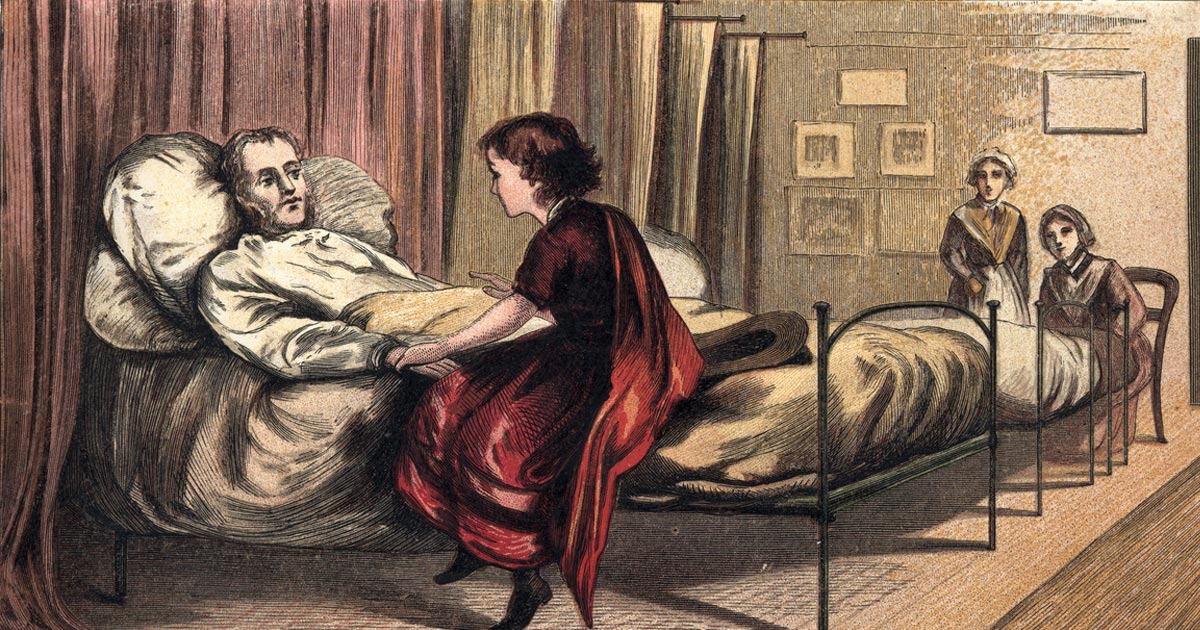
Then there were amputations. Civil War surgeons performed tens of thousands of them, often because Minié balls shattered bones so badly that saving a limb was impossible. Popular imagination loves the myth of soldiers biting bullets during surgery, but anesthesia was widely used in Civil War operations. That does not make the scene gentle. Hospitals still dealt with blood, shock, infection, overwhelmed staff, and piles of severed limbs that became grim symbols of the conflict.
The horrifying fact left out is that war does not end when the cannon stops firing. Survivors carried missing limbs, chronic pain, trauma, disease, grief, and poverty into the decades that followed. The clean timeline says “1861 to 1865.” The human timeline lasted much longer.
5. Industrial Progress Was Built On Workers Locked In Death Traps
Industrial history is often framed as a grand march of innovation: factories, machines, mass production, urban growth, consumer goods, and the modern economy. Cue the inspirational music and the spinning gears. But many workers paid for that progress with their health, childhoods, and lives.
The Triangle Shirtwaist Factory fire of March 25, 1911, remains one of the most infamous examples. A fire broke out in a New York garment factory, killing 146 workers, many of them young immigrant women. The disaster was horrifying not only because of the death toll, but because so many deaths were preventable. Workers faced locked or blocked exits, inadequate fire escapes, overcrowded conditions, and safety failures that turned a workplace into a trap.
Firefighters arrived, but their ladders could not reach the upper floors. Safety nets failed. Some workers jumped rather than burn. Others were trapped behind doors that should have opened freely. The tragedy shocked the public and helped drive workplace safety reforms, but the reforms came after the bodies.
The “left out” part is how ordinary these dangers were. Triangle was not a freak accident from a universe where buildings hate people. It was part of a broader industrial culture that often treated workers as replaceable. Long hours, low pay, child labor, dangerous machinery, and weak safety rules were common features of the so-called age of progress.
Progress is wonderful when it means electricity, medicine, and not having to churn butter by hand like a historical fitness challenge. But progress without protection can become a machine that eats people and calls the noise productivity.
6. Human Experimentation Did Not Always Hide In The Shadows Sometimes Institutions Protected It
One of the most horrifying facts in modern history is how often human experimentation was justified by war, science, racism, or state power. During World War II, Nazi doctors conducted painful and often deadly experiments on concentration camp prisoners without consent. Victims were treated not as human beings, but as material for research. The U.S. Holocaust Memorial Museum notes that modern scientists overwhelmingly reject the use of results from those experiments because of their inhumanity, lack of consent, and poor scientific standards.
Japan’s wartime biological and chemical warfare programs, including Unit 731, also involved horrific crimes. Prisoners were subjected to lethal experiments, disease exposure, and other abuses. Some postwar records related to Japanese war crimes were declassified decades later, showing how difficult it can be for societies to confront atrocities when political interests, secrecy, and military intelligence get involved.
This fact is especially chilling because it breaks the comforting myth that evil always looks like a monster in a cape. Sometimes it wears a lab coat. Sometimes it uses paperwork. Sometimes it says the suffering is necessary for national security, medical progress, or military advantage.
The real horror is not only that experiments happened. It is that educated professionals, government systems, and military structures could participate in or protect them. History becomes much more frightening when we realize that cruelty does not require ignorance. It can be organized by people with degrees, titles, offices, and very neat handwriting.
Why Do Horrifying Facts Get Left Out Of History?
There are many reasons uncomfortable history gets softened. Sometimes there is limited classroom time. Sometimes curriculum writers choose broad overviews instead of painful details. Sometimes national pride gets nervous and starts sweating through its starched shirt. And sometimes the people with the power to write history were not the people who suffered most from it.
Another reason is emotional convenience. It is easier to admire Rome if we focus on aqueducts and architecture. It is easier to discuss industrialization if we emphasize inventions instead of locked factory doors. It is easier to celebrate westward expansion if we avoid the children taken to boarding schools. But easy history is not always honest history.
Leaving out horror also changes how people understand the present. Workplace safety laws, civil rights protections, museum repatriation debates, medical ethics, informed consent, and human rights language did not appear from nowhere. Many protections exist because people suffered under systems that had too much power and too little accountability.
What These Stories Teach Us
The point of learning horrifying facts is not to feel miserable forever. Nobody needs to sit in a dark room whispering, “Everything is terrible,” while dramatic thunder plays in the background. The point is to understand how ordinary systems can become cruel when people are dehumanized.
These stories also teach that victims were not passive shadows. Enslaved people resisted in countless ways. Indigenous families preserved language and culture despite official pressure. Workers organized for safer conditions. Survivors testified. Historians, archivists, descendants, and communities continue to recover buried truths. The past contains horror, but it also contains resistance.
That is why the most useful history is not the cleanest version. It is the version that can look directly at violence, exploitation, and hypocrisy without pretending they were minor inconveniences. Honest history does not ruin the past. It rescues the people who were pushed out of the frame.
Related Experiences: Reading The Past Without Looking Away
Engaging with horrifying history is a different experience from memorizing dates for a test. A date can feel distant and tidy. A personal account, burial record, medical file, factory floor plan, or survivor testimony does something else entirely: it removes the protective glass between “then” and “now.” Suddenly, history is not a chapter. It is a room with people in it.
Many readers have had the same unsettling experience in a museum. You walk in expecting artifacts, maybe a few maps, perhaps a dramatic painting of someone pointing heroically into the middle distance. Then you see a child’s shoe, a pair of shackles, a worker’s time card, a school uniform, or a surgical instrument. The object is small. The silence around it is enormous. It becomes harder to hide behind big words like “empire,” “industry,” or “policy.” Those words begin to feel like curtains covering individual lives.
Reading about the Middle Passage, for example, is not only an exercise in numbers. The numbers matter, but they cannot carry the whole weight. Twelve and a half million people forced aboard ships is a scale so large the mind almost refuses to process it. But when you imagine one person in a dark hold, separated from family, hearing unfamiliar languages, facing thirst, sickness, and terror, the history becomes immediate. Multiply that one person by millions, and the horror becomes almost impossible to simplify.
The same happens with boarding school history. A policy document may describe assimilation in dry language, but the human experience was a child being punished for speaking the language of home. That detail is devastating because language is not just vocabulary. It is memory, humor, prayer, family, place, and identity. Taking it from children was not education in the ordinary sense. It was an attack on belonging.
Industrial disasters create another kind of recognition because workplaces still exist, safety rules still matter, and corners are still cut when profit gets impatient. The Triangle Shirtwaist fire feels more than historical because the basic question remains painfully modern: Who is protected, who is ignored, and who pays when managers decide safety is inconvenient?
Studying these topics can feel heavy, but it can also sharpen moral attention. Once you know how easily societies have excused cruelty, you become better at noticing dehumanizing language, dangerous policies, and heroic myths that are a little too polished. You learn to ask better questions: Who benefits from this story? Who is missing? What did progress cost? Whose suffering was treated as normal?
That experience is not comfortable, but comfort is not the highest goal of history. Understanding is. If the past sometimes feels horrifying, that may be a sign we are finally hearing the parts that were hidden, minimized, or deliberately left out.
Conclusion
The six horrifying facts in this article are not random dark trivia. They are reminders that history is shaped by power: who had it, who suffered under it, and who later got to explain what happened. Ancient arenas, slave ships, boarding schools, battle hospitals, unsafe factories, and wartime laboratories all reveal the same uncomfortable truth. When people are treated as objects, entertainment, labor, obstacles, or data, horror can become normal.
But remembering these stories also gives us tools. It helps us value human rights, workplace safety, medical consent, cultural survival, and honest education. The past cannot be changed, but the way we tell it can. And when we tell it more truthfully, we give dignity back to people who were too often reduced to footnotes.














