
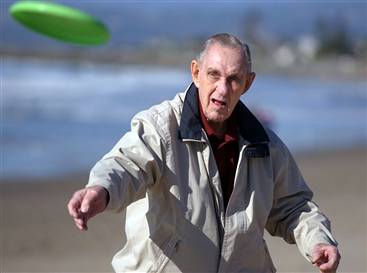
Some joys arrive with fireworks. Others show up in gym shorts, a sun-faded T-shirt, and a plastic disc that costs less than lunch. The flying saucer Frisbee toss belongs in the second category. It is simple, silly, and suspiciously effective at making ordinary afternoons feel like highlight reels. One smooth throw can turn a patch of grass into a stage, a driveway into a stadium, and two mildly bored humans into fierce competitors with absolutely no business taking things this seriously.
That is the sneaky genius behind #795 The Flying Saucer Frisbee Toss from 1000 Awesome Things. It celebrates one of those tiny, repeatable pleasures that somehow never gets old: the clean lift, the steady glide, the easy catch, and the split-second belief that maybe, just maybe, you are more coordinated than your middle-school PE record suggests. A great Frisbee toss is not just outdoor play. It is a small performance. It is a low-budget magic trick. It is a portable mood upgrade.
And unlike hobbies that require reservations, subscriptions, matching outfits, or a suspicious amount of gear, a Frisbee toss asks almost nothing from you. Find a little space. Find another person. Throw the disc. Watch your day improve. That is a pretty terrific return on investment.
Why the Flying Saucer Frisbee Toss Feels So Ridiculously Good
The best simple pleasures sit at the intersection of movement, timing, and surprise. Throwing a Frisbee hits all three. Your body has to do just enough work to feel involved, but not so much that the activity stops being fun. Your brain gets instant feedback from the disc’s flight. And every throw contains a tiny mystery: will this one wobble, dive, float, curve, or fly like it has been blessed by the gods of backyard games?
That unpredictability is part of the charm. A Frisbee toss is never entirely mechanical. Even when you know the basic technique, the wind has opinions. Your wrist has opinions. Your friend who suddenly decides to attempt a behind-the-back catch definitely has opinions. Yet when all the variables line up and the disc sails flat and true, the result is deeply satisfying. You feel skillful without having to be a professional. You feel playful without having to explain yourself. You feel eight years old and oddly accomplished at the same time.
There is also something wonderfully democratic about flying disc games. You do not need to be an elite athlete to enjoy them. You can play in a park, on a beach, in a cul-de-sac, at a family reunion, or during that strangely long lull before the burgers are done. A Frisbee toss can be competitive, relaxing, social, meditative, or gloriously pointless. In an age where too many activities arrive with pressure attached, that kind of freedom feels rare.
The Five Tosses That Define the Whole Experience
One reason the original 1000 Awesome Things entry works so well is that it captures the personalities hidden inside a single flying disc session. Not all throws are created equal, and every Frisbee player quickly learns the unofficial cast of characters.
1. The Sideways Roller
This is the throw that leaves your hand and immediately betrays you. Instead of gliding nobly through the air, it tips over, smacks the ground, and rolls away like it suddenly remembered another appointment. The Sideways Roller is humbling, but it is also essential. Without a few embarrassing tosses, nobody would appreciate the good ones. It keeps the ego in check and the laughter in circulation.
2. The Boomerang
The Boomerang is what happens when enthusiasm outruns mechanics. You fling the disc with conviction, only to watch it curl off in a dramatic side arc that suggests it is trying to leave the zip code. This is the throw that makes onlookers point in unhelpful directions while you jog after your mistakes. Still, even the miss has style. A wildly curving Frisbee is less a failure than a special effect.
3. The Fancy Fudge
This is the novelty toss: between the legs, behind the back, no-look, one-handed, or otherwise inspired by an irrational amount of confidence. It rarely works exactly as intended, which is precisely why people keep attempting it. The Fancy Fudge proves that outdoor games are better when a little chaos is allowed. Every group has one person who tries it. Every group secretly hopes it lands once.
4. The Laser
The Laser arrives flat, fast, and slightly alarming. It is accurate, impressive, and just aggressive enough to make the receiver wonder whether this is still a friendly game. The Laser says, “I have found my form, and I would like everyone here to notice.” It is thrilling to throw and mildly terrifying to catch, which is part of the fun.
5. The Flying Saucer
Then there is the star of the show: the Flying Saucer toss. This is the ideal throw, the one that rises with grace, hovers with confidence, and glides so beautifully that conversation pauses for a second. It looks clean. It feels clean. The catch is easy because the throw already did most of the work. It is the kind of motion that makes you want to say, “Okay, that one counted,” even if nobody was keeping score. The perfect Frisbee toss feels less like an object moving through air and more like a thought made visible.
A Brief History of Why We Even Throw This Thing
The Frisbee’s story is part college lore, part American toy history, and part brilliant accident. The roots of the pastime are commonly traced back to the tossing of pie tins associated with the Frisbie Baking Company near Yale, long before the plastic flying disc became a cultural icon. By the mid-20th century, disc makers helped turn that casual impulse into a mass-market object, and the Frisbee evolved from novelty toy to familiar symbol of easygoing outdoor fun.
Its staying power makes perfect sense. The design is simple enough for casual play, but refined enough to reward skill. Over time, the Frisbee inspired organized sports like Ultimate and disc golf, both of which built more structure around the same basic joy: throw, chase, catch, repeat. That is part of what makes the flying saucer toss so enduring. It works equally well as a backyard pastime, a beach ritual, a warm-up drill, or the gateway drug to becoming the kind of person who casually says things like “forehand release angle.”
The funny thing is that even after all the history, branding, patents, and organized competition, the essential appeal remains unchanged. People like watching something spin through the air in a beautiful line. They liked it then. They like it now. They will probably keep liking it as long as parks, afternoons, and mildly competitive relatives continue to exist.
Why a Simple Frisbee Toss Is Good for More Than Your Inner Child
There is a reason outdoor play keeps showing up in conversations about wellness, movement, and stress relief. Activities like tossing a Frisbee combine light physical exercise, coordination, fresh air, sunlight, and social interaction without announcing themselves as “self-improvement.” That is a powerful package. You are moving, but you are not trapped in a grim relationship with a machine. You are outside, but not necessarily on a punishing hike. You are engaging your brain, but not in the spreadsheet sort of way.
Throwing a Frisbee also sneaks in useful physical skills. Timing matters. Balance matters. Hand-eye coordination matters. So does adjusting to wind, distance, and the receiver’s position. Even a short session asks your body to do small, healthy things repeatedly: step, twist, reach, release, react. The motions feel playful because they are playful, which makes them easier to repeat. That is often the secret to movement habits that actually stick.
Then there is the emotional side. A casual flying disc session invites conversation without forcing it. Some of the best talks happen shoulder to shoulder, with a little space between words and a little motion between thoughts. The Frisbee gives people something to do while they figure out what they want to say. It softens awkwardness. It fills silence. It lowers the stakes. Not every bonding experience needs a grand plan. Sometimes it just needs a decent throw.
How to Make Your Flying Saucer Toss Better
If your Frisbee toss currently resembles an injured dinner plate, do not despair. The basics are refreshingly learnable. Start with the backhand, the classic throw most people picture first. Grip the disc comfortably, keep it level, and aim for a smooth release instead of brute force. A Frisbee likes a calm wrist snap more than a dramatic full-body tantrum.
The second big upgrade is understanding that flat is your friend. New players often accidentally tilt the disc too much, which causes the throw to veer, dip, or wobble off into a tiny plastic crisis. A flatter release gives the Frisbee a better chance to glide. That is why the perfect Flying Saucer toss looks effortless: it is controlled, not frantic.
After that, practice distance in layers. Do not start by trying to throw the disc into next Tuesday. Begin close enough to succeed, then back up gradually. Catching matters, too. Soft hands help. So does resisting the urge to stab at the disc like it insulted your family. Let it come to you. Meet it cleanly. Reset. Throw again.
Once the basics feel natural, the game becomes richer. Now you can experiment with the forehand, with different speeds, with arc, with leading throws that let the receiver move into the catch. Suddenly the Frisbee toss is not just an activity. It is a conversation in spin.
Where the Frisbee Toss Still Wins in Modern Life
For all our upgrades, updates, and algorithmically curated entertainment options, the Frisbee toss remains stubbornly relevant because it solves a modern problem: how do you have fun without turning it into work? A flying disc asks for presence. You cannot doomscroll and throw well at the same time. You cannot obsess over productivity while tracking a smooth arc against a blue sky. The game gently drags you into the moment.
It also scales beautifully. It works on dates, on family trips, at barbecues, during campus downtime, after long office days, and on vacations when no one can agree on a “real” activity. It is cheap, portable, and gloriously low-ceremony. That is not a small thing. The best recreation often survives because it is easy to begin.
And maybe that is the deeper reason #795 The Flying Saucer Frisbee Toss resonates. It celebrates more than a toy. It celebrates a rhythm of life that many people miss: brief, shared, unoptimized delight. No scoreboard required. No app needed. Just a spinning disc, a patch of open space, and the tiny miracle of a throw that flies exactly the way you hoped.
500 More Words of Real-Life Frisbee Experience
Picture a summer evening when the heat has finally stopped behaving like a personal grudge. Somebody finds a Frisbee in the back of a car, half buried under reusable grocery bags and one mysterious sneaker. Nobody announces a grand plan. No one stretches. No one says, “Let us now begin a meaningful athletic experience.” The disc just appears, and within thirty seconds two people are tossing it in that casual way that always turns serious faster than expected.
At first, the throws are lazy. A few soft floaters. A few catches made one-handed because it feels cooler than it is. Then somebody uncorks one perfect Flying Saucer toss, the kind that rises chest-high, travels flat, and lands in waiting hands with a satisfying slap. That is when the mood changes. Suddenly both players stand a little straighter. The distance widens. The effort sharpens. A tiny backyard pastime becomes an arena for honor, glory, and extremely unnecessary redemption.
There is always a rhythm to these sessions. Throw. Catch. Walk a little. Laugh at the bad one. Apologize for the even worse one. Attempt a trick throw that should never have left the brainstorming stage. Jog after the disc when it drifts under a bench or into a hedge. Resume as if nothing embarrassing happened. The whole thing feels wonderfully human. It is not polished. It is not optimized. It is just fun doing what fun does best: making time disappear without asking permission.
Some of the best Frisbee memories happen in places that were never meant to be memorable. An ordinary school field after class. A beach where the sand gets into everything, including your snacks and your soul. A suburban street during that golden hour stretch when the neighborhood gets quiet and the sky starts showing off. A park where strangers pretend not to watch until someone makes an absurd diving catch and suddenly half the lawn is emotionally invested.
The experience also changes with who you are throwing with. With siblings, the toss turns competitive in under a minute. With close friends, it becomes an excuse to talk in fragments between throws. With parents, it can feel charmingly timeless, like the same afternoon replaying itself across decades. With kids, it becomes comedy. They chase the disc at angles that ignore geometry, celebrate catches that bounced off three body parts, and remind adults that the point was never perfection in the first place.
Even throwing alone can be strangely satisfying. A solo toss into the open air, a quick catch, a little adjustment, another release. The repetition becomes almost meditative. You notice the wind more. You notice your balance. You notice how a cleaner wrist snap changes the entire flight. A Frisbee is good at teaching small lessons without sounding like a motivational speaker.
Then there are the catches that nobody forgets. The running grab at the edge of the grass. The fingertip save that looked accidental but will be described later as “instinct.” The snag made while laughing, which somehow makes it more impressive. These moments are tiny, yes, but they linger because they feel earned. The disc was in motion. You were in motion. For a second, both of you agreed on the same point in space.
That is why the Flying Saucer Frisbee toss keeps surviving every era. It creates memories cheaply, quickly, and with very little setup. It turns spare time into story material. Years later, nobody says, “Remember that highly efficient afternoon?” They say, “Remember that perfect throw?” And weirdly, they do.
Conclusion
The flying saucer Frisbee toss deserves its place on any list of awesome things because it captures the best kind of pleasure: low-cost, high-reward, and instantly shareable. It blends movement, laughter, nostalgia, and just enough skill to keep you chasing the next perfect release. Whether you are throwing in a park, on a beach, at a picnic, or in the narrow strip of backyard you optimistically call “the field,” the magic remains the same. A Frisbee leaves your hand, finds its line, and for one lovely second the whole world feels lighter. Not bad for a spinning circle of plastic.










