
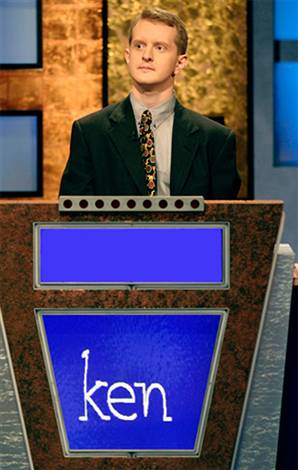
That glorious living-room moment when the board lights up, the category speaks your language, and suddenly you are not just watching triviayou are mentally accepting a tiny imaginary trophy.
The Tiny Thrill of a Category Made Just for You
There are ordinary moments in life, and then there is the moment a Jeopardy! category appears that seems to have been personally delivered to your brain by a benevolent trivia angel. Maybe it is “Classic Rock Lyrics,” “Greek Mythology,” “Famous Sandwiches,” “Nineteenth-Century Novels,” “Baseball Nicknames,” or “Words That Sound Like Other Words If You’re Tired.” Whatever the topic, your posture changes. Your snack is paused midair. Your family senses a disturbance in the couch force.
This is the magic behind when the categories on Jeopardy! are right in your wheelhouse. It is a small but powerful joy: the feeling that all your weird reading, half-remembered documentaries, childhood obsessions, and suspiciously specific knowledge about state capitals finally have a purpose. You may not be standing behind the podium. You may not have a buzzer. You may be wearing pajama pants with penguins on them. Still, for the next few minutes, you are ready to dominate from home.
The phrase “right in your wheelhouse” means something fits your knowledge, skill, or comfort zone perfectly. In Jeopardy! terms, it means the board has temporarily become your personal playground. The contestants are professionals, but you? You once spent three weeks reading about shipwrecks for no reason. Tonight, “Famous Maritime Disasters” has arrived. Finally, the universe has reimbursed you.
Why Jeopardy! Categories Feel So Satisfying
Jeopardy! has endured because it turns knowledge into drama. The show reverses the traditional quiz format by giving contestants clues that function like answers, requiring them to respond in the form of a question. Its game board is built around categories, each containing clues that grow in difficulty and value. That simple structure creates suspense, strategy, and one of television’s most addictive pleasures: guessing before someone else can.
Categories are not just labels. They are invitations. “U.S. Presidents” tells your brain to open one drawer. “Potent Potables” opens another. “Before & After” warns everyone to buckle up because language is about to do gymnastics in the hallway. The category gives the viewer context, and context makes recall easier. Instead of scanning the entire messy attic of memory, your brain gets to search one shelf.
That is why a wheelhouse category feels so electric. The category narrows the world to something you already love, already know, or already care about. Interest and curiosity are powerful helpers in memory. Studies on trivia and learning have found that people tend to remember information better when they are genuinely curious about it or personally interested in the subject. In less scientific terms: your brain remembers what it is nosy about.
So when Jeopardy! flashes a category like “Movie Musicals” and you have been spiritually preparing since age nine, your brain is not starting from zero. It is pulling costumes from storage, warming up the orchestra, and whispering, “We were born for this.”
The 1000 Awesome Things Connection
The title nods to 1000 Awesome Things, the beloved project by Neil Pasricha that celebrated small, everyday joysthose little sparks that make life feel warmer, sillier, and more human. The premise was simple but surprisingly profound: happiness often hides in plain sight. It is not always a luxury vacation or a life-changing promotion. Sometimes it is the smell of a bakery, the perfect parking spot, or getting the exact Jeopardy! category that makes you feel like a genius in front of a half-eaten bowl of popcorn.
That is what makes this moment awesome. It is not about actually being the smartest person in the room. It is about the sudden alignment between your private knowledge and the public game. For once, your niche obsession is not niche. It is the main event. Your random expertise has put on a blazer and walked onto national television.
There is also a wonderfully democratic quality to the experience. Everyone has a wheelhouse. One person lights up at “Opera.” Another becomes dangerous during “Fast Food Mascots.” Someone else is unbeatable in “World Capitals,” while their cousin knows every animated Disney sidekick by voice actor, release year, and emotional baggage. Jeopardy! reminds us that knowledge is not one giant mountain. It is a neighborhood full of strange little houses, and everybody owns a few keys.
The Living-Room Champion Effect
Watching Jeopardy! at home creates a special kind of confidence. There is no studio clock in your face, no opponents buzzing in with the speed of caffeinated hummingbirds, and no host calmly witnessing your panic. You can answer from the couch with the heroic certainty of someone who risks absolutely nothing.
When the category is right, this confidence multiplies. You start answering before the contestant. You correct pronunciation. You say things like, “I knew that,” even when you said it two seconds after the correct response appeared. You might even develop a temporary rivalry with one contestant, usually because they dared to select a different category while your category still had clues left. “Go back to Mythology, Brenda,” you mutter, as if Brenda can hear you through the television and deserves your tactical guidance.
This is part of the fun. Jeopardy! lets viewers participate mentally. The show is not passive entertainment; it is a nightly brain scrimmage. You test your recall, speed, confidence, and humility. Sometimes you sweep a category and feel like a scholar. Sometimes you confidently shout “What is Prague?” only to learn the correct response was “What is a carburetor?” Balance is important.
Still, the wheelhouse moment feels earned. It validates all the hours you spent reading, watching, listening, exploring, and accidentally retaining facts. It says, “That obscure thing you know? It counts.”
Why We Love Trivia, Even When It Is Useless
Trivia is often described as “useless knowledge,” but that phrase is unfair. Useless knowledge has uses. It starts conversations, builds confidence, strengthens memory, sparks curiosity, and occasionally helps you win a bar quiz where the grand prize is a gift card and the eternal respect of four people named Mike.
Trivia also turns learning into play. A dry fact becomes exciting when placed inside a clue. “This planet has the shortest day in the solar system” sounds more fun when there is a timer, a category, and imaginary money involved. The brain enjoys patterns, associations, and retrieval. Jeopardy! packages all three into a polished, fast-moving ritual.
There is another reason trivia feels good: it lets us rediscover what we know. In daily life, knowledge often sits quietly in the background. You do not normally walk into a grocery store and announce the year the Magna Carta was signed. In fact, please do not. Security has enough to handle. But a trivia clue gives old knowledge a stage. It asks your memory to step forward and take a bow.
And when the topic is in your wheelhouse, recall feels almost physical. The answer rises before you consciously search for it. The clue begins, and your brain says, “Oh, this one lives here.” That quick recognition is deeply satisfying because it feels like mental fluency. For a moment, thinking is smooth.
Examples of Perfect Wheelhouse Categories
1. The Childhood Obsession Category
This is the category that rewards the thing you loved before anyone told you to be practical. Dinosaurs, Greek gods, planets, Pokémon, Broadway shows, Civil War generals, marine animals, old mapswhatever it was, you absorbed it like a sponge with library access. Years later, Jeopardy! brings it back, and suddenly your eight-year-old self is running the board.
2. The Career Knowledge Category
If you work in medicine, law, education, finance, engineering, food, or technology, certain categories can feel like a surprise workplace bonus without the meeting invite. A nurse may cruise through anatomy clues. A teacher may own grammar. A chef may destroy “Herbs & Spices.” An accountant may become emotionally available during “Tax Terms,” which is rare and should be respected.
3. The Hobby Category
Hobbies create deep pockets of knowledge. Gardeners know plant zones. Gamers know lore. Runners know race distances. Birders know that every small brown bird is not “probably a sparrow,” despite what your uncle insists. When a hobby category appears, it feels like the show briefly understands your weekend personality.
4. The Pop Culture Sweet Spot
Pop culture categories are thrilling because they reward the things people sometimes pretend are less serious than “real” knowledge. But recognizing a film quote, sitcom character, album title, or celebrity cameo still requires memory and context. Besides, knowing every episode of a classic TV show is not a flaw. It is an archive with snacks.
5. The Wordplay Category
Some viewers live for vocabulary, puns, rhyme, crossword-style clues, and categories with quotation marks doing suspicious work. These clues reward flexible thinking. They also create the delightful experience of groaning and admiring the clue at the same time, which is basically the official sport of word nerds.
The Strategy Behind Category Love
On the actual Jeopardy! stage, categories are not just fun; they are strategic terrain. Contestants choose clues based on confidence, score position, Daily Double hunting, and the need to control the board. A strong category can build momentum. A weak one can become quicksand. For viewers, however, the stakes are emotional rather than financial. We want contestants to pick our favorite category because it lets us play our best game from home.
That is why it feels almost rude when a contestant abandons a category you are sweeping. You just got three correct responses in a row. You are spiritually holding the buzzer. Then the contestant jumps to “Opera” for $1600, and your living-room empire collapses. The nerve.
Still, this movement across the board is part of what makes Jeopardy! lively. It mixes expertise with surprise. Even when the board is not in your wheelhouse, a well-written clue can teach you something memorable. The best categories balance accessibility and challenge. They reward knowledge without making viewers feel locked outside the clubhouse.
What This Awesome Thing Says About Us
The joy of a perfect Jeopardy! category reveals something charming about human beings: we want our knowledge to matter. We collect facts not only for exams, jobs, or practical survival, but because curiosity is part of being alive. We like knowing things. We like connecting things. We like the little fireworks that go off when a clue matches a memory.
It also reminds us that expertise can be wonderfully specific. You do not have to know everything to feel smart. Nobody knows everything. Even champions miss clues. The delight comes from recognizing your lane and enjoying the ride. Today it might be “French Literature.” Tomorrow it might be “Snack Cakes of America.” Both are valid. One may be more delicious.
In the spirit of 1000 Awesome Things, this moment matters because it is small, free, and surprisingly uplifting. It takes an ordinary evening and adds a little sparkle. It turns the couch into a podium, the remote into a buzzer, and your random knowledge into a victory parade with very limited parking.
Experience Section: The Night the Board Finally Chose Me
Anyone who watches Jeopardy! long enough eventually has a night when the board seems to lean forward and say, “This one’s for you.” For me, the feeling begins before the first clue is read. The categories appear, and one of them glows brighter than the othersnot literally, of course, unless the TV settings are wrong, but emotionally. It might be a category about old movies, word origins, geography, or foods with names that sound like minor European nobles. Suddenly, I am no longer casually watching. I am alert. I am ready. I am about to become unbearable.
The first clue comes up, and I know it instantly. Not “I can reason my way there” know it. Not “wait, give me a second” know it. I mean the answer arrives fully dressed, holding luggage, already checking into the hotel. I say it out loud. The contestant says it too. Correct. A tiny celebration begins in my chest. The next clue appears. I know that one as well. Now I sit up straighter, because clearly history is happening. By the third clue, I am performing for the room, even if the room contains only a lamp and a dog who does not respect trivia.
The best part is how quickly confidence changes the entire viewing experience. A category in your wheelhouse makes you feel connected to the game. You notice clue wording more carefully. You anticipate traps. You start saying things like, “They’re going for the author, not the character,” as if you are consulting from mission control. If someone else is watching with you, this is the point where they either become impressed or gently ask you to stop narrating your own greatness.
Of course, the universe enjoys humility. Just when you think you are unstoppable, the $2000 clue appears and knocks you flat. Maybe it asks for a detail you never learned, or worse, one you did learn and lost somewhere between your car keys and the name of that actor from that thing. You guess badly. The contestant gets it right. You nod respectfully, pretending you were “between two answers.” This is part of the ritual. Jeopardy! gives, Jeopardy! corrects.
Still, the afterglow remains. Sweeping even part of a category feels like finding money in an old coat pocket, except the money is self-esteem and the coat pocket is your brain. You walk away a little happier, a little sharper, and maybe a little more willing to defend your hobby of reading random articles at midnight. Because someday, perhaps when you least expect it, that knowledge will return as a clue. And when it does, you will be ready on the couch, snack in hand, answering proudly in the form of a question.
Conclusion: What Is Awesome?
When the categories on Jeopardy! are right in your wheelhouse, a small miracle occurs. Your everyday knowledge becomes exciting. Your favorite subjects get a spotlight. Your brain enjoys the rare pleasure of being both fast and correct. It is not about winning money or proving superiority. It is about the sweet little click of recognition, the joy of curiosity rewarded, and the goofy confidence of playing along from home.
That is why this moment belongs among life’s awesome things. It is simple, harmless, funny, and deeply human. A category appears, your memory wakes up, and for a few shining clues, the world feels organized around exactly what you happen to know. Final Jeopardy! may still humble you, but for now, enjoy the run.
Note: This article is original, written in standard American English, and synthesized from real public information about Jeopardy!, trivia culture, memory, curiosity, nostalgia, and the 1000 Awesome Things concept. It contains no copied source passages, no source-link clutter, and no AI citation placeholders.













