
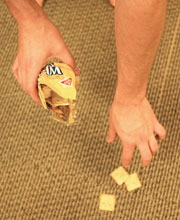
Few laws of everyday life are as dramatic, flexible, and suspiciously convenient as the five second rule. A cookie slips from your hand, bounces once on the kitchen floor, and suddenly everyone in the room becomes a food safety lawyer. Was it three seconds? Was it five? Did it land frosting-side up? Is the dog already involved? These are the urgent courtroom questions of snack civilization.
In the world of 1000 Awesome Things, the five second rule is not really about microbiology. It is about optimism. It is the tiny human refusal to let gravity ruin lunch. It is the heroic rescue mission performed for one fallen French fry. It is the belief that some moments are too delicious to surrender without a fight.
Of course, science walks into the room wearing sensible shoes and says, “Actually, bacteria can transfer almost instantly.” And science is right. But the cultural charm of the five second rule remains powerful because it captures something funny, familiar, and deeply human: we all want a second chance, especially when that second chance is covered in peanut butter.
What Is the Five Second Rule?
The five second rule is the popular idea that food dropped on the floor is still safe to eat if you pick it up within five seconds. It has many cousins: the three second rule, the ten second rule, the “my floor is clean enough” rule, and the always-popular “nobody saw that, so it never happened” rule.
In everyday conversation, the rule usually appears after a minor food tragedy. A grape rolls under the table. A chip dives off the plate. A sandwich corner kisses the counter. Someone shouts “five second rule!” and the fallen snack receives a full presidential pardon.
But the phrase has become bigger than food. It now stands for quick decisions, comic denial, childhood habits, and the strange way we negotiate with ourselves when reality becomes inconvenient. That is why #874 from 1000 Awesome Things works so well: it takes a silly little rule and turns it into a celebration of tiny, ridiculous joy.
Why the Five Second Rule Feels So Awesome
It Saves the Snack
Let’s be honest: nobody invokes the five second rule for steamed broccoli. The rule appears when something valuable falls. A cookie. A slice of pizza. A golden fry. A piece of chocolate that had plans, dreams, and perhaps a caramel center.
The five second rule gives us permission to rescue food before guilt, germs, or common sense can assemble a committee. It turns an accident into an action scene. You drop it, you gasp, you dive, you recover. Suddenly your kitchen becomes a low-budget superhero movie starring you and a slightly dusty pretzel.
It Saves Time and Money
There is also an economic argument, even if it is delivered by someone holding a floor tortilla. Food waste is frustrating. Replacing a whole sandwich because one corner touched the counter feels excessive, especially when the counter looked clean and the sandwich had emotional value.
That does not mean every dropped bite deserves a comeback tour. But emotionally, the five second rule feels like a tiny rebellion against waste. It says, “We are practical people. We have napkins. We have standards, but they are adjustable.”
It Makes Ordinary Life Funnier
The best part of the five second rule is not the food. It is the performance. The speed grab. The fake confidence. The way someone says “still good” while clearly trying not to think about shoe traffic. It adds slapstick comedy to the day without requiring props, costumes, or a subscription service.
That is the secret of many awesome things: they are not grand. They are quick sparks of recognition. Everyone has been there. Everyone has made the calculation. Everyone has looked at a dropped cookie and thought, “How much do I believe in destiny?”
Is the Five Second Rule Scientifically True?
Here is the responsible answer: no, the five second rule is not a reliable food safety rule. Research has found that bacteria can transfer to food in less than one second, depending on the surface, the food, moisture, and the level of contamination. Time matters, but it is not magic. Five seconds does not create an invisible force field around your mozzarella stick.
Moist foods tend to pick up more bacteria than dry foods. Watermelon, cooked pasta, and sticky candy are more likely to collect unwanted passengers than a dry cracker. Surfaces matter too. Tile, stainless steel, and wood can transfer microbes differently than carpet. Carpet may sometimes transfer less bacteria, but before anyone starts serving dinner from the rug, let’s agree that “less gross” is not the same as “fine dining.”
Food safety guidance in the United States emphasizes clean hands, clean surfaces, separation between raw and ready-to-eat foods, proper cooking temperatures, and safe refrigeration. That advice may not be as funny as yelling “five second rule,” but it is much better at preventing foodborne illness.
The Smart Way to Think About Dropped Food
Ask Where It Landed
A cookie dropped on a freshly washed kitchen counter is not the same as a gummy bear dropped on a gas station floor. Context matters. Floors near entryways, bathrooms, trash cans, pet bowls, and public spaces are higher-risk zones. If the food lands somewhere that shoes, paws, spills, or mystery moisture have visited, retirement is the honorable choice.
Ask What Kind of Food It Is
Dry foods are easier to inspect and sometimes easier to brush off. Wet, sticky, or porous foods are more likely to collect bacteria and debris. A dry pretzel has a better chance of surviving the incident than a slice of watermelon, which basically behaves like a tiny edible sponge with ambition.
Ask Who Will Eat It
Food safety matters more for young children, older adults, pregnant people, and anyone with a weakened immune system. What seems like a harmless kitchen joke to one person may be a real health risk to another. When in doubt, toss it out. The snack may be gone, but your digestive system will send a thank-you card.
The Five Second Rule as a Happiness Lesson
The five second rule belongs in 1000 Awesome Things because it celebrates the tiny absurd negotiations that make life feel human. It is not a medical recommendation. It is a cultural wink. It reminds us that everyday happiness often hides in small moments: a saved cookie, a shared laugh, a dramatic rescue, a silly rule everyone understands without needing a manual.
Neil Pasricha’s broader project has always been about noticing these little sparks. The smell of bakery air. The perfect parking spot. The first scoop from a jar of peanut butter. The five second rule fits right in because it turns a tiny disaster into a tiny victory.
And that matters. Modern life is full of big problems, serious headlines, and screens asking if we accept cookies that are definitely not the kind we wanted. Sometimes the brain needs a small awesome thing to grab onto. A dropped snack can become a joke. A kitchen mistake can become a story. A rule that is scientifically questionable can still be emotionally accurate: we love second chances.
Why We Keep Believing It Anyway
Because We Like Control
Dropping food is a loss of control. The five second rule gives control back instantly. You cannot reverse gravity, but you can move fast. You can make a decision. You can declare victory with a confidence that is not entirely supported by peer-reviewed evidence.
Because We Trust Familiar Spaces
People are more likely to apply the rule at home because home feels safe. Your own kitchen floor seems different from a public sidewalk, even though bacteria do not check lease agreements before transferring. Familiarity lowers our sense of risk. That is useful for comfort, but not always useful for hygiene.
Because Humor Softens Disgust
Disgust is one of the body’s oldest safety systems. It tells us to avoid things that may be contaminated. But humor can soften that reaction. When someone yells “five second rule,” the room laughs, and the dropped food becomes less disgusting for a moment. Comedy does not sanitize the snack, but it does sanitize the mood.
Food Safety Without Killing the Fun
You do not need to become the Snack Police to be sensible. The best approach is simple: enjoy the joke, but know the limits. If food falls on a questionable surface, throw it away. If it can be rinsed safely, like some whole fruits or firm vegetables, rinse it under running water. If it is wet, sticky, cooked, creamy, or headed for someone vulnerable, let it go with dignity.
At home, keep counters clean, wash hands often, use separate cutting boards for raw meat and ready-to-eat foods, cook foods to safe temperatures, and refrigerate leftovers promptly. These habits do more for your health than any countdown ever will.
Still, the phrase “five second rule” deserves its place in the hall of everyday comedy. It is short, universal, and instantly understood. It is a punchline, a rescue mission, and a tiny philosophy lesson wrapped in crumbs.
Specific Examples: Five Second Rule Scenarios
The Kitchen Cookie
A chocolate chip cookie falls onto a clean kitchen floor that was mopped earlier that day. Emotionally, this is the Super Bowl of five second rule situations. Scientifically, there is still some risk, especially if the floor has been walked on. Practically, many people will inspect it, dust it off, and move on with their lives. The safest answer is to discard it. The human answer is complicated by chocolate.
The Restaurant French Fry
A fry drops under the table at a restaurant. Let it go. That fry has crossed into the underworld. It now belongs to the floor, the mop bucket, and possibly a future archaeologist.
The Picnic Strawberry
A strawberry lands in the grass. You may be tempted to rinse it and eat it, but outdoor surfaces can carry soil microbes, animal waste, pesticides, and other contaminants. If you cannot wash it thoroughly, it is better to toss it. The ants will hold a banquet in your honor.
The Toddler Cracker
A toddler drops a cracker, picks it up, and eats it before any adult can inhale. This is less a five second rule situation and more a live demonstration of human speed. Parents can reduce risk by keeping play and eating areas cleaner, but toddlers remain committed to field research.
The Bigger Meaning of “Still Good”
The phrase “still good” is doing a lot of work. It is about food, yes, but it also describes the way people handle small failures. We drop things. We mess up. We miss the first try. Then we decide whether the moment is ruined or recoverable.
That is why the five second rule has lasted. It is not because people have carefully studied bacterial transfer rates before eating a cracker. It is because the idea feels generous. It offers a tiny grace period in a world that rarely gives one.
In that sense, #874 is not just about floor food. It is about resilience with crumbs on it. It is about laughing before you overthink. It is about choosing delight in a situation that could have been mildly annoying. That is the kind of awesome thing worth noticing.
Personal Experiences With the Five Second Rule
Everyone has a five second rule story because everyone has experienced the tragedy of a snack making a break for freedom. My earliest memory of the rule involves a buttered piece of toast landing butter-side down, because toast, like cats, seems to understand physics and spite. Someone in the room yelled “five second rule,” but even as a kid I knew the toast had entered a new chapter. The butter had fused with the floor in a way that felt legally binding.
School cafeterias were the true training grounds. A grape could roll off a tray and become a social experiment. If it landed near your own shoes, maybe someone would call it salvageable. If it rolled near the trash can, everyone suddenly became a public health official. The rule was never really about seconds. It was about geography, witnesses, and how badly you wanted that grape.
At family gatherings, the five second rule often becomes a personality test. There is always one person who says, “It builds immunity,” with the confidence of someone who is not a doctor but has owned a barbecue grill for twenty years. There is another person who gasps like the fallen appetizer has committed a felony. Then there is the practical person who quietly replaces the snack and keeps the party moving.
The funniest five second rule moments happen when the food is clearly not worth saving, but someone tries anyway. A lettuce leaf falls on the floor and gets treated like a national treasure. A noodle slips from the plate and is retrieved with the seriousness of a rescue operation. A piece of popcorn disappears under the couch and someone briefly considers forming a search party. These moments are ridiculous, but they are also warmly human.
I have also noticed that the rule changes depending on the food’s emotional value. A plain cracker? Gone. A homemade brownie from the center of the pan? Suddenly the floor looks “pretty clean.” A single peanut? Farewell, tiny friend. The last slice of pizza? People start making philosophical arguments about destiny, surface area, and whether cheese has natural defensive properties.
In adulthood, the five second rule becomes less about whether you actually eat the food and more about the joke. You may throw the food away, but you still say it. The phrase creates a small burst of shared recognition. It says, “We all know this rule is suspicious, but we also know life is better when small accidents get a punchline.”
That is the lasting charm of #874. The five second rule is not awesome because it is scientifically perfect. It is awesome because it turns a clumsy moment into a tiny comedy scene. It gives people a reason to laugh in the kitchen, at lunch, at a picnic, or beside the snack table. And in a world where plenty of things fall apart for reasons far more serious than gravity, a little laugh over a dropped cookie feels surprisingly valuable.
Conclusion: The Rule Is False, But the Feeling Is Real
The five second rule should not be treated as real food safety advice. Bacteria do not politely wait for a countdown to finish. Dropped food can become contaminated immediately, especially if it is moist, sticky, or lands on a dirty surface. The safest choice is often to throw it away.
But as an entry in 1000 Awesome Things, the five second rule earns its spot. It captures the comedy of everyday life, the pain of losing a good snack, and the universal desire to rescue something before it is too late. It is funny because it is familiar. It is awesome because it makes a tiny mess feel like a tiny adventure.
Note: Enjoy the five second rule as a joke, not as a health guideline. When food safety matters, trust clean hands, clean surfaces, proper cooking, safe storage, and common sense over a countdown shouted in panic.













