
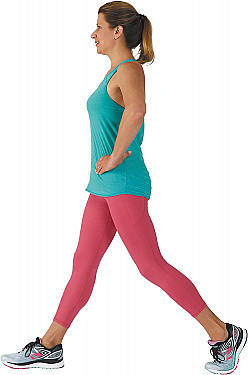
Some health headlines arrive wearing a lab coat and carrying a clipboard. Others show up, point at the floor, and say, “Go ahead, sit down and stand back up.” The Harvard Health story A brief fitness test may predict how long you’ll live falls into the second category, and that is exactly why it caught so much attention.
The test in question is the sit-to-rise test, sometimes called the sit-to-stand-from-the-floor test. It looks simple enough to make you overconfident for about three seconds. Then reality enters the chat. You lower yourself to the floor, try to stand back up with as little support as possible, and suddenly discover that fitness is not just about steps, sweat, or owning a water bottle large enough to hydrate a horse.
What makes this brief fitness test so interesting is that it appears to capture several crucial parts of health at the same time: strength, balance, flexibility, coordination, mobility, and body control. In other words, it is not a crystal ball. It is more like a brutally honest performance review from your own body.
Here is the important takeaway: this test does not tell you the exact date stamped on your future. What it may do is reveal how well your body handles the kinds of movements linked to independence, resilience, cardiovascular health, and healthy aging. That is a big deal, especially in midlife and beyond.
What is the brief fitness test Harvard Health is talking about?
The Harvard Health article centers on the sit-to-rise test. To do it, a person lowers themselves from standing to sitting on the floor and then rises back to standing. The goal is to use as little support as possible. Hands, knees, forearms, furniture, or obvious wobbling lower the score.
The scoring system starts at 10 points. Points are subtracted when support is needed or when the movement is unstable. A perfect 10 means getting down to the floor and back up without using extra supports and without wobbling. That sounds easy until you actually try it in socks on a slippery floor and discover your hips have filed a formal complaint.
What makes the sit-to-rise test different from a treadmill test or step count is that it is not mostly about endurance. It is a snapshot of non-aerobic fitness: lower-body strength, power, balance, flexibility, coordination, and body awareness. Those qualities may not get the same spotlight as cardio, but they matter enormously for daily function.
What the research found about longevity
The Harvard Health piece highlighted a 2025 study that followed 4,282 adults ages 46 to 75 for a median of about 12.3 years. Researchers found that lower sit-to-rise scores were associated with a higher risk of death from natural causes and cardiovascular causes over time.
The strongest pattern was straightforward: people who scored well tended to have lower risk, and people who struggled more tended to have higher risk. Compared with those who scored a perfect 10, participants with midrange scores had meaningfully higher mortality risk during follow-up, while the lowest-scoring group showed the greatest risk, especially for cardiovascular death.
That finding does not mean the test itself is magical. It means the test appears to reflect several important dimensions of physical function that are closely tied to long-term health. Think of it less as fortune-telling and more as a quick systems check.
And that systems check matters. When a person can lower themselves to the floor and rise again with control, it often suggests better leg strength, better trunk stability, better mobility, better balance, and better movement confidence. Those qualities support walking, climbing stairs, recovering from a stumble, playing with grandchildren, getting out of bed, and simply staying independent.
Why this simple test may be so revealing
1. It captures strength and power
Standing up from the floor requires strong legs, hips, and core muscles. This is not just a vanity-muscle situation. Lower-body strength and power support everyday movement, reduce frailty risk, and help people keep doing normal life tasks without needing assistance.
2. It exposes balance issues quickly
Balance is one of those abilities people rarely think about until it starts fading. But when it slips, so can everything else. A shaky rise from the floor may hint at reduced stability, and poor balance is closely tied to falls, injuries, and lost independence in older adults.
3. It reflects flexibility and mobility
Tight hips, stiff ankles, limited thoracic mobility, and shortened hamstrings can all make the movement much harder. You do not need circus-level mobility to score well, but you do need enough range of motion for your joints to cooperate instead of staging a protest.
4. It hints at overall physical function
The sit-to-rise test looks brief, but it asks your body to coordinate multiple systems at once. That makes it a useful functional marker. Many health experts increasingly care about function because it often predicts whether someone can stay active, avoid falls, and preserve quality of life.
5. It may reflect how active you are overall
People who move regularly often have stronger muscles, better balance, and more confidence changing levels, kneeling, bending, and getting up. In contrast, long periods of inactivity can quietly erode those abilities. Sometimes the floor test simply reveals what daily habits have been building for years.
What the test does not mean
This is the part people need to hear twice: a low score is not a death sentence. It is a signal, not a prophecy.
The study shows an association, not a promise about any one person’s lifespan. Plenty of things can influence performance on the test, including arthritis, previous injuries, obesity, chronic pain, fear of falling, neurologic issues, recent surgery, or simply never practicing getting up from the floor. A person can be aerobically fit and still score lower because of mobility limitations. Another person can score well and still have other health risks that the test does not capture.
That is why the most sensible way to use the sit-to-rise test is as a conversation starter. If you struggle with it, your body may be asking for attention in areas like strength, flexibility, balance, or medical evaluation. The result is useful because it can guide action, not because it gives you a dramatic movie-trailer voiceover about your destiny.
How to try the sit-to-rise test safely
Before trying it, choose caution over ego. This is not the time to audition for a mobility reel.
- Use a carpet, exercise mat, or other stable surface.
- Have a sturdy chair, wall, or another person nearby.
- Do not try it alone if you feel unsteady.
- Skip it or ask a clinician first if you have hip, knee, spine, or balance problems, recent surgery, or a condition that makes floor transfers unsafe.
Move slowly. Lower yourself with control. Rise carefully. Notice whether you need hands, knees, or a nearby object. Also notice how you feel: confident, stiff, shaky, strong, hesitant, smooth, or “Wow, I should not have underestimated this.”
That information matters just as much as the number.
How to improve your score and your real-life fitness
If your sit-to-rise test did not go well, that is not failure. That is feedback. And the good news is that many of the components behind the test are trainable.
Build lower-body strength
Exercises like chair squats, step-ups, lunges, sit-to-stands, and resistance-band work can build the leg and hip strength needed to get down and up more efficiently. Two strength-focused sessions per week is a smart starting point for many adults.
Train balance on purpose
Balance does not usually improve by accident. Single-leg stands, heel-to-toe walking, supported tandem stance, and supervised balance drills can help. Tai chi, yoga, and certain Pilates routines can also improve control and stability.
Work on flexibility and mobility
If tight hips or hamstrings are sabotaging the movement, add stretching and mobility practice. Gentle hip mobility drills, hamstring stretches, ankle mobility work, and thoracic spine movement can make the trip to the floor feel less like folding a lawn chair in reverse.
Do your cardio too
The sit-to-rise test is not mainly about aerobic fitness, but cardio still matters tremendously for longevity. Walking, cycling, swimming, dancing, or any other consistent moderate to vigorous activity supports heart health and lowers long-term disease risk.
Practice the movement itself
Sometimes people are not weak so much as unfamiliar. Practicing safe floor transfers with support can improve confidence and movement strategy. A physical therapist or qualified trainer can be especially helpful if you are recovering from injury, dealing with stiffness, or feeling nervous about falls.
Why one test should never replace the big picture
The most useful message from the Harvard Health article is not that one short fitness test can “tell your future.” It is that functional fitness deserves more respect.
Many adults focus almost entirely on weight, step counts, or cardio minutes. Those metrics matter, but so do the less glamorous things: whether you can control your body, move through a full range of motion, stay balanced when life gets awkward, and recover when gravity gets ideas.
Real longevity is not just about adding years. It is about adding capable years. The best-case scenario is not merely living longer. It is living longer while still being able to climb stairs, carry groceries, get off the floor, travel, garden, play, work, and move through the world with confidence.
That is why strength, balance, mobility, and flexibility should not be treated like side quests. They are part of the main storyline.
The practical bottom line
If a brief fitness test like the sit-to-rise test challenges you, do not panic. Pay attention. A low score can be a useful early nudge to improve habits, build strength, protect mobility, and talk with a healthcare professional if needed.
If you score well, great. Celebrate modestly, maybe not with an immediate dramatic floor spin. Then keep going. Physical function can be improved, but it can also be lost if neglected.
The smartest response to this research is not fear. It is action. Move more. Strength-train regularly. Practice balance. Keep your joints mobile. Protect your heart. Treat your body like something you plan to use for a very long time, because hopefully, you do.
Experiences related to the topic: what this test often reveals in real life
One reason this topic resonates so strongly is that the sit-to-rise test feels personal in a way bloodwork often does not. You can read about cholesterol and nod politely. But the moment you try to sit on the floor and stand back up, the feedback is immediate. There is no waiting room, no hold music, and no pretending your hips did not just send a strongly worded memo.
A common experience is that active people are surprised by the result. Someone who walks every day may assume they will glide through the test, only to discover that their endurance is decent but their flexibility is not. Another person who lifts weights may have plenty of strength but struggle with the balance and coordination part. In that sense, the test can feel humbling, but in a useful way. It reminds people that fitness is not one single trait.
Many adults also notice fear before they notice weakness. Going down to the floor is one thing. Getting back up without grabbing something can feel mentally harder than expected. That reaction matters. Confidence is part of function. If someone is afraid of falling, they may avoid movements that actually help them stay strong and independent. Over time, that avoidance can shrink what their body is willing and able to do.
Another very real experience is the “I used to do this without thinking” moment. People remember sitting cross-legged on the floor, getting up quickly, kneeling in the garden, crouching to reach low shelves, or playing with kids without strategizing every movement like a chess match. The test can highlight how gradually mobility changes sneak in. Nothing dramatic happens on one random Tuesday. The body just gets a little stiffer, a little weaker, a little less practiced, until one day the floor feels much farther away than it used to.
On the more encouraging side, people often improve faster than they expect once they start training the right things. A few weeks of chair stands, gentle stretching, balance drills, walking, or tai chi can make movements feel smoother and less intimidating. The score itself may improve, but even more important is how daily life improves. Stairs feel easier. Getting in and out of the car feels less awkward. Carrying laundry becomes less annoying. The body stops negotiating every basic task.
Perhaps the most meaningful experience tied to this topic is the shift in mindset. Instead of asking, “How do I look?” people start asking, “How well can I move?” That is a smarter question. Looking fit and functioning well are not always the same thing. The sit-to-rise test helps bring the conversation back to what the body can actually do. And in the long run, that may be one of the most valuable fitness lessons of all.










