
Adult Swim did not become a TV institution by behaving like one. It arrived like a sleep-deprived prank, lingered like a cult, and somehow turned into one of the most influential brands in modern animation and alternative comedy. What started as a late-night experiment on Cartoon Network became a creative laboratory where cheap-looking shows could be brilliant, weirdness could be the whole point, and a talking milkshake could somehow feel like a manifesto.
The secret to Adult Swim was never just that it was “for adults.” Plenty of television had adult jokes, adult language, and adult-sized cynicism. Adult Swim offered something stranger: it treated viewers like curious insomniacs who were willing to meet a show halfway. Sometimes more than halfway. Sometimes at 12:47 a.m., while wondering whether the remote had broken or reality had.
This history of Adult Swim in 14 shows is not a list of the only titles that mattered. That would be impossible, and also a great way to start 700 arguments online before lunch. Instead, these 14 shows capture the block’s major eras: the prototype years, the rise of absurdist animation, the era of cult prestige, the live-action freak-out period, and the point where Adult Swim stopped feeling like a secret and started influencing the entire comedy ecosystem.
Why Adult Swim Mattered So Much
Before streaming made niche tastes easy to satisfy, Adult Swim acted like a pirate signal for people who wanted something outside regular network rhythms. It built a distinct house style without limiting itself to one format. Animation sat next to anime. Sketch comedy sat next to mock talk shows. Stop-motion parodies shared space with sincere genre storytelling. The block’s identity came from tone, not medium: irreverent, experimental, often abrasive, and weirdly smart.
It also made “low-budget” look like an aesthetic choice rather than an apology. Recycled animation, awkward timing, public-access ugliness, deadpan voice acting, and intentionally broken structure all became tools, not flaws. Adult Swim taught a generation of creators that if the idea was sharp enough, polish could be optional. Sometimes polish was the enemy. Sometimes polish was the narc in the room.
So, if you want to explain Adult Swim’s history, you do not really explain it through executives, scheduling, or ratings charts alone. You explain it through shows. Specifically, through the shows that proved the block could invent, mutate, and survive.
The History of Adult Swim in 14 Shows
1. Space Ghost Coast to Coast The Blueprint Before the Brand
If Adult Swim officially arrived in the early 2000s, its brain was clearly forming in the 1990s. Space Ghost Coast to Coast was the prototype: a surreal talk show made from repurposed Hanna-Barbera animation, filled with awkward celebrity interviews, anti-comedy pauses, and the sense that television itself was being lightly roasted over an open flame.
The show mattered because it proved that old animation could be remixed into something aggressively modern. It also established the Williams Street sensibility: ironic, cheap-looking, self-aware, and delightfully uninterested in mass appeal. Adult Swim would later build a whole universe out of that attitude.
2. Home Movies The First Real Statement
When Adult Swim launched, Home Movies was the first show viewers saw. That choice said everything. Instead of opening with noise and chaos, the block opened with a quietly offbeat comedy about a kid filmmaker, his divorced mom, and one of the funniest coaches ever put on television. It was conversational, character-driven, and low-key in a way that felt radical next to louder animated comedy.
Home Movies gave Adult Swim an emotional core. It suggested that the block was not just a dumping ground for edgy leftovers. It could rescue unusual shows, nurture them, and let personality outrun polish. Without Home Movies, Adult Swim might have felt like a stunt. With it, the block felt curated.
3. Cowboy Bebop The Anime Door Opens
Adult Swim’s identity was never only comedy, and Cowboy Bebop made that clear. Stylish, melancholy, funny, and unmistakably adult in tone, it helped prove that late-night animation could be cool without being juvenile. It also helped broaden American viewers’ understanding of what TV animation could do emotionally and visually.
This mattered historically because Adult Swim became one of the most important mainstream U.S. homes for anime on television. Cowboy Bebop was not just a good fit; it was a declaration that the block could balance absurd humor with genre sophistication. That dual identity would become one of Adult Swim’s greatest strengths.
4. Aqua Teen Hunger Force The Mascot of Beautiful Nonsense
If one show best represents the words “Adult Swim energy,” it might be Aqua Teen Hunger Force. On paper, it sounds like someone lost a bet: a milkshake, fries, and a meatball share a suburban house and rarely pursue anything resembling a normal plot. In practice, it became one of the block’s defining comedies.
The genius of Aqua Teen was its refusal to explain itself. It felt handmade, chaotic, quotable, and gloriously unserious. Yet it was also a perfect expression of Adult Swim’s confidence. The network was not trying to make everyone laugh. It was trying to make its people laugh. That distinction built loyalty. Also confusion. A lot of confusion.
5. Sealab 2021 Recycling as an Art Form
Sealab 2021 turned recycled footage into comic architecture. Like Space Ghost, it borrowed old animation, but it used that limitation differently. The result was office comedy, sci-fi parody, and pure derailment packed into one knowingly flimsy structure.
What made Sealab 2021 so important was that it showed Adult Swim could create a whole production logic from constraints. The jokes often landed because the visuals were stiff, not despite it. That ethos would echo across the network for years: use whatever is lying around, then make it stranger than anyone expected.
6. Harvey Birdman, Attorney at Law Smart, Fast, and Deeply Silly
Harvey Birdman, Attorney at Law pushed Adult Swim’s remix instinct into sharper satire. It took classic cartoon characters and dropped them into legal farce, turning nostalgia into comic ammunition. The writing was denser, faster, and more reference-heavy than much of the block’s earlier work.
This was a turning point because it showed Adult Swim could do more than anti-comedy chaos. It could build elegant joke machines. Harvey Birdman had structure, pacing, and a sharper satirical edge, which helped expand the network’s range. It was silly television made with a lawyerly respect for precision.
7. The Venture Bros. Cult Comedy Grows Up
Then came The Venture Bros., a series that started as a riff on adventure cartoons and evolved into one of the richest cult animated worlds of its era. What began as parody became mythology. Characters deepened, continuity mattered, and joke density mixed with genuine pathos.
This show is crucial to Adult Swim history because it proved the block could sustain ambitious long-form storytelling. The Venture Bros. treated pop-culture parody as a doorway into something sadder, smarter, and more layered. It helped give Adult Swim “prestige” before people regularly used that word for weird animated television about failure, legacy, and very bad parenting.
8. Robot Chicken The Block Goes Mainstream Without Behaving
Robot Chicken brought stop-motion sketch comedy, toy-box nostalgia, and machine-gun parody to the network, and it became one of Adult Swim’s longest-running success stories. Suddenly the block had a show that was both unmistakably Adult Swim and broadly legible to mainstream pop-culture fans.
The series mattered because it translated the network’s anarchic sensibility into a more accessible format. You did not need to understand a whole invented universe; you just needed to know Batman, Star Wars, or whatever unfortunate childhood icon was about to be emotionally drop-kicked. It also helped legitimize Adult Swim in awards conversations, proving the block’s homemade weirdness could win industry respect without losing its bite.
9. The Boondocks Sharp Social Commentary Enters the Frame
The Boondocks expanded Adult Swim’s cultural range in a major way. Adapted from Aaron McGruder’s comic strip, the show brought pointed political satire, sharp racial commentary, and a more explicitly confrontational voice to the block. It was funny, but it was also argumentative television.
Historically, that mattered because it challenged the idea that Adult Swim was only interested in detached irony. The Boondocks could be absurd, but it had convictions. It used animation not as an escape hatch from the real world, but as a sharper lens on it. That made the block feel broader, bolder, and more willing to take thematic risks.
10. Metalocalypse When a Joke Became a Franchise
Metalocalypse turned extreme metal into a deadpan animated empire. The premise was ridiculous and the execution was surprisingly disciplined. Dethklok was both a parody of metal excess and, somehow, a functioning musical phenomenon with a life beyond the show itself.
This was peak Adult Swim alchemy: take a concept that sounds too dumb to last, then build an actual cultural machine out of it. Metalocalypse showed the network’s ability to extend beyond television into music, fandom, live performance, and merch without losing its comedic identity. It made Adult Swim feel less like a block and more like a subculture.
11. Tim and Eric Awesome Show, Great Job! The Anti-Comedy Virus
If Adult Swim had one show that most clearly infected internet comedy, it was probably Tim and Eric Awesome Show, Great Job! Its warped infomercial textures, local-commercial ugliness, intentional awkwardness, and nightmare public-access vibe became hugely influential. The show looked broken on purpose, which was exactly the point.
Its importance is hard to overstate. Tim and Eric helped normalize a whole new language of cringe, lo-fi surrealism, and aggressively uncomfortable absurdity that later spread across web comedy, meme culture, sketch videos, and even mainstream advertising. Adult Swim had always been weird; Tim and Eric made weirdness contagious.
12. Childrens Hospital Live-Action Gets Respectably Unhinged
Adult Swim’s live-action period sometimes gets overshadowed by the animated giants, but Childrens Hospital deserves a place in the network’s history. The parody medical comedy was fast, ridiculous, cameo-packed, and incredibly useful as a talent incubator. It showed that Adult Swim’s sensibility could work beautifully outside animation.
More importantly, it helped establish the block as a destination for alt-comedy voices who might have felt too odd for conventional TV pipelines. In another universe, Childrens Hospital is a niche web series. On Adult Swim, it became part of a larger ecosystem where oddness was not only allowed, but budgeted for.
13. The Eric Andre Show Chaos as a Talk Show Format
The Eric Andre Show did to late-night television what a raccoon does to a trash can: it opened everything violently and somehow made a bigger mess than physics should allow. The series borrowed the visual grammar of cheap talk shows and then detonated it from within.
Its historical role is massive because it bridged Adult Swim’s TV weirdness with the internet meme era. Clips spread everywhere. Its shock tactics, anti-host energy, and prank-driven unpredictability turned the show into one of the network’s most recognizable live-action exports. By this point, Adult Swim was no longer just shaping niche comedy; it was shaping online culture in real time.
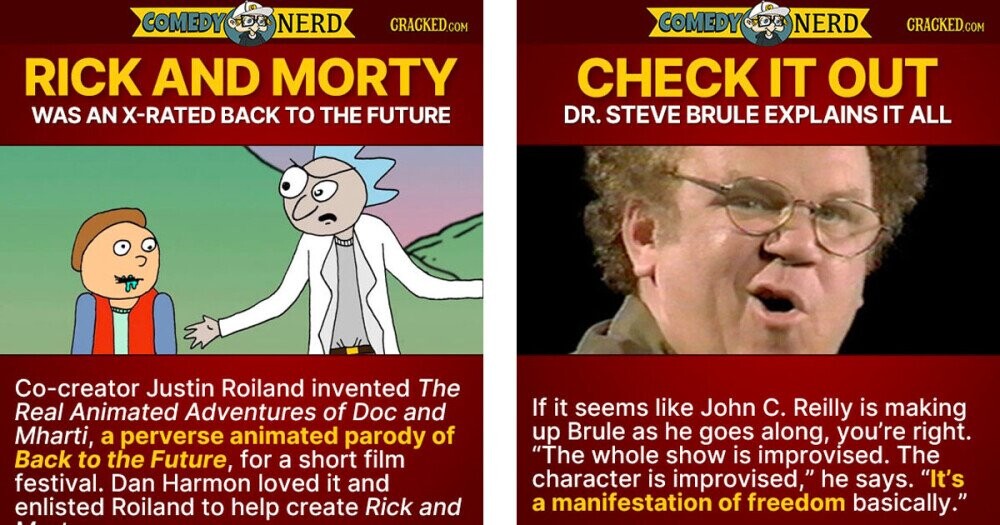
14. Rick and Morty The Crossover Era
Then came Rick and Morty, the show that pushed Adult Swim into a new level of mainstream visibility. It kept the block’s love of sci-fi absurdity and corrosive humor, but wrapped those impulses in a highly bingeable mix of serialized mythology, emotional stakes, and blockbuster-scale concept design.
Rick and Morty mattered not because it made Adult Swim respectable, but because it made Adult Swim impossible to ignore. It became the rare Adult Swim show that was both intensely online and broadly commercial, both weird and widely consumed. In a sense, it completed a long arc: the outsider network that once felt like a whispered recommendation after midnight now had a full-fledged global phenomenon on its hands.
What These 14 Shows Reveal About Adult Swim
Put together, these shows map Adult Swim’s evolution from scrappy experiment to cultural force. Space Ghost, Sealab, and Harvey Birdman showed how remix culture could become original art. Home Movies and The Venture Bros. proved character depth and continuity belonged on the block. Aqua Teen, Tim and Eric, and Eric Andre kept the network gloriously allergic to normal television behavior. The Boondocks and Cowboy Bebop expanded its emotional and thematic range. Robot Chicken, Metalocalypse, and Rick and Morty demonstrated that Adult Swim could create franchises without becoming boring, which is harder than it sounds and rarer than executives like to admit.
Just as important, Adult Swim trained audiences to trust tone over category. Fans learned that if the block scheduled something odd, it was worth trying. That habit of viewer trust is priceless. It is also difficult to build, especially when your network regularly aired things that sounded like fake shows invented in a group chat at 1:30 a.m.
The Late-Night Experience: What Watching Adult Swim Actually Felt Like
To understand Adult Swim historically, you also have to understand it experientially. Watching it was not just about the shows themselves. It was about the hour, the mood, and the accidental ceremony of it all. For many viewers, Adult Swim was the television equivalent of finding a side door into culture. Daytime TV had rules. Primetime had rules. Adult Swim felt like a place where the rules had been scribbled over with a marker and then used to light a tiny bonfire.
You would usually arrive there a little tired, which honestly helped. Maybe you were channel surfing. Maybe you were supposed to be asleep. Maybe you had homework open in front of you as a decorative object. Then suddenly the screen looked different from everything else on cable. The pacing was stranger. The jokes took weirder angles. The animation looked rough in a way that felt intentional. Even the pauses felt loaded. Adult Swim did not ask, “Are you comfortable?” It asked, “Are you still here?”
That feeling mattered. The block rewarded attention, but it also rewarded surrender. You did not always have to “get” every joke instantly. Sometimes the humor was in the rhythm, the awkward silence, the random cutaway, the aggressively stupid bit that somehow became funnier the longer it refused to leave. Adult Swim trained viewers to sit with discomfort, anti-climax, and tonal whiplash. That may sound dramatic, but it is also true. It gave audiences permission to laugh at things that were not structured like normal punchlines.
It was also communal in a peculiar way. Even when you watched alone, you felt like you had joined a scattered, sleepless club. The next day, quoting an Adult Swim line to the right person was like testing for membership. If they laughed, congratulations: you had both been to the same strange island overnight. If they stared blankly, that also tracked. Adult Swim was never built for universal approval. It was built for recognition among the initiated.
Another key part of the experience was unpredictability. You could move from anime melancholy to nihilist parody to a fake infomercial that felt one step away from a hallucination. That instability became part of the pleasure. Adult Swim viewers learned not to expect tonal consistency. In fact, tonal inconsistency became the brand. The block trusted that curiosity could be stronger than comfort, and often it was.
There was also a genuine thrill in seeing television that did not seem pre-approved by every committee in America. Adult Swim shows often felt like they had slipped through a crack in the system. Some were polished, some looked charmingly duct-taped together, but many carried the same feeling: someone made this because they thought it was funny, not because a strategy deck said a broad audience would definitely adore it. That creative looseness is a huge part of why the block inspired such devotion.
For viewers who grew up with it, Adult Swim was not just programming. It was atmosphere. It was insomnia with a sense of humor. It was a crash course in alternative comedy, experimental animation, parody, remix culture, niche fandom, and the idea that television could still surprise you after midnight. Plenty of networks had hits. Adult Swim had a vibe, and that vibe became formative for a generation of comedy fans and creators.
Conclusion
A history of Adult Swim in 14 shows is really a history of television learning how weird it could afford to be. From Space Ghost Coast to Coast to Rick and Morty, the block kept reinventing itself without losing its core identity: make bold things, trust odd people, and never assume late-night viewers want the obvious choice. Not every experiment worked. That was part of the charm. Adult Swim’s greatness came from the fact that it was willing to risk confusion, irritation, and cult obsession in equal measure.
And honestly, that may be the most Adult Swim lesson of all: sometimes the future of TV looks like a mess right before it becomes influential.













