
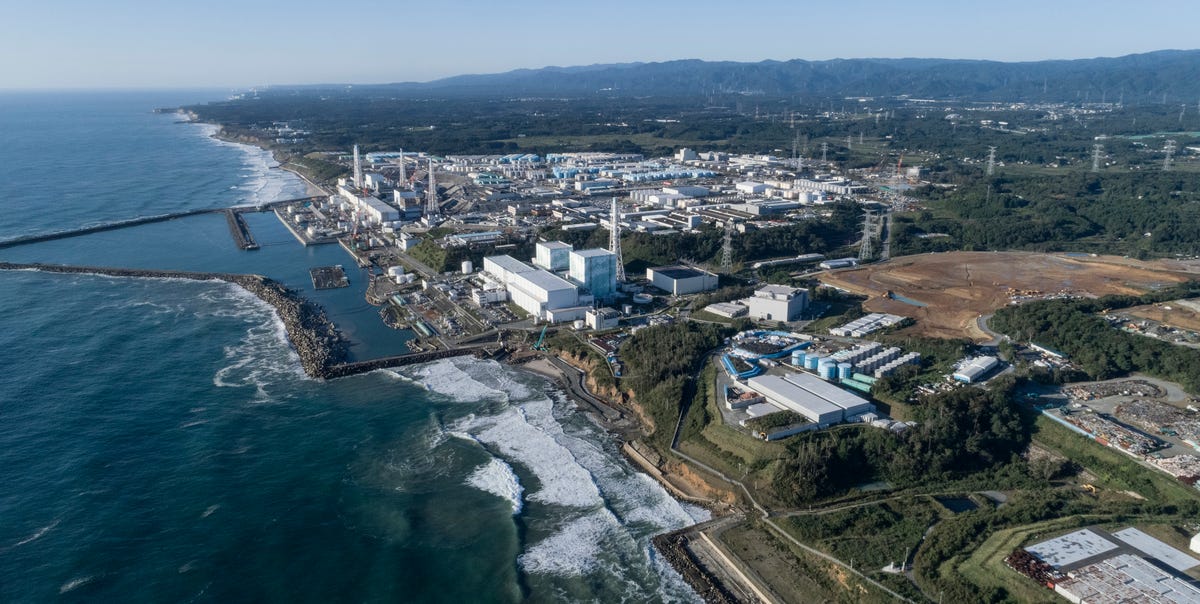
Late on March 16, 2022, northeastern Japan was jolted by the kind of earthquake that makes ceiling lights swing, dishes leap from shelves, and every phone in the room suddenly become the loudest object on Earth. The powerful offshore quake struck near Fukushima at 11:36 p.m. local time, prompting tsunami advisories for Fukushima and Miyagi prefectures, knocking out electricity across a wide area, and stopping trains while authorities inspected tracks and infrastructure.
The United States Geological Survey measured the event at magnitude 7.3, while the Japan Meteorological Agency later revised its estimate to magnitude 7.4. That difference is not a contradiction so much as a reminder that seismic agencies use different data, scales, and calculation methods. The USGS placed the hypocenter roughly 63 kilometers, or 39 miles, below the surface near the east coast of Honshu. Japanese officials reported intense shaking in Fukushima and Miyagi, with movement also felt in Tokyo hundreds of miles away.
Although the tsunami turned out to be small, the quake itself was deadly and disruptive. Four people were reported killed, 97 were injured in early official counts, more than 2.2 million homes temporarily lost power, and a Tohoku Shinkansen bullet train partially derailed without injuring passengers. In a country famous for earthquake engineering, the night was a reminder that “prepared” does not mean “untouchable.” It means the damage is reduced, warnings move faster, and more people know what to do when the floor begins behaving like a badly secured trampoline.
What Happened Near Fukushima?
The Mainshock Arrived Late at Night
The earthquake struck offshore of Fukushima Prefecture shortly before midnight. Japan’s earthquake early-warning system detected the event and sent alerts to phones, televisions, computers, and other devices. Because electronic signals travel much faster than destructive seismic waves through the ground, people farther from the epicenter may receive several seconds of warning. That is not enough time to finish dinner, find matching socks, and calmly review the family emergency binder. It can, however, be enough time to step away from glass, stop machinery, open a door, or get under sturdy cover.
Strong shaking was recorded across parts of Fukushima and Miyagi. Buildings swayed in Tokyo, products tumbled from store shelves, household furniture shifted or fell, windows broke, and sections of roads cracked. Water also spilled from damaged pipes. These scenes looked dramatic, but they also showed why securing bookcases, televisions, cabinets, and water heaters matters. During many earthquakes, the immediate threat inside a modern building is not the building collapsing; it is the room’s contents suddenly developing ambitions as airborne projectiles.
Why the Magnitude Was Reported as Both 7.3 and 7.4
News reports initially described a magnitude-7.3 earthquake because that was the early estimate used by the USGS and other outlets. The Japan Meteorological Agency later listed the quake at magnitude 7.4 and adjusted its depth estimate to about 56 kilometers, or 35 miles. Such revisions are common after scientists analyze additional seismic stations and refine their calculations.
Magnitude describes the overall size of an earthquake, while intensity describes how strongly it shakes at a particular location. One earthquake can therefore have a single magnitude estimate but many intensity readings. A neighborhood built on soft sediment may shake more violently than a rocky area at a similar distance. Building design, depth, fault direction, and local geology all influence what residents actually experience.
Why Tsunami Advisories Were Issued
The Quake Occurred in a Tsunami-Prone Subduction Zone
The earthquake occurred near the Japan Trench, where the Pacific Plate moves beneath the plate supporting northern Japan. The USGS identified the event as thrust faulting at or near the subduction-zone interface. Thrust earthquakes can lift or lower sections of the seafloor, displacing seawater and generating tsunami waves. That does not mean every offshore thrust quake produces a destructive tsunami, but it gives emergency agencies a very good reason to watch the ocean closely.
Authorities issued tsunami advisories for the Pacific coasts of Fukushima and Miyagi prefectures. An advisory is less severe than a tsunami warning, but it is not an invitation to grab a lawn chair and review the waves. Even a small tsunami can create dangerous currents in harbors, river mouths, marinas, and nearshore waters. Coastal residents were urged to leave vulnerable areas and follow local instructions.
Small Waves Reached the Coast
A wave of about 30 centimeters, or 11 inches, was observed at Ishinomaki in Miyagi Prefecture. Other modest sea-level changes were recorded, and the advisory was lifted early the next morning. NOAA’s historical hazard database also notes that monitoring showed only a small tsunami and no threat to the western coast of North America. The outcome was reassuring, but issuing the advisory was still the correct call: emergency systems are supposed to act before every uncertainty has been politely resolved.
The relatively limited tsunami was influenced by several factors, including the earthquake’s depth and how the fault moved. A deeper quake may transfer less vertical displacement to the seafloor than a shallow megathrust event. By comparison, the catastrophic March 11, 2011, earthquake was vastly more powerful and ruptured a much larger area, creating a tsunami that devastated the Tohoku coast.
Power Outages, Transport Disruption, and Damage
Millions Temporarily Lost Electricity
More than 2.2 million homes across 14 prefectures temporarily lost power, including households in the Tokyo region. Most service was restored by morning, although tens of thousands of customers in Fukushima and Miyagi remained without electricity longer. The blackout darkened streets, interrupted elevators and rail operations, and sent commuters searching for alternate routes.
Power failures are not merely inconvenient. They can affect medical equipment, water pumps, communications, refrigeration, traffic signals, and heating during cold weather. Japan’s rapid restoration demonstrated the value of grid monitoring and emergency response, but the outage also offered a universal lesson: a charged power bank becomes extremely popular when every wall outlet has entered an unplanned period of personal reflection.
A Bullet Train Derailed, but Passengers Were Safe
A Tohoku Shinkansen train partially derailed between Fukushima and Miyagi. No passengers were injured, but the incident damaged infrastructure and disrupted service. Rail operators suspended lines for inspections, leaving crowds waiting at stations. The lack of casualties reflected safety systems designed to slow or stop high-speed trains when earthquake sensors detect dangerous shaking.
Elsewhere, walls and windows were damaged, roads cracked, and merchandise covered store floors. The damage was serious without reaching the catastrophic scale of 2011. That distinction matters. A major disaster does not need to flatten a city to disrupt lives; a mix of injuries, utility failures, transportation closures, broken water lines, and damaged homes can create a long recovery tail.
What Happened at the Fukushima Nuclear Plants?
No New Nuclear Emergency Was Reported
Any strong earthquake near Fukushima immediately raises concerns about nuclear safety because the name is inseparable from the 2011 disaster. After the 2022 quake, Tokyo Electric Power Company inspected the Fukushima Daiichi and Fukushima Daini facilities. TEPCO reported no abnormalities in major plant parameters or reactor-cooling water injection equipment at Fukushima Daiichi. Some equipment shut down automatically, small amounts of water sloshed from spent-fuel pools, alarms sounded, and minor leaks or tank displacement were investigated, but monitoring did not indicate a new release emergency.
At Fukushima Daini, spent-fuel cooling pumps at two reactors briefly stopped and later resumed. A fire alarm was determined to be false. These details may sound unsettling, but they also show how nuclear facilities are checked after a major earthquake: operators do not simply glance at a control panel, say “looks fine,” and head home. Systems, tanks, cooling equipment, radiation monitors, structures, and alarms must be inspected and reported.
Why the 2011 Comparison Was Unavoidable
The 2022 earthquake struck just days after the eleventh anniversary of the March 11, 2011, Great East Japan Earthquake. That magnitude-9 event generated a devastating tsunami, caused nearly 20,000 deaths or missing persons, and disabled power and cooling systems at Fukushima Daiichi, leading to reactor meltdowns. The 2022 quake was far smaller, deeper, and associated with only a minor tsunami, yet it understandably revived fear and painful memories throughout the region.
It is also worth distinguishing the March 2022 event from another magnitude-7.3 earthquake off Fukushima on February 13, 2021. The 2021 quake caused injuries and widespread power outages but did not prompt a tsunami warning. Similar magnitudes do not guarantee similar outcomes; location, depth, fault movement, and seafloor displacement make every earthquake its own complicated geological personality.
What the Earthquake Revealed About Japan’s Preparedness
Japan has some of the world’s most advanced seismic building codes, public-warning systems, coastal defenses, evacuation planning, and automatic shutdown technology. The March 2022 earthquake showed many of those systems working: alerts were transmitted quickly, trains stopped or slowed, tsunami advisories were issued, nuclear sites were inspected, and electricity was restored to most customers within hours.
Still, preparedness cannot eliminate risk. Four deaths and numerous injuries were reported. Furniture fell. Roads and buildings were damaged. A train derailed. Coastal communities evacuated while memories of 2011 were still vivid. The most realistic goal of disaster preparedness is not a magical bubble around society. It is fewer casualties, faster information, safer infrastructure, and a recovery process that begins immediately rather than after confusion has enjoyed a full breakfast.
Experience-Based Lessons for Residents and Travelers
What the First Minute Can Feel Like
Survivor accounts and video from strong earthquakes often share a familiar rhythm. At first, there may be a faint rattle: glassware tapping, a door shifting, or a phone alert sounding. Then the motion strengthens. Hanging lights swing. Cabinets open. Objects hit the floor. The instinct to run can be powerful, especially when alarms are sounding, but moving through a shaking room exposes people to broken glass and falling objects.
The safer response in most indoor situations is to drop to the ground, cover the head and neck beneath a sturdy table or desk when available, and hold on until the shaking stops. Doorways are not automatically safer, and racing down stairs during violent motion can turn an emergency into an orthopedic group project. U.S. earthquake-safety guidance emphasizes “Drop, Cover, and Hold On” because falling and flying objects cause many injuries.
What Happens After the Shaking Stops
The end of the main shaking does not mean the event is over. People may be in darkness, phone networks may be overloaded, elevators may stop, and aftershocks can arrive minutes or hours later. A practical sequence is to check for injuries, put on sturdy shoes, look for fire or gas hazards, avoid damaged structures, and rely on official alerts rather than rumors racing through social media in tiny, confident capital letters.
Families benefit from deciding in advance where to meet and how to communicate if networks are congested. Text messages often require less bandwidth than calls. A basic emergency kit should include water, shelf-stable food, medications, flashlights, batteries, a radio, charging equipment, copies of important documents, and supplies for children, older adults, and pets. Aftershocks generally decrease over time, but they can continue for days, weeks, or longer, so damaged buildings should be treated cautiously.
Coastal Experience: Do Not Wait to See the Wave
For anyone near the coast, strong or prolonged shaking is a natural tsunami warning. Once the shaking allows safe movement, people should follow local instructions and move inland or to higher ground when directed. A tsunami is a series of waves, not a single cinematic wall of water, and the first arrival may not be the largest. Beaches, harbors, canals, and river mouths can remain dangerous even when wave heights look modest.
The March 2022 advisory produced only small waves, but residents did not know that outcome in advance. That uncertainty is the entire reason alerts exist. Going to the shore to “take a quick look” is a poor trade: one interesting video in exchange for being positioned exactly where officials asked people not to stand. Ready.gov advises people to move inland and upward, stay away from beaches and waterways, and follow evacuation orders immediately.
Travel Lessons From a Night of Disruption
Travelers in earthquake-prone regions should learn the local alert system, save accommodation addresses offline, carry a small flashlight and power bank, and identify evacuation routes before bedtime. Shoes should be placed where they can be reached without crossing broken glass. A little cash is useful when card terminals or ATMs lose power. Hotel guests should know where the stairs are because elevators may be unavailable after shaking.
The 2022 Fukushima earthquake also showed why itineraries need flexibility. Rail lines can close for inspection even when stations and trains appear undamaged. Roads may be blocked, taxis may be scarce, and hotels may briefly operate without normal power. The best traveler response is calm adaptability: confirm official information, avoid unnecessary movement, conserve the phone battery, and resist the temptation to treat every delay as a personal argument with the universe.
Conclusion: A Smaller Tsunami, but a Major Warning
The magnitude-7.3 earthquake near Fukushima did not repeat the catastrophe of 2011. Its tsunami was small, nuclear facilities reported no new major emergency, and most power was restored quickly. Yet the quake killed people, injured many others, damaged buildings and roads, derailed a bullet train, interrupted transportation, and placed millions of households in darkness.
Its larger lesson is that disaster resilience is built from layers: strong construction, rapid alerts, automatic shutdown systems, reliable public communication, household planning, and individual decisions made under pressure. No single layer is perfect. Together, they can transform a terrifying event from an unimaginable catastrophe into a severe but manageable emergency.
Editorial note: The title uses the USGS magnitude of 7.3. The Japan Meteorological Agency later rated the March 16, 2022, earthquake at magnitude 7.4.













