
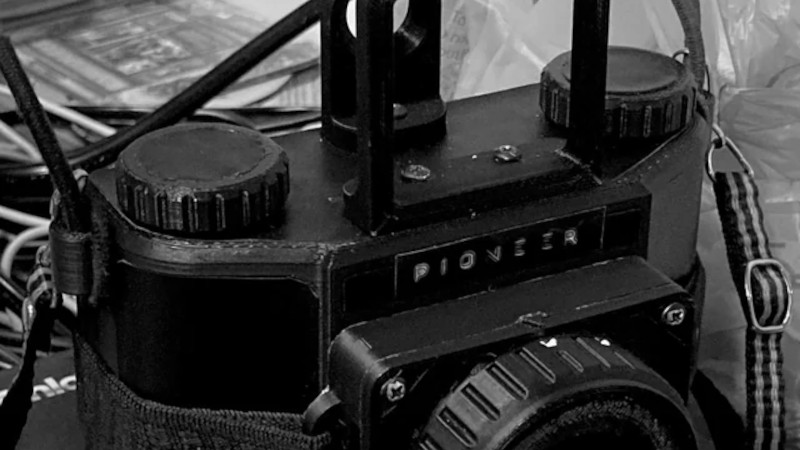
There are two kinds of people in the world: people who see an old camera and think, “Nice,” and people who see an old camera and think, “I bet I could build one in my garage with a 3D printer, stubborn optimism, and a heroic misunderstanding of free time.” This article is for the second group, and for the first group too, because let’s be honest, both are secretly curious.
The idea of building a medium format camera from scratch sounds a little unhinged at first. Medium format is the land of big negatives, rich detail, dreamy tonal transitions, and cameras that often feel like they were engineered by watchmakers who lifted weights. It is not usually the format associated with “weekend craft project.” And yet, that is exactly why the concept is so fascinating. A handmade medium format camera sits right at the intersection of engineering, photography, patience, and mild chaos.
What makes the idea even better is that it is not fantasy. A few years ago, a DIY builder drew attention for designing and printing a working medium format film camera with a 3D-printed body, a simple single meniscus lens, and even a custom shutter. That detail matters. Plenty of homemade cameras are pinhole designs or rely on scavenged shutter assemblies. Making a functioning camera body is hard enough. Making one that also handles light control, film transport, and timing without borrowing the magic from a donor camera is where the project starts to feel less like arts and crafts and more like a mechanical mic drop.
Why Medium Format Still Has People Acting Irrationally
To understand why anyone would build a medium format camera from scratch, it helps to understand why medium format still inspires such devotion. In film terms, medium format usually means cameras that use 120 film. That film can be exposed in several frame sizes, including 6×4.5, 6×6, 6×7, and 6×9. The bigger the frame, the fewer shots you get per roll, but the larger the image area you capture. Translation: fewer clicks, more drama.
That larger image area is the whole point. Medium format has long been prized for high detail, smoother tonal transitions, strong color depth, and that famous “medium format look.” It is not some mystical fairy dust sprinkled onto negatives at midnight. It comes from a combination of factors: larger capture area, lens rendering, shallower depth of field for equivalent framing, and the fact that these systems have traditionally been designed for photographers who care very deeply about the final image. Medium format does not automatically make bad composition good, but it does make good composition look like it showed up wearing a tailored suit.
Classic systems such as the Rolleiflex, Hasselblad, and Mamiya families earned legendary status because they paired larger negatives with serious optics and modular thinking. The Rolleiflex 6×6 design, for example, became beloved because it offered excellent optics, bright viewing, and fast handling for professional work. Mamiya systems later expanded the menu with 6×4.5, 6×6, 6×7, and even 6×9 options, each aimed at a different style of shooting. By the time you start reading about interchangeable backs, waist-level finders, dark slides, leaf shutters, and rotating backs, you realize medium format never wanted to be ordinary.
What “From Scratch” Really Means
A camera built from scratch is not just a box that keeps film in the dark. That is the easy part. A real medium format camera has to do several difficult jobs at once. It must hold the film flat. It must place the lens at the correct distance from the film plane. It must keep stray light out. It must advance the film reliably. It must expose the frame for a controlled amount of time. It must do all of that repeatedly, while being handled by an excited human who has already decided the build is genius before seeing the negatives.
In the standout DIY example that helped spark renewed interest in the idea, the builder designed the camera around a single-element meniscus lens sourced from an optical surplus seller. That choice is clever. A simple meniscus lens is not clinically perfect, but perfection was never the point. The charm of a custom-built medium format camera often comes from slight softness, curved field behavior, vignetting, and odd transitions that make images feel alive rather than sterile. In other words, the lens does not need to behave like a modern lab instrument. It needs to make pictures with character.
The more impressive trick was the shutter. A shutter is where many DIY builds quietly surrender and say, “Actually, pinhole is beautiful.” But a working shutter turns a homemade camera into a practical photographic tool. In this case, the builder used a magnetically locking rotary sector design with a shutter speed around 1/100 second. That is fast enough to be useful, simple enough to be mechanically believable, and difficult enough to earn genuine respect from anyone who has ever tried to make a moving part behave consistently.
The Engineering Problems That Try to Ruin the Fun
Building a medium format camera from scratch is essentially a long conversation with tolerance stacks, light leaks, and the laws of optics. Every part of the build is a potential betrayal.
Lens Coverage
A medium format negative is much larger than a 35mm frame, so the lens must throw a large enough image circle to cover it. A lens that works nicely on 35mm may turn medium format into a moody circular vignette generator. Sometimes that is artistic. Sometimes it is just evidence that geometry remains undefeated.
Film Flatness
Film loves to curl, shift, and generally behave like it has personal goals. If the film is not held flat, sharpness becomes inconsistent across the frame. On a larger negative, that problem gets easier to notice. A scratch-built camera therefore needs a pressure system, rails, or carefully designed channels that keep the film where it belongs.
Shutter Timing
A shutter that fires at 1/100 second once is charming. A shutter that fires at 1/100 second every time is engineering. Consistency matters more than bragging rights. If exposure varies wildly from frame to frame, your camera becomes less of a photographic instrument and more of a random mood machine.
Film Advance and Frame Spacing
120 film is wonderfully simple and annoyingly unforgiving. Advance it too little and frames overlap. Advance it too much and you waste precious negative area. Since medium format rolls do not give you a huge number of exposures to begin with, sloppy spacing feels expensive in a very personal way.
Light Sealing
Nothing teaches humility like developing a roll and discovering that every image has a glowing orange comet streaking through it because one seam in the body was a fraction too generous. A scratch-built camera lives or dies by how well it blocks stray light.
Why a Homemade Medium Format Camera Can Be Better Than a Perfect One
The obvious question is this: why not just buy a used medium format camera? There are plenty on the market, and some remain more affordable than people expect. That is true. But buying one gives you a camera. Building one gives you a camera and a relationship with every flaw and feature inside it.
A handmade medium format camera teaches the photographer what commercial products often hide. You begin to understand focal distance, coverage, shutter mechanics, aperture behavior, frame registration, and exposure limitations not as abstract ideas but as daily realities. You stop taking the phrase “light-tight body” for granted. You stop thinking of a shutter as a clicky little mystery inside a lens. You start seeing photography as controlled physics rather than pure button pressing.
There is also the image aesthetic. A homemade camera does not usually make clinically corrected files that scream technical perfection. It makes pictures with personality. Soft corners, glow, asymmetry, minor vignetting, and imperfect sharpness can create a visual signature that modern lenses spend billions trying to remove. The result is often more emotionally memorable than technically flawless.
That is why DIY medium format projects keep resurfacing. We have seen open-source 3D-printed medium format designs, experimental panoramic builds, hacked film backs, and hybrid digital contraptions that mash together components from multiple systems. Not every project becomes practical. Some are gloriously ridiculous. But even the ridiculous ones push the same idea forward: the camera does not have to be a sealed consumer object. It can be a thing you understand, modify, and even invent.
What Building One Says About Photography Right Now
The return of interest in film and medium format is not just nostalgia with expensive processing fees. It is also a reaction to the speed of digital life. Digital cameras are astonishing, but they are also optimized for immediacy: more frames, faster autofocus, smarter processing, cleaner files, quicker sharing. Medium format film asks for the opposite. It asks you to slow down, meter carefully, compose with intent, and accept that you will not know the result instantly.
A scratch-built medium format camera doubles down on that philosophy. First you build the machine slowly. Then you shoot with it slowly. Then you wait for development. Then you scan the negatives, often at moderate resolutions because medium format simply gives you more information per frame. The whole process feels less like consuming technology and more like collaborating with it.
That slower process has artistic benefits. Many photographers say film makes them more precise because every frame costs money and effort. Medium format amplifies that mindset. You shoot less, but you think more. And when the camera itself is one you designed or assembled, each frame carries a little extra suspense. Will it be sharp? Will it leak? Will the shutter behave? Will this be the best photo of your month or a beautifully exposed disaster? Honestly, that suspense is half the fun.
Should You Build One?
If you are expecting the practical answer, here it is: probably not as your first camera project. Start with something simpler if you have never dealt with optics, light seals, film transport, or precision parts. A medium format camera is not impossible, but it does demand patience, testing, redesign, and the emotional resilience to discover that a nearly finished camera is actually just a prototype wearing confidence.
But if you are drawn to photography as both image-making and mechanical problem-solving, then yes, building one makes perfect sense. A medium format camera from scratch is one of those rare projects where the process is as rewarding as the outcome. Even if the first version is imperfect, it will teach you more than a dozen ordinary gear purchases ever could.
And when it works, even imperfectly, the payoff is enormous. You are no longer just taking pictures with a medium format camera. You are taking pictures with your medium format camera. That tiny possessive pronoun does a lot of work. It turns photography into authorship at two levels: you made the image, and you made the machine that made the image. That is not just cool. That is deeply satisfying in the way only weird, ambitious maker projects can be.
Experiences From the World of Scratch-Built Medium Format Cameras
The experience of using a medium format camera you built yourself is unlike using almost any commercial camera. The first feeling is disbelief. You load a roll of 120 film, close the back, and suddenly the thing is no longer a project on your workbench. It is a real camera with consequences. Every click now costs money, chemistry, time, and possibly your dignity.
The second feeling is heightened awareness. With a factory camera, you tend to trust the machine. With a homemade one, trust is earned one frame at a time. You notice the resistance of the winding knob. You listen to the shutter like it is whispering secrets. You look at the seams and wonder whether that tiny gap is harmless or the beginning of a future light leak epic. Even before you see a single developed negative, the camera has already changed how you shoot.
Then comes the strange joy of limitation. A scratch-built medium format camera often has a simple lens, fixed focus zones or minimal focusing aids, modest shutter options, and very few conveniences. Normally that would sound like a sales pitch written by your worst enemy. In practice, it can be liberating. Instead of fiddling with menus, autofocus modes, and burst rates, you start looking harder at light, distance, shape, and timing. The camera stops competing for your attention and starts demanding your judgment.
There is also a special thrill in seeing the first successful negatives. They are rarely perfect. Maybe the edges are soft. Maybe the spacing is a little inconsistent. Maybe one frame has a mysterious flare that looks either like a mistake or an art-school breakthrough. But when the image is recognizable, exposed correctly, and actually beautiful, the feeling is electric. You are not just reacting to the photo. You are reacting to proof that your design choices became a functioning image-making system.
One of the most surprising parts of the experience is how forgiving viewers can be when the images have character. Pictures from scratch-built cameras often carry a distinctive handmade quality. The lens may glow wide open. The corners may fade. The tonal roll-off may feel dreamy rather than brutally sharp. In a world overflowing with technically perfect images, that handmade signature can feel refreshing. People lean in. They ask what camera you used. Telling them you built it yourself is the photographic equivalent of casually revealing you forged your own sword, except much easier to bring to brunch.
The process can also be humbling. Not every roll will come back triumphant. Some will return as expensive evidence that a spool slipped, a seal failed, or a shutter lied. But even those failures become useful. Each bad roll is feedback. Each flaw points to a specific mechanical truth. Over time, the camera improves, and so does the photographer. That shared evolution is part of the charm.
In the end, the greatest experience tied to a medium format camera from scratch is ownership in the deepest sense. You are not just a user of a tool. You are part designer, part technician, part photographer, and part optimistic lunatic. And frankly, photography could use more of that energy.
Conclusion
A medium format camera from scratch is more than a quirky maker headline. It is proof that photography remains a hands-on, buildable, understandable medium. It reminds us that the camera is not sacred hardware dropped from the heavens by luxury brands. It is an arrangement of light, mechanics, spacing, and timing that a determined person can still wrestle into existence.
That is the real beauty of the idea. Yes, medium format promises rich negatives, strong detail, and a slower photographic rhythm. But building one yourself adds another layer entirely. It turns the act of photography into an act of invention. And that may be the most satisfying frame of all.














