
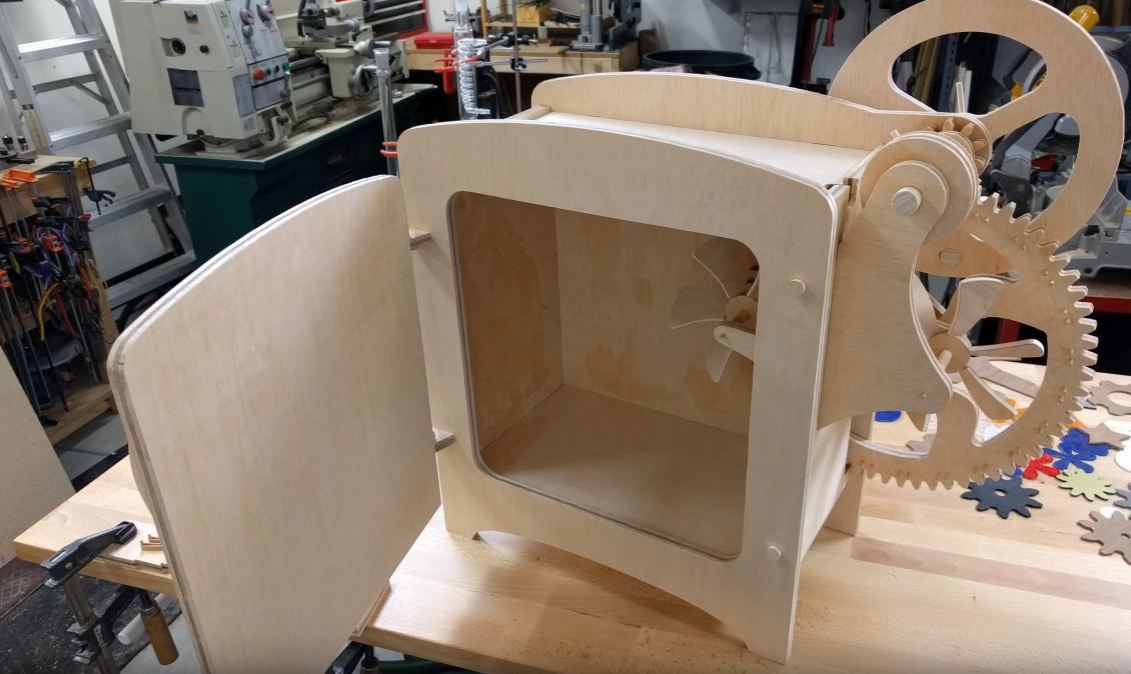
Imagine opening your refrigerator and finding no familiar compressor hum, no circulating chemical refrigerant, and no mysterious metal box in the back vibrating like it has unresolved emotional issues. Instead, the cooling system relies on something that sounds as though it came from a middle-school science fair: rubber fibers being stretched, twisted, and released.
As strange as it sounds, the science behind a refrigerator cooled by rubber bands is real. Researchers have demonstrated that natural rubber and other materials can undergo substantial temperature changes when mechanical forces are applied and removed. Scientists call these phenomena elastocaloric cooling and, when twisting is involved, twistocaloric cooling.
This does not mean you can toss a bag of office rubber bands into an insulated box and expect perfectly chilled milk by dinner. The experimental systems use carefully prepared fibers, controlled mechanical cycles, heat exchangers, and sophisticated engineering. Still, the basic principle is wonderfully simple: deform a material, manage the heat it releases, then let it return toward its original state and use the resulting temperature drop to absorb heat from somewhere else.
That “somewhere else” could eventually be a refrigerator, beverage cooler, air-conditioning system, wearable device, or specialized electronics enclosure. The humble rubber band, it turns out, may have ambitions far beyond holding together your junk drawer.
Why Rubber Can Become Hot or Cold
The rubber-band experiment you can feel
Take a sturdy rubber band, stretch it quickly, and carefully touch it to your upper lip or another temperature-sensitive area of skin. It may feel slightly warmer. Keep it stretched briefly, allow some of that heat to escape, and then release it. The rubber can feel cooler.
This behavior is associated with the unusual thermodynamics of elastomers. Rubber is made from long polymer chains that, in a relaxed condition, can exist in many tangled and disordered arrangements. Stretching the material forces those chains into a more ordered configuration. During a rapid deformation, the relationship among mechanical work, molecular organization, and heat can produce a measurable temperature rise.
When the process is reversed under the right conditions, the material can absorb thermal energy and cool. That temperature change is the foundation of elastocaloric refrigeration.
Scientists have known about the thermal behavior of stretched natural rubber for a very long time. What modern materials researchers are doing differently is turning a fascinating physics demonstration into a repeatable cooling cycle that might eventually move useful quantities of heat.
Cooling is not the same as simply “making cold”
A refrigerator does not manufacture coldness. It moves heat.
A conventional vapor-compression refrigerator circulates a refrigerant through components including an evaporator, compressor, condenser, and expansion device. The refrigerant absorbs heat from inside the insulated cabinet and rejects that heat into the surrounding room. The cold interior is therefore the result of continuously pumping thermal energy outward.
A rubber-based cooling device must accomplish the same basic mission. A fiber becoming cooler for a few seconds is interesting, but a practical refrigerator needs a continuous cycle. Engineers must repeatedly deform and relax the material while carefully controlling when it touches, or exchanges heat with, the hot and cold sides of the system.
From Elastocaloric Cooling to the “Twist Fridge”
Stretching works, but twisting offers another route
Traditional elastocaloric experiments commonly involve stretching or compressing a solid material. Researchers later explored a clever variation: instead of relying only on a large change in length, what happens when a fiber is twisted and untwisted?
An international research team led by scientists associated with the University of Texas at Dallas and Nankai University demonstrated what they called twistocaloric cooling. The researchers worked with natural rubber, polyethylene fishing line, and nickel-titanium wire. Their experimental coolers were informally described as “twist fridges.”
The name sounds like a kitchen appliance designed by someone who also sells balloon animals, but the physics is serious.
In experiments with rubber fibers, researchers stretched the fibers and inserted enough twist to create coiled and even supercoiled structures. Rapidly releasing the twist produced substantial surface cooling. One reported experiment measured a temperature decrease of about 15.5 degrees Celsius after untwisting, while releasing both twist and stretch produced a decrease of approximately 16.4 degrees Celsius.
Those figures describe experimental temperature changes under specific conditions, not the temperature of a commercial refrigerator compartment. Nevertheless, they demonstrate that mechanically manipulating fibers can generate a surprisingly strong caloric response.
Rubber is not the only material invited to the cooling party
The same research explored other materials. Coiled polymer fishing line produced cooling when its mechanical state changed. Nickel-titanium, a shape-memory alloy widely studied for solid-state cooling, achieved even larger surface temperature changes in some torsional experiments.
Researchers also built a demonstration in which a nickel-titanium cable cooled flowing water. The experiment showed that twist-based cooling could move beyond infrared-camera images of a cold fiber and perform actual heat exchange with a fluid.
This distinction matters. A refrigerator is ultimately a heat-transfer machine. The material producing a caloric effect is only one part of the system. Engineers also need motors or actuators, heat exchangers, thermal switches or valves, insulation, controls, energy recovery, and a mechanical design capable of surviving millions of cycles.
How a Rubber-Band Refrigerator Could Work
A future rubber-based refrigerator would probably contain something much more sophisticated than ordinary stationery bands. The cooling element could consist of optimized natural-rubber fibers or elastomer structures engineered for controlled strain, twist, durability, and heat transfer.
Step 1: Load the cooling material
A motor or mechanical actuator would stretch, twist, compress, or otherwise deform the elastocaloric material. During this stage, the material becomes warmer.
Step 2: Reject the heat
While the material is hot, the system transfers that heat to the outside environment. A heat exchanger, fluid loop, or carefully timed contact mechanism could carry the unwanted thermal energy away.
Step 3: Release the material
The material is then unloaded. It returns toward its lower-stress state and experiences a temperature decrease.
Step 4: Absorb heat from the refrigerator
While colder than the refrigerated compartment or a secondary coolant, the material absorbs heat from the cold side of the system.
Step 5: Repeat the cycle
The process happens again and again. A useful design would likely operate multiple fibers or material elements out of phase, allowing one part of the system to absorb heat while another rejects it. The result could be a smoother, more continuous refrigeration effect rather than a series of dramatic temperature hiccups.
Recent prototype work across the wider field of elastocaloric cooling shows why researchers take solid-state refrigeration seriously. A University of Maryland system using shape-memory-alloy technology demonstrated hundreds of watts of cooling power and a temperature span exceeding 20 kelvin, illustrating that caloric cooling can be scaled beyond tiny laboratory samples.
Natural-rubber systems remain a different engineering pathway, but both approaches belong to a broader effort to build cooling machines around solid materials rather than conventional refrigerant cycles.
Why Scientists Want Alternatives to Conventional Refrigeration
Refrigeration is everywhere
Modern life depends heavily on cooling. Refrigerators protect food. Freezers support supply chains. Air conditioning keeps buildings livable. Medical facilities rely on controlled temperatures for medicines, laboratories, and equipment. Data centers generate enormous amounts of heat that must be removed.
Even a household refrigerator represents a continuous energy load because it operates day and night. Efficiency improvements therefore add up. ENERGY STAR notes that certified refrigerators are more efficient than models that merely meet federal minimum efficiency standards, showing how much attention already goes into squeezing additional performance from mature compressor technology.
The refrigerant problem is changing
Modern refrigeration systems have become far more environmentally responsible than early generations of cooling equipment, but refrigerant choice remains an important climate issue. The U.S. Environmental Protection Agency notes that hydrofluorocarbons, or HFCs, have been widely used in refrigeration and air-conditioning applications and can have global-warming impacts hundreds to thousands of times greater than carbon dioxide on a mass basis, depending on the specific gas. U.S. policy is phasing down HFC production and consumption while encouraging transitions toward lower-impact technologies.
Solid-state cooling is attractive partly because the active cooling material does not need to circulate as a greenhouse gas. An elastocaloric refrigerator might still contain fluids for transferring heat, but those fluids could potentially be ordinary secondary coolants rather than the working refrigerant responsible for the primary caloric effect.
That does not automatically make every solid-state refrigerator environmentally perfect. Manufacturing impacts, material sourcing, device lifetime, energy efficiency, and end-of-life recycling still matter. There is no magical “green” button hiding under a pile of rubber bands. But eliminating or reducing dependence on high-global-warming-potential refrigerants is an important research goal.
The Big Advantages of Rubber-Based Cooling
Natural rubber can produce a strong thermal response
Rubber can undergo large mechanical deformation, and its molecular structure gives it useful caloric behavior. Newer research continues to investigate highly ordered rubbers and strain-induced crystallization as routes toward stronger and more practical elastocaloric performance.
The raw material can be relatively inexpensive
Compared with specialized metallic alloys, rubber-based materials may offer cost advantages in certain applications. Natural rubber is already manufactured at enormous industrial scale. That does not mean refrigerator-grade caloric fibers would be as cheap as a bag of rubber bands, but the basic material family is familiar and widely processed.
Flexible fibers allow unusual machine designs
Fibers can be twisted, bundled, coiled, arranged in parallel, or incorporated into compact mechanisms. That design flexibility could eventually support cooling systems with shapes that are difficult to achieve using a conventional compressor.
Small specialized devices may be especially interesting. Wearable cooling, compact electronics thermal management, beverage cooling, localized medical applications, and portable systems could become useful proving grounds before someone attempts to replace every full-size kitchen refrigerator in America.
The Problems Standing Between a Lab Demo and Your Kitchen
Fatigue is a serious challenge
A refrigerator may cycle for years. Any rubber or metal cooling element must survive an enormous number of mechanical loading cycles without cracking, permanently deforming, or losing its thermal performance.
This is one of the most important differences between an impressive demonstration and a dependable appliance. A fiber that produces dramatic cooling 100 times is scientifically interesting. A consumer refrigerator may require reliable operation through millions of cycles.
Heat transfer must happen quickly
A cooling material can show a large temperature change and still perform poorly as a refrigerator if heat cannot move into and out of it fast enough.
Rubber is not famous for being an exceptional thermal conductor. Engineers may therefore need thin fibers, large surface areas, optimized heat-exchange fluids, special coatings, or composite structures. The colder the material becomes, the faster the system must capture that useful cooling before unwanted heat leaks back in.
Mechanical energy should be recovered
Stretching and twisting materials requires work. A practical system must minimize losses and recover as much mechanical energy as possible when the material unloads.
Think of regenerative braking in an electric vehicle. Instead of simply wasting the energy associated with reversing the mechanical cycle, an advanced cooling device could reuse part of it. Research prototypes are increasingly interested in precisely this kind of energy recovery because impressive temperature changes alone do not guarantee impressive overall efficiency.
The machine still needs moving parts
“Solid-state cooling” can sound as though the entire refrigerator would sit motionless and contemplate thermodynamics in complete silence. Not necessarily.
The refrigerant material may remain solid, but a practical elastocaloric or twistocaloric machine can still require motors, rotating shafts, tensioning mechanisms, pumps, valves, fans, and controls. Depending on the design, it could be quieter and mechanically simpler than a compressor systemor it could become a highly elaborate rubber-twisting contraption that terrifies appliance repair technicians.
Would a Real Refrigerator Literally Use Rubber Bands?
Probably not in the ordinary office-supply sense.
The phrase rubber-band refrigerator is useful because almost everyone understands what a rubber band does. However, a commercial appliance would require carefully engineered elastomeric components with controlled dimensions, chemical composition, molecular structure, pre-strain, twist density, fatigue resistance, and heat-transfer characteristics.
The difference is similar to the difference between a paper clip and a precision aircraft spring. Both may be pieces of metal that bend, but only one has been engineered for a demanding job.
Future cooling fibers could also combine several materials. Researchers may optimize natural rubber, synthetic elastomers, shape-memory alloys, polymer fibers, composites, or entirely new caloric materials. The refrigerator of the future might therefore be “cooled by rubber bands” in the same loose way that a modern computer is “powered by sand.” The basic material connection is real, but the finished technology is considerably more sophisticated.
What the Latest Research Direction Suggests
Research in caloric cooling is moving along several parallel paths. Some teams focus on nickel-titanium and other shape-memory alloys. Others study elastomers, polymers, twisting geometries, bending cycles, multi-stage heat pumps, and combinations of caloric effects.
The broader elastocaloric field has already produced prototype systems with meaningful cooling capacity, while newer work on natural rubber aims to improve material ordering, thermal response, efficiency, and durability. Research organizations have described elastocaloric technology as a promising alternative to conventional vapor-compression cooling, but commercialization still depends on solving system-level problems rather than simply discovering a material that gets cold in the laboratory.
That is an important reality check. Scientific breakthroughs often arrive in stages. First, someone discovers a surprising effect. Then researchers characterize it. Engineers build an awkward prototype with wires hanging everywhere. Someone eventually puts the prototype in a box. Years later, if efficiency, reliability, manufacturing, safety, and cost all cooperate, the technology may become a product that ordinary people can buy without reading a research paper first.
Experiencing the Idea of a Refrigerator Cooled By Rubber Bands
The most useful way to experience this concept is not to imagine replacing the compressor in your refrigerator with a fistful of rubber bands overnight. Instead, start with the physical sensation that made the underlying science so fascinating in the first place.
A simple rubber band feels ordinary when it sits on a desk. Stretch it rapidly, however, and it becomes a tiny thermodynamics experiment. The temperature change may be subtle with a common band, but once you recognize what is happening, the object becomes surprisingly interesting. Something you normally use to close a bag of potato chips is converting mechanical deformation into a thermal response.
The next mental step is to imagine repeating that effect in a controlled machine.
Picture a bundle of engineered rubber fibers mounted inside a small insulated cooling unit. One group of fibers is mechanically loaded while another group is being released. The warm group transfers its heat to an external loop. The cooler group absorbs heat from a liquid circulating through the refrigerated compartment. Then the roles switch.
From a user’s perspective, the ideal experience would actually be boringand that is a compliment. You would put food inside, close the door, and expect it to stay cold. Nobody wants to explain polymer entropy before making a sandwich.
Behind the cabinet, however, the experience could be very different from that of a conventional refrigerator. Instead of a compressor forcing a refrigerant through a pressure cycle, an actuator might rhythmically manipulate arrays of fibers. The operating sound might be a soft motor or periodic mechanical motion rather than the familiar compressor start-up. Whether a real product would actually be quieter would depend entirely on its engineering.
Another striking part of the experience is how quickly laboratory-scale temperature changes can occur. Twistocaloric experiments have shown that rapid mechanical unloading can produce a pronounced cooling response. Watching such an effect with thermal imaging would make the process immediately understandable: a fiber changes from warmer colors to colder colors simply because its twist or mechanical state changes.
Yet this hands-on perspective also exposes the engineering difficulties. A single cooling event is easy to admire. Continuous refrigeration is much harder. The fiber must reset. Heat must be moved at exactly the correct moments. Mechanical work must not be wasted. The material must avoid tearing. Every seal, bearing, heat exchanger, sensor, and control algorithm has to cooperate.
Anyone approaching the subject from a maker or science-project perspective should therefore separate the demonstration from the appliance. Demonstrating that stretched rubber changes temperature can be simple. Building a dependable refrigerator based on the effect is advanced engineering.
That contrast is arguably the most memorable part of the entire idea. The fundamental phenomenon is accessible enough to feel with a common elastic band, yet exploiting it at appliance scale requires materials science, thermodynamics, mechanical engineering, control systems, and years of durability testing.
There is also something refreshing about the concept. Modern technology often feels impossibly abstract: invisible software, microscopic transistors, quantum effects, and algorithms nobody can see. A refrigerator cooled by mechanically manipulated fibers is different. The basic action is visible. Twist something. Let it untwist. Move heat.
Of course, the final productshould rubber-based refrigeration become commercially successfulwill probably hide all that fascinating machinery behind a clean plastic or stainless-steel panel. That is what consumer appliances do. They take decades of difficult science and turn it into a button labeled “Colder.”
For now, the best experience is one of informed curiosity. The rubber-band refrigerator is neither a joke nor a product ready to replace the appliance in your kitchen tomorrow. It is a serious example of how researchers are reconsidering one of civilization’s most important technologies. Sometimes innovation begins with rare elements, billion-dollar laboratories, and exotic physics. Sometimes it begins by noticing that a stretched piece of rubber feels warm and asking a wonderfully inconvenient question: Can we build a refrigerator out of that?
Conclusion
A refrigerator cooled by rubber bands sounds absurd until the thermodynamics enter the room. Natural rubber can heat and cool as its mechanical state changes, and research into elastocaloric and twistocaloric effects has shown that carefully engineered fibers can produce substantial temperature changes.
The opportunity is significant. Solid-state refrigeration could help reduce dependence on certain conventional refrigerants, enable new device shapes, and create alternative ways to move heat. Rubber and other flexible fibers may eventually play a role because they can be stretched, twisted, coiled, bundled, and repeatedly cycled.
The obstacles are equally real. Researchers must improve durability, heat transfer, mechanical efficiency, energy recovery, manufacturing, and complete system performance. A dramatic drop in the temperature of one fiber is the beginning of a refrigeratornot the finished appliance.
Still, that beginning is remarkable. The next time a rubber band snaps across your desk, consider showing it a little more respect. Its distant, highly engineered relative may someday help keep the drinks cold.










