
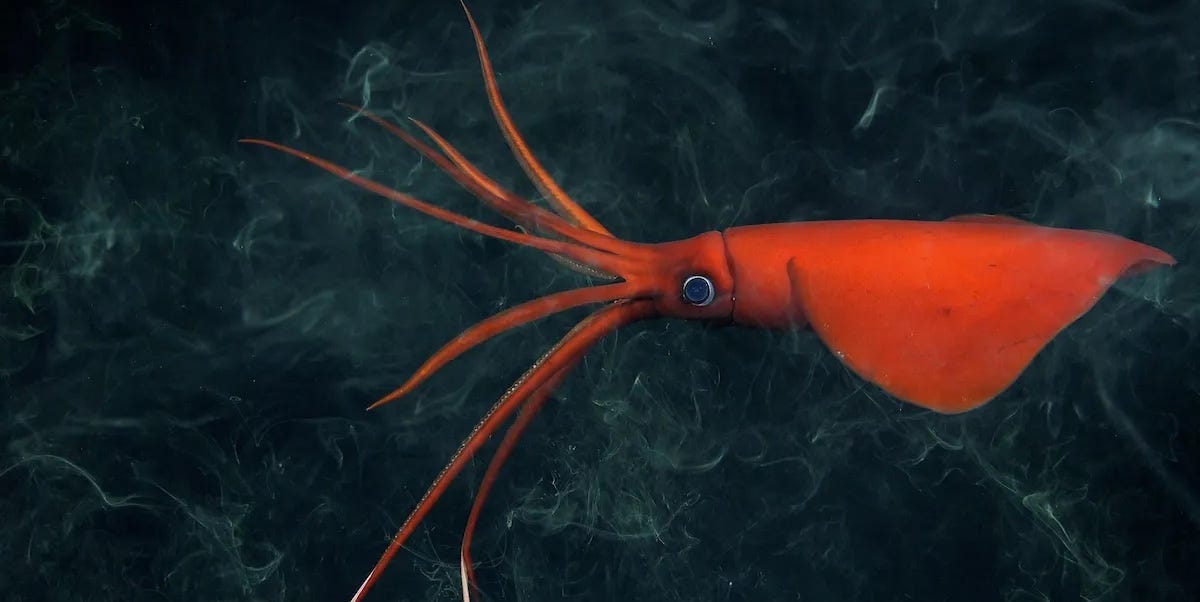
Some scientific discoveries arrive with a thunderclap. Others appear quietly on a glowing screen in a shipboard control room, 14,000 feet above a robot that is crawling over a mountain nobody has ever properly seen. In early 2024, researchers aboard Schmidt Ocean Institute’s research vessel Falkor (too) sailed into one of the most remote corners of the southeastern Pacific Ocean, near Chile, Peru, and Rapa Nuibetter known to many as Easter Island. Their mission was to explore deep-sea mountains called seamounts. What they found looked less like a normal field survey and more like nature had opened a secret folder labeled “Do Not Disturb.”
Across the Nazca, Salas y Gómez, and Juan Fernández ridges, scientists observed deep-sea coral gardens, glass sponge forests, sea urchins, amphipods, squat lobsters, and other strange, delicate animals. The headline number was dazzling: more than 100 species may be new to science. That phrase“may be”matters. In biology, a species does not become officially new just because it looks weird on camera. Scientists must compare specimens, examine anatomy, study DNA, and publish formal descriptions. Still, the expedition delivered something extraordinary: physical evidence and high-resolution imagery from a poorly explored world that may contain dozens upon dozens of life forms humanity has never named.
The “End of the Earth” Was Really a Hidden Mountain Range
The phrase “end of the Earth” sounds dramatic, but in this case, the drama is earned. The Salas y Gómez and Nazca ridges stretch across the southeastern Pacific in a chain of underwater mountains. Some rise thousands of feet from the seafloor, yet never break the surface. To passing ships, the ocean looks like empty blue space. Below, however, it is topography with attitude: peaks, cliffs, slopes, saddles, ledges, and rocky habitats where life can cling, hunt, hide, reproduce, and perform whatever the deep-sea equivalent of interior decorating may be.
Seamounts matter because they interrupt the open ocean. Currents hit their slopes and move upward, carrying nutrients that support life from plankton to predators. Rocky surfaces give corals and sponges places to attach. Crevices shelter crabs, fish, octopuses, brittle stars, and other animals. In the deep sea, where much of the bottom is muddy plain, a seamount is like a high-rise apartment building, grocery store, nursery, and neighborhood café all in oneminus the overpriced oat milk latte.
The region is also biologically unusual. It is isolated by major oceanographic features, including the Humboldt Current, the Atacama Trench, and oxygen-poor water zones. Isolation is an engine of weirdness. When populations are separated for long periods, evolution can get creative. That is why scientists suspected the ridges could hold high levels of endemism, meaning many species may live there and nowhere else on Earth.
Meet the Ship and the Robot That Opened the Door
The expedition relied on Falkor (too), a modern research vessel designed for deep-sea exploration, mapping, robotics, and real-time scientific collaboration. The ship is not just a floating laboratory; it is a launch platform for technologies that let scientists work in places where humans cannot safely go. The star of the show was ROV SuBastian, a remotely operated vehicle capable of diving to about 4,500 meters, or roughly 14,760 feet.
An ROV is not a submarine with a tiny person inside waving at anglerfish. It is an underwater robot connected to the ship by a cable, operated by pilots who guide it with cameras, lights, thrusters, sensors, and robotic arms. It can film fragile organisms without touching them, collect carefully chosen samples, measure conditions, and give scientists a live view of the deep. In practical terms, it turns the ocean floor into a slow-moving, high-definition detective story.
Researchers used multibeam sonar to map seafloor terrain, sensors to measure environmental conditions, baited cameras to observe mobile animals, and ROV dives to document communities from the base of seamounts to their summits. This combination matters because deep-sea biology is not just about finding a cool creature and saying, “Well, that is unsettling.” It is about understanding where the creature lives, what habitat supports it, how the community changes with depth, and whether human activity may threaten it.
What Did Scientists Find?
The short answer: a deep-sea variety show. The longer answer includes corals, glass sponges, sea urchins, amphipods, squat lobsters, mollusks, sea stars, sea cucumbers, fish, and many animals still awaiting expert identification. Some looked like lace. Some looked like alien houseplants. Some looked like a crab had started a side career in modern dance.
Deep-Sea Corals
Unlike tropical corals that rely heavily on sunlight and symbiotic algae, many deep-sea corals survive in darkness by capturing food from the water column. They grow slowly, sometimes living for centuries or longer. Their branching structures create habitat for other animals, making them foundation species. Damage a deep-sea coral garden, and you do not just lose coral; you may remove the architecture of an entire community.
Glass Sponges
Glass sponges are among the deep sea’s strangest builders. Their skeletons are made of silica, the same basic material found in glass. They can create intricate structures that look impossibly delicate, like something a wizard would refuse to ship without insurance. These sponges filter water and provide shelter for small organisms, contributing to the complexity of the ecosystem.
Squat Lobsters and Amphipods
Squat lobsters are not true lobsters, but they do have the look of creatures that know exactly where the good hiding spots are. Amphipods, meanwhile, are small crustaceans that can be scavengers, grazers, or predators. In deep-sea food webs, these animals help move energy through the ecosystem. They may not get movie posters, but they keep the biological machinery running.
Why “100 New Life Forms” Is a Big Deal
Finding one potential new species is exciting. Finding more than 100 in one expedition is a loud reminder that the deep ocean remains one of Earth’s least understood environments. Scientists have mapped Mars in remarkable detail, but large portions of Earth’s seafloor are still poorly mapped and biologically underexplored. That is not because scientists forgot the ocean was there. It is because the deep sea is dark, cold, pressurized, remote, expensive to study, and very good at keeping secrets.
The discovery also matters because species are not just names in a catalog. Each one is evidence of adaptation. A sponge’s structure, a coral’s growth pattern, a crustacean’s feeding behavior, or a fish’s sensory system can reveal how life survives under extreme pressure, low food supply, near-total darkness, and unusual oxygen conditions. Deep-sea organisms are living solutions to difficult problems.
There is another reason the number matters: conservation. If many species live only on certain seamounts, then each seamount may be biologically irreplaceable. Protecting one underwater mountain while damaging another might not be enough if the communities differ from peak to peak. The expedition’s observations suggested that each seamount hosted distinct ecosystems, which strengthens the argument for broad, science-based protection across the ridge system.
The Conservation Question: Discover Before We Disturb
The deep sea may seem safely distant from human influence, but that is wishful thinking wearing a snorkel. Fishing, bottom trawling, climate change, ocean acidification, plastic pollution, and possible deep-sea mining all raise concerns for remote marine habitats. Seamounts are especially vulnerable because many of their organisms grow slowly and recover slowly. A coral garden that took hundreds of years to develop cannot be replaced on a convenient quarterly schedule.
Chile has already taken major steps to protect marine areas, including the Nazca-Desventuradas Marine Park and the Juan Fernández marine protected area. Scientists gathered data during the expedition to support future management and possible high-seas protections for parts of the Salas y Gómez and Nazca ridges. That is important because much of the ridge system lies beyond national jurisdiction, where conservation depends on international cooperation.
The expedition shows why exploration and protection should work together. You cannot protect what you do not know exists. At the same time, if exploration happens too slowly and exploitation happens too quickly, species may disappear before science even learns their names. That is the nightmare version of hide-and-seek: the ocean hides, humanity seeks, and bulldozers arrive before the field guide does.
How Scientists Confirm a New Species
When the public hears “new species,” it is easy to imagine a scientist pointing at a lobster and shouting, “New guy!” Formal taxonomy is more careful. Researchers must compare specimens with known species, analyze tiny anatomical features, consult museum collections, review scientific literature, and often use genetic sequencing. The process can take years, especially when experts are few and the organisms are difficult to classify.
That is why scientists often say “potentially new” or “likely new to science.” It is not hesitation for the sake of drama. It is accuracy. A creature may look unfamiliar because it is truly undescribed, or because it is a known species recorded in a new region, or because its juvenile form looks different from its adult form. Biology enjoys making humans feel overconfident and then quietly correcting them.
Still, the expedition’s value is enormous even before every species is officially named. Video records, environmental data, specimen collections, and seafloor maps become a foundation for decades of research. They help experts answer questions about evolution, distribution, ecosystem connectivity, and vulnerability. A single ROV dive can become a library of future discoveries.
Why the Discovery Captured Public Imagination
Part of the appeal is simple: the animals look astonishing. Deep-sea life often feels like science fiction that forgot to ask permission. Sponges resemble glass sculptures. Corals grow like frozen fireworks. Squat lobsters perch in coral branches like tiny armored landlords. Sea urchins bristle with spikes. Siphonophores can look like floating strings of living light.
But the deeper fascination is emotional. Discoveries like this remind us that Earth is not finished surprising us. In an era when satellites track storms, phones map neighborhoods, and algorithms recommend socks with alarming confidence, it is refreshing to learn that our own planet still contains places where scientists can point a camera into the dark and see something no human has ever recorded.
There is humility in that. The ocean is not empty space waiting for extraction. It is habitat. It is history. It is a living archive of evolution. The “100 new life forms” story is not just a curiosity; it is a challenge to treat the unknown with care.
Lessons From a Voyage to the Deep
This expedition offers several practical lessons. First, technology changes what is possible. Without high-resolution mapping, deep-diving robots, and precise sampling tools, many of these communities would remain invisible. Second, biodiversity hotspots can exist far from coral reefs, coastlines, and postcard beaches. Some of the richest habitats on Earth are dark, cold, and hidden beneath miles of water.
Third, exploration can directly support policy. Data from the expedition can help governments and international organizations decide where protections are most urgently needed. Science does not replace politics, but it can make ignorance a much less comfortable place to stand.
Finally, the discovery reminds us that wonder is useful. Wonder gets people to pay attention. Attention can lead to funding, research, conservation, education, and better choices. A squat lobster in a coral branch may not write legislation, but it can make people care about a place they will never personally visit.
Experiences Related to the Discovery: What It Feels Like to Follow a Journey Like This
Following a deep-sea expedition from the outside is a strange and wonderful experience. You are not on the ship, you are not wearing a headset in the control room, and you are certainly not the person responsible for steering a multimillion-dollar robot around delicate coral. Yet the moment the first images appear, you feel pulled into the voyage. A black screen becomes blue. Blue becomes gray rock. Then something moves. Suddenly, the ocean floor is not an abstract place in a textbook. It is a neighborhood.
The most memorable part of stories like this is the slow reveal. Space exploration often gives us launch countdowns, fire, smoke, and applause. Deep-sea exploration is quieter. A ship moves across a remote ocean. A robot descends for hours. Scientists wait, sip coffee, check instruments, and try not to look too excited too soon. Then lights hit the seafloor, and a hidden world appears one meter at a time. There is patience in it, and that patience makes the discovery feel earned.
Imagine watching ROV SuBastian drift over a seamount slope. At first, there may be only rock and sediment. Then a sponge appears, pale and geometric. A coral branch emerges from the darkness. A tiny crustacean clings to it like a nervous apartment tenant. A fish slides through the frame and vanishes. The scientists watching do not simply say, “Pretty.” They start asking questions. What depth is this? What is the temperature? Is this species known from nearby ridges? Is this a range extension? Could this be new? Should we collect a sample? Can we do it without damaging the habitat?
That blend of wonder and discipline is what makes marine science so compelling. The public sees beauty; researchers see beauty plus data. The color of a coral, the shape of a sponge, the position of an urchin, and the slope of the rock all become clues. The deep sea becomes a crime scene, an art museum, a nursery, and a wilderness at once.
There is also a personal lesson in the discovery: important things can remain unseen for a very long time. These life forms were not created when the ship arrived. They were already there, living in darkness, surviving pressure, feeding, growing, and reproducing without applause. Human attention did not make them valuable; it only made us aware of their value. That is a useful reminder in a noisy world. Not everything important is visible from the surface.
For students, writers, travelers, divers, conservationists, or anyone who has ever stared at the ocean and wondered what is underneath, this expedition is fuel for curiosity. It says the map is not finished. It says the planet is still bigger than our assumptions. It says science is not only a collection of facts but also a way of approaching mystery carefully, with lights, cameras, robotic arms, and enough humility to admit that a sponge may know more about the deep Pacific than we do.
In the end, the ship did not sail to a fantasy edge where the ocean pours into space. It sailed to a real edge: the edge of human knowledge. And there, on underwater mountains off South America, researchers found a living reminder that Earth still has locked rooms. The key is exploration. The responsibility is protection. The reward is meeting the neighbors we never knew we had.
Conclusion
The voyage of Falkor (too) to the Nazca and Salas y Gómez ridges was more than a spectacular deep-sea adventure. It was a scientific wake-up call. More than 100 potential new life forms, fragile coral gardens, glass sponge habitats, and distinct seamount communities show that the deep Pacific remains rich, mysterious, and vulnerable. These discoveries strengthen the case for continued exploration and for protecting remote marine ecosystems before damage outruns knowledge.
The ocean is not an empty blue background. It is a living planet beneath the planet, full of species still waiting for names. And somewhere in the dark, a squat lobster may be sitting in a coral branch, completely unaware that it has become an ambassador for the unknown.














