
Note: This article discusses LGBTQ+ family rejection, grief, and suicide. It is written with care, without graphic detail, and with the central message that acceptance, mental health support, and love can save lives.
When a Portrait Becomes a Promise
Some memorials are carved in stone. Some are sung. Some live in a photograph on a bedside table, a candle lit every year, or a voicemail no one can bring themselves to delete. And then there are memorials made of wordsthousands of themarranged until grief finds a face.
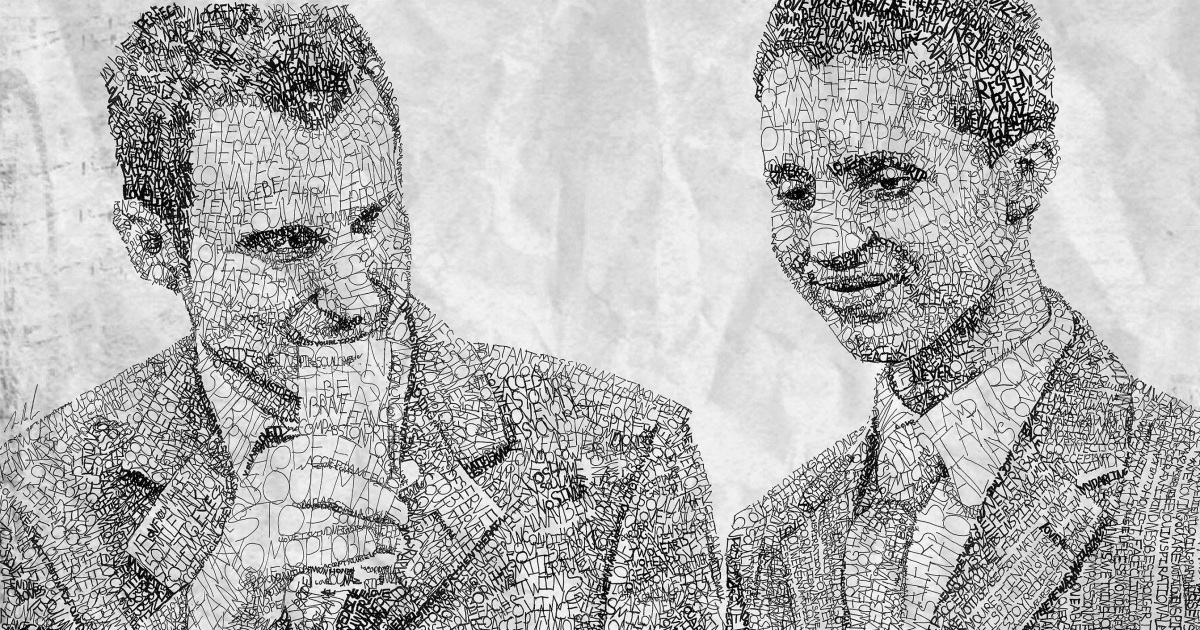
A Word Art Memorial Of A Loving Gay Couple And Their Tragic Fate refers to a deeply moving typographic portrait created by artist Michael Volpicelli. The artwork honors Dr. Nazim Mahmood and his fiancé, Matt Mahmood-Ogston, a loving gay couple whose story became a heartbreaking reminder of what happens when family rejection, cultural pressure, religious misunderstanding, and silence collide. The portrait, shared widely online in 2015, is not simply a pretty piece of word art. It is a love story, a warning, and a call to compassion.
The image features the couple formed from words Matt used to describe Nazim and their life together. That artistic choice matters. Instead of using paint alone, the portrait uses language: tenderness, memory, identity, and love shaped into a human presence. It is the visual equivalent of saying, “This person was here. This love was real. This loss should not be repeated.”
The Love Story Behind the Word Art Memorial
Dr. Nazim Mahmood was a successful doctor in London. Matt Mahmood-Ogston was his partner of 13 years and his fiancé. Their relationship was long, committed, and full of ordinary lovethe kind built from shared rooms, private jokes, grocery lists, holidays, arguments over tiny things, and plans for forever. In other words, it was not an “issue.” It was a life.
According to reports and the Naz and Matt Foundation, Nazim died in 2014 shortly after his family learned he was gay and in a long-term relationship with Matt. His death followed a painful confrontation involving family rejection and the suggestion that he seek a “cure” for being gay. The tragedy devastated Matt and became the reason he founded the Naz and Matt Foundation, an organization created to help LGBTQI+ people and families facing conflict around sexuality, gender identity, faith, and culture.
The story is especially painful because Nazim was not a confused teenager sneaking around with a secret crush. He was an adult professional, a doctor, a partner, and a fiancé. Yet even adulthood, achievement, and deep love could not shield him from the emotional force of rejection by those whose acceptance mattered deeply. That is why the memorial resonates so strongly: it shows that LGBTQ+ acceptance is not a trendy slogan. It can be a matter of survival.
Who Created the Word Art Portrait?
The memorial artwork was created by Michael Volpicelli, an American artist known for detailed portraits made from words. Volpicelli’s work often blends image and language so that the subject is not only seen but also described, remembered, and emotionally interpreted. His official biography describes his practice as “word-art” or micro-typography, and his broader portfolio includes portraits built from meaningful text connected to the subject.
That technique fits this story almost too perfectly. A standard portrait might have shown Naz and Matt smiling together. A word art portrait does more: it lets the viewer look closer. The closer you get, the more you realize the image is made from language. That mirrors grief itself. From far away, grief looks like one solid shape. Up close, it is made of a thousand details: the last conversation, the favorite shirt, the old photos, the words left unsaid, the words said too late.
Why Word Art Is Powerful in LGBTQ+ Memorials
Word art, typographic portraiture, and calligram-style design all share a simple magic trick: they turn text into an image. A calligram traditionally arranges words so their visual shape relates to their meaning. In modern portrait word art, names, memories, quotes, and emotional descriptions become the shading, lines, and contours of a face.
For LGBTQ+ memorial art, that technique carries extra weight. Queer history has often been erased, hidden, softened, or renamed to make others comfortable. Partners have been called “friends.” Fiancés have been edited out of obituaries. Families have sometimes controlled funeral narratives in ways that deny the truth of a person’s love. Word art fights that erasure. It says the quiet part loudly, beautifully, and permanently: these were the words that mattered.
The Portrait as a Love Letter
At first glance, the artwork is romantic. It shows two men connected by love, not by scandal. That alone is important. Too often, stories about gay couples are framed around pain, politics, or controversy. This memorial begins where it should: with love.
The words in the portrait act like emotional brushstrokes. They suggest that Nazim was not defined by the circumstances of his death. He was a partner, a professional, a friend, a person with humor, tenderness, and a future that should have unfolded differently. In SEO language, the “main keyword” may be word art memorial, but the real keyword is love.
The Portrait as a Warning
The memorial also warns families, faith communities, and cultures about the cost of rejection. Not every rejected LGBTQ+ person will experience the same outcome, and no single family conversation explains a whole life. But research consistently shows that family rejection can seriously harm LGBTQ+ mental health, while supportive behaviors can reduce risk and improve well-being. The Family Acceptance Project has identified specific accepting and rejecting behaviors that affect LGBTQ+ young people’s health, and The Trevor Project has found that supportive parent and caregiver actions are associated with lower suicide risk among LGBTQ+ youth.
That is the part nobody should scroll past. Acceptance is not just being “nice.” It is protective. It is practical. It is medicine without a prescription pad.
The Tragic Fate: What the Story Teaches Us
Nazim Mahmood’s death became widely discussed because it exposed a painful intersection: LGBTQ+ identity, family honor, religion, cultural expectations, and mental health. The point is not to attack faith. Many religious people and communities affirm LGBTQ+ loved ones with courage and compassion. The problem is not belief itself; the problem is when belief is used to shame, isolate, or “fix” someone who is not broken.
The Naz and Matt Foundation was created in 2014 to address exactly this issue. Its mission has focused on tackling homophobia connected to religious and cultural beliefs and helping families move toward acceptance. The organization has worked through school talks, media advocacy, parent support, and public campaigns.
That transformationfrom private grief to public serviceis one of the most powerful parts of Matt’s story. He could have disappeared into sorrow, and no one would have blamed him. Instead, he turned pain into a foundation, a mission, and a message for other families: do not wait until a funeral to say, “I love you as you are.”
Family Acceptance Is Not Optional Decoration
Family acceptance is sometimes treated as a bonus, like sprinkles on a cupcake. Lovely if available, but not strictly necessary. Research and lived experience tell a different story. For LGBTQ+ people, especially those from communities where family bonds, religion, and reputation carry enormous weight, acceptance can shape mental health, safety, housing, relationships, and self-worth.
The CDC has reported significant health disparities among LGBTQ+ students, including higher risks related to poor mental health, violence, and suicidal thoughts and behaviors. The Trevor Project’s 2024 national survey of more than 18,000 LGBTQ+ young people also highlighted the connection between anti-LGBTQ+ victimization and suicide risk, while emphasizing barriers to mental health care.
Groups such as PFLAG, the Human Rights Campaign, NAMI, and the Family Acceptance Project provide resources for parents and caregivers who want to support LGBTQ+ loved ones but may not know where to begin. Their shared message is refreshingly practical: listen, learn, use respectful language, protect your loved one from ridicule, and do not make your discomfort bigger than their humanity.
Why This Memorial Still Matters Today
The word art memorial matters because LGBTQ+ people are still fighting for the right to be remembered accurately. Love stories like Naz and Matt’s should not have to become tragedies before families take them seriously. A couple should not need public grief to prove their relationship was real.
In the United States and beyond, debates about LGBTQ+ rights often become abstract. People argue about “values,” “tradition,” “religion,” or “culture” as if they are moving chess pieces on a board. But behind every debate is a person sitting at a kitchen table, wondering whether coming out will cost them their family. Behind every policy headline is someone deciding whether to bring their partner home for dinner. Behind every “I just don’t agree with it” is a human being hearing, “I don’t fully agree with you existing.”
This is where art does what statistics cannot. Statistics inform us. Art interrupts us. A portrait made of words asks viewers to slow down and recognize the human being inside the headline. It makes the issue personal, and personal is where change often begins.
How Families Can Respond Better
When someone comes out, the first response matters. It does not have to be perfect. Nobody is asking parents to become walking rainbow encyclopedias overnight. But the first response should be safe. Try: “I love you. Thank you for telling me. I may need to learn, but you are not losing me.” That sentence can do more good than a truckload of panicked advice.
Families should avoid language about “curing,” “fixing,” “phases,” or “shame.” Major mental health and medical organizations do not consider being gay, lesbian, bisexual, transgender, or queer to be something that needs curing. Suggesting otherwise can create deep emotional harm. Instead, families can seek education from affirming organizations, speak with culturally competent counselors, and connect with other parents who have walked the same road.
Faith communities also have a role to play. They can choose pastoral care over panic. They can make space for LGBTQ+ members without forcing them to split themselves into acceptable and unacceptable parts. They can say, clearly and publicly, that no child should fear losing family, housing, dignity, or life because of whom they love.
Experiences and Reflections: What This Story Feels Like in Real Life
Anyone who has ever loved someone quietly will understand the ache inside this memorial. There is a particular kind of loneliness that comes from being happy in private and cautious in public. You build a home with someone, learn the shape of their moods, memorize how they take their coffee, and still hesitate before saying “my partner” in certain rooms. That hesitation is exhausting. It is also unfair.
The story of Naz and Matt brings up experiences many LGBTQ+ couples know too well: introducing a partner as a “roommate,” editing social media photos, changing pronouns in casual conversation, or calculating whether a family event is emotionally safe. These small edits may look harmless from the outside, but they slowly teach people to treat their own love as a liability. Imagine having to run a public relations department for your heart. Even the most organized among us would rather not.
For families, the story can be uncomfortable because it asks hard questions. What would I do if my child told me they were gay? Would my first words bring them closer or push them away? Would I worry more about neighbors, relatives, religious leaders, and reputation than about the person standing in front of me? These questions are not asked to shame parents. They are asked because love sometimes needs rehearsal before the emergency arrives.
Many parents who struggle at first are not cruel. They may be frightened, misinformed, or carrying beliefs they have never had to examine closely. But fear does not get the final vote. A parent can be confused and still be kind. A sibling can be surprised and still be loyal. A faith leader can hold tradition and still refuse humiliation. Acceptance does not require understanding every detail immediately. It begins with protecting the relationship while learning.
For artists, writers, and memorial makers, this word art portrait offers a meaningful lesson: tell the truth with tenderness. A memorial does not need to shout to be powerful. Sometimes the strongest tribute is one that invites people closer. The words forming the portrait are not decorative filler; they are emotional evidence. They preserve the vocabulary of love after loss has tried to silence it.
For LGBTQ+ readers, especially those from families where coming out feels complicated, this story may feel heavy. Please know this: your life is larger than one person’s reaction. Rejection can be devastating, but it is not a verdict on your worth. There are affirming friends, chosen families, counselors, community groups, and crisis resources that exist because people have fought to make sure you are not alone.
For allies, the experience is a reminder to be specific. “I support LGBTQ+ people” is good. “You can stay with me if home becomes unsafe” is better. “I will come with you to talk to your parents” is better still. Love becomes real when it has logistics.
And for everyone who sees the memorial, the simplest takeaway may be this: say the loving thing now. Say it before the dramatic music. Say it before the hospital corridor, before the funeral, before the regret. Say, “You are loved.” Say, “Your partner is welcome.” Say, “There is nothing to cure.” Say, “I am proud of you.” Words can wound, yes. But words can also become a portrait, a shelter, a bridge, and sometimes even a lifeline.
Conclusion: A Memorial Made of Words, a Message Made of Love
A Word Art Memorial Of A Loving Gay Couple And Their Tragic Fate is more than an artwork title. It is a doorway into a real story about love, loss, family rejection, and the urgent need for acceptance. Michael Volpicelli’s portrait honors Nazim Mahmood and Matt Mahmood-Ogston by turning memory into visible language. Matt’s ongoing advocacy through the Naz and Matt Foundation turns grief into action.
The lesson is painfully clear: LGBTQ+ people do not need to be fixed. Families, communities, and cultures need to become safer places for love to be spoken honestly. If a portrait made of words can teach us anything, let it teach this: the words we choose may become part of someone’s survival story.
Crisis support note: If you or someone you know is thinking about self-harm or suicide in the United States, call or text 988 for the Suicide & Crisis Lifeline. LGBTQ+ young people can also contact The Trevor Project for free, confidential 24/7 crisis support by phone, text, or chat.










