
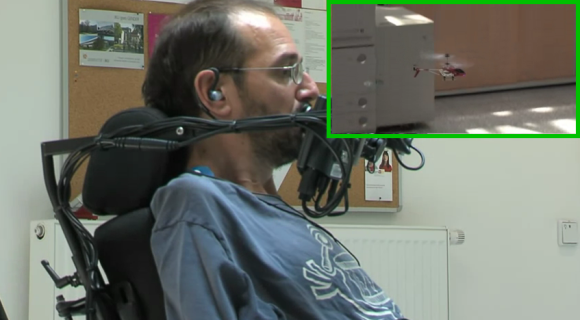
Flying a tiny infrared helicopter with a regular hand-held remote is already a comedy show in miniature: one second it is hovering proudly, the next it is attempting to become a ceiling fan. But flying that same IR helicopter with adaptive technology, muscle signals, and custom electronics? That is where a toy turns into a surprisingly powerful lesson about accessibility, engineering, and human creativity.
The phrase adaptive technology used to fly an IR helicopter may sound like the title of a science fair project that drank too much coffee, but the idea is deeply practical. It shows how a person who cannot comfortably use a standard remote control can still command a device through alternative input methods such as muscle activity, sip-and-puff sensors, wheelchair joysticks, switches, or camera-based interfaces. The helicopter is small, but the message is huge: technology becomes more meaningful when it adapts to the person, not the other way around.
At the center of this concept is a clever system that translates body signals into flight commands. Instead of thumbs pushing sticks on a plastic remote, sensors detect intentional movements or signals from the user. Software interprets those signals, maps them to control values, and a microcontroller sends infrared commands to the toy helicopter. The result is part assistive technology, part electronics hack, and part “look, Mom, no hands” moment.
What Is an IR Helicopter?
An IR helicopter is a small remote-controlled helicopter that receives commands through infrared light. Unlike larger hobby-grade aircraft that often use radio frequency transmitters, many mini indoor helicopters use IR because it is inexpensive, simple, and suitable for short-range control. Infrared light is invisible to the human eye, but the helicopter’s receiver can detect coded pulses from the remote. In ordinary use, those pulses tell the aircraft to increase throttle, turn, move forward, or trim its direction.
That simplicity makes IR helicopters excellent platforms for experimentation. They are light, relatively affordable, and usually designed for indoor spaces. They also tend to be forgiving enough for tinkering, although not always forgiving enough for your houseplants. When engineers, makers, or accessibility researchers want to demonstrate alternative control methods, a small IR helicopter becomes a perfect flying example. It is visual, immediate, and just unpredictable enough to keep everyone awake.
Why Adaptive Technology Matters
Adaptive technology refers to tools, systems, or modifications designed to help people with disabilities perform tasks that might otherwise be difficult or impossible. In practice, it can be as simple as a large-button switch or as advanced as a custom control system using biosignals. The key principle is personalization. A successful adaptive interface does not assume every user has the same movement, strength, timing, or endurance.
This is especially important for people with limited motor control. A standard remote control demands hand grip, finger precision, visual attention, and quick correction. For some users, those requirements create a wall. Adaptive technology turns that wall into a doorway by asking a better question: what reliable action can this person perform comfortably? The answer might be a shoulder shrug, a neck muscle contraction, a breath pattern, a head movement, a blink, a joystick nudge, or a single switch press.
Once that input is identified, the system can map it to a command. In the case of an IR helicopter, a muscle signal may control altitude, while another input handles direction. The point is not that everyone needs to fly a tiny helicopter around the living room. The point is that the same approach can control a computer, smart home device, communication aid, wheelchair interface, robotic arm, or educational game.
The Original Idea: Muscle Signals Become Flight Commands
One notable demonstration of adaptive helicopter control used electrical signals from muscles near the shoulders and neck. These signals are often discussed under the umbrella of electromyography, or EMG. When a muscle contracts, it produces small electrical activity. Surface electrodes placed on the skin can detect that activity without needles or surgery. The signal is tiny and noisy, so it must be amplified, filtered, and interpreted before it becomes useful as a command.
In the helicopter demonstration, the user’s intentional muscle movements were converted into control data. The system detected changes in muscle activity and mapped them to the helicopter’s altitude. Instead of pressing a throttle stick with a thumb, the user could flex a specific muscle group to influence lift. The helicopter itself received commands through an Arduino-based infrared transmitter. In plain English: muscles talked to software, software talked to Arduino, Arduino blinked invisible light, and the helicopter obeyed. Mostly. Helicopters have opinions.
How the System Works
1. Input: Detecting the User’s Available Signal
The first layer of the system is the input method. This is where adaptive technology becomes personal. For one user, shoulder muscle activity may be reliable. For another, it may cause fatigue. A sip-and-puff sensor may work better. Someone else may prefer a wheelchair joystick, head tracker, facial gesture, or switch. The input is chosen around the user’s abilities, comfort, and consistency.
In an EMG-based setup, electrodes are placed on the skin over a muscle group. The system watches for patterns that indicate intentional activation. It does not need to read thoughts, which is good, because most of us are thinking about snacks anyway. It simply detects whether a trained movement creates a measurable signal.
2. Processing: Turning Signals Into Meaning
Raw biosignals are messy. They can change with electrode position, skin moisture, muscle fatigue, movement, and electrical noise. Processing software must clean the signal, extract useful features, and decide what command should happen. This may involve thresholds, smoothing, calibration, and timing rules. For example, a small muscle contraction might mean “increase throttle slightly,” while a stronger contraction might mean “increase throttle more.”
A flexible framework such as AsTeRICS is useful because it allows different sensors, processors, and actuators to be connected into a model. Instead of rebuilding everything from scratch, developers can combine modules. This is the “construction set” idea: choose an input, process it, and connect it to an output. Today the output is a helicopter. Tomorrow it could be a mouse cursor, a keyboard command, a smart light, or a communication board.
3. Output: Sending IR Commands
The final layer is the output. A microcontroller such as an Arduino can drive an infrared LED. By blinking that LED in the correct pattern, it can imitate the helicopter’s remote control. The helicopter receives the IR pulses and responds as if the original remote had sent them.
Infrared control has limits. It usually requires line of sight, works best indoors, and can be affected by strong light. But for a small demonstration, it is wonderfully direct. It also gives researchers and hobbyists a safe, visible way to show that an adaptive interface can control a real-world object, not just move a cursor on a screen.
Why Use a Helicopter Instead of a Boring Demo?
A flying toy is more exciting than a blinking LED. No offense to blinking LEDs; they are the golden retrievers of electronics projects. They try their best. But a helicopter immediately shows cause and effect. The user activates a muscle, the system interprets the signal, and the helicopter rises. Everyone in the room can see the result.
That visibility matters. Assistive technology is sometimes discussed in abstract terms: access, independence, interoperability, user-centered design. Those terms are important, but a flying object makes the concept tangible. It says, “This person can control technology through an interface designed around them.” That is more memorable than a slide deck with seventeen bullet points and one clip-art wheelchair icon from 1998.
Adaptive Inputs That Could Fly an IR Helicopter
EMG Muscle Sensors
EMG sensors measure electrical activity generated by muscle contraction. They are useful when a person has at least one muscle group they can activate reliably. EMG-based control can be surprisingly intuitive because the user is controlling a device with body movement, even if the movement is small. However, calibration is important. Muscle fatigue can change signal strength over time, so the system should be adjustable.
Sip-and-Puff Sensors
A sip-and-puff interface detects air pressure from inhaling or exhaling through a tube. It is widely associated with wheelchair control and computer access for people who cannot use hand controls. For an IR helicopter, a soft puff could increase throttle, a soft sip could decrease it, and stronger actions could trigger direction changes. The benefit is that breath control may be more reliable for some users than shoulder or hand movement.
Wheelchair Joysticks
Many powered wheelchair users already operate a joystick or alternative drive control with skill. A system can reuse that familiar input and map it to a new device. This is a powerful design principle: do not force users to learn a strange control method if they already have a comfortable one.
Head Tracking and Camera-Based Control
Camera-based systems can detect head movement, facial position, or other visual cues. A head turn might become a steering command. A nod might trigger lift. These systems can reduce the need for physical switches, though lighting, camera placement, and background movement can affect reliability.
Single Switch Scanning
Single switch access is one of the most elegant examples of adaptive design. The system cycles through options, and the user activates a switch when the desired command is highlighted. It may not be fast enough for fancy helicopter acrobatics, but it can work for simplified control modes, games, menus, and training environments.
The Accessibility Lesson Hidden Inside the Toy
The helicopter is fun, but the real achievement is the control pipeline. Once a system can translate a user’s available input into a device command, the same idea can scale. It can support recreation, education, communication, smart home access, and employment tools. Recreation deserves special attention. People with disabilities should not only receive technology for medical appointments, school forms, or productivity tasks. Fun matters. Play is not a luxury feature in human life; it is part of learning, confidence, and social connection.
That is why an adaptive IR helicopter project is more than a technical stunt. It is a reminder that accessibility should include joy. A person should be able to control a computer, yes. They should also be able to race a toy, play a game, fly a helicopter, make music, or prank a sibling with a robot that delivers socks. Responsibly, of course. Mostly responsibly.
Design Challenges Engineers Must Solve
Adaptive control systems must be reliable, comfortable, and forgiving. Reliability means the system correctly understands the user’s intention. Comfort means the input method does not cause strain. Forgiveness means mistakes do not create dangerous or frustrating outcomes. With a helicopter, that may mean limiting maximum throttle, adding smooth acceleration, or creating an emergency stop command.
Another challenge is latency. If the system takes too long to respond, the user feels disconnected from the device. Helicopters require quick feedback because they drift. A delay of even a fraction of a second can turn “gentle hover” into “why is it in the curtains?” Signal processing must balance stability with responsiveness. Too sensitive, and false commands happen. Too cautious, and the helicopter feels sleepy.
Calibration is also essential. A user’s signal may change during the day. EMG strength can vary with fatigue, electrode placement, or posture. Sip-and-puff pressure can vary with breathing comfort. A good adaptive system should allow easy recalibration and should not punish the user for being human.
Safety and Practical Considerations
Small indoor IR helicopters are usually safer than larger radio-controlled aircraft, but they are still moving objects with spinning rotors. Any adaptive flying demo should be tested in an open indoor area, away from faces, pets, fragile objects, and ceiling fans. The aircraft should be lightweight, the battery should be in good condition, and an assistant should be ready to stop the test if needed.
For biosignal systems, comfort and skin safety matter. Electrodes should be used according to product instructions, and users should not be pushed into repeated movements that cause pain or fatigue. The best adaptive technology feels empowering, not like a workout designed by a villainous physical therapist with a helicopter obsession.
What This Means for the Future of Assistive Technology
The most exciting part of adaptive helicopter control is not the helicopter. It is the modular thinking. Modern assistive technology is moving toward systems that can be personalized quickly. Instead of one expensive device that solves one narrow problem, flexible frameworks can combine sensors, software, and output devices in different ways.
That matters because disability is not one-size-fits-all. Two people with the same diagnosis may have very different abilities, preferences, and goals. One may want a communication interface. Another may want environmental control. Another may want to play games. A modular adaptive system can meet people where they are.
Low-cost electronics also play a major role. Microcontrollers, open-source software, 3D printing, and affordable sensors have lowered the barrier to experimentation. Professional assistive technology services remain important, especially for safety-critical devices, but maker-style innovation can help create prototypes, custom solutions, and new ideas faster than traditional product cycles.
Experience Notes: What It Feels Like to Work With Adaptive IR Helicopter Control
Working with an adaptive IR helicopter system feels like trying to teach a hummingbird to read your mind, except the hummingbird is made of plastic and the mind-reading is actually signal processing. The first lesson is humility. A standard remote control may look simple, but it packs several assumptions into your hands: grip strength, thumb accuracy, fast reaction time, and steady visual tracking. Once those assumptions are removed, every control decision becomes meaningful.
The second lesson is that calibration is not a boring setup step. It is the heart of the experience. When the input is a muscle signal, the system has to learn the difference between rest, intentional movement, accidental tension, and fatigue. At first, the helicopter may respond too eagerly, hopping upward like it heard good news. Then the thresholds are adjusted, smoothing is added, and the motion becomes more controlled. That moment when the user realizes, “I did that,” is the entire project in one sentence.
A sip-and-puff version creates a different rhythm. Breath commands feel more deliberate. They can be easier to separate into distinct actions, but they also require careful comfort settings. Nobody wants to fly a helicopter by feeling like they are inflating a parade balloon. The best setup keeps commands light, predictable, and easy to repeat.
The third lesson is that fun improves testing. When people test a spreadsheet interface, they report bugs politely. When they test a flying toy, they laugh, dodge, celebrate, and immediately suggest improvements. That emotional feedback is useful. It reveals whether the interface feels responsive, whether the user trusts it, and whether the control method is enjoyable enough to use again.
The fourth lesson is that small projects can reveal big design truths. An IR helicopter only needs a few commands, but those commands represent the same problems found in more serious assistive systems: input reliability, error prevention, fatigue, customization, and user confidence. If a system can make a toy fly through muscle signals, the same design logic can help someone control a computer, navigate a communication grid, or interact with a smart home.
Finally, the experience teaches patience. Adaptive technology is not about forcing the user to match the machine. It is about shaping the machine around the user. When the helicopter finally lifts smoothly, it is not just a gadget trick. It is a tiny airborne proof that accessibility can be creative, playful, and deeply human.
Conclusion
Adaptive technology used to fly an IR helicopter is a brilliant example of how accessibility, electronics, and imagination can work together. By translating muscle activity, breath input, joystick movement, or other accessible signals into infrared commands, a simple toy becomes a demonstration of personalized control. The helicopter may be small enough to land in a cereal bowl, but the concept behind it is much bigger.
This kind of project shows why assistive technology should be flexible, modular, and user-centered. It also reminds us that accessibility is not only about completing necessary tasks. It is about independence, experimentation, play, and the right to enjoy technology in unexpected ways. When adaptive design is done well, it does not merely help someone use a device. It lets the device meet the person halfway, then maybe hover slightly above the coffee table.














