
Some aprons announce themselves with cupcakes, roosters, motivational slogans, or enough ruffles to frighten a minimalist. An indigo apron takes another route. Quiet, useful, and handsome without trying too hard, it looks as natural beside a mixing bowl as it does beside a potting bench, a paintbrush, or a table set for dinner.
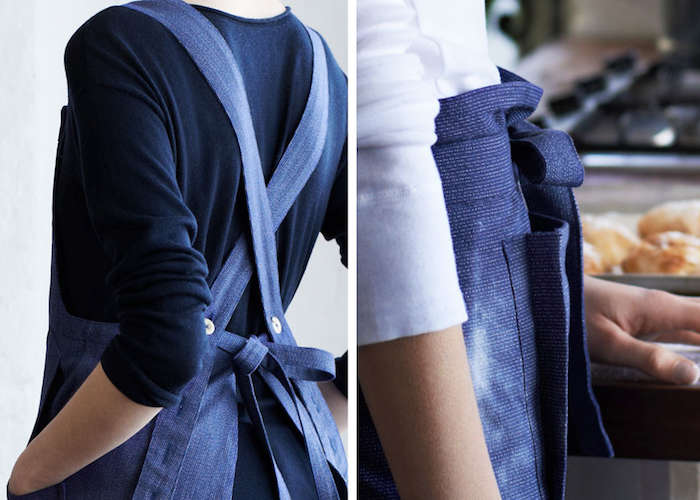
The original inspiration behind An Apron for All Hours, Indigo Edition was a beautifully understated apron design in a washed blue, yarn-dyed cotton stripe. The full bib version offered generous coverage, two large front pockets, and shoulder straps that buttoned at the back. A coordinating half-apron provided a lighter alternative. The appeal was immediately obvious: these were not novelty aprons waiting for Thanksgiving. They were practical garments designed to be lived in.
That idea feels even more relevant today. Modern cooks, gardeners, makers, florists, ceramicists, and enthusiastic home improvers increasingly want objects that work hard without making the house look like a warehouse. The indigo apron sits comfortably in that sweet spot. It protects clothing, carries tools, develops character with use, and can remain on when guests arrive without making its wearer look as though an emergency catering shift has broken out.
Why the Indigo Apron Has Such Lasting Appeal
Indigo blue has a remarkable ability to look both historic and modern. The color has centuries of textile history behind it, yet it remains closely associated with contemporary denim, workwear, utility clothing, and relaxed interiors. That tension gives an indigo apron visual depth. It feels familiar without feeling boring.
It is worth making one distinction. An apron described as “indigo” is not automatically dyed with natural indigo. The term may refer to the color rather than the dye process. Natural indigo has a long and complex global history, while many modern blue textiles use synthetic dyes or other commercial coloring systems. A washed indigo look can therefore be appreciated for its aesthetic qualities without assuming a particular production method.
What matters in everyday use is the combination of color, fabric, and construction. Deep and medium blues are forgiving around the messes of ordinary life. Flour still shows up, of course. Flour has never respected a color palette. But small splashes, garden dust, pencil marks, and the evidence of a busy afternoon often blend into the visual character of blue workwear more gracefully than they would on a pristine pale fabric.
A Color That Improves With Character
One reason people love denim and other blue work fabrics is that wear does not always look like damage. Creases soften. Edges become lighter. Frequently handled areas develop subtle variation. Instead of demanding permanent perfection, the material can tell the story of use.
That quality is especially appropriate for an apron. An apron should not require the nervous attention of a silk blouse. Its purpose is to stand between your clothes and whatever you are chopping, kneading, planting, sanding, glazing, or enthusiastically spilling.
A well-used indigo apron may eventually look better than a brand-new one. That is a rare and wonderful quality in a household object.
The Design Details That Make an All-Day Apron Work
A beautiful apron can still be a terrible apron. If the straps dig into your neck, the pockets are decorative thimbles, or the fabric twists every time you bend down, admiration tends to disappear somewhere around the second tray of cookies.
The best apron design begins with movement. You should be able to reach a high shelf, lean over a worktable, carry a basket, and wash dishes without repeatedly adjusting the garment.
Coverage Without the Feeling of Armor
A full bib apron protects the front of the torso and upper legs, making it useful for cooking, baking, gardening, ceramics, and other messy work. The original indigo striped design that inspired this discussion was approximately knee-length on many wearers, providing substantial coverage while maintaining a simple silhouette.
Fabric weight matters. A very lightweight apron can flutter, wrinkle, and offer little protection from splashes. An extremely heavy apron may feel more appropriate for welding than whisking vinaigrette. Medium-weight cotton often provides an appealing compromise: enough structure to hang properly and support pockets, but enough flexibility for comfortable movement.
Shoulder Straps and the Case for Comfort
Traditional bib aprons frequently rely on a neck loop, but longer periods of wear have encouraged interest in shoulder-based and crossback designs. Distributing the garment across the shoulders can reduce the sensation of weight hanging from the neck, particularly when pockets contain tools.
The buttoned shoulder straps of the earlier indigo design offered another practical benefit: adjustment. Small details such as buttons, generous ties, or sliding hardware can transform an apron from something technically wearable into something people actually choose to wear for hours.
Fit should also allow layering. An apron worn over a summer T-shirt may need to accommodate a sweater several months later. Generous adjustment makes one garment useful through more seasons and for more people in the household.
Large Pockets Are Not Optional Decoration
Two large front pockets can change the entire usefulness of an apron. In the kitchen, they might hold a thermometer, tasting spoon, timer, folded towel, recipe card, or phone. In the garden, the same pockets can carry seed packets, labels, pruning gloves, and a small spool of twine.
Move to a studio or workshop and the inventory changes again: pencils, measuring tape, clips, brushes, chalk, or a notebook.
The best pockets are large enough to be useful but positioned so that their contents do not attack your thighs every time you walk. Reinforcement at pocket corners also matters because these areas experience repeated stress. A pocket may begin life holding a wooden spoon and somehow end the afternoon containing three screwdrivers and a mysterious bolt. Aprons lead complicated lives.
From Breakfast to Bedtime: Why It Is an Apron for All Hours
The phrase apron for all hours works because a versatile apron is less like specialized kitchen equipment and more like a wearable household tool.
Morning: Coffee, Dough, and the First Small Mess
The day may begin with coffee and breakfast, neither of which is as innocent as advertised. Coffee drips. Butter travels. Sourdough starter behaves like a substance developed for forensic tracking.
Throwing on an apron before beginning creates a small psychological shift. You are ready to work. Clothing is protected, a towel can be tucked into a pocket or waistband, and the day’s first splatter becomes a non-event rather than a laundry emergency.
An indigo stripe is particularly good in the morning because it looks relaxed rather than formal. The garment feels closer to familiar workwear than a costume reserved for entertaining.
Afternoon: Gardening, Cleaning, and Creative Projects
After the kitchen is cleanor clean enough to satisfy a reasonable jurythe same apron can move outdoors. Large pockets make it useful for light gardening and flower arranging, while the cotton fabric provides a basic barrier against soil and plant debris.
Indoors, an apron can become equally useful during cleaning, organizing, sewing, crafting, or small repair projects. The point is not that one apron should replace genuine protective equipment. It should not. Tasks involving dangerous chemicals, flames, sparks, blades, or industrial hazards require protection designed specifically for those risks.
For ordinary household work, however, the simple cotton apron remains remarkably efficient. It keeps frequently used items close and prevents the classic household ritual of placing a pencil somewhere “safe” and then spending fifteen minutes searching for it.
Evening: Cooking Without Changing the Mood
Evening is where a good-looking apron earns its place. Imagine preparing dinner while friends are already in the kitchen. A purely industrial apron may make the cook feel as if everyone else has arrived at a party while they are still on duty.
A washed indigo apron avoids that problem. Blue stripes, simple lines, and workwear-inspired details can coordinate naturally with everyday clothing. The apron protects the outfit without visually replacing it.
When dinner is ready, you can remove the apron. Or, if you are still carrying the corkscrew and serving spoon in the pockets, you may discover that nobody particularly cares.
Indigo, Workwear, and the Beauty of Useful Things
The indigo apron belongs to a larger design tradition that celebrates practical objects. Denim became strongly associated with durable work clothing because of its sturdy woven construction and ability to withstand repeated use. Contemporary apron makers continue to borrow from that heritage through reinforced stitching, substantial cotton fabrics, utility loops, large pockets, and adjustable straps.
Yet the most successful modern apron is not simply workwear copied into the kitchen. It is lighter, more flexible, and designed around domestic movement.
This explains why the category has expanded beyond professional chefs. Home cooks now choose among traditional bib aprons, crossback aprons, smocks, pinafore-inspired silhouettes, and half-aprons. Each solves a slightly different problem.
A half-apron is quick, cool, and convenient when upper-body protection is unnecessary. A bib apron provides broader coverage. A smock offers easy slip-on wear and a relaxed fit. A crossback design can be particularly comfortable during long sessions. There is no universal winner because the right apron depends on what you do while wearing it.
The indigo edition succeeds as an idea because it is not locked into one professional identity. It can look appropriate on a baker, gardener, host, artist, or someone attempting to assemble a bookshelf without reading the instructions.
How to Choose Your Own Indigo Apron
Shopping for an apron should involve more than deciding which product looks best in an artfully arranged photograph beside a loaf of bread.
Start With the Fabric
For general household use, cotton is an appealing choice because it is familiar, breathable, washable, and available in many weights and weaves. Cotton canvas offers more structure and durability. Denim brings stronger workwear character. Lighter cotton and cotton-linen blends may feel cooler and softer for long periods indoors.
Consider what you actually do. Someone making bread twice a week has different needs from a ceramicist working with wet clay or a gardener carrying pruning tools.
Check the Pocket Placement
Look beyond the number of pockets. Consider their size, depth, position, and reinforcement. A pocket should be reachable without requiring the flexibility of a circus performer.
Also be realistic about what belongs inside it. A phone, thermometer, pencil, or seed packet makes sense. An uncovered chef’s knife does not. An apron pocket is useful, but it is not a magical exemption from common sense.
Think About Strap Style
For short cooking sessions, a simple neck loop may be perfectly comfortable. For all-day use, shoulder straps, a crossback system, or a smock-style design may feel better. Adjustable features are valuable when the apron will be shared or worn over seasonal layers.
Choose a Length That Matches the Job
Longer aprons offer more protection but can feel restrictive on shorter wearers or during jobs involving frequent crouching. Shorter designs improve freedom of movement but leave more clothing exposed.
The ideal length is the one you stop noticing after five minutes.
Caring for a Washed Indigo or Blue Cotton Apron
An apron should be washable. That sounds obvious until you encounter a beautiful kitchen textile with care instructions more demanding than those for a luxury automobile.
Always follow the manufacturer’s label because dye systems, fabric treatments, trims, and hardware vary. For many blue cotton aprons, cool or cold washing and lower drying temperatures can help limit unnecessary color loss and fabric stress. Air-drying is another practical option when recommended.
Wash deeply colored textiles with similar colors, especially during their early washes. Avoid assuming that household tricks such as adding vinegar or salt will permanently “set” the dye in a finished commercial garment. Dye chemistry is more complicated than a viral laundry tip.
Deal with stains promptly. Remove solids without grinding them deeper into the cloth, then treat the affected area according to the stain type and the care label. Before using strong stain removers or bleach, remember the obvious problem: products designed to remove color may indeed remove the color.
Cotton can also change dimension with washing and drying, particularly when exposed to heat and mechanical action. Sensible laundering protects both the fit and appearance of the apron.
Still, do not become so protective that the apron never gets used. A work garment without a mark on it is suspicious. The goal is longevity, not museum conservation.
Why an Indigo Apron Makes a Thoughtful Everyday Gift
Aprons occupy an unusually useful gift category. They can feel personal without requiring exact clothing sizes, especially when the design includes adjustable straps and generous ties. They suit new homeowners, enthusiastic cooks, gardeners, artists, bakers, grillers, and people who somehow begin a “small weekend project” that consumes the garage for three months.
Indigo also makes the gift easier to integrate into different homes and wardrobes. Blue works with warm wood, stainless steel, white kitchens, colorful ceramics, natural linens, and outdoor settings. It is distinctive without being difficult.
For an even more personal gift, consider embroidery, visible mending, or a handmade loop for a favorite kitchen towel. Over time, repairs can become part of the garment rather than evidence that it should be discarded.
Experience Notes: Living in an Indigo Apron From Morning to Night
The real test of an all-hours apron is not how it looks folded on a shelf. It is what happens after several hours of actual activity.
Picture a Saturday morning that begins with the optimistic idea of making pancakes. The apron goes on before the first bowl comes out. Within twenty minutes, one pocket contains a phone playing music, the other holds a folded dish towel, and a dusting of flour has appeared across the front with the precision of an abstract painter.
That is the first pleasant discovery: the apron changes your relationship with the mess. Instead of constantly pulling your shirt away from the counter, you simply continue cooking. A drip lands on the fabric. Fine. That is the assignment.
After breakfast, the apron stays on while the kitchen is reset. The pockets become unexpectedly useful. A stray measuring spoon goes into one. A pen and shopping list enter the other. For a few minutes, the apron functions less like clothing and more like a tiny mobile command center.
Next comes the garden. The blue cotton that looked appropriate beside the stove looks equally at home among terracotta pots and green leaves. Seed packets disappear into a pocket. So do plant labels. A pair of gloves is tucked into the waistband.
The best part is continuity. There is no need to prepare for each small activity as though changing departments in a factory. The apron simply follows the work.
By afternoon, the garment has softened with movement. This is where strap design becomes important. An apron that seemed perfectly comfortable during a ten-minute fitting can become irritating after several hours. Shoulder-based support or a well-adjusted bib design tends to disappear more successfully into the background. Good workwear is often defined by what you stop noticing.
Later, friends arrive while dinner preparation is still underway. There is garlic on the cutting board, a pot on the stove, and absolutely no chance that the kitchen will resemble the calm architectural photograph imagined earlier in the day.
Yet the indigo apron does not feel out of place. That is perhaps its greatest success. It looks like part of the outfit rather than a temporary protective device. You can pour drinks, chop herbs, open the door, and sit at the edge of the table without feeling dressed for a commercial dish room.
The pockets continue collecting evidence. A corkscrew appears. Then a folded recipe note. Then, inexplicably, a small piece of garden twine from three hours earlier.
At the end of the evening, the apron finally comes off. There are visible marks from the day, but the clothing beneath it has survived remarkably well. The apron goes into the laundry rather than five separate garments needing individual stain treatment.
That experience explains why certain aprons become habitual. The best one is not necessarily the newest, most expensive, or most heavily equipped. It is the apron hanging where you can reach it without thinking. It has the right pockets. The straps do not annoy you. The color works with nearly everything. You wear it long enough that the fabric begins to record your routines.
An indigo apron can become exactly that kind of object: less a kitchen accessory and more a companion to useful hours.
Conclusion: The Quiet Luxury of an Apron That Works
An Apron for All Hours, Indigo Edition is ultimately about a simple design principle: everyday objects become valuable when beauty and usefulness reinforce each other.
A washed blue cotton apron does not need technology, a complicated instruction manual, or seventeen specialized attachments. It needs comfortable straps, useful coverage, strong pockets, washable fabric, and a design that makes you happy to put it on.
Indigo gives the apron an extra dimension. The color connects naturally with workwear, textile tradition, and the appealing idea that useful things can become more personal with age. Whether the day involves bread dough, tomato sauce, potting soil, paint, flowers, or an ambitious dinner party, the apron is ready to absorb a little evidence.
And that may be the strongest argument for owning one. Life is messy. Your favorite shirt does not have to be.
Note: The original indigo apron that inspired this topic was featured years ago, so specific products, prices, and availability may have changed. This article focuses on the enduring design ideas, materials, practical features, and everyday experiences associated with the all-hours indigo apron.










