
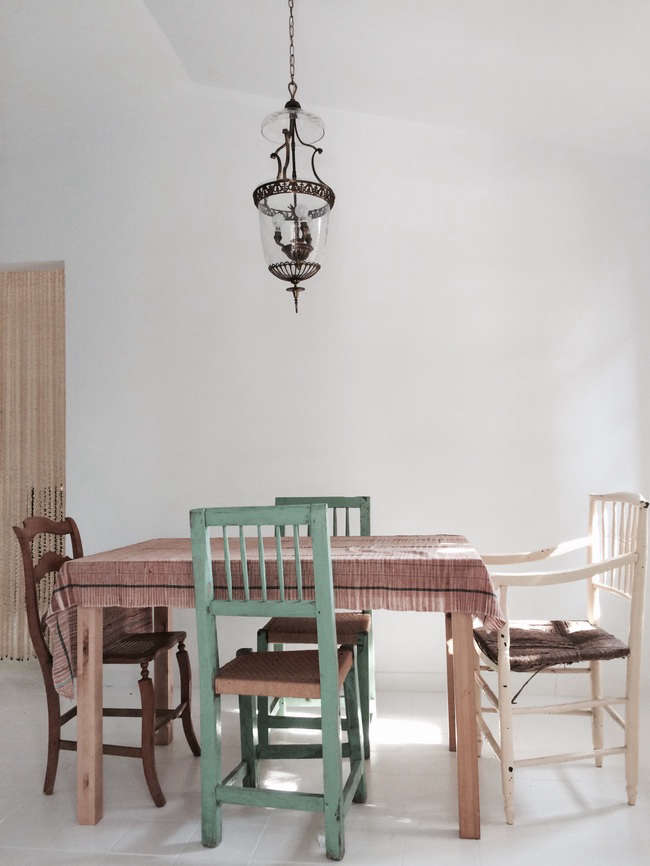
Some homes announce themselves with dramatic marble, complicated lighting plans, and enough decorative pillows to start a small textile economy. This Mallorca casita takes a different route. It is bright, relaxed, slightly eccentric, and full of objects that look as though they have collected excellent stories on their way to the island.
Created by New York–born designer Danica Wilcox for art dealer Marta Moriarty and her husband, Jesús Huarté, the small retreat began life as a humble storage building on the Maritja estate near Cala Sant Vicenc. Instead of trying to turn it into a glossy luxury villa, Wilcox gave it a soul: whitewashed walls, sunlit openings, vintage pieces, local craft, playful art, and just enough imperfection to keep the whole place from feeling like a hotel lobby with a fruit bowl.
The result is a lesson in Mediterranean interior design that feels personal rather than theatrical. It respects Mallorca’s climate, its materials, and its handmade traditions while still carrying a little bit of downtown New York creative energy. Think less “beige resort brochure” and more “an artist’s hideaway where every chair has opinions.”
A Small Building With a Big Point of View
The most interesting thing about this Mallorca casita is not its size. It is the confidence behind the edit. Wilcox transformed a practical outbuilding into a compact retreat without stuffing it with decorative tricks. The design lets light, texture, art, and a few memorable objects do the heavy lifting.
The building faces east, so the renovation focused on bringing in more morning light. Small traditional openings were expanded, while shutters were added to help manage the intense heat of a Mallorcan summer. That combination is smart for more than visual reasons. It makes the home adaptable: open and breezy when the day is gentle, shaded and protected when the sun decides it has something to prove.
Whitewashing the interior and painting the floors a crisp white gave the casita a clean canvas. In another house, that could have tipped into sterile. Here, it does not. The surrounding garden, antique furniture, woven fibers, artwork, and mismatched seating keep the rooms grounded. White becomes less of a color choice and more of a light-catching device.
The casita also sits within an estate that includes lavender, trees, a labyrinth, and an Andy Goldsworthy stone sculpture. That landscape matters because the interiors do not compete with it. Furniture is arranged openly, allowing the garden and sky to feel like part of the room. The house does not shout over Mallorca. It listens to it.
Where New York Instinct Meets Mallorcan Light
Danica Wilcox arrived in Mallorca after working as a jewelry designer in New York. Her connection to the island began years earlier, when she visited with her mother as a child. Later, she opened Hito Home in Pollença, a shop that showcased work by local artists and craftspeople before she shifted her focus to interior design.
That background helps explain why the casita feels collected rather than decorated. A jewelry designer learns to notice scale, contrast, texture, and the magic of one unusual object against a quiet background. Those instincts show up throughout the house. A glass pendant light from Madrid becomes sculptural. An old school chair becomes a punch of unexpected color. A woven wall piece becomes both humor and texture.
A White Room Does Not Have to Be a Blank Room
White walls are often treated as the safest possible choice, like ordering plain toast at a restaurant famous for pasta. But in this casita, white is not timid. It creates contrast for old wood, colorful textiles, art, green views, and natural fibers.
The brilliance comes from using white as a backdrop instead of a final destination. The floor, walls, and larger surfaces stay simple, but the room becomes lively through details: the uneven warmth of antique wood, the texture of esparto grass, the soft movement of woven curtains, and the occasional electric color.
This is a useful lesson for anyone trying to create a Mediterranean-style home. Start with calm architectural surfaces, then add character through things that have material weight or emotional history. A room does not need twenty accessories. It needs a few good ones that look capable of surviving both conversation and sunlight.
Shutters, Shade, and the Luxury of Common Sense
One of the casita’s smartest features is also one of its least flashy: shutters. Enlarged windows bring in daylight and connect the rooms to the garden, while shutters give the homeowners control over heat, privacy, and glare.
This is a core idea in Mediterranean architecture. Beauty is not separate from comfort. Thick walls, controlled openings, natural materials, curtains, pergolas, and shutters are not just decorative references to a dreamy European vacation. They are practical responses to sun, heat, airflow, and everyday living.
Modern homes sometimes treat climate-conscious design as a special feature. Older Mediterranean buildings tend to treat it as basic manners. The casita follows that more sensible tradition.
The Art of Putting Objects in Conversation
A home becomes memorable when its pieces appear to be talking to one another. Not matching, exactly. Talking. Sometimes agreeing. Sometimes raising one decorative eyebrow.
Wilcox sourced items from flea markets in Spain, France, and the Netherlands, combining old furniture with handmade textiles and art from the homeowners’ collection. That layered approach keeps the interiors from feeling frozen in one era. The casita is rustic, but not costume-rustic. It is modern, but not so modern that every object looks like it arrived in a cardboard box on the same Tuesday.
Mismatched Chairs Are a Feature, Not a Failure
One of the most charming details is the use of nonmatching dining chairs. Some were painted, others re-caned, and together they create an easy sense of personality. Matching dining sets can be beautiful, but they can also make a room feel a little too rehearsed. A varied collection of chairs suggests that the table is used for more than photographs.
The trick is giving the group a common thread. In the casita, that thread is the palette, the airy room, and the handmade quality of the pieces. The chairs are different, but they belong together because the room gives them a shared visual language.
Natural Fiber Keeps the House Soft
Esparto grass appears in the casita through rugs and decorative pieces, adding a rough, earthy texture against the bright white surfaces. The material is especially effective because it connects the interior to the dry, sun-warmed landscape outside.
Natural-fiber curtains also soften the doorways. Traditional woven curtains help filter light while keeping insects from casually joining dinner. Their role is practical, but their visual effect is almost poetic. They flutter, blur the threshold between indoors and outdoors, and make the white space feel less rigid.
These elements show why texture is essential in a white Mediterranean interior. Without it, white can look cold. Add woven fibers, aged wood, stone, linen, clay, and handmade ceramics, and suddenly the room feels sunlit rather than clinical.
Why the Mallorca Casita Works So Well
The appeal of this artful casita comes from a few design principles that are surprisingly easy to understand, even if they are harder to execute without accidentally buying seventeen baskets in one weekend.
1. The Architecture Comes First
The renovation starts with light, openings, shutters, and whitewashed surfaces. Decorative objects arrive afterward. That order matters. When the architecture already feels calm and functional, the furniture does not need to perform circus tricks to make the room interesting.
2. It Uses Local References Without Becoming a Theme Park
The casita includes Mallorcan details such as woven fibers, local stone, regional textiles, shutters, and a climate-sensitive layout. But it does not turn every corner into a souvenir shop. The result feels connected to place without being overly literal.
3. Art Is Part of the Room, Not an Afterthought
The homeowners’ art collection appears naturally throughout the casita, including a painted kitchen wall by graffiti artist Jesús Moreno, also known as Y.E.S. The art is not treated as a final accessory to hang after every furniture decision is finished. It influences the mood of the room from the beginning.
That is a powerful approach for any home. Art can establish color, scale, energy, and even a sense of humor. A room with an interesting painting often needs fewer decorative objects because the artwork is already doing emotional work.
4. There Is Room for Quirkiness
A mounted decorative head made from woven esparto grass, an old secretary desk, a bright school chair, and an antique wooden bed all make the home feel personal. None of these choices are trying to be universally appealing. That is precisely why they work.
Great interiors are not designed by committee. They are built around a point of view. The casita proves that a small space can hold serious style when it has a clear personality.
How to Borrow the Casita Look Without Copying It
You do not need a Mallorcan estate, a lavender field, or a stone egg sculpture in your backyard to borrow ideas from this home. You only need a willingness to make your space feel more collected, useful, and connected to its surroundings.
Start With One Calm Surface
Choose a wall, floor, ceiling, or major furniture piece that can create visual quiet. Whitewashed walls, limewashed paint, pale wood, soft plaster tones, or warm off-white textiles all work. The goal is not to make everything white. The goal is to create breathing room.
Mix Old, Handmade, and Ordinary
Pair an antique wooden chair with a simple modern table. Put a handmade ceramic bowl next to an inexpensive lamp. Use a flea-market frame around contemporary art. The most convincing rooms combine things from different budgets and decades.
Use Color in Small, Decisive Doses
The casita does not rely on huge color-blocked walls. Instead, color appears through a painted chair, a textile, a blanket, artwork, or a small object. This approach is especially useful in compact rooms because it creates visual interest without overwhelming the space.
Choose Materials That Improve With Age
Wood, linen, stone, terracotta, woven grass, unlacquered metal, and handmade ceramics tend to become more charming over time. They develop wear, softness, and patina. That is much more forgiving than a house filled with shiny surfaces that panic at the sight of a coffee cup.
Experience: A Slow Day in an Artful Mallorca Casita
Imagine arriving at the casita early in the morning, when the eastern light begins to slide through the windows before the heat has settled over the island. The walls look almost weightless at that hour. White paint catches the soft gold of the sun, while the shutters create narrow strips of shade across the floor.
You would probably notice the quiet first. Not silence exactly, but the kind of quiet that has texture: leaves moving outside, fabric shifting near an open doorway, the faint clink of a cup set on an old wooden table. The home would not demand attention all at once. It would reveal itself slowly.
In the bedroom, the antique bed would feel more meaningful because it has weight and age. The woven rug underfoot would add warmth without needing to make a dramatic speech about it. A small school chair in a bold painted finish would remind you that serious design does not have to take itself seriously every second of the day.
By late morning, the casita would feel connected to the garden. The line between the interior and exterior would be softened by the natural-fiber curtains and the open arrangement of furniture. You could sit inside and still feel the trees, lavender, sky, and warm stone beyond the walls.
Lunch would probably be simple: bread, olives, fruit, cheese, something cold to drink, and the lingering suspicion that you have accidentally become a better person because you are eating at a table near a garden. The mismatched chairs would make the meal feel informal, as though friends had gathered gradually rather than arriving for a staged dinner party.
Afternoon would bring the practical intelligence of the house into focus. Shutters could close against the strongest sun. The rooms would become cooler, quieter, and more intimate. The white surfaces would stop reflecting glare and begin to glow softly. A casita like this understands that summer comfort is not just about air-conditioning. It is about shade, material, rhythm, and knowing when to retreat from the sun.
As evening arrives, the vintage glass pendant might switch on and make the dining area feel almost ceremonial. Not formal. Just special. The old furniture, woven textures, art, and pale walls would become warmer in low light. This is when the room’s mix of influences would feel most complete: New York curiosity, Mallorcan craft, Mediterranean restraint, and the easy imperfection of a home that is meant to be lived in.
That is the real appeal of an artful Mallorca casita. It is not about pretending every day is a vacation. It is about creating a home that makes ordinary moments feel richer: opening shutters in the morning, sitting near a window, eating slowly, noticing texture, and allowing a few imperfect objects to become part of the family.
Conclusion
An artful casita in Mallorca works because it balances place and personality. Danica Wilcox transformed a modest storage building into a retreat that feels bright, useful, and deeply individual. The design honors the island through light, shutters, woven fibers, local materials, and a close relationship with the outdoors. At the same time, it welcomes art, vintage furniture, playful color, and unexpected objects.
The takeaway is wonderfully simple: make room for light, choose materials with character, buy fewer things with better stories, and do not be afraid to let your home have a little attitude. A beautiful interior does not need to be perfect. It just needs to feel like it knows who it is.













