
Note: This article is written for web publication in standard American English, based on publicly reported information, and does not include embedded source links.
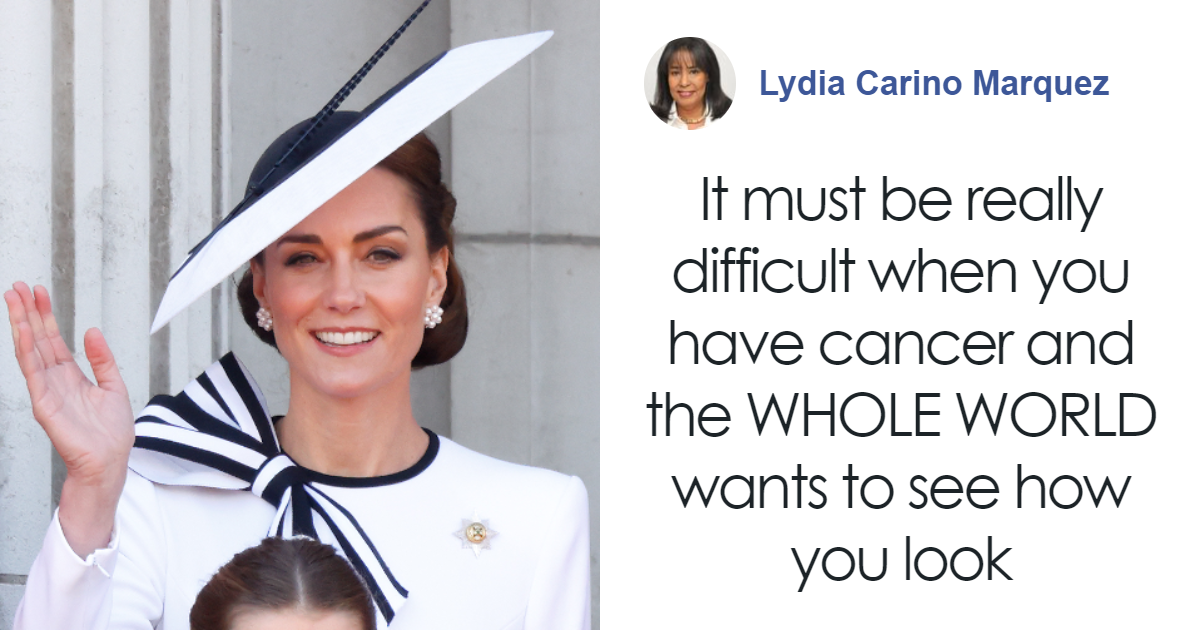
When Catherine, Princess of Walesstill widely known to many readers as Kate Middletonreturned to public view at Trooping the Colour in June 2024, the reaction was instant, emotional, and very royal-watchy. Cameras clicked. Comment sections bloomed like over-caffeinated gardenias. Fans praised her poise, her white dress, her calm smile, and her presence beside her children after months away from public life during cancer treatment.
Then came the backlash.
The controversy did not begin because people were upset that Kate appeared in public. Quite the opposite: many were relieved to see her looking steady after she had announced in March 2024 that post-operative tests had found cancer and that she was undergoing preventative chemotherapy. The storm gathered around how some media praise framed that appearanceespecially a column that suggested “lesser mortals” would have stayed home. For cancer patients, survivors, doctors, and families who know that illness is not a character contest, those words landed about as gracefully as a teacup dropped on a marble floor.
The result was a debate bigger than one royal outing. It became a flashpoint about cancer, privilege, public expectations, media language, class, and the dangerous habit of turning sick people into inspirational billboards.
Kate Middleton’s Public Appearance: What Actually Happened?
Kate’s appearance at Trooping the Colour on June 15, 2024, marked her first official public appearance since revealing her cancer diagnosis. The annual military parade celebrates the British monarch’s official birthday, and it is one of the most visible events on the royal calendar. Translation: if the monarchy has a “camera-ready pageant with horses, hats, and extremely serious uniforms” setting, this is it.
Kate appeared with Prince William and their children, Prince George, Princess Charlotte, and Prince Louis. She traveled in a carriage and later stood on the Buckingham Palace balcony with members of the royal family. To many observers, it was a moving moment. The Princess of Wales had spent months away from duties following abdominal surgery in January 2024 and her later cancer announcement. Her decision to attend was widely read as a careful, limited step back into public life rather than a full return to work.
One day before the parade, Kate released a personal update saying she was making good progress but was “not out of the woods.” She described the reality of chemotherapy as having “good days and bad days,” and said her treatment would continue for a few more months. That detail matters. It showed that her appearance was not proof of a neat recovery arc. It was one public moment inside an ongoing medical process.
Why Praise Turned Into a Controversy
Public admiration for Kate was expected. She is one of the most photographed women in the world, and her cancer diagnosis had sparked a rare wave of sympathy across political and cultural lines. But the controversy began when praise shifted from compassion to comparison.
A column in The Telegraph praised Kate’s appearance as a selfless display and suggested that “lesser mortals” might have stayed home. That phrase quickly became the center of criticism. Many readers interpreted it as implying that ordinary cancer patients who rest, cancel plans, miss work, stay in pajamas, or cannot perform cheerfulness on demand are somehow less brave or less disciplined.
That is where the internet, normally known for gentle restraint and thoughtful moderationjust kidding, it is the internetwent into full reaction mode.
Dr. Clive Peedell, a consultant clinical oncologist, criticized the column as “absolutely appalling,” saying the wording showed a poor understanding of how cancer affects people. Other critics argued that the comment ignored the reality of patients who do not have royal resources, private medical access, household staff, flexible schedules, financial security, or an entire institution designed to support their public image.
The Problem With Turning Illness Into Performance
There is nothing wrong with praising a person with cancer. Encouragement can be kind. Support can be healing. A public figure sharing even a small part of a medical journey can make people feel less alone. The problem begins when admiration becomes a scoreboard.
Cancer is not a personality test. Chemotherapy is not a pageant. Recovery is not a competition in which the best patient smiles through exhaustion, wears an elegant dress, and proves that the show must go on.
Some people with cancer keep working because they want routine. Some work because they cannot afford not to. Some stop working because their bodies demand it. Some look well while feeling terrible. Others look visibly ill and are still stronger than anyone realizes. None of these experiences makes someone a “lesser mortal.” It makes them human.
That was the heart of the backlash. Critics were not necessarily attacking Kate. In fact, many made a point of separating sympathy for her from criticism of the media framing around her. The frustration was aimed at a style of commentary that uses one person’s carefully supported public appearance to shame or diminish people whose illness looks less polished.
Privilege, Class, and the Cancer Conversation
Kate Middleton’s cancer experience is private in its medical details, and it deserves respect. At the same time, public discussion of her return naturally raised questions about privilege. A princess undergoing cancer treatment is still a cancer patient, but she is not navigating the same pressures as a single parent choosing between chemotherapy appointments and hourly wages.
That distinction is not cruel; it is honest.
Many cancer patients face delayed appointments, insurance stress, job insecurity, transportation problems, childcare challenges, medical bills, and emotional isolation. In the United States especially, the financial side of cancer can feel like a second diagnosis wearing a cheaper suit and carrying a calculator. Even in countries with public health systems, patients can encounter long wait times, staff shortages, and uneven support.
So when a columnist praises a royal appearance as morally superior to what “lesser mortals” might do, it can sound painfully detached from ordinary life. For many readers, the issue was not that Kate looked graceful. It was that the language seemed to turn grace into a class-coded virtue.
What Kate Actually Said About Her Health
Kate’s own words were more careful than much of the commentary around her. In March 2024, she explained that she had undergone major abdominal surgery and that cancer was later discovered through post-operative tests. She said her medical team advised preventative chemotherapy and that she and Prince William needed time to explain the situation to their children in an age-appropriate way.
That message was measured, personal, and privacy-conscious. It did not invite speculation about the type of cancer. It did not present her as a superhero. It did not ask the public to compare her to anyone else. Her June update also emphasized uncertainty: good days, bad days, ongoing treatment, and patience with her body.
In other words, Kate’s own communication offered a healthier model than some of the praise that followed. She acknowledged progress without pretending recovery was simple. She expressed gratitude without turning illness into a motivational poster. She appeared in public without announcing that every patient should do the same.
The Media’s Royal Health Problem
The controversy also exposed a recurring problem in royal coverage: the public wants information, the palace releases limited details, and the media fills the empty space with speculation, symbolism, and occasionally prose so purple it needs its own crown.
Before Kate’s cancer announcement, her absence from public life had already fueled rumors, conspiracy theories, and intense scrutiny. A family photo released by Kensington Palace was withdrawn by major photo agencies over editing concerns, which only intensified public curiosity. By the time Kate spoke on camera about her diagnosis, the conversation around her health had already become a global lesson in what happens when privacy meets the content machine.
After her Trooping the Colour appearance, the coverage swung in the opposite direction. Instead of conspiracy, there was reverence. Instead of “Where is Kate?” there was “Look how brave Kate is.” But both extremes share a problem: they turn a real person’s medical situation into public property.
Why Cancer Patients Reacted So Strongly
For people who have experienced cancer directly, language matters because it often reflects what society expects from them. Patients are frequently told to “fight,” “stay positive,” “be strong,” and “keep going.” Those phrases can be comforting when chosen by the patient. They can feel suffocating when imposed from the outside.
Many cancer patients do not want to be brave every minute. Sometimes they want to be tired, annoyed, quiet, scared, bored, messy, or left alone with soup and a streaming service. That does not make them negative. It makes them honest.
Medical experts have long noted that cancer-related fatigue is common during treatment. The National Cancer Institute says more than 80% of people receiving chemotherapy or radiation therapy experience fatigue. This is not ordinary tiredness. It can affect concentration, mobility, mood, and the ability to complete basic daily tasks. So when commentary implies that staying home is a weaker choice, patients hear more than a clumsy phrase. They hear a misunderstanding of the disease itself.
Public Appearance Does Not Equal Full Recovery
One of the biggest misconceptions in the Kate Middleton cancer controversy is the idea that looking well means being well. Anyone who has dealt with serious illness knows that appearance can be wildly misleading. A person can smile for photos and collapse into bed afterward. They can wear makeup and still be nauseated. They can attend one event and need days to recover.
Public figures often prepare intensely for appearances. There may be stylists, transportation, security, assistants, carefully timed schedules, and controlled environments. For a royal, even a “short appearance” is supported by a professional machine. That does not make the effort fake. It simply means viewers should not treat a polished image as a medical report.
Kate attending Trooping the Colour was meaningful because it showed she felt well enough to be there that day. It did not prove that chemotherapy was easy, that cancer treatment is predictable, or that other patients should push themselves to appear cheerful in public.
The Right Way to Praise Someone With Cancer
So how can people praise Kateor anyone with cancerwithout stumbling into the “lesser mortals” trap?
Focus on the individual, not comparisons
Say, “It was good to see her looking well today,” not, “She is stronger than people who stay home.” Praise does not need a villain. Compliments are not Olympic medals.
Respect invisible symptoms
Remember that fatigue, pain, anxiety, immune concerns, and treatment side effects are often hidden. A good photo does not reveal the full story.
Avoid moralizing recovery
Rest is not laziness. Canceling is not weakness. Privacy is not secrecy. Every patient gets to decide what dignity looks like for them.
Keep class and resources in view
Support systems matter. A royal patient and an hourly worker may both be brave, but they are not equally resourced. Pretending otherwise helps no one.
What This Says About Celebrity Culture
The Kate Middleton cancer controversy is not just about royalty. It is about the way celebrity culture turns human experiences into public lessons. A famous person gets sick, and suddenly everyone wants a narrative: brave comeback, tragic battle, heroic mother, national symbol, flawless patient.
But illness is not a brand campaign. It does not always have clean chapters. It does not care about publication deadlines. It certainly does not pause politely while commentators search for grand metaphors.
The public can admire Kate’s composure while still rejecting language that diminishes ordinary patients. Those ideas are not in conflict. In fact, holding both at once is the mature response: compassion for the individual, criticism of careless framing.
Experience-Based Lessons From the Controversy
There is a practical lesson here for anyone who writes, edits, comments online, manages employees, supports a sick friend, or has ever typed a sentence too fast and then watched it age like milk in the sun.
The first lesson is simple: never use one patient’s visible strength as a measuring stick for another patient’s private suffering. In real life, people experience cancer in wildly different ways. Some can attend a wedding during treatment. Others cannot walk to the mailbox without needing rest. Some want to talk openly. Others protect their privacy like it is oxygen. The respectful response is not to rank them. The respectful response is to listen.
The second lesson is that admiration should leave room for complexity. It is possible to say Kate’s appearance was moving without implying that all patients should “push through.” It is possible to celebrate her courage while also recognizing that she has support many people do not. Acknowledging privilege does not erase her illness. It simply prevents the conversation from becoming fantasy.
The third lesson is for workplaces. Employees dealing with cancer often need flexibility, not slogans. A manager who says, “Take the time you need, and let’s discuss practical adjustments,” is offering something far more useful than “You’re such a warrior.” Warrior language sounds dramatic, but flexible hours, remote options, reduced workload, protected leave, and basic kindness pay the actual bills of recovery.
The fourth lesson is for families and friends. People undergoing treatment may not need constant cheerleading. Sometimes they need a ride, a meal, childcare, help with paperwork, or someone who can sit quietly without trying to turn the moment into a TED Talk. Encouragement is lovely. Practical help is lovelier. Practical help with snacks may be the highest form of civilization.
The fifth lesson is for readers. Before sharing outrage, pause long enough to identify the real target. In this case, many critics were not condemning Kate. They were condemning a phrase that seemed to insult ordinary cancer patients. That distinction matters. Online discussions often flatten everything into teams: pro-Kate or anti-Kate, royalist or critic, fan or hater. Real life is bigger than that. You can wish the Princess of Wales well and still object to media language that romanticizes illness.
The final lesson is for writers. Words carry weight, especially around sickness. “Lesser mortals” may have been intended as dramatic flourish, but to many people it sounded dismissive and cruel. When writing about illness, cleverness should never outrun empathy. A sharp sentence is not worth wounding the very people a piece claims to honor.
Conclusion: Kate Deserved Compassion, and So Did Everyone Else
Kate Middleton’s public appearance amid cancer treatment was a significant royal moment, but the controversy that followed revealed something even more important: society still struggles to talk about illness without turning it into a performance.
Kate deserved compassion when she stepped back from public life. She deserved compassion when she shared her diagnosis. She deserved compassion when she returned for Trooping the Colour. But ordinary cancer patients also deserve compassion when they stay home, miss work, lose energy, avoid cameras, cry in bathrooms, cancel dinner, or simply decide that today is not the day to be inspirational.
The fairest takeaway is not that Kate did something wrong by appearing in public. She did not. The better takeaway is that media praise should never become accidental scolding. Cancer is difficult enough without society handing out imaginary medals for looking graceful under pressure.
Admire the princess, yes. Applaud her recovery, certainly. But leave the “lesser mortals” out of it. They are not lesser. They are patients, survivors, caregivers, parents, workers, friends, and people doing their bestoften without a balcony, a carriage, or a perfectly timed royal flypast.














