
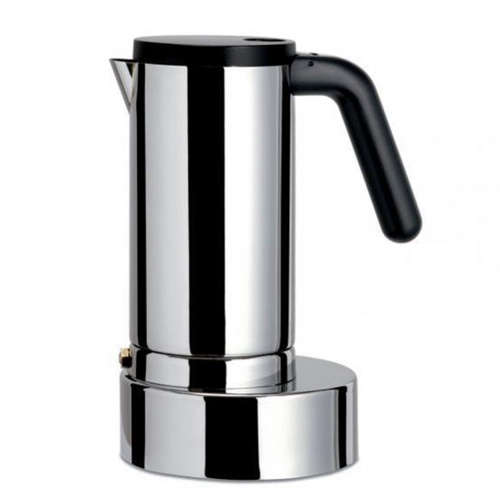
The Alessi Coffee.it Espresso Maker looks less like an ordinary kitchen tool and moffee. Designed by Dutch architect Wiel Arets, this polished stainless steel moka pot combines Italian coffee ritual, architectural restraint, and the practical advantage of an induction-compatible base.
It is also the sort of appliance that can remain on the stovetop without looking as though someone forgot to put it away. Beneath the crisp geometry, however, is a familiar moka brewing system that produces bold, concentrated coffee without capsules, touch screens, or an appliance manual resembling a small novel.
What Is the Alessi Coffee.it Espresso Maker?
Coffee.it is a designer stovetop coffee maker created by Wiel Arets for Alessi. Development took place between 2005 and 2007, with completion in 2008. The designer’s archive lists stainless steel and plastic as the principal materials, while Alessi’s historical catalog describes an 18/10 stainless steel body with black thermoplastic resin components.
The stovetop model, identified as the WA07, appeared in three-cup and six-cup sizes. Its magnetic base allowed it to work with induction cooktops, an especially useful feature when many traditional aluminum moka pots could not. e>
Is Coffee.it a True Espresso Machine?
Not quite. Coffee.it is a moka pot, commonly marketed as a stovetop espresso maker. It uses steam-generated pressure to move hot water through coffee grounds, but it does not reach the approximately nine bars used by a pump espresso machine. It produces concentrated moka coffee rather than a café-style shot with the same crema, body, and extraction profile. e>
An Architect’s Interpretation of the Moka Pot
Alessi has a long history of inviting architects and industrial designers to reinterpret household objects. Its coffee-making catalog includes Richard Sapper’s 9090, Aldo Rossi’s La Conica and La Cupola, Michele De Lucchi’s Pulcina, and other designs that treat the moka pot as both a functional brewer and a piece of miniature architecture. Coffee.it belongs naturally in this family. eometric Without Feeling Cold
A classic moka pot usually emphasizes an octagonal waist and nostalgic silhouette. Coffee.it replaces much of that visual complexity with controlled vertical lines and a disciplined relationship between its body, lid, base, and handle.
The black thermoplastic details interrupt the mirror-polished steel just enough to keep the pot from becoming a chrome monolith. It is minimalist without being anonymousmore tailored black suit than laboratory beaker.
Polished 18/10 Stainless Steel
The stainless steel body provides durability, corrosion resistance, and a substantial feel. It also allows Coffee.it to move directly from the stovetop to the breakfast table without looking like industrial cookware.
There is one predictable compromise. Mirror-polished steel displays fingerprints, dried water droplets, and convincing evidence that human beings have entered the kitchen. Owners who enjoy a spotless finish will become closely acquainted with a soft microfiber cloth.
Made for Modern Cooktops
The magnetic heat-diffusing base is one of Coffee.it’s most valuable practical features. Induction compatibility made the design forward-looking when it appeared and remains useful as more households replace gas ranges with electric or induction cooking surfaces.
Coffee.it Sizes and Capacity
The stovetop Coffee.it was offered in three-cup and six-cup versions. In moka terminology, a “cup” means a small demitasse serving, not a twelve-ounce travel mug that could double as office storage.
The three-cup model produces approximately 150 milliliters, while the six-cup model holds about 300 milliliters. The smaller version is generally suitable for one coffee drinker. The larger model works well for two people, after-dinner servings, or milk-based drinks.
Moka pots are designed to brew their stated capacity. Buying an oversized model and routinely half-filling it can produce inconsistent results, so choosing the size that matches daily consumption is usually the better strategy.
How the Alessi Coffee.it Brewing System Works
Coffee.it uses the traditional three-part moka arrangement: a lower chamber for water, a funnel-shaped basket for ground coffee, and an upper chamber where the finished brew collects.
As the lower chamber heats, pressure increases and pushes hot water upward through the coffee bed. The extracted coffee then rises through the central column and flows into the upper chamber. No electric pump is required in the stovetop model, and there are no disposable pods to purchase.
The grind should generally be finer than standard drip coffee but coarser than espresso. Grounds that are too fine can restrict the flow, while a very coarse grind may produce weak, underdeveloped coffee. Heat control is equally important because an aggressive boil can create harsh or burnt flavors.
How to Brew Coffee With Coffee.it
- Fill the lower chamber: Add water to the safe level below the pressure-release valve. Never cover or obstruct the valve.
- Add ground coffee: Fill the filter basket and distribute the grounds evenly. Do not tamp them as you would an espresso puck.
- Check the seal: Remove loose grounds from the rim and make sure the filter plate and gasket are seated correctly.
- Assemble the pot: Connect the upper and lower sections firmly without forcing the threads.
- Apply moderate heat: Use a low-to-medium setting. Start conservatively on induction, where heat transfer can be surprisingly fast.
- Watch the extraction: Coffee should enter the upper chamber in a controlled stream rather than erupting like a caffeinated volcano.
- Remove it early: Take the pot off the heat before the final violent sputtering stage, which can introduce bitter flavors.
- Stir before serving: A gentle stir blends the stronger early extraction with the lighter coffee produced later.
What Does Coffee.it Coffee Taste Like?
When used with an appropriate grind and moderate heat, Coffee.it produces a concentrated drink with more body and intensity than automatic drip coffee. It is bold enough to drink in a small cup yet versatile enough for milk drinks.
Medium-dark and dark roasts often perform well because moka brewing emphasizes chocolate, toasted nut, caramel, and roasted flavors. Lighter roasts can also work, although the method may highlight sharp acidity when the grind or temperature is poorly controlled.
The finished coffee can be diluted with hot water, combined with steamed milk, poured over ice, or used in an affogato. Pour it over vanilla gelato and you have completed a sophisticated dessert with approximately the same culinary difficulty as operating a spoon.
Advantages of the Alessi Coffee.it Espresso Maker
- Distinctive design: The polished architectural form looks attractive on the stove, counter, or dining table.
- Induction compatibility: Its magnetic base works in kitchens where many aluminum moka pots require an adapter.
- Durable construction: Stainless steel offers corrosion resistance and can remain attractive for years with proper care.
- Compact footprint: Coffee.it produces strong coffee without occupying the counter space required by a pump machine.
- No disposable capsules: Users need only coffee, water, and a dependable grinder.
- Simple mechanics: The stovetop version contains no complicated electronics that can become obsolete.
- Table-ready appearance: It functions as both brewing equipment and elegant serveware.
Potential Drawbacks
- Premium pricing: Coffee.it has historically cost considerably more than an ordinary moka pot. Much of the difference reflects materials, design authorship, and brand heritage.
- Brewing requires attention: Excessive heat or late removal can produce bitter coffee regardless of how beautiful the brewer looks.
- The finish shows marks: Polished stainless steel reveals fingerprints and hard-water spots quickly.
- It does not make true espresso: Buyers expecting thick crema and nine-bar extraction need a pump machine.
- Replacement parts require research: Gaskets, filters, and funnels for older examples should be checked before purchasing.
- Availability may be inconsistent: Coffee.it is not prominent in Alessi’s current U.S. coffee-maker selection, so buyers may encounter specialty inventory, international stock, or pre-owned units. This is an inference based on current catalog listings and secondary-market availability.
Coffee.it Compared With Other Alessi Coffee Makers
Coffee.it vs. Alessi 9090
Richard Sapper’s 9090 is the more famous Alessi moka pot and uses a distinctive lever-style closure instead of a conventional threaded connection. It is expressive, mechanical, and immediately recognizable. Coffee.it offers a quieter architectural personality with a more restrained silhouette.
Coffee.it vs. Alessi Pulcina
The Pulcina has a playful ribbed body and a design intended to stop dispensing before the final bitter stage of extraction. Coffee.it feels stricter and more formal. Pulcina says, “Italian design can smile.” Coffee.it says, “The presentation begins at nine.” offee.it vs. a Basic Moka Pot
A less expensive moka pot can make excellent coffee. Coffee.it does not suspend the laws of extraction or guarantee better flavor merely by looking sophisticated. Its value comes from the combination of stainless steel construction, induction compatibility, proportions, design heritage, and the pleasure of using a carefully considered object.
Cleaning and Maintenance
Allow Coffee.it to cool before opening it. Separate the chambers, remove the filter basket, and rinse away coffee residue. Dry the parts before reassembly to reduce water spots and stale odors.
Avoid abrasive pads, harsh powders, and aggressive cleaners on the polished exterior. For routine care, hot water and a soft cloth are usually sufficient. If detergent is needed, use only a small amount of mild, nonabrasive soap and confirm that it is compatible with the original instructions.
Inspect the gasket and filter plate regularly. A hardened or cracked gasket can prevent a proper seal, while blocked filters may interfere with pressure and flow. The safety valve must always remain clean and unobstructed. Mineral deposits should be removed periodically, especially in hard-water areas. uying a Used Coffee.it
Examine the threads, base, safety valve, interior surfaces, lid hinge, handle, funnel, gasket seat, and filter plate. Cosmetic scratches may be acceptable on a working design object. Damage to pressure-related components is not charming patina.
Who Should Buy the Alessi Coffee.it?
Coffee.it is best suited to someone who enjoys moka coffee, values industrial design, and wants an induction-compatible stovetop brewer. It also makes a thoughtful gift for an architect, designer, coffee enthusiast, or person whose countertop objects all appear to have passed an audition.
It is less suitable for anyone wanting one-button convenience, large batches, automated temperature control, or true espresso. A budget-focused buyer may achieve better value by purchasing a conventional moka pot and investing the savings in fresh coffee and a quality grinder.
Living With Coffee.it: A 500-Word Ownership Experience
The First Morning
The Coffee.it experience begins before the first brew. Its polished surfaces catch the light, the black handle creates a sharp visual line, and the stainless steel body feels more deliberate than an ordinary countertop gadget.
Filling it is familiar to anyone who has used a moka pot, but the refined finish encourages extra care. Stray coffee grounds are wiped from the rim not only to protect the seal, but because leaving coffee dust on Coffee.it feels a little like wearing gardening shoes to an art gallery.
The first brew can expose an impatient heat setting. On induction, the water may heat quickly and send coffee rushing into the upper chamber. The result can be harsher than expected. The lesson arrives in a very small cup: premium design cannot compensate for excessive temperature.
A second attempt using lower heat and earlier removal usually produces a smoother, sweeter drink. Once the correct cooktop setting is discovered, Coffee.it becomes much easier to control.
The Weekday Routine
After several mornings, the brewer becomes less of an exhibit and more of a rhythm: water, coffee, assembly, heat, aroma, and pour. There is no menu to navigate, pod drawer to refill, or software update to approve before breakfast.
The brewing sound becomes the notification. That analog ritual can be especially satisfying for people whose workday begins with screens, alerts, and software politely requesting yet another password.
The three-cup version feels personal, providing enough concentrated coffee for one substantial serving or a milk-based drink. The six-cup model is more social. It can supply two modest cups and makes breakfast feel intentional even when breakfast is toast eaten while standing near the sink.
Using Coffee.it on an Induction Cooktop
Induction compatibility makes everyday ownership easier. There is no adapter plate to store, and the brewer can remain useful if a household replaces a gas range with induction.
The important adjustment is power. Induction cooktops can transfer energy rapidly, so the ideal setting may be lower than a new owner expects. The base should also be centered carefully because some cooktops have difficulty detecting very small cookware.
Once the correct setting is established, the process is clean and efficient. There is no open flame around the handle, and changes in power take effect almost immediately.
Serving Coffee to Guests
Coffee.it naturally starts conversations. A guest may ask whether it is a coffee maker, a miniature tower, or an exceptionally elegant device for contacting Milan.
Bringing it directly to the table transforms brewing equipment into serveware. The six-cup version is particularly appealing after dinner, when several small servings of strong coffee feel more appropriate than a large pot of drip brew.
The visible process also adds ceremony. Guests smell the coffee as it brews and see the object that produced it. Coffee arrives as an experience rather than simply appearing from behind a plastic machine.
Several Months Later
Long-term satisfaction depends on accepting basic maintenance. The mirrored body needs wiping, the gasket eventually requires inspection, and hard water may leave mineral traces. None of this is difficult, but Coffee.it favors owners who enjoy caring for objects rather than replacing them.
Small scratches may eventually appear. Some owners will view them as damage; others will see evidence that the pot has graduated from design purchase to household companion.
The most satisfying Coffee.it experience does not come from keeping it untouched inside a cabinet. It comes from learning its preferred heat setting, finding the correct grind, serving good coffee, and allowing a beautiful object to perform the ordinary task for which it was designed.
Final Verdict
The Alessi Coffee.it Espresso Maker succeeds because it preserves the moka pot’s simple brewing logic while giving it an architectural identity. Its polished stainless steel body, black thermoplastic details, useful capacity options, and induction-compatible base make it more than a decorative experiment.
Its strongest selling point is not a promise to outperform every inexpensive moka pot. Coffee.it combines brewing, serving, and visual pleasure in one compact appliance. With moderate heat, fresh coffee, regular cleaning, and a little practice, it can transform an everyday cup into a satisfying design ritual.










