
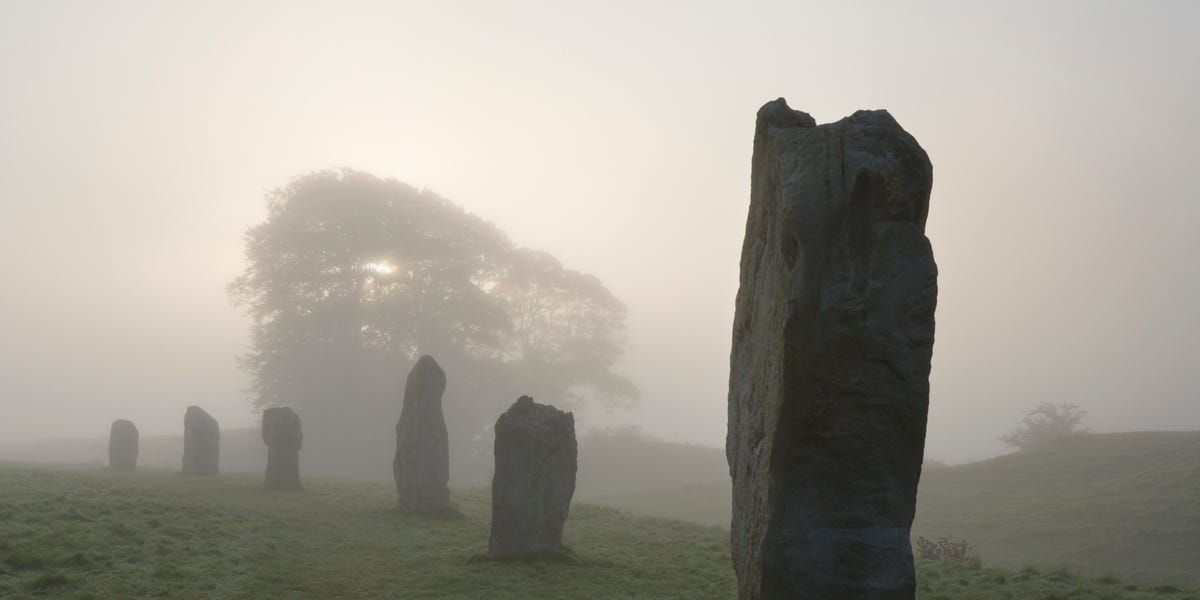
If archaeology had a favorite party trick, it would be this: go looking for one mystery, dig a little deeper, and accidentally uncover a much older one that makes everyone in sensible boots gasp into their clipboards. That is more or less what happened when researchers investigating the landscape around Crowland in eastern England found evidence of a massive prehistoric henge instead of the medieval religious remains they expected. Suddenly, a quiet field turned into a headline, a research puzzle, and a reminder that ancient people were very good at leaving behind questions with excellent dramatic timing.
The discovery of this mysterious ancient henge matters for more than its wow factor. It helps archaeologists rethink how prehistoric ritual sites were built, reused, and remembered over thousands of years. It also fits into a much bigger story now emerging from Britain and nearby parts of northern Europe: henges were not isolated curiosities. They were part of active ceremonial landscapes filled with movement, feasting, burial, pilgrimage, engineering, and symbolism. In other words, these places were not empty circles in the dirt. They were stages for human meaning.
The Discovery That Started with the Wrong Question
The Crowland find is especially fascinating because the site was first investigated in hopes of locating traces connected to Saint Guthlac, an Anglo-Saxon hermit associated with the area. Instead, archaeologists identified the remains of a large circular earthwork dating to the late Neolithic or early Bronze Age. The enclosure measured nearly 250 feet across, making it one of the largest examples known in eastern England. That alone would have been enough to stir excitement. But the real magic was in the deeper timeline.
This was not simply a prehistoric monument that vanished into obscurity. Evidence suggests the place remained meaningful for centuries, even millennia. The site appears to have functioned as a sacred or ceremonial focus in prehistory, then later drew renewed attention in the Anglo-Saxon and medieval periods. That kind of continuity is catnip for archaeologists, because it suggests memory can survive in landscapes long after the original builders are gone. A big ancient bank and ditch may stop functioning as intended, but it can still whisper, “Something important happened here.”
And humans, to their credit or eternal curiosity, rarely ignore a whisper like that.
What Exactly Is a Henge?
Before the word “henge” starts floating around like a mystical catch-all, it helps to get the definition straight. In archaeology, a henge is usually a circular or oval enclosure marked by an internal ditch and an external bank. That detail matters. A henge is not primarily defensive. If you were building a fort, putting the ditch inside the bank would be a truly creative but terrible military decision.
Many people assume a henge must be a stone circle, thanks to Stonehenge hogging the fame like the lead singer of a very old band. But not all henges were built from stone. Some used timber posts. Some emphasized earthworks. Some included burials. Some were gathering places. Some may have served different functions over time. The category is useful, but it is also broad enough to keep archaeologists arguing politely for decades, which is one of their core hobbies.
That broader definition is one reason the Crowland discovery is so important. It reminds us that henges were not all cut from the same prehistoric cookie cutter. Their settings, scale, and later reuse all matter when trying to understand what they meant.
Why This Ancient Henge Matters So Much
It shows that sacred landscapes had long memories
The Crowland henge appears to have been constructed in prehistory and then revisited in later eras. That pattern is significant. Archaeologists have long known that early medieval communities sometimes reused prehistoric monuments, but finding a previously unknown henge linked to later religious activity is especially striking. It suggests that the monument remained visible enough, distinctive enough, or spiritually charged enough to attract new meaning long after its original builders were gone.
This is one of archaeology’s most compelling lessons: places can be repurposed without being forgotten. A site that once hosted Neolithic ceremony might later become a Christianized holy place, a landmark for pilgrims, or a setting for stories that survive in local tradition. The architecture changes. The beliefs change. The emotional gravity of the place does not disappear so easily.
It confirms that henges belonged to larger ceremonial worlds
Stonehenge is not a lone masterpiece stranded on the landscape. Archaeologists now understand it as part of a much wider ceremonial complex that included Durrington Walls, Woodhenge, avenues, settlements, burial areas, and other monuments. That matters when thinking about any newly discovered henge. The question is no longer just, “What is this circle?” It is, “What wider landscape of ritual, movement, and community did this circle belong to?”
Durrington Walls is a perfect example. Evidence from that area suggests a large settlement, seasonal gatherings, and serious feasting. Pig bones and other remains indicate that people traveled from across Britain to gather there. Recent work on the huge pits surrounding Durrington Walls has strengthened the idea that prehistoric builders were organizing ritual landscapes on a scale far greater than once imagined. Sixteen massive pits were confirmed as manmade and appear to form part of a carefully planned circular boundary. That is not casual digging. That is monumental design with ambition.
Seen in that context, the mysterious ancient henge at Crowland becomes more than a local oddity. It becomes another chapter in a story about how prehistoric communities made places that gathered people, marked boundaries, shaped movement, and probably dramatized belief.
It adds fuel to a fast-changing timeline
If the old picture of henges once seemed neat and tidy, recent discoveries have cheerfully kicked over the filing cabinet. One of the biggest shifts came from Flagstones in Dorset, a circular enclosure now dated to around 3200 B.C. That makes it older than previously thought and places it among the earliest known large circular enclosures in Britain. Some archaeologists describe it as a kind of transition monument, sharing traits with both earlier enclosure traditions and later henge-like forms.
That is a big deal because it suggests circular ceremonial architecture in Britain may have deeper roots, and more experimentation, than the classic Stonehenge-centered timeline once implied. The story is no longer a simple march toward one iconic monument. It is a messier, richer sequence of ideas, local innovations, and evolving ritual practice.
Then there is the timber circle found at Aars in Denmark, where archaeologists uncovered evidence of a 4,000-year-old monument made of large wooden posts. That site resembles other timber-circle traditions and points to a broader northern European world in which ritual architecture, symbolism, and monumental design circulated across regions. Add in findings about Stonehenge’s Altar Stone coming from far to the north in Scotland, and prehistoric Britain starts looking less isolated and more networked than many people once imagined.
How Archaeologists Solve a Henge Mystery
No archaeologist walks into a field, narrows their eyes dramatically, and declares, “Aha, definitely ritual.” Real investigation is slower, nerdier, and much more impressive. The modern study of henges draws on aerial photography, geophysical survey, sediment analysis, radiocarbon dating, optically stimulated luminescence dating, environmental DNA, and old-fashioned excavation. It is a team sport played across trenches, labs, maps, soil samples, and spreadsheets.
The giant pits around Durrington Walls are a good example of how methods matter. Researchers used a mix of borehole coring, geochemical signatures, and dating techniques to determine that the pits were deliberately dug by people rather than formed by natural processes. That matters because archaeology often turns on exactly this kind of distinction. A mysterious hole in the ground can be many things. A patterned ring of synchronized, carefully placed giant pits is something very different.
At sites like Crowland, context is everything. The size of the enclosure, the surrounding marshy setting, the later Anglo-Saxon artifacts, and the medieval structures all help build a narrative. Archaeology is rarely about one object shouting the answer. It is about many quiet pieces suddenly agreeing with each other.
So What Were Henges Actually For?
This is the part where everyone wants a dramatic final answer, and archaeology responds with a polite shrug and a stack of evidence. Henges were probably not one thing. Some may have been linked to burial. Some likely hosted gatherings and feasts. Some may have expressed cosmological ideas through orientation, movement, or seasonal timing. Some may have functioned as places where living communities connected with ancestors, identities, territories, or the changing year.
Stonehenge itself has been interpreted as a burial place, a ceremonial center, an astronomical marker, and part of a wider ritual landscape. Those ideas are not always mutually exclusive. Ancient monuments often did more than one job, especially over long periods of use. A henge could be a sacred boundary, a political theater, a ceremonial meeting ground, and a memory machine all at once.
That is what makes the phrase “mysterious ancient henge” more than clickbait. The mystery is real. Not because archaeologists know nothing, but because the evidence points to human behavior that was complex, layered, and changing across centuries. The more we learn, the less likely it seems that a single tidy label will do the job.
Other Discoveries That Make the Crowland Henge Even More Intriguing
Flagstones in Dorset
Flagstones strengthens the idea that large circular enclosures emerged earlier than many researchers once believed. Its ditch, pits, and burials reveal a monument that sits right at a crucial turning point in prehistoric architecture. If sites like this helped influence later traditions, then every new henge find becomes part of a much longer developmental story.
Durrington Walls and its giant pits
Durrington Walls shows that monumental planning around henges could reach astonishing scale. Settlement evidence, timber structures, feasting remains, and giant boundary pits suggest a ceremonial landscape alive with motion and meaning. It is difficult to look at that evidence and still imagine prehistoric communities as small, isolated, and architecturally timid.
The Danish timber circle
The Aars discovery adds an international dimension. Timber circles and related monuments were not limited to one famous valley in England. Ritual architecture traveled in ideas, styles, and probably beliefs. The Bell Beaker world, long-distance material movement, and recurring circular designs all hint at prehistoric societies that were connected in ways modern audiences tend to underestimate.
Seahenge
Seahenge, the Bronze Age timber circle found on the Norfolk coast, remains one of the strangest and most visually unforgettable monuments in the henge conversation. Its central inverted tree stump and closely packed oak posts have inspired multiple interpretations, including death ritual, elite commemoration, and seasonal symbolism. Even when archaeologists disagree, the site proves just how imaginative prehistoric monument building could be.
The Experience of Meeting a Henge in Real Life
Reading about a henge is one thing. Standing where one once rose is something else entirely.
The first surprise is often how subtle the monument can seem. People hear “ancient ceremonial site” and imagine towering stones, movie-trailer fog, and a soundtrack full of ominous chanting. Sometimes what you actually get is a grassy curve, a change in slope, a faint earthwork, or a pattern visible only from above. It can feel underwhelming for about thirty seconds. Then your brain adjusts, and the site becomes more powerful precisely because it is quiet.
You start to notice scale differently. A bank that looked modest from a distance suddenly feels deliberate. A circular outline begins to shape the way you move. You realize the people who made this place did not just build an object. They built an experience. They controlled approach, enclosure, sightlines, and gathering space. They made people enter, pause, and pay attention.
Archaeologists describe a similar shift during excavation. At first, a trench can look like organized mud with ambition problems. But as postholes, ditches, deposits, and boundaries emerge, a pattern takes hold. The site stops being dirt and becomes decision-making. Someone dug here. Someone deposited something there. Someone returned. Someone reused the space long after the first builders were gone. The monument turns from scenery into evidence of repeated human intention.
There is also an emotional experience that is harder to measure but impossible to ignore. Henge sites often make modern visitors feel oddly aware of time. Not just “this place is old,” but “this place has watched entire belief systems come and go.” A prehistoric enclosure can later become a burial ground, then a Christianized place, then a field, then an excavation, then a headline, then a new story for the internet age. The monument changes role, but it never becomes entirely ordinary.
That layered feeling is especially strong at sites tied to broader landscapes like Stonehenge and Durrington Walls. Once you understand that ancient people may have walked between timber circles, river routes, settlements, burial areas, and stone monuments as part of ritual sequences, the landscape stops looking empty. It begins to feel choreographed. Even the space between monuments starts to matter.
And perhaps that is the most memorable experience of all. A henge teaches you that ancient architecture was not only about what stood at the center. It was also about movement, approach, memory, repetition, and community. It was about making space feel different from everyday life. The best henge discoveries still do that now. They interrupt the modern landscape and remind us that people thousands of years ago were every bit as capable of spectacle, symbolism, and place-making as we are. They just had fewer cranes and much better patience.
Why the Mystery Endures
The newly identified henge at Crowland is mysterious not because it is empty of meaning, but because it contains too much meaning for one easy explanation. It belongs to a prehistoric tradition that includes earthworks, timber circles, ritual landscapes, feasts, burials, and long-distance cultural links. It also belongs to a second story about reuse, memory, and the remarkable tendency of later communities to inherit old sacred ground and make it newly sacred again.
That is why archaeologists keep returning to henges. Every excavation offers the chance to refine the timeline, rethink the function, and expand the map of connected prehistoric life. A newly discovered henge is never just a ring in the soil. It is a clue to how ancient people organized belief, power, labor, and identity in the landscape around them.
So yes, archaeologists did discover a mysterious ancient henge. But the most interesting part is not the mystery alone. It is the growing realization that these monuments were part of a sophisticated, social, and symbol-rich world that still has the power to surprise us. And if the next big prehistoric revelation comes from another quiet field that looked unremarkable on Tuesday, nobody in archaeology will be shocked. Delighted, yes. Shocked, absolutely not.
Conclusion
The discovery of a mysterious ancient henge is more than a flashy archaeology story. It is a window into prehistoric Britain and northern Europe at a time when communities were reshaping landscapes with earth, timber, stone, and ceremony. Finds at Crowland, Flagstones, Durrington Walls, and other sites show that henges were not isolated monuments. They were part of dynamic ritual worlds filled with memory, movement, and evolving belief. That is why every new henge matters: each one has the power to redraw the map of the ancient past.














