
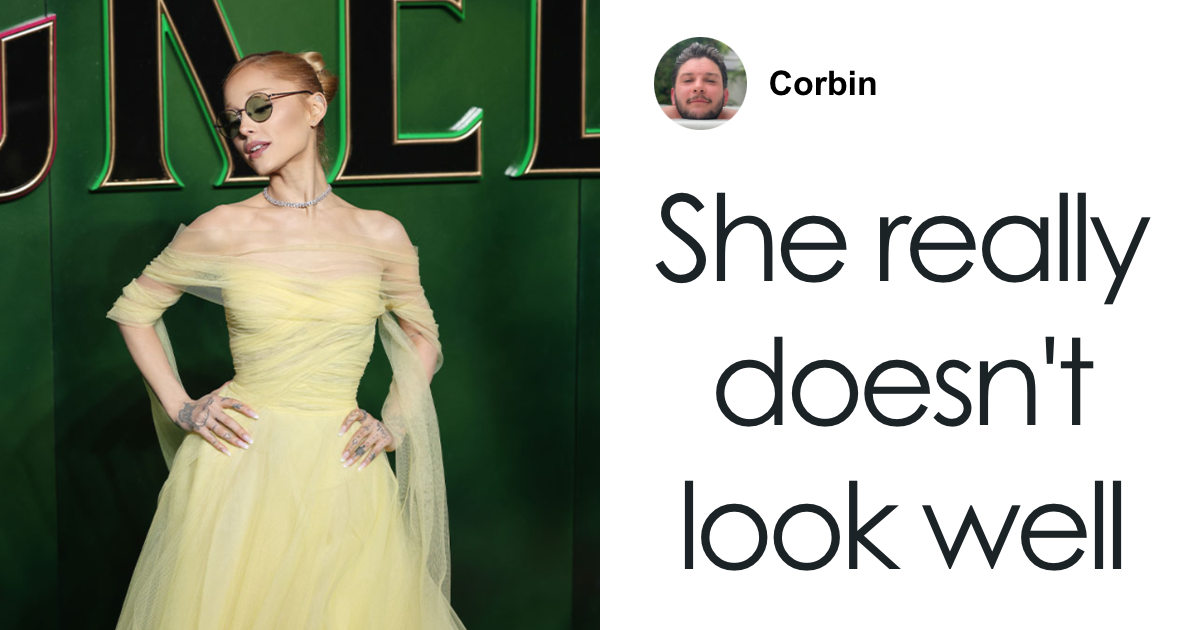
Note: This article covers public reaction, media discussion, and celebrity culture around Ariana Grande’s appearance at the London premiere of Wicked. It does not diagnose, judge, or speculate about anyone’s private medical condition.
Ariana Grande has spent most of her life under lights bright enough to make a disco ball feel shy. So when she appeared at the London premiere of Wicked, the internet did what the internet does best: zoomed in, talked loudly, and turned a red-carpet moment into a global group chat. The singer and actress, who plays Glinda opposite Cynthia Erivo’s Elphaba, attended the U.K. premiere at London’s Royal Festival Hall on November 18, 2024, during a major promotional push for the long-awaited movie musical.
But instead of focusing only on the film, the fashion, or Grande’s milestone performance, a wave of online commentary centered on her appearance. Some fans expressed concern. Others criticized the concern itself. Many pointed out that public worry can quickly become public pressure, especially when it is aimed at a woman who has been famous since her teenage years.
The result was a familiar celebrity-media storm: one part fandom, one part fashion analysis, one part internet armchair diagnosis, and one very large reminder that human beings are not movie posters. They cannot be accurately understood from a few camera flashes, a red-carpet angle, or a clip circulating on social media with dramatic background music.
Why Ariana Grande’s London ‘Wicked’ Appearance Sparked Conversation
At the London premiere, Grande leaned into the world of Glinda with elegant, character-inspired styling. Her look was widely covered by entertainment and fashion outlets, especially because the Wicked press tour had become a full theatrical event of its own. Grande and Erivo’s red-carpet wardrobes were not random outfits pulled from a closet five minutes before leaving the hotel. They were part of a carefully designed visual story: pinks, greens, yellow tones, couture drama, and enough sparkle to make Oz file a lighting complaint.
Still, the online conversation quickly shifted. Photos from the event circulated across social platforms, and some users said Grande looked different than they remembered. The language ranged from genuinely worried to openly unkind. This is where the story becomes less about one premiere and more about a bigger cultural habit: people often treat celebrity bodies as public property, as if fame comes with a permanent inspection sticker.
For longtime Ariana Grande fans, this was not the first time the singer’s appearance had become a trending topic. Grande has previously addressed comments about her body directly, asking people to be gentler and less comfortable discussing others’ physical appearance. Her message has been clear: even comments that sound caring can still be harmful when they reduce a person to how they look.
The Problem With Turning Concern Into Commentary
There is a difference between compassion and commentary. Compassion says, “I hope she is okay.” Commentary says, “Let me analyze her body in public like I am hosting a medical podcast from my couch.” The first is human. The second is risky, unfair, and usually based on incomplete information.
Health cannot be reliably judged from red-carpet photos. Lighting changes faces. Angles distort bodies. Makeup, styling, stress, travel, camera lenses, exhaustion, and even the simple awkwardness of posing while dozens of photographers shout your name can all affect how someone appears. A single image can freeze a person in a strange half-second and then travel around the world as if it were a complete biography.
That is especially important in Grande’s case because she has already explained that people have made incorrect assumptions about what “healthy” looked like for her in the past. In a 2023 TikTok video, she reminded fans that the body some people compared her current appearance to was not necessarily a healthy period in her life. Her point was not complicated, but it was powerful: outsiders rarely know the full story.
Ariana Grande’s Own Words Matter Most
Grande has spoken with unusual honesty about being watched since she was young. During the Wicked press cycle, she described growing up in public as feeling like a “specimen” under constant inspection. That image lands because it captures exactly what celebrity culture can do. It turns a person into a subject, then acts surprised when the subject has feelings.
She has also called the public’s comfort with commenting on appearance “dangerous,” not only for celebrities but for everyone involved. That warning matters. When millions of people normalize body analysis as entertainment, the behavior does not stay confined to pop stars. It trickles into schools, workplaces, family gatherings, and comment sections where ordinary people absorb the same idea: bodies are open for debate.
Grande’s response has not been to scold fans for caring. Instead, she has asked for a better kind of care. Compliment the work. Celebrate the music. Talk about the acting, the vocals, the production, the gowns, the jokes, the emotional interviews, the tiny Glinda details. But do not assume that a stranger’s body is a mystery you have been personally assigned to solve.
The ‘Wicked’ Press Tour Was Bigger Than a Red Carpet
The London premiere was part of a massive promotional campaign for Wicked, the film adaptation of the beloved Broadway musical. Directed by Jon M. Chu, the movie stars Cynthia Erivo as Elphaba and Ariana Grande as Glinda, with a cast that also includes Jonathan Bailey, Michelle Yeoh, Jeff Goldblum, and Ethan Slater. The film was one of 2024’s biggest cultural events, blending Broadway nostalgia, fantasy spectacle, and pop-star power.
The press tour became a story of its own. Grande and Erivo appeared together in coordinated looks, emotional interviews, and viral clips that showed their intense connection to the material. Some fans adored the tenderness between them. Some joked that the two seemed to be crying in every interview. Grande herself later joked about the tour’s emotional intensity, proving that even she knew the internet had noticed the teary-eyed Oz energy.
But underneath the memes was a real workload. Major film campaigns are demanding. Stars move between countries, interviews, premieres, photo calls, performances, fittings, and promotional events. They are expected to look fresh while living on schedules that would make a calendar beg for mercy. That does not prove anything about anyone’s health, but it does remind us that public appearances are often made during exhausting professional marathons.
Why Fans Feel Protective of Ariana Grande
Part of the concern around Grande comes from the emotional bond fans feel with her. Many grew up with her on Nickelodeon, followed her transition into global pop superstardom, and watched her navigate major public moments. Her music has been the soundtrack to breakups, glow-ups, gym sessions, late-night homework, and dramatic bedroom lip-sync performances that absolutely deserved a Grammy in spirit.
Because of that connection, fans often feel protective. They see a new photo and react not like distant observers, but like people checking in on someone who has been part of their lives for years. That emotional closeness is understandable. The challenge is learning where care should stop. Concern becomes harmful when it turns into repeated comments, labels, comparisons, or speculation about a person’s private life.
A healthier fan response can still be warm. It can say, “I love her performance,” “I hope the press tour is treating her well,” or “I’m glad she has support around her.” It does not need to include measurements, diagnoses, or side-by-side comparisons from different eras of her life.
The Role of Media in Celebrity Health Narratives
Entertainment media has a tricky job. Public figures attend public events, and coverage is expected. Outfits, films, interviews, and fan reactions are fair parts of the entertainment-news ecosystem. But when coverage leans too heavily into appearance-based alarm, it can amplify the very behavior celebrities are asking people to avoid.
Headlines about “health concerns” attract clicks because they combine fear with fame. That does not mean every article is malicious. Some are reporting on a real online conversation. However, responsible coverage should make an important distinction: people online may be worried, but public worry is not evidence of a medical issue.
That distinction is crucial. Snopes even addressed a false rumor about Grande and a serious diagnosis during the Wicked era, finding no credible evidence to support it. The fact that such claims spread at all shows how quickly body commentary can mutate into misinformation. One person says “she looks different,” another says “something must be wrong,” and suddenly the rumor machine is wearing a lab coat it did not earn.
Fashion, Character, and the Glinda Effect
Another reason Grande’s appearance was so heavily discussed is that the Wicked tour was deeply visual. Grande did not simply promote a movie; she stepped into a fantasy world. Her Glinda-inspired fashion included soft colors, structured gowns, vintage references, and delicate styling choices that nodded to both the Broadway musical and the classic visual language of Oz.
At the London premiere, her look drew attention because it moved beyond the expected Glinda pink and embraced another character-linked palette. Fashion outlets praised the styling as part of the larger “method dressing” trend, where actors use red carpets to extend the story of the characters they play. Think Zendaya during Dune and Challengers, Margot Robbie during Barbie, and now Grande and Erivo bringing Oz to every step-and-repeat they touched.
But method dressing can blur the line between performer and role. When a star spends months visually connected to a character, the public may begin reading every look as a clue. In Grande’s case, that meant Glinda’s softness, emotionality, and fairy-tale styling sometimes became wrapped up in conversations about Grande herself. A dress can be a dress. A character reference can be a character reference. Not every style choice is a secret message.
What This Moment Says About Women in the Spotlight
Grande’s situation fits into a long pattern. Women in entertainment are often expected to be visible but not too visible, polished but not artificial, vulnerable but not fragile, confident but not arrogant, stylish but not trying too hard, and healthy according to whatever standard the internet invented before breakfast. It is an impossible checklist, and the ink never dries because the rules change constantly.
If a woman looks the same for years, people say she is stuck. If she changes, people ask what happened. If she wears makeup, she is hiding something. If she skips makeup, she looks tired. If she is emotional, she is dramatic. If she sets boundaries, she is cold. At some point, the problem is not the woman. It is the scoreboard.
Grande’s Wicked premiere conversation is therefore not just about Ariana Grande. It is about how audiences discuss famous women and how easily “concern” can become another form of control. The more thoughtful question is not, “What do we think is going on with her?” It is, “Why do we feel entitled to decide?”
How Fans Can Discuss Celebrity Health More Responsibly
A better online culture does not require silence. It requires boundaries. Fans can care about public figures without turning their bodies into trending topics. They can discuss the emotional demands of fame, the intensity of press tours, and the need for rest without naming, shaming, or diagnosing anyone.
Focus on confirmed information
Talk about what is known: the premiere, the film, the performance, the fashion, and the celebrity’s own statements. Avoid treating guesses as facts. If Grande says she wants people to stop commenting on bodies, that should carry more weight than a stranger’s interpretation of a photo.
Avoid comparison language
Comparing a person’s current body to an older body is rarely helpful. People change. Bodies change. Lives change. Careers, stress, schedules, roles, age, styling, lighting, and personal circumstances all shift over time. A screenshot from one era should not become a ruler for another.
Remember that kindness is not weakness
Some people confuse harshness with honesty. But being careful with language is not fake; it is mature. The internet has enough unpaid detectives. It could use more people who know when to close the comment box and go drink water.
Experience Section: What This Topic Teaches Us About Real Life
The conversation around Ariana Grande’s London Wicked premiere offers a useful lesson for everyday life, not just celebrity culture. Most people will never walk a green carpet in couture while photographers shout their name, but many know what it feels like to be judged from the outside. A classmate says you look tired. A relative comments on your weight at dinner. A coworker asks whether you are “okay” in a tone that makes the room suddenly feel smaller. The setting changes, but the feeling is familiar.
One experience many people share is realizing that “concern” can still hurt. A comment may come wrapped in soft language, but it can land like a spotlight. When someone says, “You looked better before,” or “I’m just worried,” the person hearing it may not feel cared for. They may feel watched. That is why Grande’s message connects beyond fandom. She is not asking people to stop caring. She is asking them to stop making bodies the doorway to every conversation.
Another real-life lesson is that we rarely know the full story behind someone’s appearance. A friend may look different because they are stressed, busy, healing, changing routines, working long hours, dealing with private matters, or simply living in a body that does not owe anyone an explanation. Sometimes there is no dramatic reason at all. People are not before-and-after slides. They are ongoing stories.
This topic also shows how quickly group behavior can escalate online. One person posts a concerned comment. Another adds a stronger claim. A third turns it into a joke. Before long, the conversation stops being about care and becomes entertainment. That pattern happens in celebrity fandom, but it also happens in school chats, family groups, and social media circles. The lesson is simple: before commenting, ask whether the person would feel supported if they read it. If the answer is no, the comment probably belongs in the drafts folder, where many dramatic thoughts go to become better citizens.
For writers and publishers, the experience is a reminder that SEO content can be timely without being cruel. A headline may mention “health concerns” because that is what people are searching for, but the article itself should guide readers toward context, empathy, and accuracy. Responsible writing does not have to be boring. It can still be sharp, engaging, and fun. It just should not turn a person’s body into a carnival game.
For fans, the better path is to celebrate the work. Ariana Grande’s role as Glinda represents years of preparation, vocal discipline, acting effort, and love for musical theater. The London premiere should be remembered not only for the online chatter but also for the scale of the Wicked moment: two leading women carrying a beloved Broadway story into a new cinematic era. That is a much more interesting conversation than trying to diagnose someone through pixels.
Ultimately, the healthiest experience we can take from this topic is the habit of pausing. Pause before posting. Pause before comparing. Pause before assuming that public visibility equals public ownership. Celebrities may live in the spotlight, but they are still people standing inside it. And sometimes the kindest thing an audience can do is stop staring so hard and start listening better.
Conclusion
Ariana Grande’s appearance at the London premiere of Wicked sparked renewed public discussion about her health, but the most responsible takeaway is not speculation. It is perspective. Grande has already asked people to be gentler when speaking about bodies, and her words should shape the conversation more than any viral photo or comment thread.
The Wicked premiere was a major cultural moment, filled with fashion, nostalgia, performance, and fan excitement. It also became another example of how quickly celebrity attention can shift from art to anatomy. Grande’s Glinda is worth discussing. Her vocal performance is worth discussing. The film’s ambitious adaptation of a Broadway classic is worth discussing. Her private health is not a public puzzle.
In the end, the best response is simple: admire the work, respect the person, and remember that kindness never goes out of style. Not even in Oz.













