
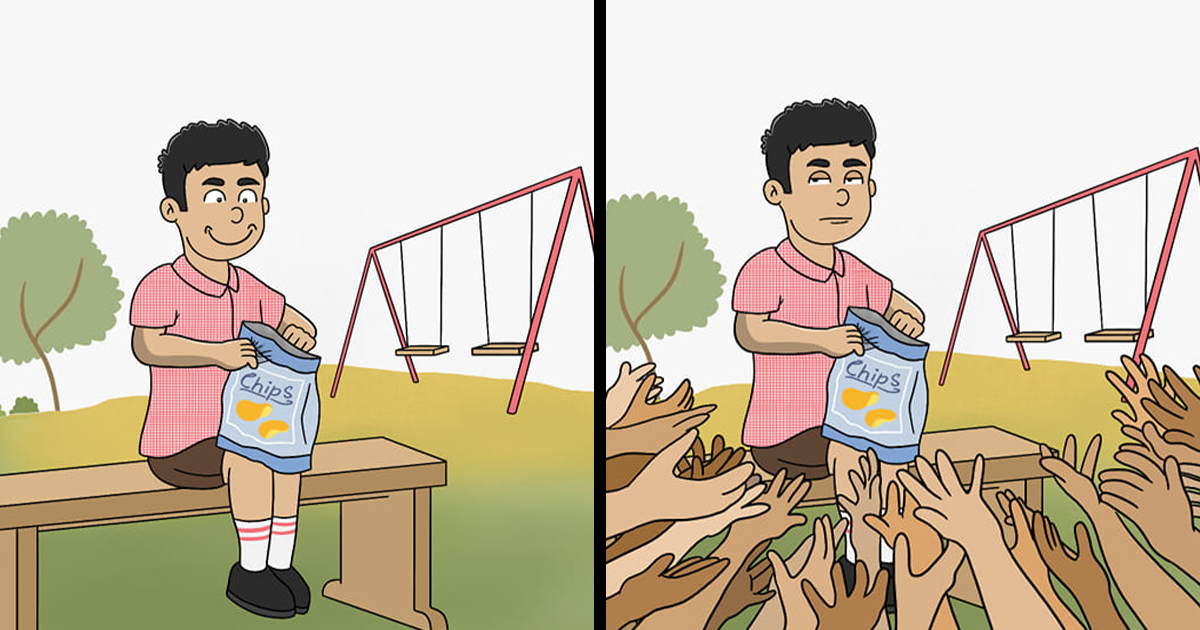
Childhood is basically a blooper reel with snacks, school bags, weird family rules, and at least one parent who can turn a simple question into a courtroom hearing. That is exactly the kind of comic gold Jeff Sequeira, the artist behind “My Name Jeff”, turns into warm, funny, and surprisingly relatable slice-of-life comics.
The series follows a little boy named Jeff, his caring mother, and his wonderfully confused father through small domestic adventures that feel suspiciously familiar. The jokes are exaggerated, but the emotional truth is not. Whether the subject is school trouble, food drama, family misunderstandings, Halloween chaos, or the universal mystery of why parents never understand context, these funny comics work because they come from real childhood memories.
In a web full of loud punchlines and overproduced content, “My Name Jeff” feels refreshingly human. The drawings are simple, expressive, and charming. The humor lands quickly. The characters do not need superhero capes, although Batman does make the emotional atmosphere more dramatic from time to time. Their superpower is being ordinary in the most entertaining way possible.
Who Is the Artist Behind “My Name Jeff”?
“My Name Jeff” was created by Jeff Sequeira, also known online as jeffseq. Before moving into UI/UX design, Jeff worked as an artist in an ed-tech company while developing his comic series on the side. He originally began the project as a way to move from traditional art into digital drawing. Like many artists, he did not begin with a grand empire-building strategy. He started with jokes, memories, and the dangerous belief that posting online “just to see what happens” would be harmless.
What happened was connection. Readers recognized themselves in the comics. They saw their parents, siblings, teachers, awkward younger selves, and snack-related disappointments. Jeff has shared that the comics were inspired by his own childhood experiences, filtered through exaggeration and playful timing. That combination matters: a literal childhood memory may be amusing, but a comic version with bigger faces, sharper timing, and a dad reacting like he just discovered gravity is much funnier.
The official WEBTOON page describes “My Name Jeff” as exaggerated comics based on childhood, placed in the slice-of-life and comedy categories. That is the sweet spot of the series. It is not trying to be epic. It is trying to make the little things feel big enough to laugh at.
Why Childhood Makes Such Good Comedy
Childhood stories are funny because kids live in a world where everything is urgent, confusing, and personally unfair. A missing cookie is not a minor inconvenience; it is betrayal with crumbs. A parent saying “we’ll see” is not a neutral statement; it is a legal loophole. A school assignment due tomorrow is a shocking development, even if the teacher mentioned it twelve times.
Jeff’s comics understand that childhood logic has its own operating system. Children often take things literally, adults often explain things badly, and families somehow survive on love, leftovers, and mild emotional blackmail. That gives the series its easy relatability. Readers do not need to have lived Jeff’s exact childhood to understand the situation. Everyone remembers being small in a world run by tall people with rules.
The best childhood comics do not simply say, “Kids are silly.” They show how childhood is full of sincere confusion. A child is not trying to be ridiculous when he misunderstands a phrase or overreacts to a problem. He is working with limited information and maximum confidence, which is also how many adults assemble furniture.
The Charm of Simple, Expressive Webcomics
One reason “My Name Jeff” works so well is its visual clarity. The panels are easy to follow, the characters are instantly readable, and the punchlines do not require a detective board covered in red string. This is a strength, not a limitation. In digital comics, especially webcomics shared on social media and platforms like WEBTOON, readers often decide within seconds whether to keep scrolling or stay.
Jeff’s style invites readers in quickly. The characters have a cute, rounded look, and the expressions carry much of the joke. A raised eyebrow, a panicked stare, or a parent’s blank confusion can do more than a paragraph of explanation. That is one of the great powers of comics: words and images cooperate. The text sets up the situation, while the drawing delivers the emotional explosion.
Comics are often underestimated as “easy” reading, but strong visual storytelling requires discipline. The artist must decide what to show, what to leave out, where to pause, and how to make the final panel feel inevitable but still surprising. When done well, the reader does not notice the mechanics. They just laugh and think, “Yep, that happened to me too.”
Everyday Family Life as a Comedy Machine
The central cast of “My Name Jeff” is wonderfully compact: Jeff, his mom, and his dad. This limited family setup gives the comics a cozy sitcom rhythm. Mom often represents care, rules, and practical reality. Dad brings confusion, surprise, and sometimes the energy of a man who entered the scene halfway through the instructions. Jeff stands in the middle, trying to survive childhood with dignity, which is difficult when adults control bedtime.
Many of the comic ideas revolve around ordinary family situations. Food appears often because food is never just food in childhood. It is reward, comfort, negotiation tool, evidence, and occasionally a crime scene. School is another perfect comedy arena because it combines pressure, embarrassment, and the terrifying possibility of being asked to speak in front of the class.
Holiday episodes also fit the series naturally. Titles such as “Trick-Or-Treat,” “Christmas Present,” “Butter Chicken,” “Nana’s Here,” and “Night Night Batman!” suggest the range of Jeff’s humor: family, food, pop culture, and childhood imagination. These are not random topics. They are the memories people keep because they carry emotion. A holiday misunderstanding can live in family history forever, usually retold every year by the person who was least embarrassed.
Why Readers Respond to Nostalgic Humor
Nostalgia is powerful because it lets people revisit the past without having to redo homework. When readers see a comic about a childhood misunderstanding, they are not only laughing at Jeff. They are remembering their own weird moments: the time they believed a ridiculous adult phrase, hid a bad report card, lost a toy, fought over snacks, or misunderstood something so completely that the family still brings it up at dinner.
This kind of humor is gentle but effective. It does not rely on cruelty. It finds comedy in memory, exaggeration, and recognition. The joke is not “look how foolish this child is.” The joke is “look how strange childhood feels when you finally see it from the outside.” That difference is important. It gives the comics warmth.
Readers also enjoy seeing childhood drawn from an adult perspective. The adult artist knows what was silly, but he still respects how big the moment felt back then. That balance creates emotional honesty. A comic about a child’s small crisis can be funny because the stakes are tiny, but it can also be touching because, to the child, the stakes were enormous.
The Webcomic Format Helps Personal Stories Travel
Webcomics have changed how artists share personal stories. In the past, a creator often needed a newspaper slot, a publisher, or a printed collection to reach readers. Today, an artist can publish directly on Instagram, WEBTOON Canvas, Facebook, Behance, or other digital platforms. That does not make success easy, but it makes entry possible.
“My Name Jeff” is a good example of how a personal experiment can become a shared experience. Jeff began with a simple goal: improve digital art and play with childhood jokes. The audience came because the comics felt honest and accessible. A person scrolling during a lunch break could read one strip in seconds, laugh, and send it to a sibling with the message, “This is literally us.” That sharing behavior is the oxygen of webcomics.
The digital format also favors short, expressive storytelling. Each comic can stand alone. A reader does not need to memorize lore, although “Dad is confused again” could absolutely qualify as recurring mythology. This makes the series easy to discover and easy to enjoy out of order.
What Makes “My Name Jeff” Different From Generic Funny Comics?
Many online comics are funny, but not all of them feel personal. “My Name Jeff” has a specific emotional center. It is not just a collection of random jokes about kids. It is a comic diary, polished into comedy. That autobiographical flavor gives the series texture.
The humor often comes from the gap between childhood memory and adult interpretation. Jeff takes a small personal memory and pushes it into a cleaner comic shape. He simplifies the characters, tightens the setup, and exaggerates the punchline. The result feels familiar even when the exact situation is unique. That is the magic trick of good slice-of-life art: the more specific it becomes, the more universal it feels.
The series also avoids overcomplication. It trusts simple situations. A family misunderstanding does not need explosions. A child’s panic over a small problem can be enough. In fact, adding too much would ruin the charm. The funniest childhood stories are usually the ones that begin with, “Okay, this sounds dumb now, but at the time…”
Why Comics About Childhood Appeal to Adults
Adults love childhood comics because adulthood is expensive and suspiciously full of emails. A funny comic about being a kid offers a quick vacation from bills, deadlines, and the philosophical crisis of choosing what to cook for dinner again. It reminds readers of a time when the biggest problem was a lost toy, a scary teacher, or a sibling who breathed too loudly.
There is also comfort in seeing childhood frustrations treated with humor. Many people carry memories of embarrassment, pressure, strict parents, school anxiety, or feeling misunderstood. A comic can soften those memories. It does not erase them, but it gives them a new frame. Suddenly the old awkward moment becomes a story, and stories are easier to carry.
That is why “My Name Jeff” can feel both silly and meaningful. A reader may arrive for the funny faces but stay for the recognition. The comics say, quietly, that family life is messy, childhood is weird, and everyone has survived at least one deeply dramatic snack incident.
The Role of Humor in Memory and Creativity
Humor does more than entertain. It helps people process experiences. A funny story can turn stress into distance, confusion into insight, and embarrassment into connection. This is especially true with childhood memories, where the adult storyteller can revisit a moment with more understanding and less panic.
For an artist, drawing childhood can be a creative exercise in editing. Memory is not a perfect recording. It is a highlight reel, a reconstruction, and sometimes a liar with excellent lighting. The cartoonist decides which details matter: the facial expression, the object on the table, the exact wording of a parent’s response, the silence before the punchline. Those choices transform memory into art.
Jeff’s work shows how a personal memory can become public humor without losing its heart. By exaggerating his childhood experiences, he does not make them less true. He makes the emotional truth easier to see. That is why the comics feel real even when they are obviously heightened.
Specific Examples of Relatable Childhood Themes
1. Food Drama
Food is one of the oldest engines of family comedy. A child saves a snack, someone eats it, and suddenly the household has entered a crisis usually reserved for courtroom dramas. Comics about food work because everyone understands the emotional value of a treat. It is not “just candy.” It is planned happiness.
2. School Pressure
School memories are packed with comic potential: forgotten homework, awkward confessions, report cards, confusing teachers, and the eternal fear of being called on when your brain has left the building. Childhood comics turn those little pressures into scenes readers instantly recognize.
3. Parent Logic
Parents in childhood stories often operate by mysterious rules. They can say “because I said so” with the confidence of a Supreme Court ruling. They can misread a situation, overreact, underreact, or ask a question when the answer is clearly written on the child’s terrified face. That gap between adult authority and child confusion is classic comedy territory.
4. Pop Culture Imagination
Children do not just watch superheroes; they borrow them emotionally. A Batman reference, a fantasy scenario, or an overdramatic bedtime moment can turn ordinary life into a tiny epic. “My Name Jeff” uses that childhood imagination to make small events feel wonderfully oversized.
Why the Series Still Feels Fresh
Although Jeff has said he is not actively creating new “My Name Jeff” comics at the moment because of his UI/UX design career and life responsibilities, the existing work still circulates because the humor is evergreen. Childhood does not expire. Kids still misunderstand adults. Parents still say confusing things. Snacks still disappear under suspicious circumstances.
The themes are timeless because they are built from human behavior, not trends. A joke based on a viral meme may fade quickly, but a joke about family chaos can stay funny for years. That is why readers continue to respond to the series even after its main posting period. It has the quality all good slice-of-life comics need: emotional repeat value.
Extra Experiences: Why Childhood Comics Feel Like Everyone’s Secret Diary
There is something strangely comforting about a childhood comic that makes you laugh before you realize it has opened a drawer in your own memory. You see a little kid in a panel dealing with a parent, a snack, a school problem, or a confusing adult rule, and suddenly you are eight years old again, standing in the kitchen with evidence on your shirt and no legal defense prepared.
Most people have at least one childhood story that would make a perfect comic. Maybe you misunderstood a phrase and took it way too seriously. Maybe you thought “sleeping in” meant physically sleeping inside something. Maybe you tried to help in the kitchen and created a flour-based weather event. Maybe your sibling blamed you for something with the confidence of a professional actor, and your parents believed them because apparently justice was on vacation that day.
The best part about these memories is that they become funnier with distance. At the time, they may have felt embarrassing, unfair, or even tragic. A ruined drawing, a forgotten lunch, a bad grade, or a lost toy can feel enormous to a child. Adults sometimes forget that children experience small problems with full emotional volume. A comic can bring that feeling back without making it painful. It lets us laugh at the size of our childhood reactions while still respecting them.
Family memories are especially rich because every household has its own private language. One family has a joke about the time Dad forgot the birthday candles. Another remembers Grandma’s terrifyingly generous food portions. Someone else still cannot hear the phrase “five more minutes” without remembering a parent who used it as a flexible measurement of time, somewhere between thirty seconds and never. These tiny domestic legends are the raw material of slice-of-life comics.
Artists like Jeff Sequeira remind us that childhood does not need to be dramatic to be worth drawing. A simple conversation can carry a whole personality. A parent’s confused stare can tell a complete story. A child’s overreaction can reveal both humor and innocence. That is why childhood-inspired comics work so well online: they are quick to read, easy to share, and emotionally familiar.
They also give adults permission to be silly about the past. We spend so much time trying to look mature that we forget how funny our early logic was. Childhood comics bring that logic back in a safe, playful way. They say, “Yes, you were dramatic. Yes, your parents were confusing. Yes, the missing snack was a major event. And yes, it is okay to laugh about it now.” In a busy world, that kind of gentle humor is more valuable than it looks.
Conclusion
“Artist Created Funny Comics Inspired By His Own Childhood Experiences (28 Pics)” is more than a catchy title. It describes why “My Name Jeff” connects so easily with readers. Jeff Sequeira turned personal childhood memories into simple, funny, and heartfelt comics that celebrate the strange theater of family life. The series proves that good comedy does not always need wild fantasy or complicated plots. Sometimes all it needs is a kid, two parents, a misunderstanding, and the emotional stakes of a missing snack.
What makes these funny childhood comics memorable is their honesty. They are exaggerated, yes, but they are exaggerated in the way memory itself exaggerates. The fear was bigger. The snack mattered more. The parent looked more confused. The punchline is funny because the feeling behind it is real.
For readers who grew up with comics, cartoons, family jokes, or school-day disasters, “My Name Jeff” feels like opening an old photo album where every picture has learned how to roast you gently. And honestly, that is a beautiful thing.














