
Some comics hit you with a complicated plot. Others arrive like a tiny emotional support snack: small, warm, slightly silly, and exactly what your brain needed between emails, errands, and wondering why laundry seems to reproduce when nobody is looking. That is the charm behind ChickenPupPie, a webcomic series built around adorable dog characters, everyday situations, cozy humor, and the kind of relatable moments that make readers say, “Unfortunately, yes, that is me.”
The collection titled “Artist Creates Relatable And Funny Comics That Might Make You Smile (31 Pics)” celebrates the simple joy of wholesome comics. These are not loud, cynical punchlines designed to bulldoze your mood. They are gentle little scenes about comfort, curiosity, laziness, snacks, seasonal rituals, games, relationships, and tiny victories. In a digital world where everything competes to be dramatic, ChickenPupPie’s comics succeed by being refreshingly soft.
Why Relatable Comics Work So Well Online
Relatable comics have become one of the internet’s favorite comfort foods. They are quick to read, easy to share, and emotionally efficient. In just a few panels, a comic can capture the entire saga of wanting to be productive, opening your laptop, staring at the screen, and somehow becoming spiritually bonded to the couch.
The best funny comics do not need to explain too much. They show a familiar situation, twist it slightly, and let the reader complete the joke. That is why short webcomics perform so well on platforms like Instagram, Reddit, X, Imgur, and Pinterest. A reader can understand the setup in seconds, laugh, send it to a friend, and move on with a slightly better mood.
ChickenPupPie’s work fits neatly into this tradition. The comics are built around simple visual storytelling, expressive animal characters, and tiny slices of life. The dogs may be fictional, but their behavior feels human in the best way: sleepy, food-motivated, overconfident, easily distracted, and occasionally overwhelmed by the massive emotional responsibility of existing before breakfast.
Meet ChickenPupPie: A Creator Who Finds Humor in Small Moments
ChickenPupPie is known for wholesome and humorous comics featuring cute pups in everyday situations. The creator has shared that drawing has long been part of their life, including freelance work on children’s books. However, long projects based on other people’s stories eventually became draining. Webcomics offered something different: short, personal, flexible pieces that could be made in spare time and shaped around the creator’s own ideas.
That creative shift matters. Many independent artists thrive when they find a format that feels sustainable. A four-panel comic, a one-page strip, or a small visual gag can be more freeing than a huge illustrated project. Instead of carrying a giant narrative boulder uphill, the artist gets to toss readers a polished little pebble of joy. Sometimes that pebble has floppy ears and a suspicious interest in tacos.
The dog characters in ChickenPupPie’s comics are not random mascots. They are charming visual stand-ins for human moods. Dogs are expressive, instantly lovable, and naturally funny. Their ears alone can do half the acting. A tilted head can suggest confusion. A droopy posture can communicate defeat. A determined stare at food can become an entire personality profile.
The Comedy of Ordinary Life
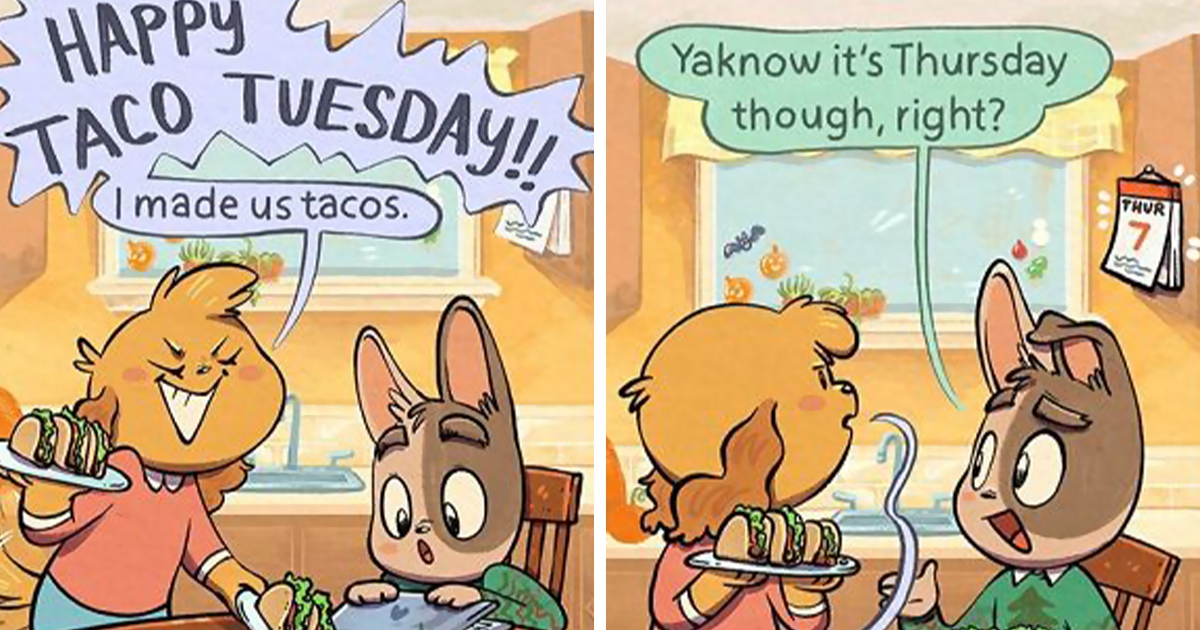
One reason these relatable comics feel so comforting is that they are not trying to turn everyday life into a grand heroic journey. They know that sometimes the funniest battle of the day is deciding whether “Taco Tuesday” can legally happen on Thursday. Spoiler: emotionally, yes.
ChickenPupPie’s comics draw from daily life, silly jokes, games, cozy routines, and random observations. The humor often comes from moments that are small enough to overlook but familiar enough to land instantly. Walking through a forest, carving pumpkins at home, doing “work” without really doing the work, or glaring dramatically at a minor inconvenience can become comic gold when framed with the right rhythm.
This is the secret sauce of slice-of-life comics. They do not need explosions. They need recognition. The reader sees a character avoiding a task, misunderstanding a situation, getting overly excited about food, or treating a tiny comfort like a sacred ritualand the joke clicks because the reader has been there.
Wholesome Humor Without Being Boring
Wholesome comics can sometimes be misunderstood as simple or overly sweet. But making gentle humor work is harder than it looks. A comic can be kind without becoming bland. It can be cute without turning into a greeting card that smells like vanilla and judgment. ChickenPupPie’s work succeeds because the sweetness is balanced with personality.
The pups are adorable, but they are not perfect. They procrastinate. They get dramatic. They misunderstand things. They behave with the kind of small, harmless chaos that makes characters memorable. That imperfection keeps the comics funny. Readers are not just smiling at cuteness; they are smiling at themselves.
Why Dog Comics Are Almost Unfairly Effective
Dogs have a major advantage in visual humor: they are already funny before the joke begins. Their expressions, body language, and enthusiasm make them natural cartoon performers. A dog character can make a blank stare feel like an existential crisis. A wagging tail can turn a normal sentence into emotional fireworks.
In ChickenPupPie’s comics, dogs also soften the human situations being portrayed. A comic about burnout, laziness, social awkwardness, or lack of motivation can feel lighter when shown through a pup. The reader gets the point without feeling attacked. It is much easier to admit, “Yes, I too avoid responsibilities,” when the confession is being delivered by a round little dog who looks like it would lose a debate with a sandwich.
The Art Style: Simple, Expressive, and Reader-Friendly
The strongest webcomics often use clean visuals because clarity is everything. Online readers scroll quickly. A comic has only a second or two to say, “Hey, stop here, there is a joke and possibly a small emotional blanket.” ChickenPupPie’s art style is approachable and expressive, using charming character design and readable scenes rather than overloading each panel with unnecessary detail.
This kind of visual simplicity is not laziness. It is design discipline. The artist has to decide what matters most: the expression, the timing, the pose, the small prop, or the final beat. In comedy, every panel has a job. If the setup is too cluttered, the punchline gets buried. If the characters are too stiff, the joke loses warmth. ChickenPupPie’s comics keep the focus where it belongs: on emotion, timing, and the tiny absurdities of being alive.
How Short Comics Create Big Emotional Payoffs
A short comic is a tiny machine. The first panel invites us in. The middle panels build recognition or tension. The final panel releases the joke, flips the meaning, or lands on a soft emotional note. When done well, it feels effortless. When done poorly, it feels like someone explained a joke at a meeting and then asked everyone to rate it on a spreadsheet.
ChickenPupPie’s best moments work because they understand pacing. The humor is rarely forced. Instead, it comes from a character’s reaction, an unexpected bit of honesty, or a familiar situation pushed just far enough to become funny. That is why these comics are easy to revisit. They are not dependent on shock value. They are built on mood.
Why We Need Feel-Good Comics More Than Ever
The internet is not exactly famous for being gentle. It can be useful, entertaining, inspiring, and occasionally a place where someone argues passionately with a blender review from 2018. Because of that, wholesome art has real value. Funny and relatable comics offer a small pause from the noise.
Laughter has long been associated with stress relief, social bonding, and emotional release. You do not need a scientific lecture to know that a good laugh can loosen the tension in your shoulders. Still, the research-backed idea is simple: humor helps people cope, connect, and reset. A small comic will not solve every problem, but it can interrupt a gloomy scroll and replace it with a smile. That counts.
The Relatability Factor: “That’s Me” in Four Panels
Relatable comics spread because they invite readers to identify with them. The joke is not just “look at this character.” The joke is “look at this character being exactly like us.” That little mirror effect is powerful. It turns a comic from content into a shared experience.
For example, a comic about pretending to work while actually doing very little is funny because almost everyone has had that moment. A comic about singing holiday songs in the wrong month works because joy does not always respect the calendar. A comic about being intensely focused on food is funny because hunger has personally managed at least 40 percent of human decision-making since the beginning of time.
From Hobby to Audience Favorite
One of the most interesting parts of ChickenPupPie’s story is that the comics began as something refreshing and personal. That gives the work a relaxed sincerity. The creator has noted that motivation and inspiration can come and go, and when the comics stop feeling fun, it is okay to step away for a while.
That attitude is healthy and surprisingly important. Online creators often feel pressure to post constantly, grow quickly, and feed the algorithm as if it were a dragon with Wi-Fi. But creative work lasts longer when the artist protects the joy that made the project worth doing in the first place. ChickenPupPie’s comics feel light because they are not trying too hard to impress. They are trying to share something small, funny, and true.
What Makes the 31 Pics Worth Viewing
The “31 Pics” format is perfect for this kind of comic collection because it gives readers a generous sample of the artist’s world. One comic might focus on a cozy seasonal activity. Another might capture a goofy conversation. Another might turn a tiny everyday habit into a punchline. Together, the collection becomes more than a gallery; it becomes a mood board for soft humor.
Readers who enjoy funny animal comics, wholesome webcomics, slice-of-life humor, cute dog illustrations, and relatable internet art will find plenty to enjoy. The appeal is broad because the themes are universal. Everyone understands comfort. Everyone understands procrastination. Everyone understands the spiritual importance of snacks. And if someone claims they do not, please check whether they are secretly three raccoons in a coat.
Why Artists Keep Returning to Everyday Humor
Everyday humor is endlessly renewable. There will always be awkward conversations, chores, weather complaints, food cravings, seasonal excitement, creative blocks, and tiny domestic dramas. For comic artists, these moments are a gold mine because they are specific enough to feel real and common enough to be widely understood.
That is why creators from many corners of webcomic culture use slice-of-life storytelling. Some focus on anxiety. Some focus on relationships. Some focus on pets, parenting, work, school, or introvert problems. ChickenPupPie’s dog-centered approach adds warmth and playfulness to that tradition, making the comics feel like a friend sending you a joke because they know your day could use one.
Experience: Why These Comics Feel Like a Tiny Reset Button
Reading a collection like “Artist Creates Relatable And Funny Comics That Might Make You Smile (31 Pics)” feels a bit like opening a window in a stuffy room. You may arrive distracted, tired, or just casually avoiding something responsible. Then a small dog character appears on screen, does something emotionally accurate and slightly ridiculous, and suddenly your brain has permission to unclench.
That is the real experience of relatable comics: they make ordinary feelings visible. Maybe you have had a day where your ambition was huge but your energy was operating on the battery percentage of an old remote control. Maybe you planned to clean, cook, answer messages, organize your life, and become a better person, only to spend twenty minutes deciding which snack best represented your current emotional chapter. A good comic takes that tiny private failure and says, “Same.”
There is also comfort in seeing humor built from softness instead of sarcasm. A lot of internet comedy depends on being sharp, mean, or aggressively ironic. That can be funny, but it can also get exhausting. ChickenPupPie’s comics offer a gentler flavor. They are not laughing at people as much as laughing with them. The characters seem to understand that life is weird, motivation is fragile, and sometimes the correct response to a serious plan is to lie down for five minutes and accidentally wake up in a different era.
Another reason the experience feels pleasant is the rhythm of short comics. You do not have to commit to a long story arc or memorize twelve characters with complicated backstories. You can dip in, smile, and leave. That makes the collection ideal for quick breaks: during lunch, before bed, between tasks, or while pretending you are “checking one thing” online. We all know how that ends, but at least this time the scroll comes with cute dogs.
For artists, these comics can also be encouraging. They show that meaningful work does not always need to be massive. A simple idea, a few expressive panels, and a sincere sense of humor can connect with thousands of readers. That is inspiring for anyone who has ever postponed a creative project because it did not feel big enough. Sometimes small is the point. Small is readable. Small is shareable. Small fits into someone’s day exactly when they need it.
For readers, the biggest takeaway is not complicated: joy can be brief and still matter. A funny comic will not fold your laundry, fix your schedule, or stop your inbox from multiplying like a cursed mushroom colony. But it can give you a moment of lightness. It can remind you that other people are also tired, silly, hopeful, distracted, snack-driven, and trying their best. That shared recognition is why relatable comics continue to thrive.
In the end, ChickenPupPie’s comics work because they are honest about small happiness. They celebrate cozy moments, goofy habits, and the everyday comedy of being a creature with feelings. Whether the characters are walking through a forest, carving pumpkins, playing games, craving tacos, or dramatically avoiding responsibility, they invite readers into a warmer corner of the internet. And honestly, a warmer corner is always worth bookmarking.
Conclusion
“Artist Creates Relatable And Funny Comics That Might Make You Smile (31 Pics)” is more than a cute comic collection. It is a reminder that humor does not have to be loud to be memorable. ChickenPupPie’s work turns small slices of life into charming visual jokes, using adorable dogs, expressive art, and gentle timing to create comics that feel instantly familiar.
These funny and relatable comics succeed because they understand the reader. They know we are all a little tired, a little snack-obsessed, sometimes dramatic, sometimes cozy, and often just looking for one small reason to smile. In a fast-moving online world, that kind of wholesome humor is not just pleasantit is necessary.
Note: This article is an original, fully rewritten editorial piece based on publicly available information about ChickenPupPie, digital comics, webcomic culture, humor, and relatable visual storytelling.













