
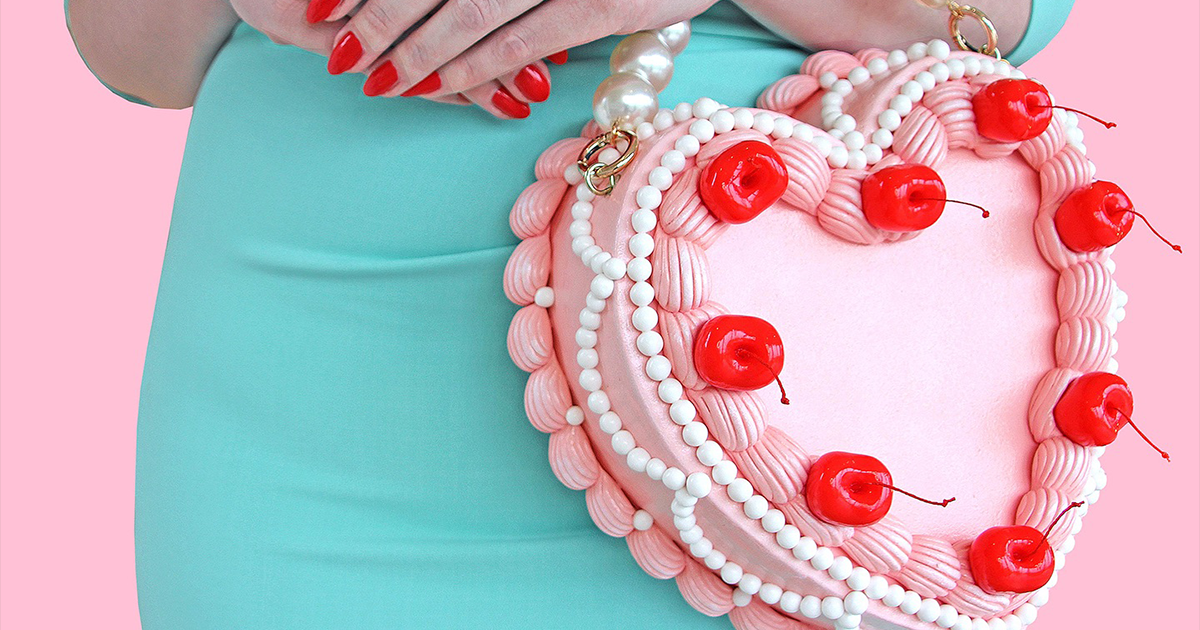
Most handbags are designed to carry your wallet, phone, keys,rus makes handbags that look like the granola baror the entire meal surrounding it.
Working under the name ROMMYDEBOMMY, the Dutch artist has created an extraordinary collection of food-shaped handbags inspired by desserts, fruit, vegetables, snacks, noodles, breakfast plates, and complete dinners. A gallery featuring 80 of her designs demonstrates just how far one imaginative artist can stretch the relationship between food and fashion. Suddenly, a slice of cake is a clutch, a bowl of noodles has a shoulder strap, and a plate of fries is ready for a night out. ese are not flat bags with pictures of food printed on them. Kuperus builds three-dimensional wearable sculptures with carefully modeled toppings, realistic textures, glossy sauces, browned crusts, tiny seeds, and other details capable of confusing a hungry observer from several feet away. Her work sits somewhere between fashion accessory, pop-art sculpture, visual joke, and the most dangerous thing to carry into a restaurant before dinner.
Meet the Artist Behind the Delicious Handbags
Rommy Kuperus is a Netherlands-based artist and designer whose creative identity revolves around color, humor, and everyday objects. Her brand, ROMMYDEBOMMY, became known internationally through images of handbags shaped like recognizable foods. She has also designed food-inspired necklaces, brooches, coin purses, bow ties, and decorative objects, but her sculptural bags remain the main course.
Kuperus studied areas including public design, product design, and lifestyle design before developing her independent artistic practice. In an early interview, she described her work using three wonderfully accurate words: “color,” “explosion,” and “humor.” She also identified supermarkets, architecture, toys, nature, household objects, and unexpected color combinations as important sources of inspiration. od became an ideal subject because it offered nearly unlimited shapes and textures. A croissant has curved layers. Sushi has crisp geometric sections. Frosted cake allows for wild color combinations. Ramen is a glorious nest of chaos. Even an ordinary strawberry provides seeds, leaves, shine, and a recognizable silhouette.
Kuperus has explained that she is fascinated not only by the taste of food but also by its appearance. To her, a grocery store can function like a museum filled with colors, surfaces, packaging, patterns, and sculptural forms that many shoppers barely notice while searching for the shortest checkout line. ow Food Becomes Wearable Art
It Begins With a Recognizable Dish
The strongest food-shaped handbags work because viewers recognize them instantly. Kuperus does not need to attach a label reading “waffle” or “strawberry cake.” The form, color, and texture deliver the message before the viewer has time to analyze it.
A food item must then be translated into something that can open, close, hang from a strap, and carry personal belongings. That creates a design puzzle. A realistic plate may be visually convincing but awkward as a bag. A towering cake may look spectacular but require a carefully concealed compartment. The artist must preserve the food illusion while building a functional object inside it.
Every Texture Matters
Kuperus creates the illusion through layers of modeled and painted detail. Depending on the piece, her work has involved materials such as clay, lightweight foam, paint, faux leather, and polyurethane components. Her official information notes that she mixes different types of clay herself, adding what she jokingly calls “a little bit of magic.” Earlier profiles have also documented her use of foam and painted surfaces to keep the finished designs surprisingly light. e illusion depends on small decisions. Bread should not be one flat shade of beige; it needs darker baked edges, tiny cracks, and subtle changes in color. Frosting needs volume and shine. Lettuce requires irregular folds. Noodles must overlap without becoming an unreadable blob. A sunny-side-up egg needs a yolk that appears glossy and raised above the white.
These details explain why the bags look more like movie props than conventional accessories. They recreate not merely the outline of food but also the visual signals that make people imagine crispness, softness, stickiness, or crunch.
The Bags Are Actually Functional
The funniest surprise may be that these wearable sculptures are real bags. According to Kuperus, many have room for daily essentials such as a phone, keys, a small cardholder, and a little makeup. Capacity varies because a sushi roll and a layered birthday cake are not known for sharing identical interior dimensions. e artist describes her operation as a one-woman business, and each design is handmade. No molds are used, so slight differences in shape and color are part of the process rather than defects. Custom and made-to-order pieces may require months of processing, reflecting the amount of sculpting, drying, painting, assembly, and finishing involved. Buffet of Handbag Designs
Desserts That Never Melt
Cakes, cookies, pastries, doughnuts, and candy are natural stars of the ROMMYDEBOMMY collection. They already come in bright colors and decorative shapes, which makes them perfect raw material for playful fashion.
Some cake bags resemble individual slices complete with piped frosting, fruit, cream, and visible layers. Others look like entire celebration cakes. Doughnut designs feature glossy icing and sprinkles, while waffle-inspired pieces reproduce the familiar grid pattern and may appear topped with fruit, syrup, or butter.
Unlike actual desserts, these creations do not collapse in warm weather, attract ants, or make your hands mysteriously sticky. That is progress.
Fast Food With Faster Fashion
Burgers, fries, pizza, hot dogs, and fried snacks provide another major source of inspiration. Their bold colors and instantly recognizable arrangements translate well into novelty handbags. A hamburger offers stacked layers of bun, lettuce, cheese, sauce, and patty. Pizza provides melted cheese, crust, and toppings. French fries supply a forest of golden shapes that can be sculpted individually.
Some of Kuperus’s most memorable works resemble complete plated meals rather than single ingredients. A bag might look like a tray of fast food, a breakfast plate, or a carefully arranged dinner. These elaborate compositions create an amusing contradiction: the object looks ready for a dining table, yet a chain turns it into something intended for the shoulder.
Noodles, Sushi, and Global Comfort Foods
The collection does not remain in the dessert case. Kuperus has explored sushi, instant noodles, pasta, dumplings, moon cakes, sandwiches, and other foods associated with different culinary traditions. A realistic instant-ramen design attracted significant online attention, while sushi bags have reproduced details such as rice grains, seaweed, sliced fillings, and compartmentalized presentation boxes. is variety gives the collection more personality than a simple lineup of cupcakes and candy. Food is closely tied to family, travel, culture, celebration, and memory. A person may be drawn to a particular handbag because it resembles a childhood snack, a favorite restaurant order, or a dish connected with home.
Fruit and Vegetables Join the Menu
Produce may be less dramatic than a triple-layer cake, but it offers excellent sculptural possibilities. Strawberries, watermelon, citrus fruit, peas, corn, and other ingredients have distinctive colors and silhouettes. Kuperus can exaggerate their familiar qualities without making them unrecognizable.
Her strawberry clutch became one of the designs associated with the early growth of her brand. Its appeal is easy to understand: the bright red body, scattered seeds, and green top make the fruit naturally suited to a playful accessory. It is cheerful, compact, and considerably less likely to stain a white dress than the real thing. hy These Food-Shaped Handbags Are So Captivating
They Create a Double Take
Human attention is drawn to objects that violate expectations. We know what a handbag should look like, and we know where a plate of spaghetti normally belongs. When those categories collide, the brain pauses to solve the visual riddle.
From a distance, the object may register as food. A moment later, the viewer notices the chain, clasp, or handle. That delayed recognition creates the joke. It is a classic trompe-l’oeil effect: the artist makes one material imitate another so convincingly that the eye briefly accepts the illusion.
They Turn an Outfit Into a Conversation
A traditional black shoulder bag is versatile, elegant, and unlikely to make strangers ask whether it contains garlic bread. A ROMMYDEBOMMY bag has the opposite social function. It announces itself immediately.
Novelty handbags often work as conversation pieces rather than silent supporting accessories. Fashion publications have documented renewed interest in sculptural, surreal, and unusually shaped bags, from hearts and animals to exaggerated everyday objects. These designs offer a joyful alternative to minimalist accessories and allow the wearer to express a specific sense of humor. hey Transform the Ordinary
Food is so familiar that people often stop looking at it carefully. Kuperus reverses that habit. By rebuilding a common snack as a handcrafted object, she invites the viewer to notice its design: the spiral of a pastry, the geometry of a sandwich, the irregular edge of lettuce, or the absurd perfection of a doughnut.
This approach connects her work to a wider tradition of contemporary artists who transform consumer goods and everyday foods into sculptures. Artist Chloe Wise, for example, became widely known after creating bread sculptures decorated like luxury handbags, including a convincing bagel-and-cream-cheese piece that was initially mistaken for a real designer purse. her designers have converted pasta boxes, cereal packaging, and fast-food wrappers into wearable objects. These projects differ in materials and purpose, but they all blur the line between product, joke, art, and accessory. andmade Fashion in a Mass-Produced World
One reason Kuperus’s work feels special is that it resists uniformity. Most commercial bags are designed for repeatable manufacturing. Every seam, component, and dimension must be reproduced reliably across hundreds or thousands of units.
A handmade food sculpture follows a different logic. One tomato slice may curl more than another. The browning on one piece of toast may be slightly darker. A frosting swirl may lean to the left because it was shaped by hand rather than stamped by a machine.
That individuality is central to the value of wearable art. Buyers are not simply paying for a container with a strap. They are supporting the planning and manual labor required to transform raw materials into an object that carries the recognizable personality of its maker.
The delicate nature of the designs also changes how they are used. Kuperus recommends protecting the pieces from extreme heat, very rainy weather, excessive weight, children, pets, andmost amusinglyhungry people. The bags can be worn, but they can also be displayed on a wall like small sculptures between outings. ow to Style a Handbag That Looks Like Dinner
A food-shaped bag already provides the visual headline, so the rest of an outfit does not need to shout over it. One easy approach is to pair the bag with simple clothing in solid colors. Jeans, a white shirt, and a giant slice-of-cake clutch create a balanced outfit in which the accessory receives the attention it deserves.
Another approach is deliberate color matching. A strawberry bag can echo red shoes or lipstick. A sushi purse can complement black, cream, and green clothing. A pastel cake bag fits naturally with soft pinks, blues, and yellows.
Maximalists may prefer the opposite strategy: prints, dramatic jewelry, platform shoes, and a handbag shaped like an entire breakfast. There are no fashion police prepared for that situation.
The best choice is usually a food with personal meaning. Someone who loves baking might carry cake. A noodle enthusiast may choose ramen. A traveler may want a bag inspired by a memorable regional dish. When an accessory reflects a genuine interest, it feels playful rather than random.
The Experience of Carrying a Handbag That Looks Like Food
Imagine preparing for a casual evening out. Your outfit is ready, your phone is charged, and your keys have performed their traditional disappearing act. Instead of reaching for an ordinary purse, you pick up a handbag shaped like a plate of pancakes covered with berries and syrup.
The first experience is tactile. From photographs, a food-shaped handbag can look heavy, fragile, or inconvenient. In person, the lightweight construction would be surprising. The chain may weigh as much asor even more thanthe sculpted body. You open a concealed compartment, place your essentials inside, and realize that the artwork is not pretending to be useful. It is genuinely prepared to do purse duty.
Then comes the mirror test. A conventional bag usually completes an outfit without changing its entire story. The pancake bag immediately changes everything. You are no longer simply dressed for dinner. You appear to be transporting breakfast into the evening as part of an unexplained but confident personal mission.
The real adventure begins in public. Someone notices the bag at an elevator, café, bookstore, or crosswalk. Their expression moves through several recognizable stages: curiosity, confusion, realization, and delight. They lean closer. Is that really a bag? Does it open? Is the syrup sticky? Where did it come from? Can it hold a phone?
A wearable artwork gives strangers permission to start conversations. This can be wonderful for people who enjoy social interaction. The bag functions like an introduction that requires no small talk about weather. Instead of asking what you do for a living, someone may spend five minutes examining a sculpted blueberry.
There is also a pleasant element of mischief. Carrying a realistic food handbag gently disrupts the visual order of an ordinary space. A subway car is full of neutral coats, laptop backpacks, and practical totes. Then someone enters carrying a three-dimensional bowl of noodles. The bag does not harm anyone or demand serious interpretation, yet it changes the atmosphere by introducing surprise.
At a restaurant, the effect becomes even stronger. Place a hamburger-shaped bag on the table and the accessory begins competing with the menu. A server may laugh. Other diners may stare. Someone will probably make a joke about ordering the matching meal. The experience demonstrates how easily an object can move between art, fashion, humor, and social performance.
Owning such a bag would also require a different kind of care. You would not casually throw it beneath a pile of groceries or allow it to roll around on the floor of a car. After wearing it, you might wipe the surface gently and store it in a protected place. Because the object is handmade and sculptural, caring for it becomes closer to maintaining artwork than handling a mass-produced tote.
The most meaningful experience, however, may come from choosing the food itself. A cake bag might remind someone of birthday celebrations with family. A moon-cake purse could connect with an important holiday tradition. A waffle design might recall Sunday breakfasts, while a sushi bag could represent a favorite date-night ritual.
Food memories are powerful because they combine sight, smell, taste, people, and place. By turning a dish into a permanent accessory, the artist gives those associations a physical form. The wearer is not carrying actual food, but the bag can still carry a story.
That emotional connection explains why the collection is more than a parade of visual jokes. The humor attracts attention, but the craftsmanship and familiarity make the designs memorable. A person may laugh at a purse shaped like toast, then realize that toast reminds them of mornings in a childhood kitchen. Suddenly, the novelty object has become surprisingly personal.
Of course, there would also be practical limitations. The bag probably would not replace a large everyday tote. It would be a special accessory for an event, photo shoot, gallery visit, celebration, or day when blending into the background sounds painfully boring. You would pack lightly, avoid a thunderstorm, and maintain a safe distance from enthusiastic dogs.
Ultimately, carrying one of Kuperus’s food-shaped handbags would feel like participating in the artwork. The sculpture changes when it leaves a shelf and enters public life. Movement makes the chain swing. Clothing creates a new color combination. Reactions from strangers become part of the experience. The wearer completes the piece simply by taking it somewhere unexpected.
When Fashion Is Served With a Sense of Humor
Rommy Kuperus has demonstrated that a handbag does not need to choose between usefulness and imagination. Her approximately 80 showcased food-inspired designs transform familiar meals into meticulously crafted wearable art while preserving enough interior space for real belongings.
The collection succeeds because it combines convincing detail with unapologetic humor. Each cake, strawberry, noodle bowl, burger, and sushi roll asks viewers to look twice at something they thought they already understood. In doing so, the bags celebrate food, craftsmanship, personal expression, and the simple pleasure of wearing an object that makes people smile.
Fashion frequently tells us to be polished, timeless, and sensible. ROMMYDEBOMMY offers another possibility: carry the pancakes.













