
Note: This article is written as an original, web-ready story inspired by the real rise of hand embroidery, DIY crafts, and creative home hobbies during lockdown. It does not reproduce any copyrighted descriptions or source text.
At the beginning of lockdown, when the world suddenly shrank to the size of a living room, a kitchen table, and one suspiciously overworked couch, I started creating embroidery designs. Like many people, I was looking for something that did not involve refreshing the news every seven minutes or pretending that banana bread counted as a personality trait. Embroidery gave me a needle, thread, fabric, andmost importantlya reason to slow down.
What began as a small creative experiment turned into a full collection of hand embroidery designs. Some were floral, some were funny, some were sentimental, and some looked like they had been stitched by a raccoon with strong opinions. But each piece taught me something about patience, color, texture, and the surprisingly dramatic relationship between thread tension and human emotion.
Below are my best 40 embroidery works from that strange, quiet, creative season. Think of this as a stitched diary: part art gallery, part survival kit, and part reminder that beauty can be made even when life feels paused.
Why Embroidery Became the Perfect Lockdown Hobby
Hand embroidery has always had a timeless charm, but during lockdown it felt especially powerful. It required only a few supplies: an embroidery hoop, fabric, embroidery floss, needles, scissors, and a design idea. No giant studio. No expensive machinery. No need to explain to your family why the dining table had officially become a “mixed-media textile laboratory.”
Embroidery also offered something that many of us desperately needed: structure. Each stitch created a tiny, visible sign of progress. A back stitch became a stem. A satin stitch turned into a petal. A French knot became a berry, a star, or, depending on the day, a tiny knot of pure frustration. Unlike scrolling through social media, embroidery left something behind.
Modern embroidery designs are especially flexible. They can be minimalist, botanical, vintage-inspired, humorous, abstract, romantic, cozy, or bold enough to make your grandmother raise one eyebrow and secretly approve. That creative freedom is why so many beginners found comfort in embroidery during lockdown and why many makers continued long after restrictions lifted.
The Supplies That Carried Me Through
My first setup was humble: a wooden hoop, cotton fabric, a handful of embroidery floss, a needle, a water-soluble pen, and small scissors sharp enough to make me feel professional. Later, I added linen, felt, metallic thread, beads, printed patterns, stabilizer, and enough floss colors to make a rainbow feel underdressed.
The most useful beginner stitches were the classics: back stitch for outlines, satin stitch for filled shapes, chain stitch for decorative lines, stem stitch for flowers, split stitch for lettering, lazy daisy for petals, and French knots for tiny details. These embroidery stitches became the foundation for nearly every design I made.
My Best 40 Embroidery Works
This collection is not ranked by perfection. If perfection were required, several pieces would have quietly packed their bags and left. Instead, these are the designs that captured a mood, solved a creative problem, or made me smile when the world felt uncertain.
1. The First Lockdown Bloom
A simple wildflower hoop stitched with soft pink, yellow, and green threads. It was not complicated, but it proved that a few basic stitches could create something cheerful.
2. The Window Garden
This design showed little potted plants lined up on a windowsill. It became a tribute to everyone who tried to become a plant parent in 2020 and accidentally created a botanical drama series.
3. Midnight Moon and Stars
Using dark fabric and pale thread, I stitched a crescent moon surrounded by tiny stars. French knots made the sky sparkle without needing glitter, which is good because glitter is basically craft confetti with legal immunity.
4. The Cozy Tea Cup
A steaming tea cup with floral details became one of my warmest embroidery designs. It worked beautifully with stem stitch steam curls and satin stitch leaves.
5. Tiny Mushroom Forest
This whimsical piece included red-capped mushrooms, mossy greens, and small woodland details. It felt like stitching a fairy tale into fabric.
6. Sunflower for Better Days
The sunflower design used layered yellow petals and a textured center of French knots. It was bright, hopeful, and slightly demanding, like a motivational speaker in plant form.
7. Home Sweet Hoop
A cozy house surrounded by tiny flowers, this piece captured the complicated feeling of being home all the time: grateful, restless, safe, and very aware of every squeaky floorboard.
8. The Lavender Bundle
This botanical embroidery design used long straight stitches and soft purple tones. It was simple, elegant, and perfect for beginners who want a project that looks harder than it is.
9. The Quarantine Cat
A sleepy cat curled inside an embroidery hoop became one of the funniest pieces in the collection. The cat looked exactly how I felt: present, but spiritually unavailable.
10. The Lemon Branch
Bright lemons, glossy leaves, and white blossoms gave this hoop a fresh kitchen-garden mood. Satin stitch worked well for the fruit, while split stitch gave the leaves definition.
11. Floral Initial Monogram
This personalized embroidery design combined a large stitched letter with small flowers wrapping around it. It made a thoughtful handmade gift and looked lovely framed.
12. The Rainy Day Hoop
An umbrella, raindrops, and small blue accents turned this into a soft, reflective design. It reminded me that even gloomy days can have rhythm and beauty.
13. The Mini Meadow
This piece packed daisies, grass, clover, and tiny insects into one small hoop. It taught me that negative space mattersand that I cannot resist adding “just one more flower.”
14. Coffee Before Everything
A stitched coffee mug with playful lettering became a favorite for obvious reasons. During lockdown, coffee was not a beverage; it was a support system.
15. The Bluebird
This design used layered blues and soft gray thread to create a small bird perched on a branch. It was one of my first attempts at using thread direction to suggest feathers.
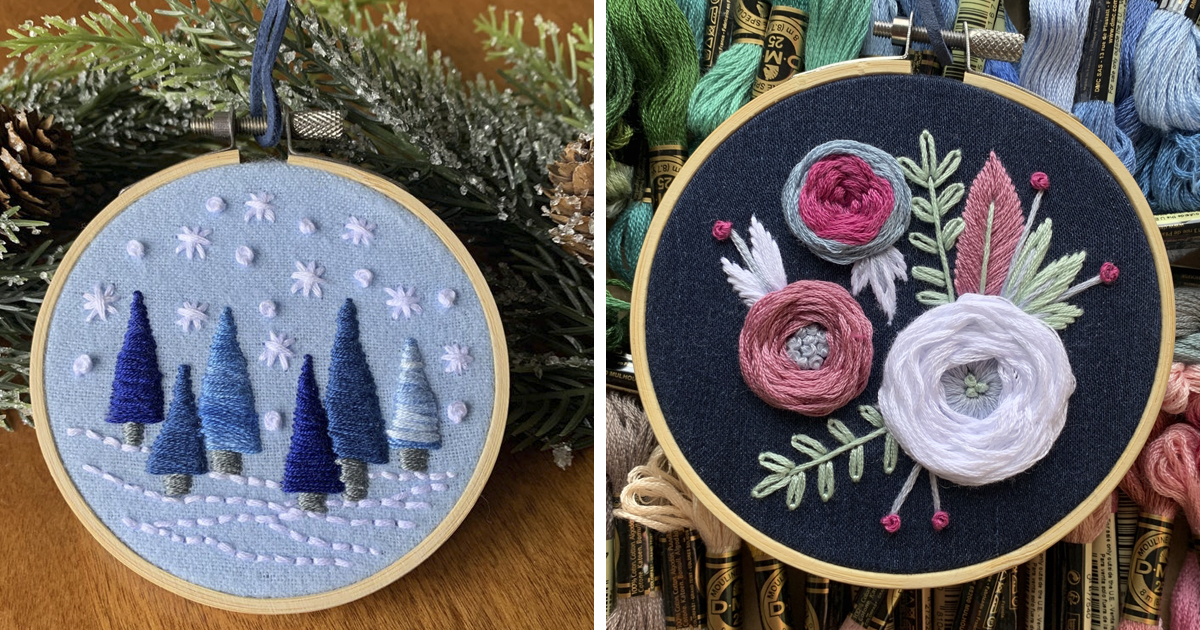
16. Wild Rose Wreath
A circular floral wreath with pink roses, leaves, and buds became one of the most romantic designs in the collection. It also taught me that symmetry is both beautiful and deeply bossy.
17. The Golden Bee
This little bee used yellow, black, and metallic thread for a touch of shine. The wings were stitched lightly so they looked delicate instead of heavy.
18. Mountain Morning
A landscape embroidery hoop with mountains, sun, and pine trees brought outdoor energy into an indoor year. Long stitches created the slopes, while small details gave the design depth.
19. The Book Lover Hoop
A stack of books with flowers growing around them became a tribute to reading during lockdown. The tiny book spines were surprisingly satisfying to stitch.
20. Rainbow After Rain
This cheerful piece used soft rainbow colors and clouds. It was simple, sweet, and exactly the kind of hopeful design people wanted during uncertain months.
21. The Kitchen Herbs Design
Basil, rosemary, thyme, and mint were stitched as small botanical studies. This embroidery design looked wonderful on linen and made me feel like a very organized person, even when my spice drawer disagreed.
22. The Tiny Cottage
A little cottage with smoke curling from the chimney became a cozy favorite. The roof texture used short straight stitches, while the garden used lazy daisy flowers.
23. Moonlit Moth
This design featured a moth with patterned wings and a small moon above it. It blended natural imagery with a slightly mystical style.
24. The Garden Gate
A stitched wooden gate surrounded by vines and flowers gave this hoop a storybook feeling. It was one of the first designs where I focused on depth and layering.
25. Strawberry Patch
Red strawberries, white blossoms, and green leaves made this one of the most cheerful works. The seeds were tiny stitches, which required patience and possibly snacks.
26. The Sleepy Fox
A curled fox in orange and cream thread became a soft woodland design. It was ideal for practicing smooth satin stitch and gentle outlines.
27. Wildflower Alphabet
This was a series of small letters decorated with different flowers. It worked well for custom gifts, nursery decor, and anyone who believes letters deserve accessories.
28. The Happy Cactus
A potted cactus with tiny flowers proved that embroidery can be funny and cute at the same time. The spikes were easy straight stitches, thankfully less dangerous than the real thing.
29. Ocean Waves
This hoop used flowing blue lines and white accents to create waves. Chain stitch and split stitch gave the water movement.
30. The Autumn Leaf Study
Orange, rust, gold, and brown threads created a collection of fall leaves. It was a great exercise in blending colors without making the fabric look muddy.
31. Floral Skull
This bold design mixed a skull outline with blooming flowers. It balanced spooky and pretty, which is also how I describe my inbox during deadline week.
32. The Minimal Line Portrait
A single-line face design stitched in black thread gave the collection a modern feel. It proved that embroidery does not need many colors to make an impact.
33. Winter Pine Hoop
This seasonal design used pine branches, berries, and tiny snow-like knots. It made a lovely holiday embroidery project without feeling overly busy.
34. The Honey Jar
A stitched jar of honey surrounded by bees and flowers created a warm farmhouse-style piece. Golden thread added a soft glow.
35. The Tiny Planet
A whimsical planet with stars and rings became one of the most playful designs. It was small, quick, and perfect for using leftover thread.
36. Garden Snail
A snail with a patterned shell turned into an unexpectedly charming piece. The shell allowed for decorative stitches and color experiments.
37. The Wedding Bouquet
This elegant design featured roses, greenery, and soft ribbon-like lines. It showed how embroidery can preserve the feeling of a bouquet long after real flowers fade.
38. The Positive Phrase Hoop
A simple phrase surrounded by flowers became one of the most giftable designs. Lettering in embroidery takes practice, but when it works, it feels deeply personal.
39. The Blackwork-Inspired Pattern
This geometric piece used repeating motifs and dark thread. It was calming, precise, and excellent for days when I wanted structure more than improvisation.
40. The “Still Here” Hoop
The final favorite was a small design with the words “Still Here” stitched among wildflowers. It was not fancy, but it carried the whole emotional weight of the collection: quiet resilience, one stitch at a time.
What These 40 Embroidery Designs Taught Me
Creating these embroidery works taught me that art does not have to arrive fully formed. Most designs began as messy sketches, half-planned color palettes, and the confident lie, “This will only take one evening.” Spoiler: it did not.
I also learned that embroidery rewards consistency more than speed. A hoop may take hours, days, or weeks, but progress is visible in every line of thread. That makes hand embroidery especially satisfying for anyone who wants a creative hobby with a calming rhythm.
Another lesson was that mistakes are not always disasters. A crooked leaf can become a windblown leaf. A messy flower center can become a textured flower center. A knot on the back can become a private secret between you and the fabric. Embroidery has a forgiving quality if you are willing to adapt.
How to Start Creating Your Own Embroidery Designs
Begin With Simple Shapes
If you are new to embroidery, start with flowers, leaves, stars, hearts, moons, fruit, or simple lettering. These shapes let you practice essential embroidery stitches without getting overwhelmed.
Choose a Limited Color Palette
Too many colors can make a design feel chaotic. Pick three to six thread colors at first. A small palette helps your embroidery design look intentional, even if your planning process involves staring at floss like it owes you money.
Use the Right Fabric
Cotton and linen are popular choices for hand embroidery because they hold stitches well. Avoid fabric that stretches too much when you are just starting, unless you enjoy emotional puzzles.
Practice Lettering Slowly
Embroidered lettering looks simple, but it requires control. Use back stitch, split stitch, or stem stitch for clean letters. Keep your lines short and your thread tension even.
Finish Your Hoop Neatly
A good finish makes a handmade piece feel polished. Trim loose threads, secure the back, and consider adding felt or backing fabric. The back does not need to be perfect, but it should not look like a spaghetti incident.
of Personal Experience: What Lockdown Embroidery Really Felt Like
Looking back, I did not start embroidery because I wanted to create 40 finished works. I started because I needed somewhere to put my attention. Lockdown blurred the edges of time. Mornings became afternoons too quickly, and afternoons became nights before I had done anything that felt real. Embroidery gave me a small ritual. I could choose a thread color, tighten fabric in a hoop, make a stitch, and suddenly the day had a beginning.
The first few pieces were awkward. My stitches were uneven, my lines wobbled, and I had no idea how much thread to cut. Sometimes I used too much and created knots. Sometimes I used too little and had to rethread the needle every five minutes like I was being punished by a tiny sewing committee. But even the mistakes were useful. They kept my hands busy and my mind focused on something gentle.
One of the best experiences was discovering how personal embroidery could be. A flower was never just a flower. It could remind me of spring walks I missed, a garden I wanted, or a friend I had not seen in months. A stitched tea cup felt like comfort. A moon felt like quiet. A funny cat hoop felt like the only reasonable response to spending too much time indoors.
I also learned that creativity grows when you stop waiting for perfect conditions. I did not have a studio. I stitched on the couch, at the kitchen table, near a window, and sometimes in bed with a blanket over my knees. My supplies lived in boxes, baskets, and one heroic zip bag that held more floss than physics should allow. The setup was imperfect, but the work still happened.
Sharing the designs online added another layer of meaning. People responded to the softness, humor, and handmade quality of the pieces. Some liked the botanical designs. Others loved the cozy home themes or uplifting phrases. That feedback helped me understand that embroidery was not only a private comfort; it could also create connection. A small hoop could travel through a screen and make someone feel seen.
The biggest lesson was patience. Embroidery cannot be rushed without showing it. If I pulled too hard, the fabric puckered. If I hurried the satin stitch, the fill looked uneven. If I skipped planning, I paid for it later. The craft gently insisted that I slow down, breathe, and work one stitch at a time. During lockdown, that rhythm became more than a technique. It became a way to handle uncertainty.
By the time I had created dozens of embroidery designs, I realized the collection was not just about thread and fabric. It was a record of adaptation. Each hoop marked a day when I made something instead of simply waiting for things to change. That is why these 40 works still matter to me. They are colorful proof that even in a difficult season, creativity can find a way through.
Conclusion
At the beginning of lockdown, I started creating embroidery designs because I needed a creative outlet. What I found was much more than a hobby. Hand embroidery became a calming routine, a design challenge, a storytelling tool, and a surprisingly funny teacher. It taught me that small actions matter, that imperfect work can still be beautiful, and that a needle and thread can turn restless hours into something lasting.
These 40 embroidery works represent flowers, animals, landscapes, cozy objects, phrases, and tiny stitched worlds. More importantly, they represent persistence. Whether you are a beginner learning basic embroidery stitches or an experienced maker searching for fresh inspiration, the best design is often the one that keeps you coming back to the hoop.














