
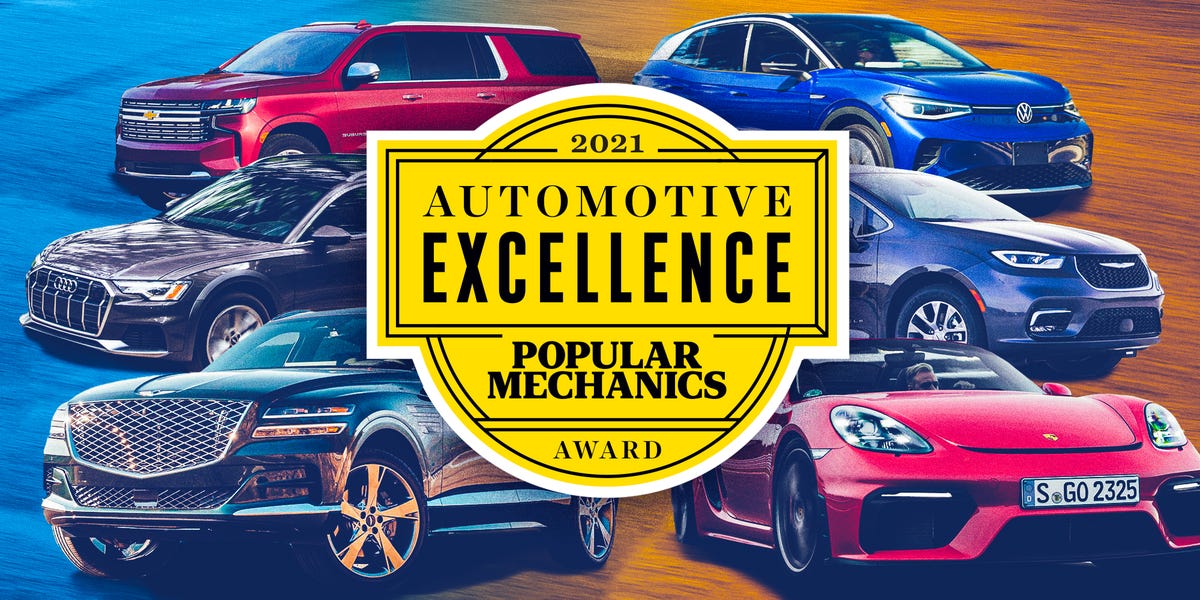
The automotive world loves awards almost as much as it loves cup holders, horsepower, and arguing about whether physical buttons are better than giant touchscreens. But behind the shiny trophies, press releases, and “best-in-class” badges, the Automotive Excellence Awards represent something genuinely useful: a way to recognize vehicles, brands, technologies, and engineering teams that raise the bar for safety, performance, reliability, innovation, value, and everyday usability.
For car shoppers, these awards can act like a flashlight in a very large, very confusing dealership parking lot. A modern buyer is not simply choosing between “sedan or SUV” anymore. They are comparing hybrids, electric vehicles, turbocharged engines, advanced driver-assistance systems, over-the-air software updates, infotainment layouts, resale value, warranty coverage, crash-test results, and whether the third row is suitable for adults or only for backpacks with emotions. Automotive awards help translate all that noise into clearer signals.
Still, not all awards mean the same thing. Some are based on professional road testing. Others rely on owner surveys, safety data, long-term reliability, value analysis, or design and engineering evaluation. The best way to understand automotive excellence is not to chase one trophy, but to understand what each award measures and how it fits into the larger picture.
What Are Automotive Excellence Awards?
Automotive Excellence Awards are honors given to vehicles, manufacturers, technologies, dealerships, or automotive programs that perform exceptionally well in defined categories. These categories may include best car of the year, best SUV, best truck, best electric vehicle, best safety performance, best value, best powertrain, best family car, and best ownership experience.
In the United States, several respected automotive organizations evaluate vehicles from different angles. Editorial outlets such as MotorTrend, Car and Driver, Edmunds, Cars.com, Kelley Blue Book, and Autotrader focus heavily on expert testing, consumer relevance, pricing, performance, and real-world usability. Safety organizations such as the Insurance Institute for Highway Safety and the National Highway Traffic Safety Administration examine crash protection and crash-avoidance performance. Consumer-focused research firms and publishers such as J.D. Power and Consumer Reports add owner satisfaction, initial quality, reliability, road-test performance, and long-term dependability into the discussion.
Together, these awards form a practical ecosystem. One award may tell you a car is thrilling to drive. Another may tell you it protects passengers well. Another may reveal whether owners are still smiling after months of living with the vehicle. When several respected awards point in the same direction, shoppers should pay attention. When they disagree, that is useful too, because it shows that “best” depends on what you value most.
Why Automotive Awards Matter to Car Buyers
Buying a vehicle is one of the largest purchases many people make. The stakes are high, and the showroom coffee is not always strong enough to support clear decision-making. Automotive Excellence Awards help buyers narrow their options by highlighting vehicles that have been evaluated through structured testing, expert analysis, or large-scale consumer feedback.
They Make Research Easier
Instead of reading 97 browser tabs until your laptop begins to judge you, awards provide a shortlist. A family looking for a three-row SUV can start with winners in family-car, safety, and value categories. A commuter interested in low running costs can compare hybrid and EV award winners. A driving enthusiast can look at performance-focused honors and powertrain awards.
They Reveal Strengths Beyond Marketing
Automakers are excellent at advertising. Every vehicle is “bold,” “dynamic,” “premium,” and apparently designed to make you drive across a desert at sunset. Awards can cut through the adjectives by focusing on measurable or testable qualities: braking distance, crash protection, fuel economy, cargo space, acceleration, charging speed, interior ergonomics, reliability predictions, and owner feedback.
They Encourage Automakers to Improve
Automotive awards do not just help consumers. They push manufacturers to compete. When safety ratings require better headlights or stronger crash-prevention systems, automakers respond. When value awards reward practical features at reasonable prices, brands notice. When owner-satisfaction studies expose irritating controls or glitchy infotainment, engineering teams have fewer places to hide.
Major Types of Automotive Excellence Awards
1. Car, Truck, and SUV of the Year Awards
Some of the most visible awards honor the best all-new or significantly updated vehicles of a model year. MotorTrend’s “Of the Year” awards are among the best-known examples. Its evaluation framework considers factors such as advancement in design, engineering excellence, efficiency, safety, value, and performance of intended function. In plain English: the vehicle should do what it promises, do it intelligently, and not require the buyer to sell a kidney to enjoy it.
The North American Car, Truck and Utility Vehicle of the Year awards also carry major industry weight. These honors are judged by a large group of automotive journalists and focus on vehicles that bring strong innovation, design, safety, handling, driver satisfaction, user experience, and value to the market. Because the awards are separated into car, truck, and utility categories, they reflect how Americans actually shop.
2. Safety Awards
Safety awards are among the most important because they deal with something more meaningful than chrome trim: human lives. The Insurance Institute for Highway Safety recognizes vehicles through its Top Safety Pick and Top Safety Pick+ programs. These awards evaluate crashworthiness, headlights, pedestrian crash prevention, and front crash-prevention systems. The National Highway Traffic Safety Administration also provides federal 5-Star Safety Ratings that help consumers compare crash protection and safety performance.
A strong safety award does not mean a vehicle is invincible. It means it performed well in specific, rigorous evaluations. For families, commuters, teen drivers, and anyone who has ever seen another motorist attempt to merge while eating a burrito, safety recognition should carry real weight.
3. Reliability and Ownership Awards
Reliability is not glamorous until your car refuses to start on a Monday morning. Then it becomes the most glamorous thing in the universe. Consumer Reports evaluates vehicles using road-test performance, predicted reliability, owner satisfaction, and safety. J.D. Power studies such as the Initial Quality Study, Vehicle Dependability Study, and Automotive Performance, Execution and Layout Study gather large-scale owner feedback about problems, satisfaction, features, comfort, and emotional appeal.
These awards are especially useful because they capture what happens after the honeymoon phase. A vehicle may feel amazing during a 20-minute test drive, but owner-focused awards help answer the bigger question: will you still like it after school drop-offs, grocery runs, potholes, software updates, and that one mysterious dashboard beep?
4. Best Value and Best Buy Awards
Kelley Blue Book’s Best Buy Awards are designed to identify vehicles that make sense for a wide range of shoppers. These awards emphasize value, pricing, ownership costs, reputation, features, and market relevance. Value does not always mean “cheapest.” A true value winner delivers the right mix of quality, capability, comfort, technology, resale strength, and affordability.
This matters because the lowest monthly payment is not always the best deal. A vehicle with poor fuel economy, weak resale value, or expensive maintenance can become a financial raccoon in your garage. Best value awards help shoppers look beyond the sticker price.
5. Electric Vehicle and Green Car Awards
As electric vehicles and hybrids become mainstream, automotive excellence now includes charging speed, range, battery efficiency, regenerative braking feel, software quality, and real-world usability. EV awards from automotive publications often consider whether a vehicle makes electric driving easier rather than merely more futuristic. A great EV should not feel like a science project with heated seats. It should be practical, efficient, comfortable, and simple to live with.
Hybrid awards also deserve attention. In recent years, hybrids have become a sweet spot for many buyers who want better fuel economy without depending fully on public charging infrastructure. Powertrain-focused awards, including programs that evaluate engines and propulsion systems, increasingly recognize hybrid systems, plug-in hybrids, and electric drivetrains alongside traditional gasoline engines.
6. Editorial Choice and Top Rated Awards
Car and Driver’s Editors’ Choice and 10Best lists, Edmunds Top Rated Awards, Cars.com Best Of Awards, and Autotrader Best New Cars awards all help translate professional testing into practical recommendations. These programs often evaluate acceleration, braking, handling, comfort, cargo space, technology, visibility, controls, efficiency, pricing, and overall livability.
Editorial awards are valuable because expert reviewers drive many competing vehicles back-to-back. That context matters. A compact SUV may feel wonderful in isolation, but when compared directly with five rivals, its noisy cabin, confusing screen menus, or cramped cargo area may suddenly wave a tiny red flag.
What Makes a Vehicle Truly Award-Worthy?
The best vehicles rarely win because of one flashy feature. True automotive excellence is balanced. A vehicle may have jaw-dropping acceleration, but if the ride feels like falling down stairs in designer shoes, it may not deserve broad recognition. Likewise, a family SUV with excellent cup holders but poor crash-test results should not be polishing any trophies.
Safety Comes First
Modern excellence begins with protection. Strong crash-test performance, effective automatic emergency braking, good headlights, lane-support systems, blind-spot monitoring, and pedestrian detection all matter. Safety technology should work quietly and confidently, not panic every time a leaf crosses the road.
Engineering Must Serve Real Life
Engineering excellence is not just about complexity. It is about solving problems elegantly. A great hybrid system should transition smoothly between gas and electric power. A great EV should charge quickly and estimate range accurately. A great truck should tow confidently without making the driver feel like they are negotiating with gravity.
Value Must Be Honest
An award-winning vehicle should justify its price. That does not mean it must be cheap. Luxury vehicles can offer strong value if they deliver craftsmanship, comfort, performance, technology, and ownership satisfaction that match the cost. Mainstream vehicles, meanwhile, earn value praise by making advanced features accessible without hiding the good stuff behind option packages the size of a restaurant menu.
Technology Should Help, Not Distract
Automotive technology has improved dramatically, but not every screen is a blessing. Award-worthy tech is intuitive. It connects quickly, responds reliably, and keeps key controls easy to use. A climate-control setting should not require a three-act play. The best vehicles blend digital convenience with common sense.
Design Should Have Purpose
Great design is more than a dramatic grille. Exterior design should support aerodynamics, visibility, identity, and practicality. Interior design should make the cabin comfortable, durable, and easy to use. A beautiful vehicle that cannot fit luggage, child seats, or normal-sized elbows may win attention, but not long-term admiration.
How Consumers Should Use Automotive Awards
Automotive Excellence Awards are helpful, but they should be used wisely. A winning vehicle is not automatically the right vehicle for every buyer. The best car for a single urban commuter may be completely wrong for a family of five, a contractor, a rural driver, or someone who believes every weekend should include muddy trails and questionable decisions.
Start by identifying your priorities. If safety is the top concern, compare IIHS and NHTSA results. If long-term dependability matters most, look at reliability-focused rankings and owner surveys. If you care about driving enjoyment, read editorial testing from performance-oriented publications. If budget is king, study Best Buy and value awards. If you are considering an EV, pay close attention to charging performance, real-world range, warranty coverage, and home-charging practicality.
Next, look for overlap. A vehicle that appears on multiple respected lists is often worth a test drive. For example, a compact car that earns praise for value, safety, reliability, and owner satisfaction is probably doing many things right. On the other hand, a vehicle that wins a performance award but scores poorly in reliability may still be great for enthusiasts, but less ideal for someone who wants stress-free commuting.
Finally, take a proper test drive. Awards cannot tell you whether the seat fits your back, whether the touchscreen annoys you, whether the cargo area fits your stroller, or whether your driveway has enough clearance. Trophies are helpful. Your daily life gets the final vote.
Automotive Excellence in the EV and Hybrid Era
The meaning of automotive excellence is changing fast. In the past, many awards focused on engine refinement, horsepower, ride quality, design, and mechanical durability. Those qualities still matter, but today’s vehicles are also judged on software, battery efficiency, driver-assistance calibration, charging networks, energy management, and digital user experience.
This shift has made awards more complex and more important. A modern electric SUV might offer excellent acceleration, but if its route planning is weak or its charging curve is disappointing, the ownership experience suffers. A hybrid sedan might not look dramatic, but if it delivers outstanding fuel economy, comfort, reliability, and affordability, it may represent excellence better than a louder, flashier rival.
The best award programs are adapting by looking beyond old definitions of performance. Performance can mean 0-to-60 mph speed, but it can also mean charging from 10% to 80% efficiently, keeping passengers comfortable, protecting occupants, saving fuel, or making advanced safety features standard. The future of automotive excellence is not one-dimensional. It is smarter, cleaner, safer, and more user-focused.
Common Mistakes When Reading Automotive Awards
Mistake 1: Assuming Every Award Is Independent
Some awards are editorial and test-based. Others may be promotional, sponsored, or limited in scope. Always consider who gives the award, what criteria are used, and whether the evaluation is transparent.
Mistake 2: Ignoring Category Differences
A “best luxury SUV” winner may be excellent, but that does not help much if you need an affordable commuter car. Compare vehicles within the right category and price range.
Mistake 3: Treating Awards as Permanent Truth
Automotive quality changes by model year. A vehicle that won praise two years ago may have new competitors, updated safety standards, or changed reliability data. Always check the most current model-year information before buying.
Mistake 4: Forgetting Personal Fit
The best vehicle on paper may not fit your needs. Awards can guide your shortlist, but your commute, budget, parking situation, passengers, climate, and driving style matter just as much.
Examples of Award-Winning Qualities in Today’s Market
Recent award programs show several clear trends. Compact and midsize vehicles that combine fuel efficiency, advanced safety, and reasonable pricing continue to perform well. Three-row SUVs are judged not only by size, but by family-friendly details such as cargo flexibility, car-seat access, visibility, and usable technology. Trucks must prove capability, towing confidence, and value rather than simply flexing torque numbers like gym selfies.
Electric vehicles are increasingly evaluated on practical ownership qualities: range, charging speed, efficiency, cabin packaging, software ease, and affordability. Hybrids are enjoying renewed attention because they offer strong fuel economy without requiring major lifestyle changes. Meanwhile, safety awards keep getting tougher, encouraging automakers to make stronger crash protection and better driver-assistance systems standard across trims.
In short, the modern Automotive Excellence Awards landscape rewards balance. The winners are not always the loudest, fastest, or most expensive vehicles. Often, they are the vehicles that solve real problems beautifully.
Experience-Based Insights: What Automotive Excellence Feels Like in Real Life
Automotive excellence is easy to discuss in charts, ratings, and award categories, but it becomes much clearer when you imagine living with the vehicle. The first sign of a truly excellent car often appears before you even start the engine. The door closes with a reassuring sound. The seat adjusts naturally. The steering wheel lands where your hands expect it. The controls make sense. Nothing feels like it was designed by a committee trapped in a conference room with too much coffee.
On the road, excellence feels calm. A great vehicle does not constantly remind you how hard it is working. It accelerates smoothly, brakes predictably, and stays composed over rough pavement. The cabin remains quiet enough for conversation. The safety systems support the driver without behaving like an overprotective robot. The infotainment system connects without drama. The cup holders hold cups, which sounds basic until you meet a poorly designed one and suddenly understand betrayal.
In family vehicles, excellence shows up in small moments. A wide-opening rear door makes buckling a child seat easier. A flat cargo floor turns grocery loading into a non-event. Rear vents keep passengers from staging a climate-control rebellion. Clear visibility helps reduce stress in school pickup lines, where patience goes to retire. These details may not look exciting in a brochure, but they define daily satisfaction.
In performance vehicles, excellence is not just speed. It is communication. The steering tells you what the front tires are doing. The brakes feel strong after repeated use. The suspension balances control with comfort. The engine or electric motors deliver power in a way that feels natural rather than theatrical. A great performance car makes the driver feel talented without requiring racetrack reflexes or a chiropractor on retainer.
In electric vehicles, excellence feels like confidence. The range estimate is believable. Charging information is easy to understand. Regenerative braking is smooth. The cabin packaging takes advantage of the electric platform instead of simply replacing an engine with batteries and calling it innovation. The best EVs make the technology disappear into the experience, which is exactly what good technology should do.
In value-focused cars, excellence feels like getting more than expected. The materials are durable. The ride is comfortable. Fuel economy is strong. Safety features are included without forcing buyers into the most expensive trim. Maintenance costs are reasonable. Nothing about the car screams “budget,” even if the payment does not scream either.
That is why the Automotive Excellence Awards matter. They celebrate the vehicles that make ownership easier, safer, smarter, and more enjoyable. The best winners are not just impressive during a test drive. They continue to feel right months and years later, when the new-car smell has faded and real life has taken over. A truly excellent vehicle does not need to brag every morning. It simply starts, drives, protects, saves, carries, entertains, and quietly proves that good engineering still matters.
Conclusion
The Automotive Excellence Awards are more than industry applause. They are practical tools for understanding which vehicles stand out in safety, reliability, performance, value, design, technology, and ownership satisfaction. From expert-tested Car of the Year programs to crash-test recognition, owner surveys, EV awards, and best-value rankings, each award tells a different part of the story.
For shoppers, the smartest approach is to use awards as a guide, not a shortcut. Look for credible organizations, transparent criteria, current model-year data, and overlap among multiple respected sources. Then compare those findings with your own needs, budget, driving habits, and test-drive impressions. A trophy can point you in the right direction, but the best vehicle is the one that fits your life without turning every commute into a negotiation.
Note: This article is synthesized from reputable U.S. automotive award and rating programs, including major editorial testing organizations, consumer research firms, safety agencies, and vehicle-value evaluators. No direct source links are included in the article body per publishing requirements.














