
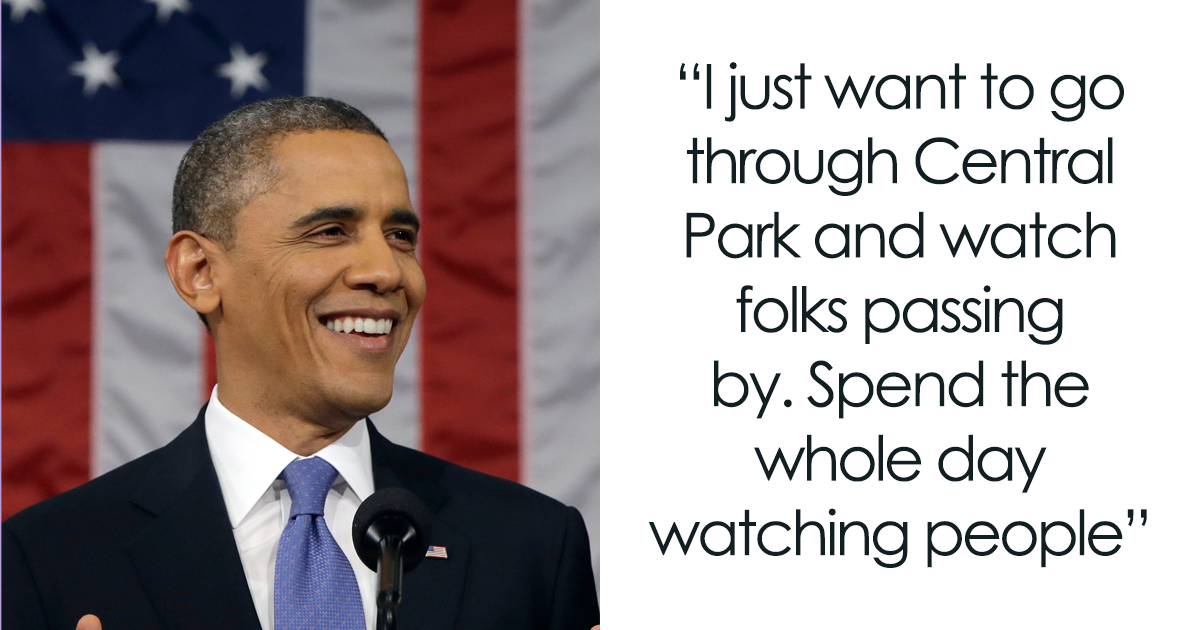
Some quotes arrive like fireworks. Others work more like coffee: quiet at first, then suddenly you are awake, motivated, and wondering why you have been arguing with a laundry basket instead of changing your life. Barack Obama’s most inspiring and thought-provoking quotes often do both. They sparkle, but they also sit with you.
As the 44th president of the United States and the first African American elected to the office, Obama became known not only for policy debates and historic milestones, but also for a style of public speaking built around hope, responsibility, democracy, and the stubborn belief that ordinary people can do extraordinary things when they stop waiting for someone else to bring the magic wand.
This collection of Barack Obama quotes is not just a greatest-hits playlist for political speeches. It is a guide to leadership, civic engagement, resilience, and moral imagination. Whether you admire him, disagree with him, or simply appreciate a well-built sentence, Obama’s words offer useful lessons about change, courage, unity, and the fine American art of not giving up when the group project gets messy.
Why Barack Obama’s Quotes Still Resonate
Obama’s best quotes endure because they combine optimism with obligation. He rarely presents hope as a fluffy pillow you can nap on. Instead, hope becomes a tool, a discipline, and sometimes a polite but firm shove out the door. His most memorable lines often say, in effect: yes, the world is complicated; yes, progress is slow; now roll up your sleeves anyway.
That balance is why Barack Obama inspirational quotes show up in classrooms, graduation speeches, leadership workshops, social media captions, and office walls where someone has clearly tried to make the break room feel less like a beige cave. His words work because they are not only about him. They point back to the listener.
Again and again, Obama’s speeches return to a few central themes: change is collective, democracy requires participation, courage is stronger than cynicism, and progress is rarely tidy. These ideas appear in his 2004 Democratic National Convention keynote, his 2009 inaugural address, his Nobel Peace Prize lecture, his Selma anniversary remarks, his Charleston eulogy, and his 2017 farewell address.
Barack Obama’s Most Inspiring And Thought-Provoking Quotes
1. “We are the change that we seek.”
This may be one of the most famous Barack Obama quotes because it turns a political slogan into a personal challenge. It refuses to let people outsource responsibility. The quote says change is not a delivery service. It does not arrive in a neat box with free shipping. It happens when people vote, organize, volunteer, listen, learn, and keep showing up after the excitement fades.
The thought-provoking part is that it removes the comfortable excuse of waiting. If we are the change, then the next step is not “someone should do something.” The next step is “what am I willing to do?” That is a much less cozy question, which is why it matters.
2. “Yes, we can.”
Simple? Absolutely. Powerful? Also absolutely. “Yes, we can” became more than a campaign phrase because it compressed a national mood into three words. It suggested possibility without pretending the road would be easy.
The genius of the line is the word “we.” Not “I can,” not “the experts can,” not “the mysterious committee in a windowless room can.” We. It is democratic, inclusive, and wonderfully inconvenient for anyone hoping to sit on the sidelines with snacks while other people fix the world.
3. “We choose hope over fear.”
Obama used this idea in multiple contexts, including moments of national and global uncertainty. The quote is inspiring because it treats hope as a choice, not a mood. Fear is often loud, dramatic, and excellent at getting cable-news bookings. Hope is quieter, but it builds schools, starts movements, comforts neighbors, and keeps people working when quick victory is nowhere in sight.
This quote also warns against political and personal paralysis. Fear may be natural, but it should not be the architect of our future. Hope, in Obama’s framing, is not denial. It is disciplined action in the presence of difficulty.
4. “The future rewards those who press on.”
This quote belongs in the mental toolbox of anyone who has ever wanted to quit a project halfway through, which is to say everyone who has ever assembled furniture, applied for a job, built a business, studied for finals, or tried to keep a houseplant alive.
Obama’s larger message is that persistence is not glamorous, but it is powerful. Progress usually does not arrive with dramatic music. It often looks like one more email, one more meeting, one more attempt, one more conversation that begins awkwardly and ends with a tiny breakthrough.
5. “Change will not come if we wait for some other person.”
This quote is a direct hit to passivity. It reminds readers that history is not only shaped by presidents, celebrities, billionaires, or people with suspiciously perfect LinkedIn headshots. Change begins when ordinary people decide their ordinary actions matter.
For SEO readers searching for motivational Obama quotes, this line is especially useful because it applies everywhere: community work, personal growth, professional leadership, education, and relationships. It asks us to stop treating responsibility like a hot potato.
6. “Our actions matter.”
In his Nobel Peace Prize remarks, Obama reflected on war, peace, justice, and responsibility. The phrase “our actions matter” is short, but it carries weight. It suggests that even in a world shaped by vast systems and historical forces, human choices still count.
That idea is both comforting and demanding. Comforting, because it means we are not helpless. Demanding, because it means neutrality is not always neutral. What we do, tolerate, ignore, repair, protect, and challenge becomes part of the world we leave behind.
7. “Democracy does require a basic sense of solidarity.”
In his farewell address, Obama emphasized that democracy is not merely a set of rules. It is also a habit of seeing one another as connected. This is one of his most thought-provoking quotes because it moves beyond elections and into character.
Solidarity does not mean everyone agrees. That would be less like democracy and more like a very alarming group chat. It means citizens recognize that disagreement must still happen inside a shared commitment to truth, dignity, and the common good.
8. “The most important title is citizen.”
This quote captures one of Obama’s central beliefs: public life does not belong only to officials. A democracy depends on citizens who participate, question, organize, vote, serve, and refuse to let cynicism become their permanent address.
It is also a humble line. After holding one of the most powerful offices in the world, Obama often returned to the idea that citizenship is the foundation. Titles come and go. Citizenship remains the daily work.
9. “We did not come to fear the future. We came here to shape it.”
This quote has the clean rhythm of a great leadership line. It acknowledges fear without bowing to it. The future can be intimidating, especially when technology, politics, economics, and culture all seem to be changing faster than anyone can update their passwords.
But Obama’s point is that the future is not something that simply happens to us. It is influenced by decisions made now: what we build, what we teach, what we protect, what we fund, what we forgive, and what we refuse to normalize.
10. “We can be better.”
After tragedy, Obama often turned to language that asked Americans to grieve honestly without surrendering to despair. “We can be better” is not flashy, but it is morally serious. It does not say we are perfect. It does not say improvement is automatic. It says better is possible.
That small word, “can,” matters. It leaves room for failure, but also for responsibility. The quote is useful because it applies to nations, families, workplaces, and individuals. We can listen better. Lead better. Disagree better. Apologize better. Maybe even merge better in traffic, though let us not get carried away.
11. “The march is not yet over.”
At Selma, Obama spoke about civil rights, memory, and unfinished work. This quote reminds us that progress is not a museum exhibit. It is a living responsibility. The achievements of past generations are not comfortable chairs for us to fall asleep in; they are bridges we are expected to cross.
That makes the quote both inspiring and challenging. It honors sacrifice while refusing complacency. The work of justice, equality, and democratic renewal continues, not because nothing has changed, but because change must be protected and extended.
12. “If we can find that grace, anything is possible.”
In his Charleston eulogy, Obama used the language of grace to speak about grief, racism, forgiveness, and moral courage. This quote is powerful because it does not reduce grace to politeness. Grace becomes a force that can open hearts, reveal truth, and move people toward change.
It is one of Obama’s most emotionally resonant lines because it recognizes that public healing is not only legal or political. It is also spiritual, relational, and deeply human. Sometimes a nation needs policy. Sometimes it also needs the courage to see one another clearly.
13. “Better is good.”
Obama’s Howard University commencement message included a practical lesson that many perfectionists desperately need: progress counts. “Better is good” sounds almost too simple, but it is a useful antidote to all-or-nothing thinking.
People often abandon good work because it does not solve everything instantly. Obama’s point is that improvement is worth pursuing even when it is incomplete. A better law, better school, better habit, better conversation, or better community is still movement in the right direction.
14. “America is not the project of any one person.”
This quote gets to the heart of Obama’s view of democracy. A nation is not a solo performance. It is more like jazz: structured, improvised, occasionally chaotic, and much better when people actually listen to one another.
By saying America is not the project of one person, Obama pushes back against the fantasy of the lone savior. Leaders matter, but citizens matter too. Institutions matter. Communities matter. Local decisions matter. The future is built by many hands.
What Makes Obama’s Quotes So Effective?
They Use Plain Language With Big Meaning
Obama’s most memorable quotes are usually not complicated. They are built from everyday words: hope, change, we, better, future, citizen, grace. The power comes from how those words are arranged and where they are placed. He often makes a sentence feel both personal and historic, which is not easy. Many speakers try this and end up sounding like a greeting card trapped in a wind tunnel.
They Invite People Into The Story
Obama’s rhetoric often gives listeners a role. He does not simply describe problems; he asks people to participate in solutions. That is why his inspirational quotes work in so many settings. Students hear a call to learn. Volunteers hear a call to serve. Leaders hear a call to act with humility. Citizens hear a call to stop doom-scrolling long enough to do something useful.
They Balance Hope With Hard Truth
The best Barack Obama quotes are not naive. They often come from speeches about recession, war, racial injustice, political division, mass violence, and civic disappointment. Their optimism has weight because it does not ignore pain. It says: the problem is real, and so is our responsibility.
Lessons From Barack Obama Quotes For Leadership And Life
First, hope must become action. It is not enough to admire a quote, share it, and then return to business as usual. Inspirational words are only useful when they become habits. “Yes, we can” means very little if it is followed by “but not today, because my couch needs emotional support.”
Second, leadership requires humility. Obama’s best lines often move attention away from the leader and toward the people. That is a valuable lesson for managers, teachers, parents, founders, organizers, and anyone who has ever been placed in charge of a project with three deadlines and one working printer.
Third, democracy is a practice. Many Obama quotes remind us that citizenship is active. Voting matters, but so do local meetings, public service, respectful disagreement, media literacy, and the willingness to defend institutions even when they move slowly enough to make a turtle look caffeinated.
Finally, progress is imperfect. “Better is good” may be one of the most useful ideas in modern civic life. If people demand perfection before supporting improvement, nothing moves. Obama’s quotes encourage a more durable approach: keep your ideals high, but do not despise partial victories.
Real-Life Experiences Inspired By Barack Obama’s Quotes
The interesting thing about Barack Obama’s most inspiring and thought-provoking quotes is that they tend to follow people into ordinary rooms. They are not trapped behind podiums or sealed inside history books. A line like “We are the change that we seek” can show up in a classroom when a teacher asks students to stop complaining about the school culture and start building a better one. Suddenly the quote is not political decoration. It is a challenge with homework attached.
In workplaces, Obama’s quotes often become useful during moments of fatigue. Teams love innovation until innovation requires meetings, revisions, budget questions, and that one spreadsheet named “final_final_REALLY_final.” In those moments, “The future rewards those who press on” feels less like a slogan and more like a survival strategy. It reminds people that persistence is not just dramatic endurance; sometimes it is simply returning to the problem with a clearer head and a stronger cup of coffee.
Community volunteers may feel the meaning even more directly. Anyone who has helped organize a neighborhood cleanup, voter registration drive, food pantry, youth program, or local fundraiser knows that change is usually unglamorous. There are folding chairs. There are sign-up sheets. There is always someone who forgot the tape. Yet this is exactly where Obama’s idea of citizenship becomes real. Democracy is not only speeches and ceremonies. It is people deciding that their block, school, church, city, or country is worth the effort.
Obama’s quotes can also influence personal growth. “Better is good” is especially helpful for people who freeze because they cannot do everything perfectly. Someone trying to rebuild their health, repair a relationship, start a business, or return to school may not be able to transform life overnight. But better sleep, one honest conversation, one application, one walk, one apology, or one brave decision still counts. Progress may be small, but small progress repeated over time has a habit of becoming a new life.
Even family conversations can be changed by these ideas. “We can be better” is a useful sentence at the dinner table, especially when disagreements become louder than understanding. It does not require everyone to share the same opinion. It asks everyone to share responsibility for the tone, the truth, and the relationship. That may sound simple, but in real life it can be revolutionary. Also, it is cheaper than therapy, though not always a substitute for it.
The deeper experience behind Obama’s quotes is this: words matter most when they move us from admiration to action. A quote can inspire a poster, but it can also inspire a phone call, a vote, a volunteer shift, a study plan, a business idea, or a moment of courage. The best quotes do not merely make us nod. They make us ask what kind of people we are becoming.
Conclusion
Barack Obama’s most inspiring and thought-provoking quotes endure because they ask more of us than applause. They ask for patience, courage, humility, citizenship, and hope with work boots on. His words remind us that change is not a spectator sport, democracy is not self-cleaning, and progress usually depends on people who are willing to do the unglamorous work after the speech ends.
Whether you are looking for leadership quotes, motivational quotes, civic engagement ideas, or simply a sentence strong enough to get you through a difficult season, Obama’s words offer a steady reminder: the future is shaped by those who participate. Hope is not passive. Better is possible. And yes, we still can.
Note: This article synthesizes reputable U.S. biographical sources, official archived speeches, and public historical records, rewritten in original editorial language for web publication.














