
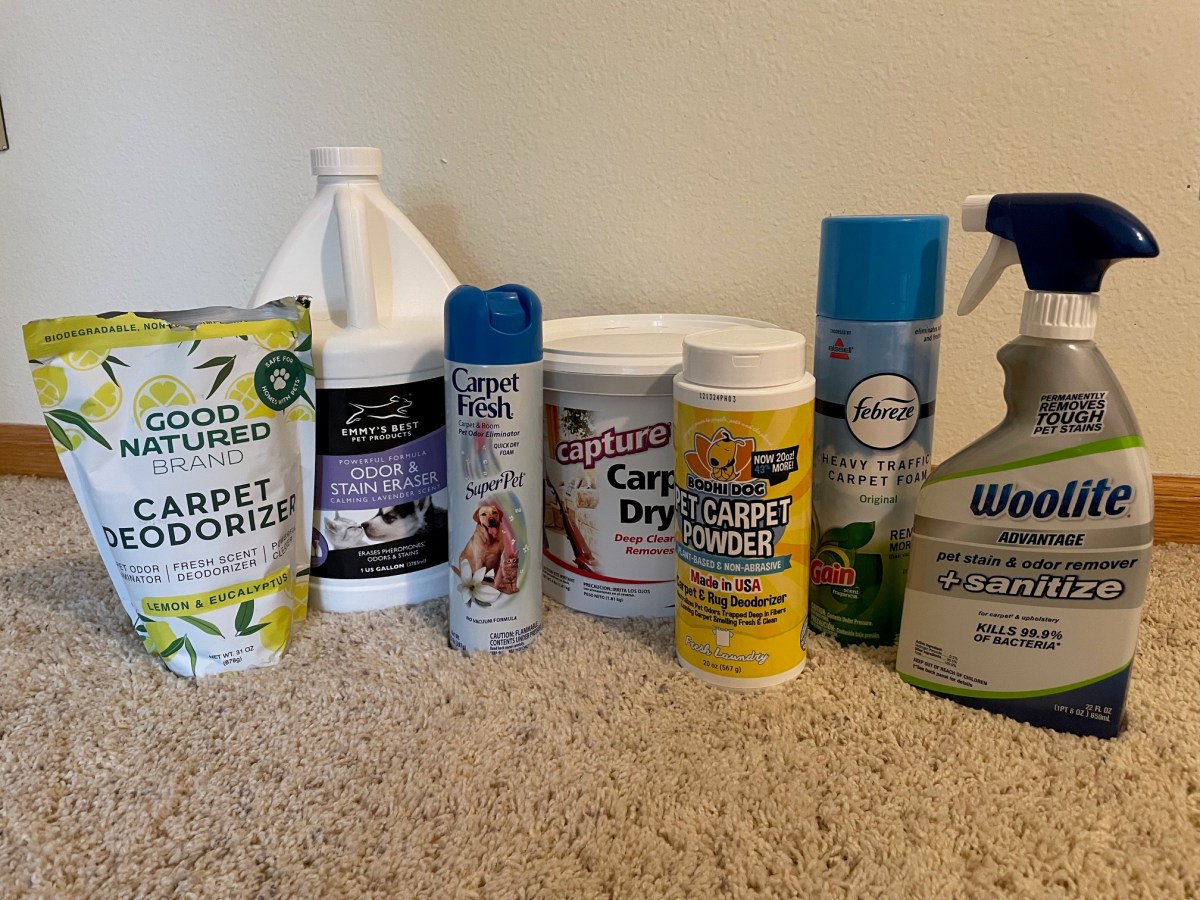
Carpet has a special talent: it remembers everything. Muddy shoes, spilled coffee, damp dog fur, last Tuesday’s takeout, and that mysterious smell nobody wants to investigate too closely can all settle into soft fibers and linger long after the visible mess is gone. A good carpet deodorizer should help solve that problem without merely turning “wet dog” into “wet dog standing in a flower shop.”
For its 2025 carpet deodorizer review, Bob Vila evaluated eight popular products over two months, performing six types of tests and comparing powders, foams, and sprays. The products were judged on application, odor-fighting effectiveness, scent, value, residue, and how fresh treated carpet remained after several days. Woolite Advanced Pet Stain & Odor Remover emerged as the top overall performer.
This guide takes a closer look at those tested results while adding practical buying advice drawn from carpet-care specialists, cleaning experts, consumer testing organizations, and product guidance. The goal is simple: help you choose the best carpet deodorizer for your particular variety of household funk.
Best Carpet Deodorizers of 2025 at a Glance
- Best Overall: Woolite Advanced Pet Stain & Odor Remover
- Best Foam for Pet Odors: Carpet Fresh Super Pet Carpet Odor Eliminator
- Best Dry-Cleaning Option: Capture Carpet & Rug Dry Cleaner
- Best Pleasant-Smelling Powder: Bodhi Dog Pet Carpet Powder
- Best Spray for Pet Messes: Emmy’s Best Pet Products Pet Odor & Stain Eraser
- Best for High-Traffic Areas: Febreze Gain Original Heavy Traffic Carpet Foam
- Best Naturally Minded Powder: Good Natured Brand Carpet Deodorizer
- Best Value: Arm & Hammer Pet Fresh Carpet Odor Eliminator
1. Woolite Advanced Pet Stain & Odor Remover: Best Overall
The strongest carpet deodorizer is often the one that tackles the cause of a smell instead of simply dropping a scented curtain over it. That is where Woolite Advanced Pet Stain & Odor Remover stood out in Bob Vila’s testing. The spray earned particularly strong marks for effectiveness and was praised for combining deodorizing, stain removal, and sanitizing functions in one product.
Its spray format is useful for targeted treatment. Rather than dusting an entire room because one corner smells suspicious, users can concentrate the formula where the odor actually lives. Bob Vila’s tester described the fragrance as clean and lightly lemony rather than aggressively chemical, with the noticeable scent fading after a few hours. The formula also performed well against real pet-related messes during the testing period.
Bissell, which markets the Woolite formula, states that the product can kill 99.9 percent of specified bacteria on approved carpets and soft surfaces when used according to label directions. However, the manufacturer also lists important material restrictions, including certain wool and polypropylene or olefin fibers. That is a good reminder that “safe for carpet” does not automatically mean “safe for every carpet ever invented.”
Best for
Pet accidents, localized odors, households that want stain removal and odor control in one treatment, and users who prefer sprays over powders.
Keep in mind
Always check the label and test a hidden area first. Products containing oxidizing or sanitizing ingredients can be unsuitable for some delicate or specialty fibers.
2. Carpet Fresh Super Pet Carpet Odor Eliminator: Best Foam for Pet Odors
Foam deodorizers occupy a useful middle ground. They spread more visibly than a clear spray but avoid the loose dust associated with some powders. Carpet Fresh Super Pet was one of the better-performing alternatives in the Bob Vila evaluation, earning solid scores for both ease of application and odor control.
This type of product makes sense for refreshing larger carpeted areas where the problem is general pet smell rather than one concentrated stain. The foam can be distributed over the surface, allowed to work according to the instructions, and then removed or allowed to dry as directed.
The key distinction is that a general deodorizing foam is not necessarily the same as an enzyme-based urine treatment or a deep carpet cleaner. When urine has penetrated through the carpet and into the pad, a surface freshener may improve the room temporarily without reaching the deepest source of the odor.
3. Capture Carpet & Rug Dry Cleaner: Best Dry-Cleaning Option
Capture Carpet & Rug Dry Cleaner is more cleaning-oriented than a simple “sprinkle, sniff, celebrate” powder. In Bob Vila’s comparison, it earned strong ratings for effectiveness and overall value while also offering stain-removing capability.
A dry carpet-cleaning system can be appealing when users want to avoid soaking carpet or waiting for a large area to dry. It may also be useful in busy rooms that cannot be turned into a damp no-go zone for half a day. The WoolSafe organization lists Capture Dry Carpet Cleaner among approved products available in North America, although consumers should still verify suitability for their specific rug or carpet construction.
Dry compounds do require thorough removal. Any powder-based product left behind can make carpet feel gritty, and excessive residue may attract soil rather than help the carpet stay fresh.
4. Bodhi Dog Pet Carpet Powder: Best Pleasant-Smelling Powder
Sometimes a carpet is not stained or deeply contaminated. It simply smells like a home where animals enthusiastically exist. Bodhi Dog Pet Carpet Powder performed well in Bob Vila’s testing, with especially good marks for scent, application, and value.
Powders are convenient for whole-room refreshing because they can be distributed across a wide area before vacuuming. They are particularly attractive to users who enjoy a noticeable fragrance after cleaning.
There is, however, a practical trade-off. Fine powders demand a capable vacuum and careful application. More is not automatically better. A modest, even layer is easier to remove than a miniature indoor snowstorm that leaves the vacuum cleaner questioning its career choices.
5. Emmy’s Best Pet Products Pet Odor & Stain Eraser: Best Spray for Pet Messes
Emmy’s Best Pet Products Pet Odor & Stain Eraser earned some of the strongest overall marks among the alternatives evaluated by Bob Vila. Its combination of high scores for effectiveness, scent, and value makes it especially interesting for pet owners who need a targeted spray rather than a general room freshener.
Sprays have an obvious advantage when the odor has an address. A pet accident beside the sofa does not necessarily justify treating 400 square feet of otherwise innocent carpet. Targeted application also makes it easier to follow dwell-time and blotting instructions precisely.
For biological messes such as urine, vomit, or other organic material, formulations designed to attack the underlying residue are generally more appropriate than fragrance-only products. Enzyme-based cleaning formulas, for example, are designed to break down components of organic stains and related odors.
6. Febreze Gain Original Heavy Traffic Carpet Foam: Best for Busy Rooms
Living rooms, hallways, family rooms, and entry areas tend to collect a broad mixture of odors rather than one dramatic source. Febreze Gain Original Heavy Traffic Carpet Foam performed strongly for odor reduction in Bob Vila’s testing and offered the familiar convenience of a foam application.
This style of deodorizer is best suited to routine refreshing rather than restoration work. Think “the family room has become stale” rather than “the basement carpet survived a flood and now has opinions.” Persistent musty odors, recurring urine smells, or dampness require investigation and cleaning at the source.
Fragrance preference also matters more than many buying guides admit. A product can be technically effective and still become annoying if its perfume dominates the house. Strongly scented products are best tested in a limited area before committing the entire room.
7. Good Natured Brand Carpet Deodorizer: Best Naturally Minded Powder
Good Natured Brand Carpet Deodorizer was another solid performer in Bob Vila’s test, receiving especially favorable ratings for odor-fighting effectiveness and scent.
Products marketed around simpler or naturally derived ingredients appeal to many households, but shoppers should still read the actual ingredient information and usage directions. “Natural” is a marketing description, not a universal guarantee that a formula is appropriate for every person, pet, vacuum, or carpet fiber.
Consumers who prioritize ingredient screening can also look for established third-party programs. The U.S. Environmental Protection Agency’s Safer Choice program identifies products that meet its criteria for ingredient safety and performance, while an additional Fragrance-Free label is available for qualifying products without fragrance ingredients.
8. Arm & Hammer Pet Fresh Carpet Odor Eliminator: Best Value
Arm & Hammer Pet Fresh Carpet Odor Eliminator earned the highest value score in Bob Vila’s comparison and also performed well for application and scent. It is the classic choice for shoppers who want a straightforward powder that can be used during routine vacuuming.
Baking soda is widely used for odor absorption, and Arm & Hammer’s carpet-care guidance recommends allowing baking soda time to sit before vacuuming so it can absorb more odor and soil. The company’s dedicated carpet formulas combine baking soda with fragrance and, in some versions, additional cleaning ingredients.
For ordinary stale smells, a powder can be inexpensive and convenient. For wet contamination or pet urine that has reached the carpet backing, however, sprinkling powder over the top is more like putting a nice hat on the problem. It may help, but deeper treatment may still be necessary.
How Bob Vila Tested the Carpet Deodorizers
The Bob Vila test covered eight products over approximately two months. Powders, foams, and sprays were compared across six testing considerations, including application, immediate odor reduction, scent, residue, overall value, and whether treated carpet still smelled fresh about a week later. Products were also tried on additional soft surfaces where appropriate.
This testing approach matters because the first five minutes after application can be misleading. Almost any strongly scented formula can make a room smell different immediately. The harder question is whether the original odor returns after the perfume fades.
How to Choose the Best Carpet Deodorizer
Match the product to the source of the odor
Start with the obvious but frequently ignored question: What is causing the smell? General staleness, cooking odors, pets, smoke, mildew, and urine are different problems.
A powder may be perfectly adequate for ordinary everyday odors. A localized spill may call for a spray. Pet urine often requires a dedicated stain-and-odor treatment, while a genuinely dirty carpet may need extraction or professional cleaning.
The Carpet and Rug Institute recommends prompt treatment of spills and advises blotting rather than aggressive scrubbing, which can distort carpet fibers. For pet urine, the organization specifically warns against using steam heat on the affected spot because heat can set the stain and odor; extraction and cool-water rinsing are preferred approaches for appropriate situations.
Choose between powder, foam, and spray
Powders are convenient for large areas and routine vacuuming. They can absorb odors and leave fragrance behind, but they must be removed thoroughly.
Foams provide broad coverage without as much loose dust. They are useful for refreshing traffic lanes and larger carpeted areas.
Sprays are best for precision. They make it easier to concentrate treatment on a stain, pet accident, or specific smelly patch.
Check the carpet fiber before applying anything
Wool, silk, specialty rugs, and some synthetic fibers may require different cleaning products. WoolSafe advises choosing independently tested products for wool carpets and rugs rather than assuming a cleaner labeled for general carpet use is automatically suitable.
Testing a hidden corner is one of the least exciting cleaning steps ever invented, but it is considerably more exciting than discovering a pale orange patch in the center of a navy rug.
Consider scent sensitivity
A heavy fragrance can create the impression of cleanliness even when an odor source remains. Households sensitive to perfume may prefer lighter scents, fragrance-free choices, or formulas designed primarily to neutralize rather than perfume.
The EPA notes that its Safer Choice program evaluates qualifying products against ingredient criteria and separately recognizes qualifying fragrance-free formulas. Those labels can provide another comparison point for shoppers who want to look beyond marketing language.
Carpet Deodorizer vs. Carpet Cleaner: Know the Difference
A deodorizer is not automatically a cleaner, and a cleaner is not automatically a deodorizer. Some products do both, but many are designed primarily to make carpet smell fresher.
This distinction becomes important with recurring odors. If a drink spilled months ago, a pet repeatedly marked the same spot, or moisture reached the carpet pad, the source may be below the visible surface. Better Homes & Gardens has similarly cautioned that repeatedly applying deodorizer can allow an underlying problem to go unresolved and may contribute to residue buildup.
For routine maintenance, the Carpet and Rug Institute recommends regular vacuuming and periodic deeper cleaning, with professional carpet cleaning generally suggested every 12 to 18 months depending on conditions and use.
Practical Experience: What You Learn After Actually Living With Carpet Deodorizers
The most useful lesson from real-world carpet deodorizer testing is that the strongest-smelling product is not automatically the best-performing product. A powerful fragrance can create an impressive first five minutes, but the real test happens the following morning. If the original odor returns as soon as the perfume fades, the product has mostly changed the soundtrack without fixing the plot.
Targeted sprays tend to feel more efficient when the odor has a specific source. A puppy accident, spilled milk, or a patch near the front door usually benefits from focused treatment. You can apply the product exactly where it is needed, follow the recommended contact time, blot or vacuum as directed, and inspect the same area later. The experience is controlled and easy to evaluate.
Powders are a different experience. They are satisfying to spread over a broad room, especially before a thorough vacuuming session, and the immediate freshness can be dramatic. The downside appears when too much product is used. A heavy layer takes longer to remove, may require repeated vacuum passes, and can leave fine residue behind. The practical rule is simple: use enough to do the job, not enough to make the carpet look as though a small flour truck overturned indoors.
Foams are particularly convenient in high-traffic spaces because coverage is easier to see. That visual feedback helps prevent accidentally treating one section three times while ignoring another. They can be useful before guests arrive or during routine room refreshes, although they should not be confused with deep extraction cleaning.
Pet households provide the toughest test of all. Dog and cat odors are not always sitting politely on top of the carpet waiting to be removed. Urine can reach the backing or pad, while repeated accidents can create an odor that seems to disappear in dry weather and return whenever humidity rises. In that situation, repeated fragrance applications may only create a strange combination of flowers and regret. The better experience comes from identifying the contaminated zone, using an appropriate treatment, extracting residue when necessary, and allowing the area to dry thoroughly. The Carpet and Rug Institute’s guidance on prompt blotting, appropriate extraction, and avoiding steam heat on urine spots reinforces this source-first approach.
Another lesson is that drying time matters. A carpet that remains damp can smell worse before it smells better, especially when too much liquid is applied. More product is rarely a substitute for correct product use. Following label directions may feel less heroic than emptying half a bottle onto a stain, but it is usually kinder to the carpet.
Material compatibility also becomes much more important once you own a wool rug, vintage runner, or expensive specialty carpet. A product that worked perfectly on a synthetic family-room carpet may not be the right choice elsewhere. WoolSafe emphasizes independent product testing for wool and wool-rich floor coverings, which is a useful reminder that cleaning should begin with identifying the material, not merely identifying the smell.
Finally, the best long-term carpet-deodorizing experience usually comes from combining products with ordinary maintenance. Vacuum frequently. Deal with spills quickly. Keep wet shoes and damp towels off the floor. Wash pet bedding. Investigate moisture. Deep-clean when routine deodorizing stops working. A carpet deodorizer is a useful maintenance tool, but it should not become witness protection for a larger cleaning problem.
Frequently Asked Questions
Do carpet deodorizers really remove odors?
Some do. The best formulas neutralize or help remove odor-producing residue, while others primarily add fragrance. Products that also clean, sanitize, oxidize stains, or use enzymes may be more appropriate when an odor has a specific biological or stain-related source.
What is the best carpet deodorizer for pet urine?
For a localized pet accident, a targeted stain-and-odor remover is generally more appropriate than a basic scented powder. Woolite Advanced Pet Stain & Odor Remover was Bob Vila’s top-tested product in 2025, but compatibility with the carpet material must be checked before application.
Can baking soda remove carpet odors?
Baking soda is commonly used to absorb odors from dry carpet. It is generally applied to a dry surface, allowed time to sit, and then vacuumed thoroughly. It is better suited to general freshness than to deeply embedded contamination requiring actual cleaning.
Should I use steam on pet urine?
The Carpet and Rug Institute advises against using steam heat directly on urine spots because heat can set the stain and odor. Appropriate extraction and cool-water rinsing are among the alternatives it recommends.
How often should carpet be professionally cleaned?
The Carpet and Rug Institute generally recommends professional cleaning every 12 to 18 months, although busy homes, pets, heavy traffic, and specific carpet warranties may justify a different schedule.
Final Verdict
Based on Bob Vila’s 2025 testing, Woolite Advanced Pet Stain & Odor Remover was the standout overall choice because it combined strong odor control with stain-removing and sanitizing capabilities. For shoppers who prefer powders, Arm & Hammer Pet Fresh Carpet Odor Eliminator offered particularly strong value, while Capture Carpet & Rug Dry Cleaner provided a more cleaning-focused dry option.
The best carpet deodorizer ultimately depends on what is making the carpet smell. Ordinary staleness may need only a light powder or foam. A pet accident deserves a targeted treatment. Persistent odors may call for deep cleaning, pad treatment, or professional help. Choose the product for the problem, follow the label, test delicate materials first, and remember the golden rule of carpet care: if the smell keeps coming back, stop arguing with the smell and find its source.













