
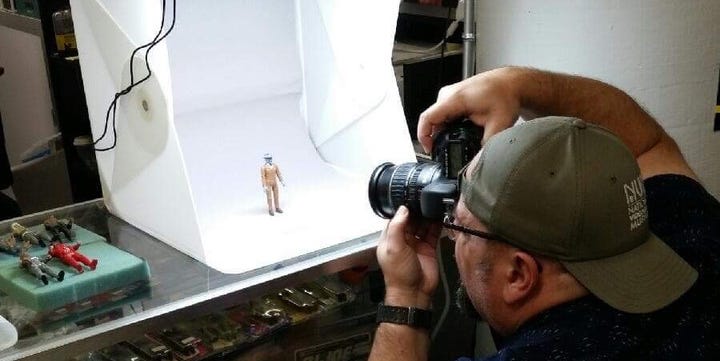
Most toy histories focus on the winners. You know the type: the lines that swallowed entire aisles, emptied wallets, and somehow convinced millions of kids that one more action figure was absolutely necessary for emotional well-being. But Blake Wright has made a name for himself by studying the toys that never got that chance. His work on Toys That Time Forgot pulls readers away from the shiny success stories and into a stranger, more fascinating museum of pop culture: the land of unreleased action figures, canceled toy lines, abandoned prototypes, and big ideas that ran out of runway just before takeoff.
That is exactly what makes Wright’s work so compelling. He is not just cataloging toy weirdness for the sake of novelty. He is preserving creative labor that otherwise might have vanished into storage boxes, garage shelves, corporate file cabinets, or the black hole known as “someone probably threw it out in 1993.” In a hobby powered by nostalgia, that is a pretty heroic mission. It is also why Blake Wright, unmade toys, prototype toys, and Toys That Time Forgot have become keywords toy collectors and pop-culture history fans keep circling back to.
Who Is Blake Wright, and Why Does He Matter in Toy History?
Blake Wright did not arrive from some giant toy corporation with a boardroom badge and a warehouse full of prototypes. He came to the subject as a longtime journalist and collector, which turns out to be a perfect combination for digging into lost toy history. Across interviews, Wright has described how his earlier magazine project, Little Plastic Men, helped reveal just how much interest existed in stories about unreleased toys. One of its most popular recurring features focused on unproduced lines, and that response nudged him toward something bigger: a full-scale book devoted to the toys that almost existed.
That leap matters. A niche article series is one thing. A hardcover art-and-history project built around canceled toys is another. Wright reportedly mocked up sample pages, took them to Toy Fair, and essentially asked people to talk him out of making the book. Instead, the response pushed him forward. That origin story tells you everything about the appeal of Toys That Time Forgot: people inside and outside the toy world instantly recognized that this was missing history hiding in plain sight.
In other words, Blake Wright matters because he noticed a blind spot. Toy collectors had books about popular lines, rare variants, card backs, packaging changes, and every imaginable version of Batman standing with slightly different eyebrows. What they did not really have was a serious, attractive, well-researched body of work about canceled toy lines and unreleased action figures. Wright helped fill that gap.
What Are “Unmade Toys,” Exactly?
The phrase sounds simple, but it covers a surprisingly wide range of toy-industry heartbreak. Sometimes an unmade toy is little more than concept art and a product pitch. Sometimes it is a sculpt, a paint master, packaging proof, or a near-finished prototype that somehow still never reaches retail. That is what gives the subject its weird emotional charge. These are not always vague ideas. In many cases, they were real products with real design work behind them. They just got stopped before kids ever tore them open on a living room floor.
And why does that happen? A lot of reasons, none of them glamorous. A movie underperforms. A TV series loses momentum. A manufacturer goes bankrupt. Retailers cool on the category. The first wave underwhelms, so the second wave gets cut loose before it can march into stores like the tiny plastic heroes it deserved to be. The toy business can be brutal that way. It is creative, but it is also commercial, and commerce has a nasty habit of reminding imagination who pays the rent.
That tension is one of the biggest reasons Wright’s subject matter lands so well. Unmade toys are not just collectibles that got delayed. They are artifacts of decisions, market shifts, licensing problems, and plain bad luck. They show the toy business as it really is: wildly inventive, occasionally chaotic, and always one executive meeting away from changing history.
Why Toys That Time Forgot Hits Such a Nerve
It Preserves Work That Was Never Meant to Survive
One of the smartest things Blake Wright does is treat unreleased toys as creative history, not just collector bait. The sculptors, designers, inventors, project managers, and executives behind these lines invested real time and skill into them. Even when the products failed commercially or never launched, the work still existed. Wright has talked about wanting to spotlight that lost art, and that goal gives the series its real weight.
That point is easy to underestimate until you think about how much gets discarded in development. Paperwork disappears. Control drawings get tossed. Prototype pieces get separated from their stories. A half-finished toy line can evaporate so completely that later fans assume it never made it past a casual brainstorm. Wright’s books push back against that disappearance. They say, “No, this happened. People built this. People believed in this.”
It Turns Toy Research into Detective Work
Another reason the series clicks is that it has the energy of an investigation. Wright has described tracking people down, following leads, and speaking directly with the people who were there. That is a different experience from simply reposting old catalog images online and calling it scholarship. He is not just scraping the internet for trivia; he is reconstructing stories from primary voices and surviving materials. That gives the books more authority and a lot more soul.
For readers, that detective element is catnip. Every canceled line becomes a tiny mystery: What was planned? How far did it get? Why did it die? And perhaps most painfully, what would it have looked like on a store peg between the guaranteed sellers and the mediocre lunchbox tie-ins?
The Lost Lines That Make the Subject So Addictive
Part of the fun of reading about Blake Wright’s work is the range of examples. This is not one narrow genre of “toys that got canceled.” It is an entire alternate timeline of pop culture. Among the projects associated with the series and its coverage are lines tied to The Last Starfighter, Krull, Alien, Dinotopia, Magic: The Gathering, Oddworld, and planned extensions of toy lines such as Inhumanoids and Sectaurs. There are also references to ambitious but unrealized concepts like Hasbro’s Tribes, the kind of project that sounds like it was born from a meeting where someone said, “What if we made this louder, stranger, and somehow even more 1990s?”
These examples matter because they reveal just how many almost-hits were floating around the industry. Plenty of movies that felt toyetic never crossed the finish line in stores. Plenty of lines that did launch had additional waves waiting in the wings before business reality slammed the door. Plenty of brands with devoted fan bases came painfully close to turning sketches and prototypes into a living product line.
That is the special flavor of heartbreak at the center of Toys That Time Forgot. These were not always bad ideas. Sometimes they were terrific ideas attached to the wrong release window, the wrong partner, the wrong sales environment, or the wrong moment in the culture. A canceled toy line can be a failure. It can also be a missed opportunity so obvious that reading about it years later makes you want to shake history by the shoulders and ask what, exactly, it was thinking.
Why Wright’s Books Work Better Than a Simple Collector Guide
Wright’s approach is especially effective because he does not present the material like a dry checklist. The books have consistently been described as art-and-history projects, not static guides. That matters. A spreadsheet of unreleased figures might be useful to hard-core collectors, but it would not have the same emotional pull. Wright frames these objects as stories and design artifacts, which makes them interesting even to readers who have never once argued about blister-card variants in a parking lot after a convention.
The structure helps too. The books are organized across toy eras, often broken into the 1980s, 1990s, and 2000s, with labels such as the Golden Age, Darker Times, and Gilded Age. That gives the material context. A canceled line from the 1980s means something different from one abandoned in the late 1990s or 2000s because the entertainment business, retail environment, and toy aesthetics changed. By sorting projects historically, Wright turns the books into a broader commentary on how the industry evolved.
He also benefits from having a journalist’s instinct for framing. The best entries are not just “here is a cool object.” They become mini case studies about ambition, risk, timing, and taste. That is why readers who are not even devoted toy collectors can still get pulled in. The series is really about toy history, yes, but it is also about pop culture decision-making and all the ways great-looking things can still fail to arrive.
From Book Series to Broader Toy Storytelling
The success of Toys That Time Forgot did not stay boxed inside one campaign or one volume. The project grew into a larger identity for Wright as a toy historian and storyteller. The series expanded across multiple volumes, and his later work with TOYCOLLECTR continued that same behind-the-scenes spirit. That progression makes sense. Once you build a reputation for uncovering the stories collectors have never heard and the images they have never seen, people start bringing you more stories.
That community response is a major part of the appeal. Wright has noted that once the first book landed, more collectors and industry veterans began reaching out with leads, materials, and memories. That is how niche history really grows. One project makes people realize their forgotten folder, garage tote, or prototype shelf is not just clutter. It is evidence. Suddenly a near-lost chapter of toy culture has a witness.
Recognition followed as well. Wright’s work earned broader respect in collector circles, including acknowledgment from pop-culture institutions that recognized him as a historian. That feels appropriate. He is not just documenting toys; he is documenting the road not taken in a business built on imagination. That is a historian’s job, even if the artifacts happen to be a canceled action figure from a movie your older cousin swore was “actually awesome if you give it another chance.”
Why This Topic Matters More Than It First Appears
At first glance, writing thousands of words about prototype toys and unreleased action figures might seem like an extremely specialized hobby within an already specialized hobby. And yes, that is part of the charm. But the deeper value is easier to see once you step back. Unmade toys tell us what companies believed kids wanted. They reveal which franchises seemed promising, which aesthetics were trending, and where corporate optimism outran commercial reality.
They also preserve the human side of manufacturing culture. Every unreleased toy represents somebody’s workday, somebody’s sketchbook, somebody’s sculpting table, and somebody’s meeting where a plan looked viable until it wasn’t. That makes this history feel oddly tender. A successful toy line becomes part of mainstream memory. A failed one risks disappearing entirely unless someone bothers to save the proof. Wright bothered.
So when people talk about Blake Wright and Toys That Time Forgot, they are really talking about a bigger idea: that pop culture deserves to remember not only what sold, but also what almost existed. Sometimes the near-misses are every bit as revealing as the hits.
Collector Experiences: What It Feels Like to Fall for Toys That Never Existed
There is a very specific emotional experience tied to unmade toys, and it does not feel quite like ordinary nostalgia. Nostalgia usually says, “I had this.” Unmade toy nostalgia says, “Wait… I should have had this.” That tiny shift is powerful. It creates a weird blend of memory and imagination, as if your childhood briefly overlaps with an alternate universe where the toy aisle was even better, stranger, and more dangerous for your allowance.
For many collectors, the experience starts with disbelief. You are flipping through a page or hearing an interview, and suddenly there it is: proof that a toy line based on some beloved movie, cartoon, or game really was in development. Not a rumor. Not a fan mock-up. An actual toy concept, sculpt, or paint master that came painfully close to existence. That moment hits like discovering a deleted scene from your own childhood.
Then comes the second feeling: fascination. Once readers see one canceled line, they want ten more. They want to know why a figure was designed that way, why the packaging leaned into a certain logo, why a second wave was stronger than the first, and how a perfectly marketable toy line still managed to face-plant before reaching shelves. It becomes less about “I want that toy” and more about “I need to understand how this almost happened.” That curiosity is exactly what Blake Wright taps into.
There is also a strong convention-floor energy to the whole subject. Anyone who has ever stood near a display case full of prototypes knows the atmosphere. People lean in. They squint. They point. They start telling stories. One person remembers a catalog mention. Another remembers a rumor from an old toy magazine. A third swears their cousin’s friend’s brother totally saw one at a test market somewhere, which is either historically valuable testimony or the opening line of the least reliable documentary ever made. Either way, the room comes alive.
Unmade toys also create a rare sense of shared discovery between veterans and newcomers. A lifelong collector may appreciate the production history, while a casual reader simply enjoys the drama of unrealized pop culture. Both reactions are valid. In fact, that may be why the subject feels so addictive. It is simultaneously academic and playful. You can analyze licensing strategies and retail timing, then immediately turn around and say, “Okay, but seriously, I would have bought three of those.”
Perhaps the most memorable experience, though, is the sense of rescue. When lost toy concepts are documented properly, they stop being forgotten scraps and become part of the record. Readers are not just consuming trivia; they are witnessing recovery. They get to see creative work pulled back from obscurity and given context, dignity, and an audience. That is satisfying in a way that goes beyond collecting. It feels like something was almost erased and then saved at the last minute.
That is why books like Toys That Time Forgot linger in the mind. They do not just show you cool objects. They recreate the experience of wonder, missed possibility, and rediscovery. They remind you that childhood culture was always bigger than the shelves we remember. There were other paths, other lines, other tiny plastic legends waiting in the dark. Blake Wright turned on the lights.
Conclusion
Blake Wright’s work succeeds because it treats unmade toys as more than collector curiosities. They are pieces of design history, pop culture archaeology, and creative ambition frozen just before release. Toys That Time Forgot works on multiple levels at once: it is fun, visually rich, surprisingly emotional, and full of “you have got to be kidding me” moments that make toy history feel alive.
In a world obsessed with bestsellers, blockbuster franchises, and the toys that dominated shelves, Wright chose to document the ones that missed their moment. That is exactly why his books matter. He proves that canceled toy lines and unreleased action figures are not footnotes. They are stories. And once you start reading about them, it becomes very hard not to imagine what your childhood bedroom might have looked like if history had been just a little kinder to plastic.













