
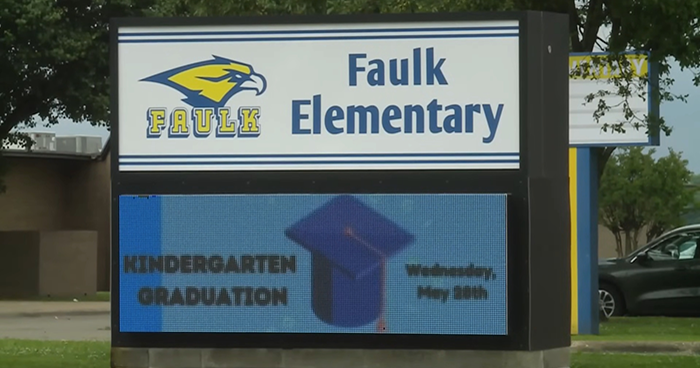
A kindergarten graduation is supposed to be peak wholesome chaos: tiny caps, proud grandparents, wobbly waves from the stage, and at least one child treating the diploma like a paper airplane. But at Faulk Elementary School in West Memphis, Arkansas, a celebration reportedly turned into a scene no child should have had to witness. A fight broke out among adults after a kindergarten graduation ceremony, and videos shared widely online showed children crying and begging grown-ups to “stop.”
That wordstopis what made the story hit so hard. Not because adults fighting in public is new. Sadly, public meltdowns now seem to come with their own unofficial soundtrack: gasps, phone cameras, and someone yelling, “WorldStar!” But this was not a bar parking lot or a late-night argument outside a concert. This was a school event for five- and six-year-olds, children who had just finished one of their first big milestones.
The reported kindergarten graduation brawl quickly became more than a viral clip. It became a uncomfortable national conversation about school safety, parental behavior, emotional self-control, and what children learn when adults lose the plot in real time. Because when parents fight at a school celebration, the children do not just see punches. They see the people who are supposed to protect them become the reason they feel scared.
What Reportedly Happened At The Kindergarten Graduation
According to multiple reports, the incident happened after a kindergarten graduation ceremony at Faulk Elementary School in West Memphis. What began as a verbal dispute between adults allegedly escalated into a physical altercation involving several people. The exact cause of the fight was not immediately clear, which somehow makes the whole thing feel even more absurd. A kindergarten graduation should not require a police investigation, a hallway crowd-control plan, or future family access restrictions.
Video circulating online appeared to show adults shouting, shoving, and throwing punches while children stood nearby in distress. Some children could reportedly be heard crying and pleading for the adults to stop. For anyone who has ever watched a child freeze during a loud argument, the emotional weight of that moment is easy to understand. Kids do not process adult violence like background noise. They absorb it. They replay it. They ask questions later when the room is quiet and no one has a good answer.
School district officials condemned the behavior and said safety remained the priority. Reports noted that the district reviewed footage, cooperated with police, and identified adults believed to have been involved. The district also emphasized that children would not be punished for the actions of adults. That detail matters. A child should not lose access to school activities because a parent forgot that “use your words” is not just a kindergarten lessonit applies to grown-ups too.
Why This Story Struck A Nerve
The story went viral because it contains a painful contradiction: kindergarten graduation is a symbol of innocence, but the behavior surrounding it was anything but innocent. People reacted with anger, embarrassment, disbelief, and sadness. Many online commenters said the same thing in different ways: those children deserved better.
And they did. Graduation ceremonies, even tiny ones with construction-paper decorations and applause that goes on too long, are memory-making events. Children may not remember every song or speech, but they often remember how they felt. Safe. Proud. Excited. Seen. In this case, some children may instead remember fear, confusion, and the sound of adults fighting while they asked them to stop.
That is why the story is not just about “bad behavior.” It is about the emotional environment adults create around children. Schools spend years teaching students conflict resolution, kindness, patience, and emotional regulation. Then, in one chaotic hallway moment, children watched adults fail the assignment with a confidence usually reserved for reality TV reunions.
Children Are Always WatchingEspecially When Adults Think They Are Not
One of the most uncomfortable truths about parenting is that children notice more than adults wish they did. They notice tone. They notice body language. They notice when a joke is not really a joke. They notice when a room shifts from tense to unsafe.
Young children are still learning how to understand conflict. When adults argue loudly or become physical, children may not know whether the danger is temporary, personal, or about to get worse. They may wonder if someone they love will be hurt. They may blame themselves. They may become clingy, quiet, restless, angry, or unusually watchful afterward.
Public health and pediatric experts have long warned that exposure to violence can affect children’s sense of safety. Not every frightening event leads to long-term trauma, but adults should not dismiss a child’s fear simply because “nobody was seriously hurt.” Emotional bruises do not show up in a police report, but they still matter.
The Real Lesson: Adult Self-Control Is A School Safety Issue
When people discuss school safety, they often think about locked doors, cameras, visitor badges, and emergency drills. Those things matter. But the Arkansas kindergarten graduation brawl points to another part of safety that is less visible: adult conduct.
Schools are community spaces. They rely on trust. Teachers need to trust families. Families need to trust schools. Children need to trust that the adults in the building can handle disappointment, frustration, and disagreement without turning a hallway into a boxing undercard.
That does not mean parents must be perfect. Every parent has had a bad morning, an awkward co-parenting moment, or a school-event stress spiral. Someone parks badly. Someone saves too many seats. Someone’s uncle blocks the aisle filming an eight-minute video of a child walking three feet. Annoyances happen. But maturity is the ability to feel irritated without becoming the incident everyone talks about at dinner.
Why Parents Sometimes Lose Control At School Events
School events can be emotionally loaded. They bring together ex-partners, extended families, old conflicts, social pressure, financial stress, and the unspoken competition of “whose child got the loudest applause.” Add heat, crowds, limited seating, and phones recording every second, and suddenly a minor disagreement can turn radioactive.
Still, context is not an excuse. A stressful environment may explain why tempers rise, but it does not justify violence. Adults are responsible for walking away, asking staff for help, lowering their voice, or taking the argument outside the school community entirely. The kindergarteners did not sign up to be emotional referees. They came for cupcakes and applause.
What Schools Can Do To Prevent Graduation Chaos
Schools cannot control every adult’s behavior, but they can reduce the odds of a meltdown. Clear event expectations help. Before graduations, concerts, awards days, and sports events, administrators can send short reminders about respectful conduct, visitor procedures, seating rules, and consequences for disruptive behavior.
Staff visibility also matters. Adults are less likely to escalate when calm authority figures are present in hallways, entrances, and crowded transition areas. Schools can also designate a conflict-response staff member or security contact for large events. That way, teachers are not forced to choose between protecting children, managing parents, and wondering whether the microphone still works.
Another smart step is planning for family dynamics. Schools often know when certain adults should not be seated together or when custody tensions may affect an event. Without shaming anyone, schools can quietly offer separate seating, staggered arrival times, or staff support. Prevention is less dramatic than reaction, but that is the point.
What Parents Should Do When Tension Starts Rising
The best time to stop a public fight is before pride grabs the steering wheel. If a parent feels anger building, the first move is simple: pause. Take a breath. Step back. Let the other person have the last word if necessary. The ego may hate it, but the child will benefit.
Parents can also create a personal rule: no serious arguments at children’s events. Not at graduations. Not at school plays. Not at birthday parties. Not beside the snack table where someone’s aunt is guarding the fruit tray. If the issue truly matters, it can be discussed later, away from children and away from an audience.
Another useful strategy is the “future memory test.” Ask: Do I want my child to remember me this way? If the answer is no, leave the scene. Not every confrontation deserves your energy. Some arguments are just traps wearing nice shoes.
The Emotional Cleanup After A Public Fight
When children witness frightening adult behavior, the response afterward matters. Adults should not pretend nothing happened. Children know when something happened. Instead, caregivers can offer a calm, age-appropriate explanation: “That was scary. The adults should not have behaved that way. You are safe now. It was not your fault.”
Children may need reassurance more than once. Some may ask repeated questions. Others may act out or become quiet. That does not mean they are “being dramatic.” It means their nervous system is trying to sort out what happened.
Schools can help by checking in with students, giving teachers guidance on what to say, and offering counseling support when needed. A school community heals faster when adults name the problem honestly and show children that safety and kindness still matter.
Online Outrage Is Easy; Real Accountability Is Harder
Viral outrage tends to burn fast. People watch the clip, type “unbelievable,” make a joke about kindergarten fight club, and move on. But real accountability takes more than embarrassment. It requires consequences, reflection, and prevention.
If adults involved in a school fight face bans, legal consequences, or restricted access, those measures should be handled seriously and fairly. The goal is not public humiliation. The goal is protecting students and staff while making it clear that school events are not free-for-all zones.
At the same time, communities should resist turning the children into punchlines. The most important people in this story are not the adults who lost control. They are the kids who had to beg them to stop.
A Kindergarten Graduation Should Not Need A Damage-Control Plan
There is something almost painfully symbolic about adults fighting at a kindergarten graduation. Kindergarten is where children learn to line up, share crayons, apologize, keep hands to themselves, and use inside voices. The adults in this story allegedly failed several of those units at once.
But the broader message is not just “those parents behaved badly.” The broader message is that children deserve adult spaces that feel safe. They deserve celebrations that stay focused on their accomplishments. They deserve grown-ups who can disagree without creating fear.
Because childhood milestones are not really about the certificates, the songs, or the photos. They are about children looking out into a crowd and seeing faces that say, “We are proud of you.” Not faces twisted in anger. Not bodies pushing through a hallway. Not adults so consumed by conflict that children have to become the voice of reason.
Experience-Based Reflections: What This Kind Of Incident Teaches Families
Anyone who has spent time around school events knows they can be surprisingly intense. A simple graduation can feel like a military operation with glitter. Families arrive early, seats disappear faster than concert tickets, relatives debate camera angles, and someone inevitably whispers, “Can you move? I can’t see my baby.” Most of the time, everyone survives with dignity mostly intact. But tension can rise quickly when adults forget the purpose of the day.
One common experience at children’s events is the pressure to make everything perfect. Parents want the best photo, the best seat, the loudest cheer, the most meaningful moment. That love is understandable. But when love becomes possession, the child’s celebration can turn into an adult performance. The moment stops being “Look how proud we are of you” and becomes “Look how important my role is.” That shift is dangerous because pride, embarrassment, and old conflict can take over.
Another experience many families recognize is the awkwardness of blended family gatherings. Graduations often bring together parents, step-parents, grandparents, former partners, new partners, and relatives who have not spoken since an argument involving Thanksgiving, a parking space, or a Facebook post from 2018. Children should never be placed in the middle of those tensions. A smart family plan can help: decide seating in advance, agree not to discuss conflict at the event, and have one calm adult ready to redirect anyone who starts heating up.
Teachers and school staff also know the emotional labor behind these events. They are not just arranging chairs and printing certificates. They are managing hundreds of feelings in one room. They notice which child is nervous, which parent is upset, which hallway is getting crowded, and which relative looks like they came prepared to debate. When a fight breaks out, it adds stress to educators who already carry too much. Respecting school staff is part of respecting children.
For parents, the takeaway is practical: rehearse calm before you need it. Decide ahead of time what you will do if someone insults you, blocks your view, brings up custody drama, or says something ridiculous. The answer can be boring and powerful: “Not here.” Then walk away. Children do not need adults to win every argument. They need adults to model control, dignity, and emotional safety.
For communities, the lesson is equally clear. A school celebration is not just an event; it is a shared promise. Everyone in the room agrees, silently, that the children come first. When adults honor that promise, kids get memories filled with pride and joy. When adults break it, children may remember fear instead. The difference can come down to one adult choosing to breathe, step back, and let the day belong to the graduates.
Conclusion
The reported brawl at a kindergarten graduation in West Memphis became viral because it was shocking, but it should also be useful. It reminds parents, schools, and communities that children are always learning from adult behavior. They learn from the speeches, the hugs, the applause, and yes, the moments when adults lose control.
The children who begged adults to “stop” should not have had to be the mature ones in the hallway. Their graduation should have been remembered for tiny caps and proud smiles, not shouting and fear. If there is one lesson worth taking from this incident, it is simple: at every child-centered event, adults should act like the memory belongs to the childbecause it does.














