
Your car should smell like transportation, not like a forgotten gym bag that developed its own weather system. Unfortunately, spilled coffee, fast-food wrappers, damp carpets, pets, cigarette smoke, and mysterious objects under the seats can turn even a well-maintained vehicle into a rolling odor laboratory.
That brings us to one of the internet’s favorite cleaning ingredients: vinegar. Can you use vinegar to fix a stinky car? Yes, in many situations, distilled white vinegar can help reduce mild odors, loosen certain residues, and freshen washable interior surfaces. However, vinegar is not a universal odor eraser, and pouring it around the cabin without identifying the source can leave you with a car that smells like both old socks and salad dressing.
The most effective approach is to find the odor source, remove it, clean the affected material, dry everything completely, and then use vinegar as one part of the treatment. Automotive and cleaning experts consistently recommend locating the cause before attempting to cover or neutralize the smell.
Does Vinegar Really Remove Car Odors?
Vinegar can help with some car odors, but the word “remove” needs a little clarification. Vinegar is mildly acidic, so it may help break down or alter certain odor-producing residues. It is particularly useful for light food spills, some pet accidents, stale smoke residue, road-salt deposits, and general mustiness after the underlying moisture problem has been corrected.
It also has a strong odor of its own. Fortunately, the vinegar smell usually fades as the liquid evaporates, especially when the doors or windows are left open during drying. The goal is not to make the car permanently smell like a pickle jar. The goal is to apply a controlled amount, allow it to work, remove excess moisture, and ventilate the cabin.
Vinegar works best when the odor is located on a washable surface and has not penetrated deeply into foam, insulation, carpeting, or the vehicle’s ventilation system. It is less effective when the smell comes from active mold growth, contaminated seat padding, a dead animal, a leaking heater core, fuel vapors, sewage-contaminated water, or a mechanical problem.
Which Car Smells Can Vinegar Help Fix?
Food and Drink Spills
Milk, soda, coffee, sauces, and forgotten takeout can create surprisingly aggressive odors. Before using vinegar, remove all solid material and blot up as much liquid as possible. Vacuum crumbs from seams and crevices because a single fossilized french fry can apparently produce the aroma of an entire restaurant dumpster.
For washable cloth upholstery or carpet, a diluted vinegar solution may help lift residue and reduce lingering odors. Consumer Reports has published stain-cleaning formulas that combine diluted white vinegar with water and a small amount of dish soap for appropriate fabrics. It also recommends blotting rather than soaking and testing the solution on a hidden area first.
Do not scrub a wet spill aggressively. Scrubbing can drive the material deeper into carpet backing or seat foam. Instead, work from the outside of the stain toward the center, using clean microfiber towels and changing them as they become dirty.
Pet Urine and Pet Odors
A 50/50 mixture of distilled white vinegar and water is sometimes recommended for treating minor urine stains on suitable carpeting or fabric. Vinegar may help with urine residue, but it should not replace a quality enzyme cleaner when the accident has soaked deeply into upholstery or padding. Enzyme products are specifically formulated to break down organic material rather than merely changing its smell.
AAA includes diluted vinegar among the possible treatments for urine stains while emphasizing the importance of testing any cleaning solution in an inconspicuous area.
Blot the area first, lightly apply the solution, let it sit briefly, and blot again with a dry towel. Avoid saturating the seat. If liquid reaches the foam beneath the fabric, the odor may return every time the interior becomes warm and humid. Your dog may have forgotten the incident, but the seat cushion has not.
Cigarette and Cigar Smoke
Vinegar may reduce mild smoke odor, especially when used to wipe washable hard surfaces or left in an open, stable container inside a parked vehicle for several hours. However, long-term tobacco smoke penetrates headliners, carpets, seat foam, door panels, seat belts, ventilation ducts, and cabin air filters.
A true smoke-odor cleanup usually requires vacuuming, washing hard surfaces, cleaning glass, shampooing fabric, treating the headliner carefully, and replacing the cabin air filter. Car and Driver and State Farm both describe smoke removal as a multi-step cleaning process rather than a one-product miracle.
Do not soak the headliner with vinegar or any other liquid. Excess moisture can weaken the adhesive holding the fabric in place, creating a sagging ceiling that makes the car look as if it has become emotionally exhausted.
Mild Musty Odors
Vinegar can help with a faint musty smell only after the moisture source has been found and corrected. Check beneath floor mats, under the spare tire, around door seals, beneath seats, and inside the trunk. Look for wet carpet, clogged sunroof drains, leaking weatherstripping, spilled liquids, or condensation.
The EPA and CDC emphasize that mold control depends on moisture control. Cleaning the visible surface without fixing the leak or drying the material allows the odor and growth to return.
If carpeting is wet, remove the floor mats, extract as much moisture as possible, and dry the interior thoroughly. A wet/dry vacuum, fans, sunlight, and professional extraction equipment can be more valuable than another round of deodorizer.
Road-Salt and Winter Grime Odors
Winter floor mats can hold road salt, slush, dirty water, and odors. NAPA recommends diluted vinegar solutions for loosening road-salt deposits on suitable carpeted surfaces, followed by brushing, extraction, and thorough drying.
Remove the mats from the vehicle before cleaning whenever possible. This makes rinsing and drying easier and prevents extra moisture from soaking the vehicle’s carpet.
How to Use Vinegar in a Stinky Car
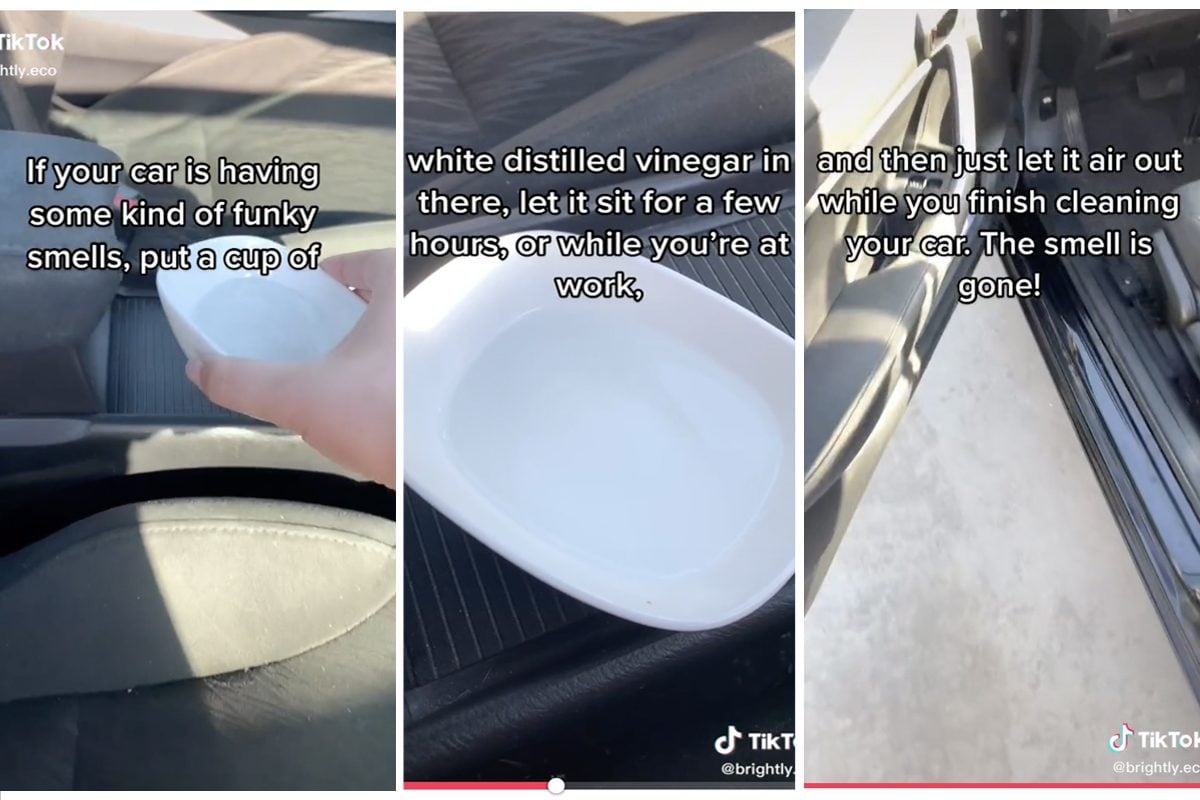
Method 1: Leave a Bowl of Vinegar Overnight
This is the least invasive method and a reasonable first experiment for mild stale odors.
- Remove trash, food, damp clothing, pet items, and anything else that might be producing the smell.
- Vacuum the seats, carpets, floor mats, trunk, and spaces beneath the seats.
- Pour one cup of distilled white vinegar into a wide, stable bowl.
- Place the bowl on a level surface inside the parked vehicle.
- Close the doors and leave it for several hours or overnight.
- Remove the bowl and ventilate the car before driving.
Place the bowl where it cannot tip over. A cup of vinegar sliding across the carpet during an emergency stop would create an entirely new cleaning article.
This passive method may lessen light smoke, food, or stale-air odors, but it cannot clean contaminated fabric or repair a leak. If the smell returns quickly, the source is still present.
Method 2: Use a Diluted Vinegar Spray
For washable cloth upholstery, carpeting, rubber mats, or selected hard surfaces, begin with equal parts distilled white vinegar and water. A weaker mixture can be used for routine wiping.
- Vacuum loose dirt and debris.
- Test the solution on a hidden area and allow it to dry completely.
- Spray the solution onto a microfiber cloth rather than directly onto the dashboard or seat.
- Blot or wipe the affected area lightly.
- Use a second cloth dampened with plain water to remove residue when appropriate.
- Blot dry and leave the windows or doors open in a secure location.
Consumer Reports advises spraying cleaning products onto the cloth instead of directly onto interior components. This reduces overspray on upholstery, screens, buttons, and coated surfaces.
Method 3: Clean Removable Floor Mats
Take rubber or carpeted mats out of the vehicle. Vacuum them, apply the appropriate diluted solution, scrub gently, rinse if the material permits it, and let them dry completely before reinstalling them.
Never return damp mats to the car. Trapping moisture beneath them is a reliable way to turn a minor odor into a full-scale mildew convention.
Where You Should Not Use Vinegar
Leather Seats
Do not assume that vinegar is safe for every type of leather. Acidic cleaners may dry, discolor, or alter coated and uncoated leather. Use an automotive leather cleaner recommended by the vehicle manufacturer, followed by an appropriate conditioner when required.
Even when an online recipe claims to be leather-safe, test it in a hidden location. Vehicle interiors contain many different leather coatings, dyes, protective finishes, and synthetic materials that may not react the same way.
Touchscreens and Instrument Displays
Avoid vinegar on infotainment screens, gauge-cluster lenses, camera displays, and surfaces with anti-glare or anti-fingerprint coatings. Use a clean, slightly damp microfiber cloth or a cleaner specifically approved for the display.
Automotive interior guidance warns that inappropriate household cleaners can damage upholstery and specialty coatings.
Electrical Components
Do not spray vinegar into switches, charging ports, speakers, seat controls, vents, or electronic modules. Apply any approved cleaner to a cloth first and keep moisture away from openings.
Unknown or Delicate Upholstery
If the fabric is vintage, suede-like, unusually colored, previously repaired, or labeled for professional cleaning only, skip the homemade mixture. An automotive detailer can test the material and use extraction equipment without oversaturating it.
Metal Components
Acidic vinegar can contribute to corrosion or dulling on certain metals when left in contact too long. Wipe accidental drips promptly and do not use vinegar as a soaking treatment for seat tracks, fasteners, electrical connectors, or unfinished metal.
Never Mix Vinegar With Bleach
This is the most important safety rule in the article: never mix vinegar with chlorine bleach or a product that may contain bleach. Vinegar is an acid, and combining an acid with bleach can release toxic chlorine gas. Exposure may irritate or injure the eyes, throat, and lungs.
Do not combine random cleaning products simply because each one smells powerful. “Smells powerful” is not a recognized unit of cleaning effectiveness.
If you have already used another cleaner, read its label and rinse the area appropriately before applying anything else. Work in a well-ventilated location, wear gloves when needed, and keep children and pets away from the cleaning area.
When Vinegar Will Not Fix the Smell
The Odor Comes From the Air-Conditioning System
If the smell appears only when the fan or air conditioner starts, the problem may be a dirty cabin air filter, moisture on the evaporator, a clogged drain, or microbial buildup inside the HVAC system. A bowl of vinegar on the floor cannot reach those components.
Cars.com, AutoZone, Firestone, Allstate, and Kelley Blue Book identify musty or sour vent odors as possible signs of cabin-filter or air-conditioning contamination.
Check the owner’s manual for the cabin air filter’s location and replacement schedule. If a new filter does not solve the problem, a technician may need to inspect the evaporator case, drain tube, seals, and ductwork.
The Carpet or Seat Padding Is Saturated
Surface cleaning cannot remove contamination that has reached thick carpet padding or seat foam. Professional hot-water extraction, removal of the affected material, or replacement may be necessary.
The Vehicle Has Flood Damage
A flooded vehicle can contain contaminated water, hidden moisture, corrosion, mold, and damaged electronics. State Farm notes that flood damage can cause continuing odor and corrosion problems and recommends professional drying when materials cannot be safely removed.
There Is Significant Mold Growth
Small spots on washable hard surfaces may sometimes be cleaned safely, but large areas, recurring growth, contaminated HVAC systems, or mold caused by sewage water require professional attention. The underlying leak must be repaired and all affected material must be dried completely.
The Smell Signals a Mechanical Danger
Do not try to deodorize a gasoline smell, burning smell, exhaust odor, rotten-egg odor, or unusually sweet chemical smell with vinegar. These odors may indicate a fuel leak, electrical problem, exhaust leak, catalytic-converter issue, or coolant leak.
Firestone advises treating a gasoline odor as a potentially dangerous fuel-system problem, while automotive guidance identifies unusual sweet or chemical smells as reasons to inspect the cooling or air-conditioning system.
If you smell fuel or burning material, stop driving when it is safe, turn off the vehicle, move away from it, and obtain professional assistance.
Vinegar vs. Other Car Odor Treatments
Baking Soda
Baking soda can be useful on dry carpets and cloth upholstery. Sprinkle a light layer, allow it to sit, and vacuum it thoroughly. Do not pour vinegar directly over a large pile of baking soda inside the car. The foaming reaction looks exciting but mostly produces carbon dioxide, water, and a cleanup project.
Kelley Blue Book and AAA recommend baking soda as an inexpensive option for certain upholstery odors.
Enzyme Cleaners
Enzyme cleaners are generally better for urine, vomit, milk, and other organic contamination because they target the material creating the smell. Follow the label carefully and confirm that the product is suitable for automotive upholstery.
Activated Charcoal
Activated-charcoal odor absorbers may help with residual airborne smells after the source has been cleaned. They are less messy than open bowls of liquid and can remain in the vehicle longer.
Steam and Extraction Cleaning
Professional extraction equipment can remove dirty liquid from beneath the surface instead of merely wetting the fabric. This is often the better choice for large spills, heavily soiled carpets, and used vehicles with an unknown odor history.
Ozone Treatment
Some professional detailers offer ozone treatment for severe smoke and biological odors. Ozone can irritate the respiratory system and should not be used casually or while people, pets, or plants are inside the vehicle. It is not a substitute for removing contaminated material or repairing water leaks.
A Practical Odor-Removal Checklist
- Identify when and where the smell is strongest.
- Remove trash, food, damp items, and removable floor mats.
- Inspect under seats, inside storage compartments, and beneath the trunk floor.
- Vacuum the entire interior before adding liquid.
- Check for wet carpet, blocked drains, damaged seals, and HVAC odors.
- Test diluted vinegar on a hidden area.
- Use as little moisture as necessary.
- Blot or extract the cleaning liquid instead of leaving the surface wet.
- Ventilate and dry the vehicle completely.
- Replace the cabin air filter when vent odors or restricted airflow suggest contamination.
- Call a detailer or mechanic when the odor returns or signals a hazardous condition.
Experiences From Using Vinegar to Fix a Stinky Car
My most useful experience with vinegar and car odors began with a cup of coffee that lost an argument with a speed bump. The lid popped loose, coffee ran down the center console, and a respectable amount disappeared between the passenger seat and the carpet. I blotted the visible spill immediately and congratulated myself on handling the crisis like a professional. Two warm days later, the car smelled like a coffee shop operating inside a wet basement.
The first lesson was that cleaning only what you can see is not enough. I moved the seat, found more liquid underneath, removed the floor mat, vacuumed the area, and used a lightly applied mixture of distilled white vinegar and water on the washable carpet. I did not pour the solution directly onto the floor. I sprayed it onto a cloth, blotted the carpet, followed with another damp cloth, and then pressed dry towels into the area.
The vinegar smell was noticeable for several hours, but it disappeared after I left the doors open in a secure, shaded location. The sour coffee odor also faded. More importantly, it stayed gone because the hidden liquid had finally been removed. Vinegar helped, but access, blotting, and drying did most of the heavy lifting.
A second experience involved a used car with a stale smoke smell. Leaving a bowl of vinegar inside overnight made the air seem better the next morning, but the improvement lasted only a day. The odor returned as soon as sunlight warmed the cabin. That was a clear sign that the smoke residue was embedded in the interior rather than floating politely in the air waiting to be captured.
The successful treatment required several rounds of work. I vacuumed the carpets and seats, wiped washable plastic and vinyl surfaces, carefully cleaned the interior glass, washed the seat belts, and replaced the cabin air filter. The headliner received only gentle surface treatment because saturating it could have loosened the adhesive. After the physical residue was removed, another overnight bowl of vinegar helped with the remaining light odor. This time, the result lasted.
The third experience was a musty smell that appeared whenever the air conditioner started. Spraying vinegar on the floor mats accomplished nothing because the mats were innocent. The odor was coming from the vents. The cabin air filter was dark, damp-looking, and full of debris. Replacing it improved the smell, but a faint mustiness remained until the evaporator drain and HVAC system were inspected and cleaned.
That situation demonstrated an important diagnostic trick: pay attention to timing. If the smell is constant, inspect upholstery, carpets, storage areas, and the trunk. If it appears when the vehicle becomes hot, look for old food, smoke contamination, or moisture trapped in fabric. If it begins when the fan starts, investigate the cabin air filter and air-conditioning system. If it occurs after rain, inspect seals, drain tubes, and the lowest areas of the floor.
I have also learned that more vinegar does not produce a better result. Oversaturating a seat can push odor-causing material deeper into the cushion and extend drying time. A lightly dampened cloth, repeated blotting, and good airflow are safer than turning the passenger seat into a vinaigrette.
Another useful habit is to smell the cleaning towel after each pass. When the towel continues picking up the original odor, more residue remains. Replace the towel instead of spreading the contamination across a larger area. For serious spills, a wet extractor is far more effective because it removes dirty liquid rather than redistributing it.
The overall experience is simple: vinegar is useful, inexpensive, and often worth trying, but it works best as an assistant rather than the entire cleaning crew. It can help with light odors and washable residue. It cannot repair a leaking sunroof, remove contamination buried deep in seat foam, clean a moldy evaporator, or make a fuel leak safe. The winning formula is always source removal, appropriate cleaning, complete drying, and only then odor treatment.
Conclusion: Is Vinegar Worth Trying?
Yes, you can use vinegar to fix a stinky car when the odor is mild and the affected surface can be cleaned safely. Diluted distilled white vinegar may help with food residue, some pet accidents, smoke film, road salt, and stale odors. An open bowl may also reduce light residual smells after the interior has been cleaned.
However, vinegar should never be used as a substitute for finding the source. Persistent mildew, wet carpeting, contaminated seat foam, HVAC odors, flood damage, fuel fumes, burning smells, and coolant odors require targeted repairs or professional cleaning. Test every solution, avoid delicate surfaces and electronics, use minimal moisture, ventilate thoroughly, and never mix vinegar with bleach.
Note: Cleaning recommendations can vary by vehicle and material. Consult the owner’s manual or the vehicle manufacturer’s care instructions before applying a homemade solution to leather, coated trim, specialty upholstery, touchscreens, or electronic components.













