
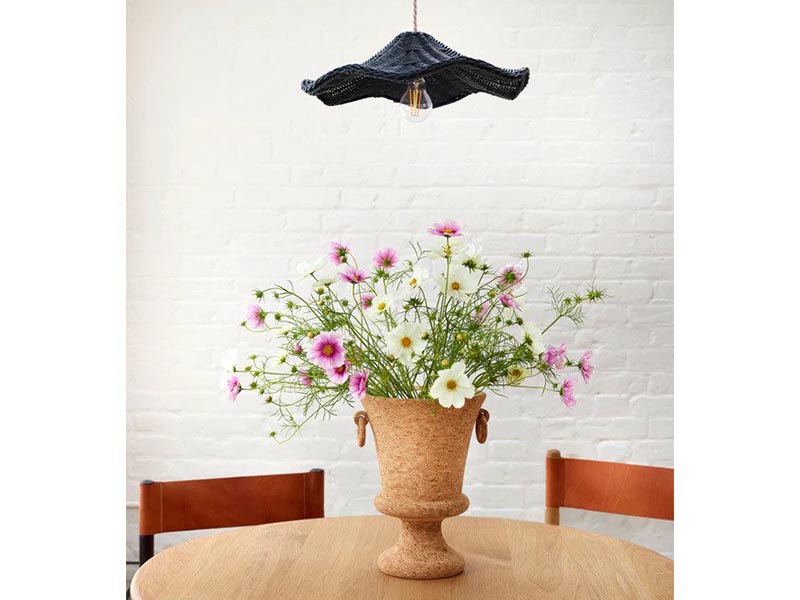
A Cork Urn, Large is not the kind of home accessory that politely waits in the corner hoping someone notices it. It has presence. It has texture. It has that “I casually understand interiors” energy without needing a velvet rope or a museum label. Made from cork, shaped like a sculptural urn, and sized generously enough to hold its own in an entryway, living room, studio, or dining space, this piece sits at the intersection of natural home decor, functional storage, and sustainable design.
At first glance, the phrase “large cork urn” may sound oddly specific. Is it a vase? A vessel? A planter? A storage container? A decorative object? The answer is yes, with a confident nod. Its charm comes from flexibility. A large cork urn can display dried branches, corral everyday clutter, soften a minimalist room, or simply stand alone as an organic sculptural accent. It is the rare decor item that can look refined while still giving off the relaxed personality of a person who owns linen napkins but also eats cereal for dinner occasionally.
This guide explores what makes a large cork urn special, how to style it, where to place it, how to care for it, and why cork continues to gain attention as a warm, renewable material in modern interiors.
What Is a Cork Urn, Large?
A large cork urn is a decorative vessel made primarily from cork, often shaped with a rounded body, narrow opening, and sometimes handles or amphora-inspired details. Unlike ceramic, glass, or metal urns, cork has a naturally tactile surface. It feels earthy, soft, and architectural all at once. The material gives the object a handmade quality, even when the silhouette is clean and symmetrical.
In home decor, the word “urn” usually refers to a vessel-inspired decorative form rather than a purely functional container. A cork urn may be used as a statement object, a dry vase, a tabletop centerpiece, or a stylish storage solution. Because cork is lightweight compared with stone or ceramic, a large urn can offer impressive scale without being a backbreaking commitment every time you dust.
Not Just a Vase, Not Just a Basket
The large cork urn works because it sits between familiar categories. It has the silhouette of a classical vessel, the practicality of a container, and the texture of natural fiber decor. That makes it easier to use than more formal urns that look like they came with a security guard. A cork version feels relaxed and modern, especially when paired with wood, linen, plaster, rattan, stone, or matte black accents.
Why Cork Works So Well in Home Decor
Cork comes from the bark of the cork oak tree. The tree is not cut down during harvesting; instead, the bark is carefully stripped and allowed to regrow over several years. This gives cork a strong sustainability story, but its appeal is not only environmental. It is also practical and beautiful.
Cork is naturally lightweight, resilient, and subtly insulating. It has a cellular structure that gives it a soft hand-feel and visual depth. In interiors, cork brings warmth without adding heaviness. It is quieter than glossy ceramic, less fragile than glass, and more unexpected than the usual woven basket. Basically, cork is the friend who shows up to the party wearing something simple but somehow looks better than everyone else.
Texture That Adds Instant Warmth
The biggest design advantage of a cork urn is texture. Rooms often fall flat not because they lack furniture, but because every surface has the same visual temperature. Too much white paint, smooth laminate, shiny metal, or flat upholstery can make a space feel unfinished. A large cork urn adds a natural grain that breaks up the sameness.
Place it near a boucle chair, beside a plaster fireplace, on a console table, or under an open staircase, and it immediately creates contrast. The surface is neutral, but not boring. It has tiny variations in tone that make it look alive without shouting for attention.
A Sustainable Alternative to Trendy Throwaway Decor
Many decorative objects are bought because they look cute for a season and then mysteriously migrate to the donation pile. A large cork urn has more staying power because it is not locked into one micro-trend. It can work with coastal interiors, organic modern rooms, rustic spaces, Japandi styling, Mediterranean-inspired homes, and even eclectic apartments where the design philosophy is “somehow, it all works.”
Best Places to Use a Large Cork Urn
Because of its scale, a large cork urn is most effective where it has breathing room. It should not be squeezed into a crowded shelf like a decorative afterthought. Give it space, and it rewards you with quiet drama.
Entryway
An entryway is one of the best places for a large cork urn. It creates an immediate first impression without needing a complicated styling plan. Place it beside a console table, near a bench, or under a wall mirror. Add tall dried grasses, olive branches, or sculptural twigs for height. If your entryway tends to collect umbrellas, tote bags, and emotional baggage from the outside world, the urn can also serve as a stylish storage piece.
Living Room
In a living room, a cork urn can soften harder elements such as a stone coffee table, metal floor lamp, or leather sofa. It looks especially good near a fireplace, beside a reading chair, or in an empty corner that currently says, “I gave up here.” Use it alone for a minimalist look or pair it with stacked books, a floor lamp, and a textured rug.
Dining Room
A large cork urn can become a striking dining room centerpiece if the table is large enough. For smaller tables, use it on a sideboard instead. Fill it with dried botanicals, seasonal branches, or nothing at all. The shape is usually sculptural enough to stand on its own.
Home Office or Studio
In a workspace, the cork urn brings softness and tactility. It can hold rolled plans, wrapping paper, artist tools, rulers, or even an unruly collection of poster tubes. This is where function and style shake hands like adults.
How to Style a Cork Urn, Large
Styling a large cork urn is less about stuffing it with things and more about choosing the right visual balance. The urn itself already has texture and volume, so the goal is to complement it rather than bury it under accessories.
1. Keep It Simple With Dried Branches
Tall dried branches are the easiest styling choice. Think curly willow, dried eucalyptus, olive stems, pampas grass, or sculptural bare branches. The organic shape of the stems pairs beautifully with cork’s natural surface. Keep the arrangement loose, not overly symmetrical. The goal is “effortless,” not “hotel lobby trying too hard.”
2. Use It as a Standalone Statement
A large cork urn does not need filling to be useful. On a console, pedestal, hearth, or shelf, it can act as a sculptural object. This approach works especially well in minimalist interiors where every item needs to earn its rent visually.
3. Pair It With Contrasting Materials
Cork looks best when surrounded by contrast. Try pairing it with matte ceramic, blackened metal, honed stone, pale oak, walnut, linen, or limewash walls. Avoid placing it among too many similarly speckled brown objects, or the look can become visually muddy.
4. Add Seasonal Touches
One underrated benefit of a cork urn is how easily it adapts through the year. In spring, use fresh-looking faux greenery or dried lavender. In summer, keep it bare beside breezy linen curtains. In fall, add wheat, branches, or rust-toned foliage. In winter, use evergreen clippings if the urn is properly lined and protected from moisture, or choose realistic faux stems for zero drama.
Functional Uses for a Large Cork Urn
While it looks decorative, a large cork urn can also be useful. The exact function depends on the construction, finish, and whether the inside is sealed or lined. Always check product details before using it with water, soil, or heavy objects.
Storage for Everyday Items
A cork urn can hold rolled magazines, knitting supplies, wrapping paper, faux stems, lightweight throws, or entryway accessories. If the opening is wide enough, it can also become an elegant catchall for items that usually clutter surfaces.
Dry Planter Display
Cork and plants look wonderful together, but direct moisture can be risky unless the urn is specifically designed as a planter. The safest method is to place a nursery pot inside a waterproof liner or cachepot, then set that inside the cork urn. This gives you the look of a planter without asking cork to perform a job it did not sign up for.
Creative Desk or Studio Organizer
Smaller items can disappear in a large vessel, but tall objects work beautifully. Use the urn for artist brushes, dowels, rolled canvas, architectural drawings, or oversized stationery. It adds character to a creative workspace and makes supplies look intentional instead of “I lost the drawer battle.”
How to Choose the Right Large Cork Urn
Not every large cork urn is the same. Before buying, consider size, shape, finish, weight, and intended use. A piece that looks perfect online may feel too tall for a shelf or too narrow for the arrangement you have in mind.
Check the Dimensions
“Large” can mean different things depending on the maker. Some large urns are tabletop pieces, while others are floor-standing vessels. Measure the area where you plan to place it. For console tables and sideboards, make sure the urn does not block artwork, mirrors, or lighting. For floor placement, choose a height that feels intentional rather than accidentally abandoned.
Look at the Opening
A narrow opening is ideal for sculptural branches and minimalist styling. A wider opening is better for storage or fuller arrangements. If you plan to use the urn as a cachepot, compare the interior opening with the diameter of your plant’s nursery pot.
Consider Handles and Shape
Handles give a cork urn a more classical, amphora-like feel. A simple handle-free shape feels cleaner and more modern. Rounded bodies look softer, while taller tapered silhouettes feel more architectural. Choose based on the room’s existing mood.
Care and Maintenance
Cork is low-maintenance, but it still deserves respectful treatment. Think of it as natural material, not plastic pretending to be natural material. Keep it away from prolonged moisture, harsh chemicals, and sharp objects that could gouge the surface.
Dust Gently
Use a dry microfiber cloth, soft brush, or feather duster. Avoid aggressive scrubbing. Cork’s texture can collect dust in tiny crevices, so gentle regular cleaning works better than occasional panic-cleaning before guests arrive.
Avoid Standing Water
Unless the urn has a waterproof insert, do not fill it directly with water. For fresh flowers, use a separate glass or plastic vessel inside. For plants, use a liner and saucer. Cork is water-resistant in many applications, but decorative cork objects should still be protected from unnecessary moisture.
Protect From Heat and Direct Sun
Do not place the urn directly beside high heat sources or in harsh sun for long periods. Like many natural materials, cork can change over time when exposed to intense conditions. A little patina is charming. A sunburned urn is less charming.
Design Styles That Pair Beautifully With Cork
Organic Modern
Organic modern interiors love natural materials, soft shapes, and quiet texture. A large cork urn fits perfectly with curved sofas, travertine tables, linen curtains, and warm neutral palettes.
Japandi
Japandi design blends Japanese restraint with Scandinavian warmth. Cork’s simplicity, tactility, and natural origin make it a strong choice for this style. Keep the arrangement minimal and let the silhouette breathe.
Coastal Without the Seashell Situation
Cork can support a coastal look without turning your living room into a souvenir shop. Pair it with white walls, pale woods, woven shades, and blue-gray accents. Skip the bowl of starfish unless you are emotionally committed.
Rustic and Mediterranean
A cork urn also works beautifully with terracotta, aged wood, limewashed walls, and antique textiles. Its earthy surface feels at home in spaces inspired by old-world European farmhouses or Mediterranean villas.
Common Mistakes to Avoid
The first mistake is overfilling the urn. If every decorative vessel in the house is packed with stems, the room can start to feel like a craft store after a windstorm. Let one or two pieces stay empty.
The second mistake is choosing the wrong scale. A large cork urn should look deliberate. If it is too small for a floor corner, place it on a table or pedestal. If it overwhelms a tiny shelf, move it somewhere with more space.
The third mistake is ignoring moisture. Cork is versatile, but decorative cork vessels should not be treated like glazed ceramic planters unless they are specifically built for that purpose.
Real-Life Experience: Living With a Large Cork Urn
The first thing you notice about a large cork urn in a real room is that it changes the mood before it changes the layout. You do not need to rearrange the entire house. You set it down, step back, and suddenly the space feels warmer, more finished, and slightly more intentionalas if you had a design plan all along and were not simply moving clutter from one surface to another like a domestic magician.
In an entryway, the cork urn becomes a surprisingly practical anchor. A narrow console table can look lonely with only a lamp and keys on it, but placing a large cork urn beside it gives the area height and texture. Add a few tall branches, and the entry starts to feel styled rather than merely functional. Guests may not say, “What a lovely use of sustainable cork,” but they will notice that the space feels pulled together. That is the quiet power of good decor: it does not beg for compliments; it earns them sneakily.
In a living room, the experience is different. The urn works like a visual softener. If the room has a lot of hard edgesTV console, coffee table, bookshelves, square sofa armsthe rounded cork form helps break up the geometry. It is especially effective beside a fireplace or reading chair, where it adds height without the visual weight of a stone or ceramic vessel. You can move it more easily than heavier decor, which matters when you suddenly decide at 10:47 p.m. that the entire room must be restyled immediately.
As a storage piece, the large cork urn is useful in a selective way. It is not the best choice for tiny objects unless you use smaller containers inside. Nobody wants to dig elbow-deep for one missing charging cable. But for tall, lightweight, or rolled items, it is excellent. Wrapping paper, dried stems, umbrellas, poster tubes, and slim yoga mats can all work depending on the urn’s size and opening. The result feels less like storage and more like a design decision, which is exactly the kind of harmless illusion a tidy home depends on.
The care experience is refreshingly simple. Dusting takes seconds, and the material does not show fingerprints the way glass or glossy ceramic does. The main habit to build is moisture awareness. If using fresh flowers or a plant, place a waterproof container inside. This small extra step protects the cork and keeps the urn looking good over time. It is not fussy; it just has boundaries, which honestly is admirable.
The best part of owning a large cork urn is its versatility. When your style shifts, the piece can shift with it. It can look minimal in January, botanical in spring, rustic in autumn, and festive in winter. It can move from entryway to dining room to office without seeming out of place. That makes it more than a trendy object. It becomes one of those dependable pieces you keep finding new uses for, which is the real test of good home decor.
Conclusion
A Cork Urn, Large is a smart choice for anyone who wants natural texture, sculptural shape, and practical flexibility in one object. It can be styled as a standalone accent, filled with dried branches, used for lightweight storage, or adapted as a protected cachepot. Its cork construction gives it warmth and sustainability appeal, while its urn shape adds timeless character. Whether your home leans organic modern, coastal, rustic, Mediterranean, or quietly eclectic, a large cork urn brings that rare mix of beauty and usefulness.
The secret is to give it space, protect it from moisture, and let the material do what cork does best: add warmth without fuss, texture without clutter, and personality without making the room feel like it is trying to win an interior design reality show.













