
Note: This article is based on real product information, current retail details, and general U.S. home-improvement guidance. Prices, promotions, delivery availability, and installation options may change, so readers should verify details with Costco and local building authorities before purchasing.
Costco has a funny way of making everyday shopping feel like a treasure hunt. You walk in for paper towels and chicken, and somehow you leave emotionally attached to a gazebo, a five-foot teddy bear, and a shed large enough to make your garage feel underdressed. The latest backyard headline-grabber is the Yardline Upton 12′ x 24′ Wood Shed, a structure so roomy that many shoppers are calling it a “pop-up garage.” And yes, with the right setup and vehicle size, this Costco shed is big enough to fit a car.
That single detail is what makes this product more than just another outdoor storage shed. A 12-by-24-foot footprint gives you 288 square feet of space, which is in the neighborhood of a traditional one-car garage. Add extra-wide double doors, a side service door, windows, wood construction, and an overhead loft, and suddenly this is not merely a place to exile your rake. It is a potential car shelter, workshop, motorcycle garage, mower room, hobby studio, seasonal storage hub, or “finally, the bikes have somewhere to live” solution.
But before anyone starts picturing their SUV relaxing in a cozy Costco cottage, there are important details to understand. This shed is big, useful, and surprisingly attractive, but it is still a shed kitnot a fully finished garage with electrical, insulation, plumbing, automatic doors, or a poured foundation included by default. The magic is real, but so is the measuring tape.
What Is the Costco Yardline Upton 12′ x 24′ Wood Shed?
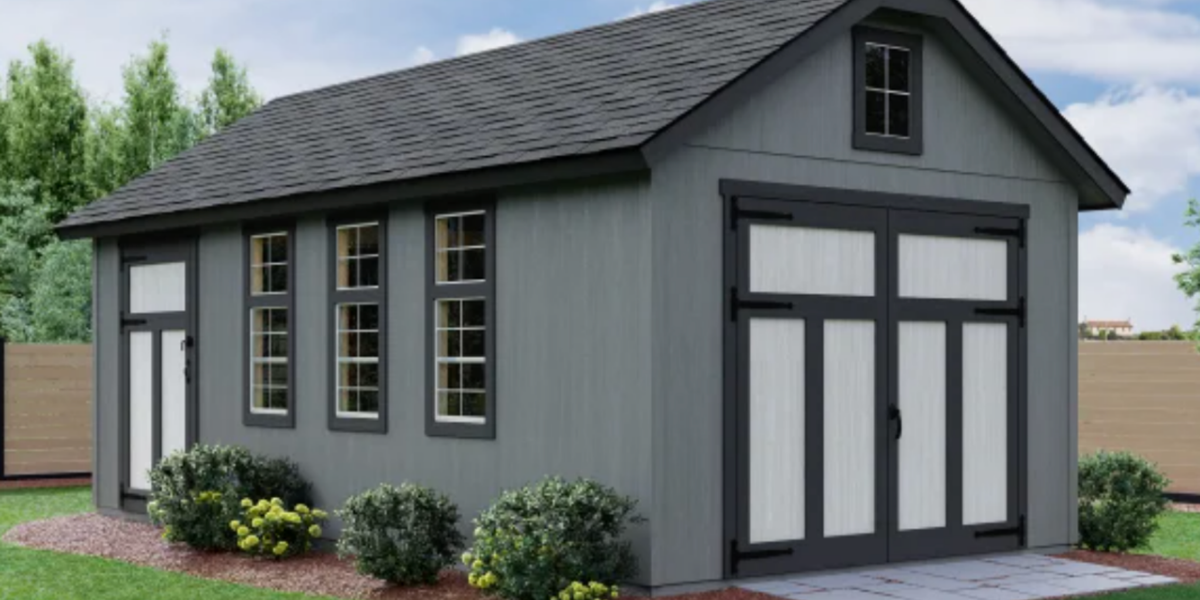
The Costco shed attracting attention is the Yardline Upton 12′ x 24′ Wood Shed, an online-only large wood shed offered with do-it-yourself assembly or professional installation options in eligible areas. Its most important feature is the size: 12 feet wide by 24 feet deep. That gives homeowners enough depth for many compact cars, sedans, small crossovers, motorcycles, ATVs, riding mowers, snow blowers, tool benches, and stacks of storage bins.
The structure includes 96-inch extra-wide double doors, a 48-inch wide service door, a 4-foot-deep overhead storage loft, and five windows, including operable and fixed windows. Door and window placement is customizable, which is a big deal because a shed this large needs to work with your yard layout, driveway approach, sun exposure, and how you plan to move things in and out.
In plain English, this is the shed for people who have outgrown the tiny plastic box behind the fence. It is for the homeowner whose garage currently contains everything except the car: camping chairs, holiday decorations, soccer balls, garden tools, paint cans, extension cords, and one mysterious box labeled “miscellaneous” that nobody has opened since 2018.
Why Everyone Is Talking About a Car-Sized Shed
The buzz comes from one simple idea: building a traditional garage is expensive, slow, and often complicated. A prefab wood shed that can fit a car feels like a shortcut. It is not the same as a conventional garage, but it can solve some of the same problems at a potentially lower price and with less construction drama.
A new garage can cost tens of thousands of dollars depending on size, materials, labor, foundation, permits, utilities, roofing, siding, insulation, and local contractor rates. By comparison, a large shed kit may look refreshingly approachable. Costco also tends to attract attention because its large outdoor structures often include delivery in the quoted price, member pricing, and occasional limited-time discounts.
The Yardline Upton stands out because it looks more polished than many basic metal sheds. Its wood design, gable-style roof, windows, side entry, and decorative details make it feel less like a backyard shipping container and more like a small detached building. That matters if the shed will sit where neighbors, guests, or your HOA can see it.
Can This Costco Shed Really Fit a Car?
For many vehicles, yes, the footprint can work. A 12′ x 24′ structure is comparable to common one-car garage dimensions. Many compact cars and sedans are roughly 6 feet wide and 14 to 16 feet long, leaving some room for door clearance, walking space, and storage. Smaller SUVs and crossovers may also fit, depending on exact measurements.
However, “fits your car” does not automatically mean “fits every car comfortably.” A full-size pickup truck, large SUV, lifted vehicle, or long van may be too wide, too tall, or too long for practical everyday use. The 96-inch double-door opening is generous for a shed, but drivers still need to consider mirror width, turning angle, ramp setup, and whether they want room to open doors after parking.
Before Buying, Measure These Four Things
First, measure your vehicle’s total length from bumper to bumper. Second, measure width including mirrors, not just body width. Third, check height, especially if you drive a tall SUV, roof-rack vehicle, or truck with accessories. Fourth, think about usable interior space after accounting for wall framing, storage shelves, the loft area, and anything else you plan to keep inside.
The best rule is simple: do not buy based on vibes. Vibes are great for throw pillows, not for parking a vehicle inside a building. Use a tape measure, mark a 12′ x 24′ rectangle on your driveway with chalk or painter’s tape, and practice visualizing how your car would enter, park, and exit. If the layout feels tight in chalk, it will not magically become a luxury showroom once the shed arrives.
Best Uses for Costco’s Car-Sized Shed
The most obvious use is vehicle storage. Homeowners without a garage may want protection from sun, rain, leaves, pollen, hail, bird surprises, and winter weather. While a shed is not identical to a climate-controlled garage, it can provide meaningful coverage when installed correctly on a strong, level foundation.
It is also ideal for storing motorcycles, scooters, golf carts, ATVs, riding lawn mowers, snow blowers, and trailers. These items are expensive, bulky, and annoying to squeeze into a standard garage. A dedicated backyard structure can free up your attached garage for daily parkingor finally make it possible to walk through the garage without doing an obstacle-course audition.
Another strong use case is a workshop. With a workbench along one wall, pegboard, storage cabinets, and good lighting, the Yardline Upton can become a serious DIY zone. Woodworkers, gardeners, mechanics, and weekend tinkerers could use the space for tools, seasonal projects, repairs, and messy jobs that should not happen in the kitchen no matter how “quick” the project seems at first.
The overhead loft adds another layer of usefulness. It is a smart spot for seasonal items that do not need daily access: holiday decorations, camping gear, patio cushions, coolers, beach chairs, and storage totes. Keeping those items overhead helps preserve the floor for larger equipment or a vehicle.
DIY Assembly vs. Professional Installation
Costco lists the Yardline Upton as available for do-it-yourself assembly or professional installation, depending on location and availability. The DIY route can save money, but buyers should be honest about the scale of the project. This is not a tiny deck box. It is a large wood structure with walls, roof panels, doors, windows, trim, hardware, and many heavy components.
DIY assembly may be realistic for experienced homeowners with proper tools, time, helpers, and a prepared foundation. The kit is designed with pre-cut wood, which helps reduce cutting work, but “pre-cut” does not mean “effort-free.” You still need to sort materials, read instructions, square the structure, fasten components correctly, and work safely at height when assembling the roof.
Professional installation can be the better choice for anyone who lacks tools, time, physical help, or confidence. It may also make sense if the shed needs to be assembled quickly and accurately. A large structure that is slightly out of square can cause door problems, roof alignment issues, and future frustration. Saving money is wonderful; spending three weekends arguing with wall panels is less wonderful.
The Foundation Is Not Optional
A shed large enough to fit a car needs a serious base. The foundation affects everything: door alignment, floor strength, water drainage, long-term durability, and whether the structure stays level. For vehicle storage, a concrete slab is often the most practical choice because it provides a firm driving surface and handles concentrated loads better than a soft or uneven base.
Some shed installations can use gravel pads, blocks, or wood platforms, but a car-sized structure deserves extra planning. A poor foundation can settle, twist, trap water, or make the doors difficult to open. If you plan to park a car, motorcycle, or riding mower inside, ask the manufacturer, installer, or a local contractor what foundation is appropriate for your intended load.
Drainage is just as important. The site should be level, compacted, and designed so water moves away from the shed instead of pooling underneath it. In wet climates, ignoring drainage is like sending your shed an engraved invitation to rot, mildew, and regret.
Permits, HOA Rules, and Local Codes
Before ordering, check your local building department and HOA rules. Costco’s product information advises buyers to consult city, municipality, and HOA guidelines because the structure may require a permit. That is especially likely because the shed is 288 square feet, which is larger than the size threshold many jurisdictions use for permit exemptions.
Rules vary widely. Some areas care about square footage. Others care about height, setbacks from property lines, foundation type, electrical work, roof drainage, wind ratings, snow load, appearance, or whether the building will store a vehicle. If you live in a hurricane-prone, high-snow, wildfire-risk, or strict HOA area, the approval process may be more involved.
Do not skip this step. A permit problem can turn a fun backyard upgrade into an expensive lesson in municipal paperwork. The safest order of operations is: measure the yard, check zoning, confirm setbacks, review HOA rules, ask about permits, plan the foundation, then buy the shed. Yes, that sounds less exciting than clicking “add to cart,” but it is also less exciting to be told to move a 12-by-24-foot building after it is assembled.
What About Weather Resistance?
The Yardline Upton is marketed with durable wood construction, treated siding, and framing designed for demanding outdoor conditions. Its features make it more substantial than lightweight plastic storage sheds. Wood also avoids some common complaints about metal sheds, such as rust, and resin sheds, such as warping under certain conditions.
Still, every outdoor structure needs maintenance. Wood sheds should be painted or finished according to manufacturer recommendations. Roof materials, seams, caulking, trim, and doors should be inspected over time. If you live in a snowy region, pay attention to roof load guidance. If you live in a windy region, anchoring matters. If you live where the summer sun acts like it has a personal grudge, exterior finish maintenance becomes even more important.
Pros and Cons of Buying This Costco Shed
Pros
The biggest advantage is space. At 12′ x 24′, this shed offers enough room for serious storage, vehicle protection, or workshop use. The 96-inch double doors make it more practical for large items than a standard shed. The side service door is convenient because you do not have to open the main double doors every time you want a screwdriver or a bag of potting soil.
The overhead loft increases storage without eating up floor area. The windows make the interior feel less cave-like, and customizable placement helps homeowners adapt the structure to their property. The wood design also gives it a more residential look than many basic metal buildings.
Cons
The biggest downside is that buying the shed is only part of the project. You may need a permit, site prep, foundation work, anchoring, paint, ramps, lighting, shelving, and possibly professional installation. Those costs can add up quickly.
It also may not be ideal for every vehicle. Large trucks and SUVs may be a tight fit. If you want automatic garage doors, insulation, finished walls, built-in electricity, EV charging, heating, cooling, or plumbing, you are entering upgrade territory. At that point, compare total project cost against a conventional garage or custom outbuilding.
How It Compares With Building a Garage
A traditional garage is usually more permanent, more customizable, and better suited for daily vehicle use. It can be built with a full concrete foundation, insulated walls, electrical service, lighting, automatic doors, security systems, and a design that matches the home. It may also add more property value when built properly.
The Costco Yardline shed, on the other hand, appeals to homeowners who want a large structure without committing to a full garage build. It can be a practical middle ground: more substantial than a small storage shed, but potentially simpler and less expensive than hiring a contractor for a full detached garage.
The key is comparing total cost, not just product price. Include membership, sales tax, foundation, installation, permits, delivery constraints, ramps, paint, gutters, shelving, and any electrical work. A shed kit may still be the smarter buy, but the math should include the whole projectnot just the number that made you stop scrolling.
Smart Setup Ideas for a Car-Sized Shed
If you use the shed for a car, keep one side wall as open as possible so doors can swing. Install wall-mounted storage rather than deep floor cabinets. Add rubber parking stops or guides to help position the vehicle. A motion-sensor light can make nighttime access easier, while a battery-powered security camera may add peace of mind.
If you use it as a workshop, divide it into zones. Put bulky equipment near the double doors, hand tools near the service door, and seasonal storage in the loft. Use vertical wall space aggressively. Pegboards, French cleats, and ceiling-mounted racks can keep the floor clear and make the shed feel larger.
If you use it for garden equipment, consider a ramp, washable floor surface, hooks for hoses, and labeled bins for fertilizers, gloves, seeds, and small tools. Keep chemicals, fuel, and batteries stored safely according to product instructions and local rules.
Who Should Consider Buying It?
This Costco shed is a strong fit for homeowners with enough yard space, a clear access path for delivery and assembly, and a real need for large-scale storage. It makes sense for people who do not have a garage, have a garage that is already full, own bulky outdoor equipment, or want a detached workspace.
It is also appealing for rural properties, hobby farms, large suburban lots, and homes where a second garage would be useful but too expensive. Car enthusiasts with a compact vehicle, motorcycle owners, gardeners, DIYers, and families drowning in seasonal gear may all find it practical.
It may not be the best fit for small lots, strict HOAs, areas with complicated permit rules, or homeowners who need a fully finished garage with utilities. It is also not a casual impulse buy. A 288-square-foot shed is a project, not a decorative accessory. Treat it with the seriousness normally reserved for appliances, roofing, and deciding who gets the last slice of Costco pizza.
Real-World Experience: What It Feels Like to Own a Shed Big Enough for a Car
Imagine the shed is finally installed. The crew has left, the yard is quiet, and you stand in front of the double doors with that special homeowner feeling: equal parts pride, relief, and sudden awareness that you now own a building you found while browsing Costco online. The first thing you notice is how big 12′ x 24′ feels when it is standing in your yard. On a screen, it is a product dimension. In real life, it is a small headquarters.
The most satisfying part is the immediate decluttering effect. Items that once lived in awkward corners suddenly have a destination. The lawn mower rolls in without scraping the car. The bikes line up instead of collapsing into a metal spaghetti pile. Holiday bins go up in the loft, which feels like discovering a secret attic for all the things you only touch twice a year. Even the snow shovel seems happier, and snow shovels are not known for their emotional range.
If you plan to park a car inside, the experience depends heavily on preparation. A smooth approach and solid ramp make the difference between “this is brilliant” and “why is my bumper negotiating with a threshold?” Once inside, a compact car can feel protected and tucked away, especially in bad weather. You may still need to fold mirrors, park carefully, and avoid stuffing both side walls with shelves. The shed can fit a car, but it does not turn into a dealership service bay. Space management matters.
For workshop use, the shed quickly becomes addictive. Having a separate place for tools changes how projects feel. You can leave a workbench set up, keep sawdust away from the house, and stop pretending the dining table is an appropriate place to repair a garden sprayer. The windows help the space feel more comfortable, and the side door makes quick access easy. Add lights, organized storage, and a sturdy bench, and the shed becomes the kind of place where a five-minute task somehow becomes a peaceful Saturday afternoon.
The biggest lesson is that the shed rewards planning. Owners who prepare the foundation, confirm permits, think about drainage, and organize the interior from day one will enjoy it much more than those who treat it like an oversized storage bin. Without a plan, a big shed can become a bigger mess. With a plan, it becomes a backyard upgrade that changes how the whole property works.
There is also a lifestyle benefit that is easy to underestimate. A large shed gives a home breathing room. The garage can return to being a garage. The patio can stop hosting random tools. The basement can lose a few mystery boxes. And the family no longer has to debate whether the leaf blower belongs next to the laundry detergent. It does not solve every storage problem, but it solves enough of them to feel like a minor domestic miracle.
In the end, Costco’s car-sized shed is exciting because it hits a very real homeowner fantasy: more space without a full renovation. It is practical, flexible, and just unusual enough to make neighbors ask questions. Is it for everyone? No. Is it worth considering if you need serious storage or a garage alternative? Absolutely. Just measure carefully, check the rules, prepare the site, and remember that even a Costco deal works best when paired with common sense.
Conclusion
The Yardline Upton 12′ x 24′ Wood Shed at Costco is not just another backyard storage box. It is a large, versatile structure that can function like a prefab one-car garage for the right homeowner, vehicle, and property. With wide double doors, a side service door, windows, overhead loft storage, and wood construction, it offers a compelling mix of utility and curb appeal.
The smartest buyers will look beyond the headline. Yes, this shed may fit a car. But the best results come from checking vehicle dimensions, local permits, HOA restrictions, foundation requirements, delivery access, installation options, and total project cost. Treat it like a serious home improvement project, and it could become one of the most useful spaces on your property.
For homeowners who need more storage, want to protect a vehicle, or dream of a backyard workshop, Costco’s car-sized shed is worth a close look. Just be warned: once you have 288 square feet of new space, you may start wondering what else Costco sells that requires its own ZIP code.














