
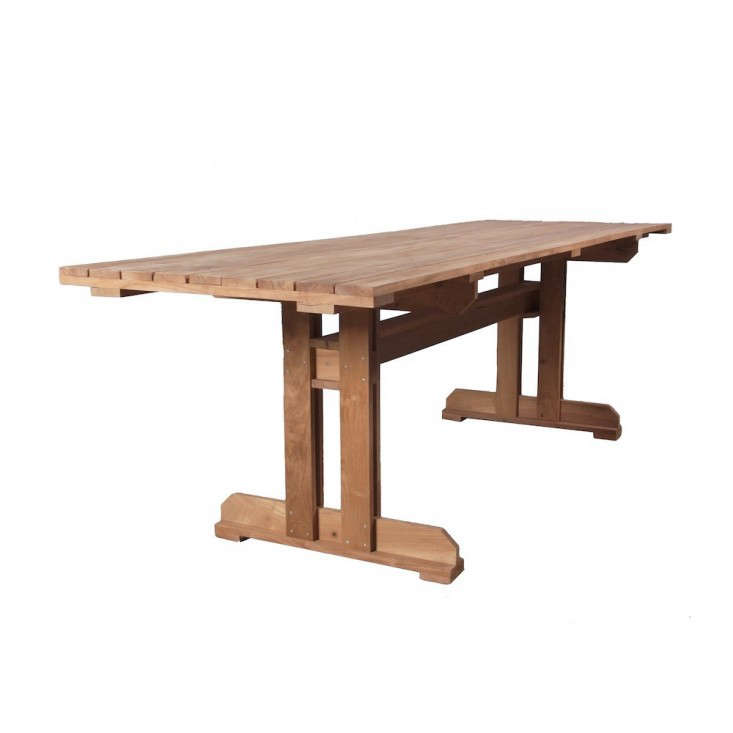
The Djuro Dining Table – 79 in. is what happens when Scandinavian minimalism decides to host a dinner party. Designed by Matilda Lindblom for Skargaarden, this long rectangular teak table combines a clean slatted surface, sturdy construction, and enough room for family meals, summer cookouts, and those supposedly “casual” gatherings that somehow involve twelve serving dishes.
Although commonly listed as a 79-inch table, its exact published width varies slightly by retailer, from approximately 78.5 to 79 inches. The remaining measurements are about 33.5 to 34 inches deep and 29 inches high. It is made entirely from teak and is intended for both indoor and outdoor use. Depending on chair width and how much elbow room guests expect, it can accommodate approximately six to eight people comfortably, with some product specifications suggesting space for as many as ten in a tighter arrangement.
Djuro Dining Table Specifications at a Glance
| Product | Djuro Dining Table, large rectangular version |
|---|---|
| Brand | Skargaarden |
| Designer | Matilda Lindblom |
| Approximate dimensions | 78.5–79 inches wide, 33.5–34 inches deep, 29 inches high |
| Material | Solid teak |
| Product weight | Approximately 97 pounds |
| Recommended seating | Six to eight people comfortably |
| Placement | Indoor or outdoor dining areas |
| Assembly | Typically listed as not required |
| Country of manufacture | Indonesia |
The large version is also identified by manufacturer number DJDT200-T. Product listings describe adjustable feet, plantation-grown teak, and a weight of about 97 pounds. That weight helps the table feel planted and substantial, although it also means rearranging the patio should not become an impulsive solo activity.
Scandinavian Design Without the Cold Personality
The Djuro table follows familiar Scandinavian design principles: restrained lines, honest materials, visual balance, and very little decorative fuss. However, it does not look clinical. The warmth of natural teak softens the rectangular geometry, while the slatted tabletop creates subtle rhythm and texture.
Skargaarden describes Djurö as a teak lounge and dining collection. Designer Matilda Lindblom is known for pieces that appear simple at first glance but reveal more thoughtful construction and detailing upon closer inspection. The table captures that approach particularly well. Nothing screams for attention, yet the proportions, leg placement, joinery, and repeating slats prevent it from becoming just another wooden rectangle.
A Slatted Top That Is Both Attractive and Practical
The narrow gaps between the tabletop slats make the surface visually lighter than a single solid slab. Outdoors, the gaps also allow rainwater to drain rather than forming shallow puddles around a forgotten glass or centerpiece.
There is one small tradeoff: crumbs can find those gaps with the accuracy of professional stunt performers. A soft brush or handheld vacuum is useful after meals, especially when bread, pastries, or enthusiastic toddlers are involved.
Minimalism That Works With Different Styles
Because the design avoids ornate carving and oversized decorative details, the table can work with several aesthetics. It feels natural on a modern deck, a coastal porch, a landscaped courtyard, or inside a bright contemporary dining room.
It can be paired with matching Djuro dining chairs for a coordinated arrangement, but it does not require them. Woven chairs make the setting feel relaxed, black metal seating creates stronger contrast, and upholstered indoor chairs can turn the table into a softer, more formal centerpiece.
Is a 79-Inch Dining Table the Right Size?
A table nearly 6 feet 7 inches long offers meaningful entertaining space without reaching banquet-table territory. The 34-inch depth is comparatively streamlined, helping it fit narrow patios and dining rooms more easily than many rectangular tables that measure 38 to 42 inches deep.
Seating Six People
With three chairs along each long side, six adults should have generous room. This arrangement leaves the short ends open, makes serving easier, and highlights the table’s elongated proportions.
Seating Eight People
Adding one chair at each end creates a practical eight-person setup. This is likely the best arrangement for holidays, weekend lunches, or dinner parties. Horne specifically describes the table as comfortably seating six to eight people. Lumens indicates that the larger Djuro format can hold more, although that would require narrower chairs and less personal space.
Planning Clearance Around the Table
The table itself is only part of the footprint. Chairs must slide back, guests need room to walk, and somebody will inevitably arrive carrying a large bowl while looking everywhere except where they are going.
A useful planning target is at least 36 inches between the table and nearby walls, railings, cabinets, or other furniture. Better Homes & Gardens also recommends generous circulation paths and suggests that an outdoor dining area for up to eight people may require approximately a 12-by-12-foot zone, depending on the furniture arrangement.
Before ordering, mark a 79-by-34-inch rectangle on the floor with painter’s tape. Then place chairs around it and pull them out as though people were seated. This low-tech test can prevent a high-priced game of patio Tetris.
Why Teak Is a Strong Outdoor Furniture Material
Teak has long been valued for outdoor applications because its heartwood contains natural oils and offers excellent resistance to decay. The Wood Database rates teak heartwood as very durable and notes its resistance to termites. These characteristics help explain why teak remains a premium material for patio tables, garden benches, and marine applications.
The Djuro table is described as being made from plantation-grown teak sourced in Indonesia. Its dense construction and substantial weight contribute to a stable dining surface that is less likely to feel flimsy when loaded with plates, cookware, drinks, and one centerpiece that looked much smaller in the store.
What Happens When Teak Weathers?
New teak generally has a golden or honey-brown appearance. When left unfinished outdoors, exposure to sunlight and weather gradually changes the surface to a silver-gray patina. This color change is normal and does not automatically mean the wood is deteriorating.
Skargaarden guidance presented by retailers states that the furniture may be oiled annually to retain more of its original appearance. Without oiling, it will slowly develop the weathered gray finish many homeowners intentionally prefer. Architectural Digest and This Old House similarly describe teak’s transition from warm brown to gray as a normal and potentially attractive part of outdoor aging.
How to Care for the Djuro Dining Table
The maintenance routine depends on whether you prefer golden teak or a naturally weathered finish. Neither choice is universally correct. The important thing is to choose a direction rather than attacking the table with a random collection of oils, stains, pressure washers, and internet enthusiasm.
Routine Cleaning
Remove leaves and loose dirt with a soft brush. For general cleaning, use warm water, a small amount of mild dish soap, and a soft sponge or nonabrasive brush. Work along the grain and between the slats, then rinse gently and allow the table to dry completely.
Both This Old House and The Spruce recommend mild soap solutions for many outdoor furniture surfaces, including teak, while warning against unnecessarily harsh chemicals. Abrasive tools can roughen the grain, and aggressive pressure washing can damage the wood’s surface.
Keeping the Golden-Brown Color
Owners who prefer fresh-looking golden teak should follow Skargaarden’s current care directions for approved oil or protective products. Clean the table first, let it dry thoroughly, and apply treatment evenly. Repeating the process on a predictable schedule usually produces better results than waiting until the surface becomes dramatically uneven.
Teak oil changes appearance more than structural durability. Applying too much can leave a sticky surface that attracts dust, so more product does not necessarily equal more love.
Allowing a Silver-Gray Patina
For a lower-maintenance approach, clean the table periodically and let it weather naturally. The gray tone pairs especially well with concrete, stone, black metal, muted textiles, and coastal landscaping.
Weathering may not happen evenly at first. Sections under a roof or centerpiece may remain darker than exposed areas. Moving accessories occasionally and cleaning the entire top uniformly can help the color develop more consistently.
Seasonal Protection
Teak is durable, but a breathable furniture cover can reduce staining from pollen, leaves, birds, and prolonged moisture. Avoid trapping a wet table under an airtight cover. Good airflow matters because a cover should protect the furniture, not turn it into a teak-flavored greenhouse.
Styling the Djuro Dining Table
For a Modern Patio
Pair the warm wood with charcoal or matte-black dining chairs. Add neutral seat cushions, simple stoneware, and a large planter with architectural greenery. The contrast emphasizes the table’s clean outline without competing with it.
For a Coastal Outdoor Space
Use woven rope or pale wicker chairs, off-white cushions, blue-gray linens, and clear glassware. Let the teak weather naturally if you want a softer coastal effect. Just resist adding anchors, ship wheels, and seventeen signs that say “Beach.” The table already understands the assignment.
For an Indoor Dining Room
The Djuro table is refined enough for indoor use. A large pendant light centered above the table can create a clear focal point, while a textured rug helps distinguish the dining area in an open floor plan. Because the tabletop is relatively narrow, choose slim centerpieces that leave space for serving bowls and shared plates.
For Mixed Seating
Place individual chairs along the long sides and a bench on one side for a casual family arrangement. A bench can tuck underneath when not in use, although its length and height should be checked carefully against the table legs and under-table clearance.
Potential Drawbacks to Consider
The Djuro Dining Table is attractive, but it is not the correct purchase for every household.
- It requires substantial space: The table may be narrow for its length, but chairs and walking clearance create a much larger total footprint.
- It is heavy: At roughly 97 pounds, moving it may require two adults.
- The slats need extra cleaning: Crumbs and debris can settle between them.
- Natural teak changes color: Buyers expecting permanent golden-brown wood must accept regular maintenance.
- Premium furniture requires careful delivery planning: Doorways, staircases, elevators, gates, and deck access should be measured before arrival.
- Return restrictions may apply: Some sellers classify the table as a special-order or made-to-order item, so policies should be reviewed before purchasing.
Who Should Buy the Djuro Dining Table?
This table makes the most sense for someone who values long-lasting materials, Scandinavian furniture, and a design that can transition between indoor and outdoor environments. It is especially appealing for households that regularly seat six people and occasionally need room for eight.
It may also suit buyers who prefer furniture that ages visibly. Teak develops character rather than remaining visually frozen on delivery day. For some owners, the gradual patina is part of the appeal; for others, it is a maintenance project with four legs.
People furnishing very small balconies, frequently rearranged multipurpose spaces, or formal dining rooms that require an extension mechanism may find another design more practical.
Practical Experience: What Living With a 79-Inch Teak Table Feels Like
The following experience-based discussion synthesizes realistic setup, dining, cleaning, and entertaining situations rather than claiming a personal long-term product test.
The First Impression Is Larger Than the Product Photo
A 79-inch table often looks sleek and manageable in professionally photographed surroundings. Once placed on an average residential patio, however, its presence becomes much more obvious. The length gives it an architectural quality: it visually organizes the space and immediately declares where meals and conversations are supposed to happen.
This is generally positive, but placement matters. When positioned parallel to a long wall, railing, or pool edge, the table looks balanced and intentional. Turning it across a narrow deck can make the same space feel crowded. Testing the footprint with tape before delivery is therefore one of the most useful preparation steps.
Six Guests Feel Comfortable; Eight Feel Social
With six chairs, the table feels spacious. Guests have room for dinner plates, glasses, napkins, and phones they insist they are not checking. Serving platters can run down the center without creating a complicated passing system.
With eight chairs, the atmosphere becomes livelier. End seats bring everyone closer and improve group conversation, but wide armchairs can create interference near the corners. Slimmer side chairs are generally easier to arrange, particularly when all eight seats are occupied.
A tenth guest might be accommodated using narrow seating or a bench, but this changes the experience from relaxed dining to cheerful efficiency. For routine use, six to eight remains the more realistic range.
The Narrower Depth Is Surprisingly Useful
The approximately 34-inch depth is one of the table’s most practical qualities. People seated across from each other remain close enough to converse naturally, and dishes in the center are usually reachable. On a narrow porch, the reduced depth can preserve valuable circulation space compared with a broader farmhouse-style table.
The tradeoff appears during elaborate meals. Two complete place settings, large serving bowls, candles, and floral arrangements can crowd the surface. A nearby cart or console becomes useful for drinks, extra plates, and anything that does not need to participate in the main event.
The Table Changes as It Weathers
Outdoors, the appearance will evolve. During the first months, areas exposed to direct sun may lighten faster than sections under placemats, covers, or roof overhangs. This can look uneven temporarily. Owners who prefer natural patina usually enjoy the process more once they stop expecting every board to change color on the same schedule.
The slatted top handles brief rain well because water can drain through the gaps, but it still benefits from being wiped before meals. After storms, leaves and small debris may collect between slats. A soft brush takes care of most of it quickly, turning maintenance into a five-minute task rather than a weekend renovation.
Daily Use Makes the Minimalism More Convincing
The visual simplicity is not only decorative. There are no elaborate aprons, ornamental edges, or bulky mechanisms competing for knee space. Adjustable feet can help stabilize the table on surfaces that are almost level but not quitea description that applies to approximately every patio ever built.
The table also photographs well in everyday settings. A few plates and glasses look intentional against the teak instead of lost on an oversized surface. When it is not being used for meals, it can support a laptop, books, craft projects, or a heroic quantity of folded laundry without looking like temporary office furniture.
Its Best Quality Is Long-Term Versatility
The strongest practical argument for the Djuro is not a single decorative feature. It is the ability to adapt. Fresh golden teak can suit a polished modern home. Weathered gray teak can belong naturally in a relaxed garden. Coordinated chairs make it formal; mixed seating makes it casual. Indoors, it functions as a restrained Scandinavian dining table. Outdoors, it becomes the center of a living space built around meals and conversation.
That versatility helps justify choosing a premium teak table over a trend-driven alternative. The Djuro does not need a dramatic redesign every season. Change the chairs, linens, lighting, or surrounding plants, and the table can take on a different personality while remaining recognizably itself.
Final Verdict
The Djuro Dining Table – 79 in. offers a thoughtful balance of minimalist design, durable teak construction, and useful entertaining capacity. Its long, relatively narrow dimensions make it particularly suitable for rectangular patios, decks, porches, and contemporary dining rooms.
Its main strengths are the timeless Scandinavian shape, indoor-outdoor versatility, naturally durable material, and comfortable seating for six to eight people. The main considerations are its substantial weight, premium positioning, slatted-top cleaning, and the maintenance required if you want teak to retain its original golden color.
For buyers who appreciate furniture that becomes more attractive and personal as it ages, the Djuro is more than a place to put dinner. It is a calm, well-proportioned anchor for gatheringsand a handsome reminder that simple furniture is often the hardest furniture to design well.
Note: Dimensions, finishes, inventory, delivery conditions, warranty terms, and return policies may vary by seller. Confirm current specifications with the manufacturer or authorized retailer before ordering.













