
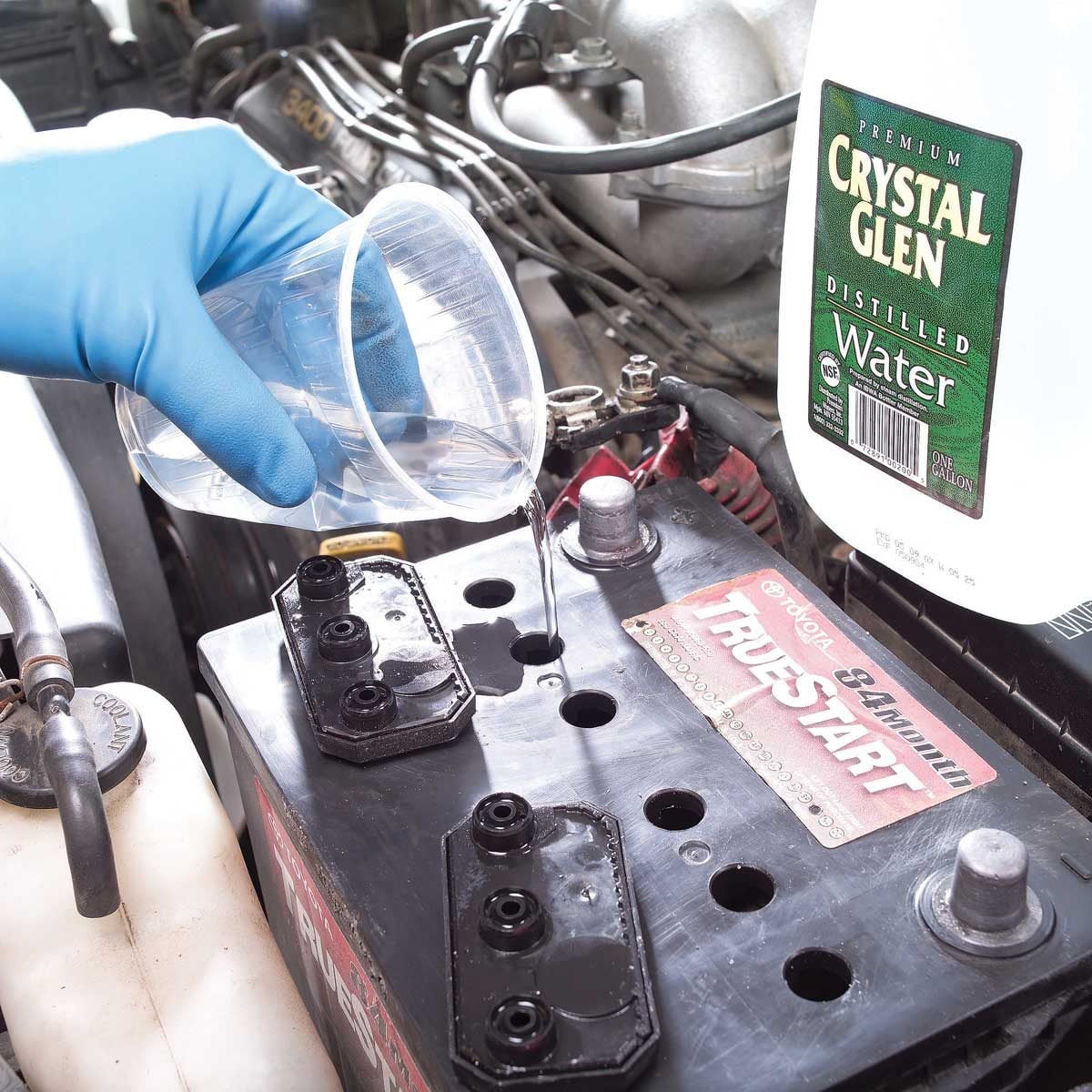
Pop the hood, spot the battery, and you may wonder whether it needs a refreshing drink. The answer depends entirely on the battery type. Some serviceable flooded lead-acid batteries need occasional distilled water. Most modern sealed, AGM, and gel batteries do notand trying to pry one open can turn routine maintenance into a chemistry experiment nobody requested.
The safest rule is simple: identify the battery before touching any caps. If the label says “maintenance-free,” “sealed,” “AGM,” “VRLA,” or “gel,” leave it closed. If it is a serviceable flooded battery with removable vent caps and the manufacturer permits watering, check the electrolyte and add only distilled water when the level is low.
The Quick Answer: Does Your Car Battery Need Fluid?
You may need to top off battery fluid only if your vehicle has a serviceable flooded lead-acid battery. These batteries contain free-flowing electrolyte and can lose water during charging, especially in hot conditions or as the battery ages. AGM and gel batteries hold electrolyte differently and are designed to remain sealed.
| Battery type | Add water? | Correct action |
|---|---|---|
| Serviceable flooded lead-acid | Usually yes | Follow the label and use distilled water only. |
| Maintenance-free flooded | Usually no | Do not force open hidden covers. |
| AGM or gel | No | Keep sealed; test or replace if weak. |
| Lithium starter battery | No | Never add fluid. |
What Is Battery Fluid?
In a conventional flooded battery, the liquid is called electrolyte. It is a mixture of sulfuric acid and water that supports chemical reactions between lead-based plates. Those reactions store energy and release it when you start the engine or power accessories.
During charging, some water can break down into hydrogen and oxygen gas and escape through the vents. Heat speeds the process. Sulfuric acid does not normally disappear at the same rate, so routine topping off means adding waternot more acid. You replace the ingredient that left instead of improvising a new recipe.
How to Identify Your Battery Type
Look for serviceable vent caps
A serviceable flooded battery usually has obvious removable caps, often one per cell or two cap strips. The case may show upper and lower electrolyte marks. If the caps are intended to be removed and the label includes watering directions, the battery is likely serviceable.
Read the label carefully
Words such as AGM, absorbed glass mat, VRLA, valve-regulated, sealed, non-spillable, gel, or maintenance-free mean you should not add water. Some sealed batteries have covers that look removable. A seam is not an invitation.
Check the manual or exact model number
If the label is faded, look up the battery model in the manufacturer’s documentation or ask a technician. Modern start-stop vehicles may require AGM or enhanced flooded batteries with specific charging behavior. Using the wrong battery type can reduce service life.
Signs the Electrolyte Level May Be Low
On a serviceable battery, the clearest sign is electrolyte below the marked minimum level or below the top of the internal plates. The plates should not remain exposed to air.
Slow cranking, charging trouble, heavy corrosion, or unusual heat may accompany a battery problem, but these symptoms are not proof that water is the answer. They can also point to an old battery, loose connections, an electrical drain, or a faulty alternator. Adding water is not a cure for every “rrr-rrr-click” at 7:00 a.m.
How Often Should You Check Battery Fluid?
Follow the battery maker’s schedule. For a serviceable flooded battery, checking during routine maintenance or oil changes is reasonable. Hot climates, older batteries, and heavily cycled vehicles may justify more frequent checks. Some battery guidance recommends inspections roughly every 45 to 60 days for serviceable applications.
If the battery needs water every few weeks, treat that as a warning. Rapid loss can indicate overcharging, severe heat, a defective regulator, internal damage, or a leak. Test the battery and charging system instead of turning refilling into a hobby.
How to Top Off Battery Fluid Safely
1. Park safely and let the battery cool
Work outdoors or in a well-ventilated area. Park on level ground, turn off the engine and accessories, and remove the key. Keep cigarettes, flames, and sparks away because charging lead-acid batteries can release flammable hydrogen gas.
2. Protect your eyes and skin
Wear splash-resistant safety glasses and acid-resistant gloves. Remove metal jewelry that could bridge the terminals. Battery electrolyte can cause chemical burns, and an accidental short circuit can produce intense heat. OSHA guidance for battery work emphasizes ventilation, acid-splash precautions, and protection from ignition sources.
3. Inspect before opening
Do not service a battery that is cracked, bulging, leaking, frozen, or extremely hot. Never open a sealed battery. Visible leakage, serious case damage, or excessive heat is a reason to stop and seek professional help.
4. Clean the top
Wipe away dirt before removing approved vent caps so debris cannot enter the cells. Keep baking soda and other cleaning solutions out of the openings. Baking soda can help neutralize acid on the exterior, but it does not belong inside the battery.
5. Check the plates and fill level
Use a flashlight rather than a flameyes, that warning needs to exist. The liquid should cover the plates and reach the manufacturer’s specified level, often near the bottom of the fill well or between minimum and maximum marks.
6. Water at the correct time
For normal maintenance, manufacturers commonly recommend charging a flooded battery first and adjusting the water afterward because electrolyte expands as charge increases. If the plates are exposed, add only enough distilled water to cover them before charging. Once fully charged and cool, finish filling to the specified level.
7. Add distilled water slowly
Use a clean plastic funnel, squeeze bottle, or battery-watering tool. Add small amounts and never fill to the brim. Overfilling can push acidic electrolyte through the vents during charging, leading to corrosion, damaged paint, and a cleanup that ruins everyone’s afternoon.
8. Reinstall the caps
Secure the caps, wipe the exterior, and remove all tools from the engine bay. If electrolyte reaches the skin or eyes, flush immediately with plenty of clean water and follow the product’s emergency instructions. Leave significant spills or damaged batteries to trained professionals.
What Water Should You Use?
Use distilled water. Deionized water may also be acceptable when the manufacturer specifically approves it. Tap, spring, and drinking water can contain minerals or dissolved solids that contaminate cells and harm internal components over time. Interstate Batteries, NAPA, AutoZone, Trojan Battery, Crown Battery, and U.S. Battery all direct users toward distilled water for serviceable flooded batteries.
Do not add sulfuric acid during routine maintenance. Skip Epsom salt, aspirin, sports drinks, “battery rejuvenator,” or other garage folklore. A battery is not impressed by creativity. If electrolyte escaped through a cracked case or spill, the battery needs professional inspection and probably replacement.
What Happens If You Overfill?
Electrolyte expands during charging. If a cell is too full, liquid can vent onto terminals, hold-down hardware, wiring, body panels, and paint. Because the overflow contains acid, corrosion can develop quickly.
Do not insert random household tools to remove liquid. Follow the manufacturer’s instructions or let a shop correct the level. If fluid has spilled, avoid direct contact and ignition sources and arrange safe cleanup.
Why Does My Battery Keep Losing Water?
- High heat: Under-hood temperatures accelerate water loss and battery aging.
- Overcharging: A faulty alternator or voltage regulator can cause excessive gassing.
- Heavy cycling: Repeated deep discharge and recharge cycles increase water consumption.
- Old age: Internal deterioration can make a battery charge inefficiently and run hot.
- Damage: Loose caps, cracks, or leaks allow abnormal fluid loss.
If water disappears rapidly, the battery becomes hot, or corrosion returns soon after cleaning, request a battery load test and charging-system test. Persistent overcharging can shorten battery life, and repeatedly adding water without fixing the cause is like mopping while the faucet remains open.
When Topping Off Is Not Enough
Distilled water can protect a serviceable flooded battery when the level is low, but it cannot reverse a shorted cell, damaged plates, severe sulfation, chronic overcharging, or ordinary end-of-life wear. Replace or professionally evaluate a battery that is swollen, cracked, leaking, repeatedly dead, or unable to pass a capacity test.
Many automotive batteries last about three to five years, although heat, driving habits, charging condition, and design can shorten or extend that range. Testing before extreme weather or a long trip is wise when the battery is several years old.
Frequently Asked Questions
Can I use tap water in an emergency?
Distilled water is the correct choice. If the plates are exposed and distilled water is unavailable, it is safer to stop charging or using the battery until proper water or professional service is available than to introduce unknown minerals.
Should I add battery acid?
No. Routine water loss does not call for more acid. Extra acid can make the electrolyte too concentrated and damage the battery. Acid is reserved for specific initial-fill or manufacturer-directed professional procedures.
Can I top off an AGM battery?
No. AGM batteries are sealed and hold electrolyte in fiberglass mats. Opening one can damage its pressure-regulated design and void the warranty. Test a weak AGM battery and replace it when necessary.
Do electric vehicles have battery fluid to check?
The high-voltage traction pack is not a user-serviceable flooded battery. Many EVs also have a separate 12-volt battery, often AGM or sealed. Follow the vehicle manual and never open a high-voltage pack.
Bottom Line
Top off battery fluid only when you have a manufacturer-approved, serviceable flooded lead-acid battery and the electrolyte is low. Use distilled water, fill to the specified level, avoid overfilling, and protect your eyes and skin. Never open AGM, gel, sealed, or maintenance-free batteries.
Also ask why the level dropped. A small correction during periodic maintenance can be normal. Repeated water loss, overheating, leakage, swelling, or weak starting points to a battery or charging-system problem that deserves testingnot another splash from the jug.
Experience-Based Lessons From Real-World Battery Maintenance
The following composite examples reflect common garage and service situations. They are practical illustrations, not claims of personal hands-on experience.
Lesson 1: Identification Prevents the Biggest Mistake
A driver sees a strip on top of a three-year-old battery and assumes the cells need water. The label, however, says “AGM” and “non-spillable.” Nothing is opened. A shop test finds that repeated short trips have left the battery undercharged, and a proper recharge restores normal starting.
The lesson is simple: battery type matters more than appearance. Ten seconds spent reading the label can prevent permanent damage. It may also save the owner from learning, at impressive speed, how much a replacement AGM battery costs.
Lesson 2: More Water Is Not Better Maintenance
Another owner has a genuinely serviceable flooded battery but fills every cell almost to the cap. After a long drive, expanded electrolyte vents onto the tray. White corrosion develops around the hold-down bracket, and nearby paint begins to discolor.
Correct watering would have stopped at the marked level or near the bottom of the fill well. The experience demonstrates that “top off” does not mean “fill every available cubic inch.” Good intentions are useful; an oversized funnel is not.
Lesson 3: Repeated Water Loss Is Diagnostic Information
A work truck in a hot climate needs distilled water twice within a short period. Instead of continuing to refill it, the owner requests a charging-system test. Alternator voltage is too high because of a regulator fault, causing excessive gassing and heat.
Repairing the charging problem prevents further water loss and protects the replacement battery. When the same symptom returns quickly, the pattern matters more than the top-off. Keeping a simple maintenance record can make that pattern much easier to recognize.
Lesson 4: Exposed Plates Require Restraint
A rarely driven classic car is discharged, and inspection shows the plate tops barely exposed. Only enough distilled water is added to cover them before charging. The battery is charged in a ventilated area, allowed to cool, and then adjusted to the final level.
Filling it completely before charging could have caused overflow as the electrolyte expanded. The sequence may sound fussy until acidic fluid reaches a freshly painted battery tray or restored engine bay.
Lesson 5: Water Cannot Revive Worn-Out Plates
A battery receives the correct amount of distilled water but still cranks slowly. Terminal cleaning helps briefly, yet a load test shows poor capacity. The battery is simply exhausted.
Topping off maintains the correct environment inside a serviceable battery. It does not rebuild damaged plate material, repair a failed cell, or reverse every form of aging. Sometimes the correct maintenance tool is distilled water. Sometimes it is a replacement receipt.
The best routine is modest: identify the battery, inspect it safely, record unusual water use, keep connections clean, test the charging system when symptoms repeat, and replace a damaged or worn battery. Battery maintenance works best when it is boring. Boring means no sparks, no acid spray, no roadside clicking, and no emergency search for “why is my battery shaped like a football?”
When replacement is necessary, return the old lead-acid battery to a retailer or an approved collection program rather than placing it in household trash or curbside recycling.
Note: This guide covers routine care of 12-volt automotive lead-acid batteries. Always follow the instructions printed on the battery and in the vehicle owner’s manual. High-voltage hybrid and electric-vehicle packs must be serviced only by trained professionals.













