
Hotel checkout sounds simple: wake up, pack your socks, pretend you did not use three tiny bottles of shampoo, and leave. But then the questions start tap-dancing in your head. Do you need to check out of a hotel in person? Can you just leave the key card on the desk and disappear like a travel ninja? What happens if you forgot to stop by the front desk? And why does the minibar still look suspicious even when you never touched it?
The good news: checking out of a hotel is usually easy. The even better news: you often have more than one option. Depending on the property, you may check out at the front desk, use a hotel app, call from your room, drop your key in a checkout box, review your bill by email, or simply leave after confirming your stay is settled. The smartest move, however, is not just leavingit is leaving cleanly, politely, and without mystery charges chasing you home like a tiny financial ghost.
This guide explains exactly how hotel checkout works, when you should check out in person, how late checkout requests work, what to do with key cards, how to review your final bill, and how to avoid awkward surprises. Whether you are a first-time traveler, a business guest, a family on vacation, or someone who packs five minutes before checkout because optimism is a lifestyle, here is what to do.
What Does “Checking Out of a Hotel” Actually Mean?
Checking out is the official end of your hotel stay. It tells the property that you have left the room, allows the hotel to close your account, helps housekeeping begin preparing the room for the next guest, and gives you a chance to review your final charges. In plain English, checkout is the hotel version of saying, “Thanks, I’m done borrowing this bed.”
Traditionally, guests checked out by visiting the front desk. A staff member would confirm the room number, review the folio, settle any remaining balance, collect keys, and provide a receipt. That still works, and for many travelers it remains the most reassuring method. But hotels now commonly offer digital checkout, express checkout, mobile app checkout, email receipts, and key drop boxes.
The exact process depends on the hotel brand, property size, technology, staffing, local rules, and whether you booked directly or through a third-party travel site. A luxury resort may prefer a more formal checkout because there may be resort fees, parking, spa charges, or dining credits to review. A roadside hotel may let you drop your key and go. A large chain hotel may send a notification through its app before breakfast even has time to become interesting.
Do You Really Need to Check Out of a Hotel?
In most cases, yes, you should check out of a hotel in some form. That does not always mean standing in line at the front desk while someone ahead of you debates a $4 bottled water charge with the intensity of a courtroom drama. It simply means notifying the hotel that you are leaving and making sure your bill is correct.
Many hotels can process your departure even if you walk out without saying anything. They usually have your card on file, your reservation has an end date, and housekeeping will eventually see that the room is empty. Still, skipping checkout entirely is not the best habit. It can delay housekeeping, create confusion about whether the room is vacant, and make billing errors harder to catch quickly.
The best answer is this: you do not always need to check out in person, but you should complete checkout using one of the methods the hotel offers. Front desk, phone, app, TV, email, key drop, or express checkoutchoose the easiest option, but do not leave the hotel guessing.
The Main Ways to Check Out of a Hotel
1. Check Out at the Front Desk
This is the classic method and still the best choice if your bill may be complicated. Go to the lobby, tell the front desk your room number, confirm your name, ask to review the final charges, return your key cards if required, and request a printed or emailed receipt.
Front desk checkout is especially useful if you used room service, parking, spa services, minibar items, laundry, restaurant charges, or a hotel credit. It is also smart if your company needs a clean invoice, if you split the stay with another guest, or if you noticed a charge that looks suspiciously like something from a parallel universe.
2. Use Mobile Checkout
Many major hotel chains offer mobile checkout through their apps. This option typically lets you review your folio, confirm departure, request an emailed receipt, and leave without stopping at the desk. It is convenient for early flights, business travel, and anyone who wants to avoid lobby lines.
Mobile checkout works best when your stay is simple: prepaid room, no dispute, no unusual charges, and no need for a paper receipt. Before tapping the final button, look at the itemized bill. If everything looks correct, you can check out digitally and head for the airport, highway, train station, or nearest breakfast burrito.
3. Call the Front Desk from Your Room
If you are in a hurry but want to be polite, call the front desk before leaving. Say something like, “Hi, this is room 512. I’m checking out now. Could you please email my receipt?” That ten-second call helps the hotel update the room status and lets housekeeping know the room is ready.
This is also a good option if you are leaving before the front desk looks busy, traveling with kids, carrying luggage that seems to reproduce overnight, or trying to avoid a long checkout line.
4. Use Express Checkout or a Key Drop Box
Some hotels provide express checkout envelopes, lobby drop boxes, or instructions to leave key cards in the room. In this setup, your card on file is charged for the final balance, and the receipt is usually emailed later.
Express checkout is convenient, but it works best when you have already reviewed your bill. If you see a folio under the door, on the TV, in your email, or in the app, check it before leaving. A wrong parking charge is much easier to fix while you are still standing near the coffee station than when you are two states away and emotionally committed to not calling anyone.
5. Simply LeaveBut Only When It Makes Sense
At some hotels, especially those with contactless checkout, leaving without stopping at the front desk may be acceptable. Still, this should be your backup option, not your default travel personality. If your room is prepaid, you have no extra charges, the hotel has your email, and the property uses automatic checkout, simply leaving may not cause any problem.
However, if you owe money, used services, need a receipt, requested late checkout, paid a deposit, or are unsure about the bill, do not vanish. Hotels are friendly, but they are not mind readers wearing name tags.
What Time Is Hotel Checkout?
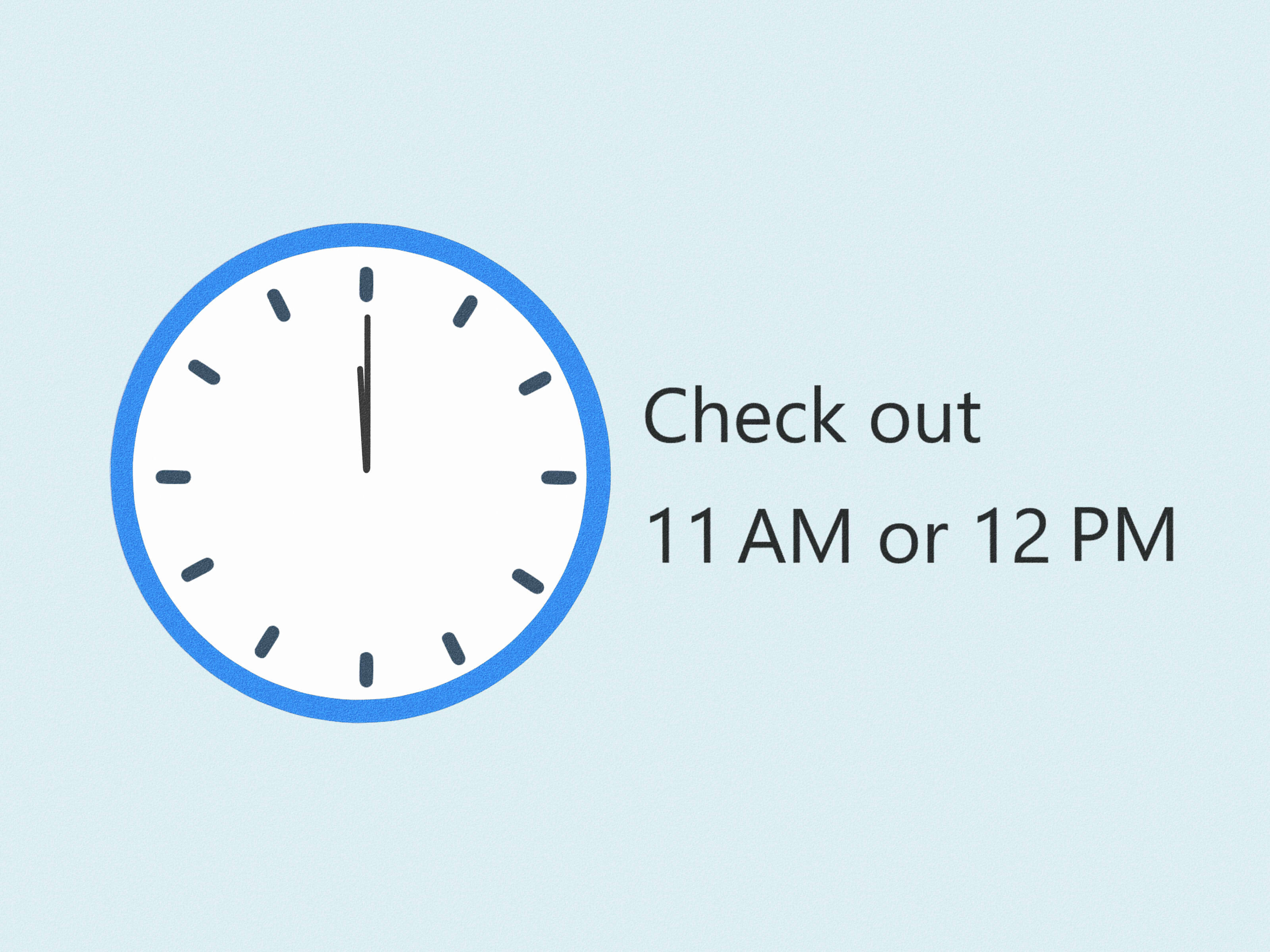
Standard hotel checkout time in the United States is commonly between 10:00 a.m. and 12:00 p.m., with 11:00 a.m. being very common. The exact time varies by property, brand, location, and room type. Always check your reservation confirmation, hotel app, welcome email, room information card, or front desk signage.
Checkout time exists for a practical reason: housekeeping needs time to clean, inspect, restock, and prepare the room before the next guest arrives. If check-in begins around 3:00 p.m. or 4:00 p.m., the staff needs those middle hours to turn the room from “lived-in vacation nest” back into “fresh hotel room that smells faintly like citrus and confidence.”
Can You Ask for Late Checkout?
Yes, you can ask for late checkout. Many hotels allow it when availability and housekeeping schedules permit. Late checkout may be free, included as a loyalty benefit, available for a fee, or unavailable during busy periods. The answer depends on the hotel, the day, the occupancy level, your membership status, and how many rooms must be cleaned before new arrivals.
The best time to ask is not five minutes before checkout while your suitcase is still empty and your hair is still wet. Ask the night before or early on the morning of departure. Be polite, specific, and flexible. For example: “Would it be possible to check out at 1:00 p.m. today?” works better than “I need the room until whenever my soul feels ready.”
If the hotel says no, ask whether they can store your luggage after checkout. Many hotels will hold bags for a few hours, which is perfect if your flight leaves later, your meeting starts after lunch, or you want one more walk around town without dragging a suitcase that sounds like thunder on every sidewalk crack.
What Happens If You Check Out Late Without Permission?
Checking out late without approval can lead to extra charges. Some hotels charge by the hour after the official checkout time. Others may charge a half-day rate or even a full extra night if you stay too long. Policies vary widely, so never assume you can keep the room just because the bed is comfortable and your motivation is missing.
Late checkout also affects housekeeping and incoming guests. If the hotel is sold out, your room may be assigned to someone arriving that afternoon. Staying past checkout without approval can create a domino effect: housekeeping waits, the front desk scrambles, the next guest waits, and suddenly everyone is glaring at a room key card like it caused the problem.
Should You Return Hotel Key Cards?
Most hotels prefer that you return key cards, drop them in a checkout box, or leave them in the room if instructed. Modern key cards are usually deactivated after checkout, so accidentally taking one home is rarely a crisis. Still, returning it is courteous and helps the property reduce waste.
If you lose a key card, tell the front desk. Many hotels will not charge for a standard plastic key card, but some boutique properties, resorts, or hotels using physical keys may have replacement fees. If the hotel uses digital keys through an app, make sure checkout is completed so access can be closed properly.
Why You Should Always Review Your Hotel Folio
Your folio is the itemized record of charges from your stay. It may include the room rate, taxes, parking, resort or destination fees, food and beverage charges, minibar items, room service, laundry, pet fees, early check-in, late checkout, and other services.
Reviewing the folio before leaving is one of the smartest checkout habits you can build. Mistakes happen. A breakfast may be charged to the wrong room. A parking fee may appear even if you arrived by rideshare. A minibar sensor may believe you had a midnight relationship with a can of sparkling water. A hotel credit may not apply automatically.
If something looks wrong, ask calmly. Front desk staff can often correct simple issues quickly. Keep your tone friendly and your facts clear: “I noticed a parking charge, but I did not have a car during this stay. Could you please check that?” This approach works much better than entering the lobby like a detective in a hotel-fee crime drama.
What About Incidental Holds and Deposits?
Many hotels place an incidental hold on your credit or debit card at check-in. This is a temporary authorization used to cover possible extra charges such as parking, dining, minibar purchases, damages, or other services. At checkout, the hotel finalizes actual charges and releases unused funds according to its process and your card issuer’s timeline.
Credit cards are usually easier for hotel holds because the money is not immediately pulled from your bank account in the same way a debit card hold may affect available funds. If you use a debit card, ask about the hold amount and release timing before check-in. Nobody wants to discover that their vacation budget is temporarily frozen because the hotel is protecting itself from imaginary room-service nachos.
When You Should Definitely Check Out in Person
Digital checkout is great, but some situations deserve a face-to-face stop at the front desk. Check out in person if you need a corrected receipt, paid with multiple cards, used a company account, booked through a third party and need clarification, disputed a charge, paid a cash deposit, requested tax-exempt billing, used dining credits, had a pet in the room, or need proof of checkout immediately.
You should also check out in person if there was a problem during your stay. Maybe the air conditioner sounded like a lawn mower with ambition, or the room type was wrong, or a service charge does not match what you expected. The checkout desk is often the last convenient moment to resolve the issue before it becomes a chain of emails.
Hotel Checkout Etiquette: Small Things That Help
Good hotel checkout etiquette is mostly common sense with a luggage handle. Leave the room reasonably tidy. You do not need to remake the bed like a housekeeping professional, but putting trash in the bin, gathering used towels in one area, and checking drawers for forgotten items is helpful.
Do not take towels, robes, pillows, hair dryers, remotes, lamps, or anything that is clearly hotel property. Complimentary toiletries, coffee packets, notepads, and disposable slippers are usually fine, but if something looks expensive, reusable, or bolted down, assume it belongs to the hotel. Your suitcase does not need a hotel lamp. It has enough emotional baggage already.
Tip housekeeping if you can, especially after a longer stay, a family trip, or a room that required extra effort. A small note with the tip makes it clear the money is intended for the housekeeper. Then do one final sweep: bathroom hooks, safe, closet, outlets, under the bed, mini fridge, and charging cables. Chargers are the hotel-room socks of the technology worldthey disappear with suspicious confidence.
What to Do If You Forgot to Check Out
If you forgot to check out, do not panic. Call the hotel as soon as you remember. Say that you have left the property, confirm your room number, ask them to complete checkout, and request an emailed receipt. If you left keys in the room, mention that too.
Then review the receipt when it arrives. If the bill is correct, you are done. If you see an error, contact the hotel promptly. The sooner you ask, the easier it is for staff to verify details. Waiting three weeks to dispute a minibar charge is possible, but it is not ideal unless your hobby is forwarding receipts with increasing levels of punctuation.
How to Check Out Fast: A Simple Step-by-Step Checklist
The Night Before Checkout
Confirm the checkout time. Pack anything you do not need in the morning. Review your hotel app or email for preliminary charges. Ask about late checkout if needed. Schedule transportation if you have a flight, train, or meeting. Set an alarm that gives you enough time to shower, pack, and perform the traditional “what am I forgetting?” room circle.
The Morning of Checkout
Check drawers, closets, bathroom counters, the safe, under pillows, and outlets. Review your final bill if available. Return or leave key cards according to the hotel’s instructions. Use mobile checkout, call the front desk, visit the lobby, or use express checkout. Ask for a receipt by email, especially if you need records for work, taxes, reimbursements, or your own peace of mind.
After You Leave
Watch for the emailed receipt. Check your card statement for finalized charges and released holds. If something looks wrong, contact the hotel directly with your reservation number, stay dates, and a clear explanation. Keep the tone polite and specific. Most billing issues are easier to solve when everyone stays calm and nobody accuses the minibar of conspiracy too early.
Common Hotel Checkout Mistakes to Avoid
One common mistake is assuming checkout time is flexible. It is not flexible unless the hotel says it is. Another is ignoring the folio. Even careful hotels can make billing mistakes, and reviewing the bill takes less time than fixing an error later.
Another mistake is leaving without confirming how your deposit or incidental hold will be handled. This is especially important when using a debit card. Also, do not leave belongings in the room after checkout and assume you can easily return. Once checkout is complete, your key may stop working, housekeeping may enter, and the room may be prepared for another guest.
Finally, do not wait until the last minute to ask for late checkout. Hotels are more likely to help when they have time to plan. If you ask early and politely, you may get an extra hour. If you ask at 11:04 a.m. while still wearing hotel slippers, your chances shrink faster than a cheap T-shirt in hot water.
Special Checkout Tips for Different Travelers
For Business Travelers
Always get an itemized receipt. Make sure the company name, tax details, and payment method are correct before leaving. If your employer reimburses travel expenses, a clean folio saves headaches later. Business travelers should also check whether parking, meals, or hotel credits are properly listed.
For Families
Start packing earlier than you think you need to. Children have a magical ability to hide socks, toys, tablets, and snack wrappers in places architects did not design for storage. Do a room sweep before checkout and ask the hotel to store luggage if you plan to enjoy the area after leaving the room.
For Couples
Decide who is handling checkout before the lobby moment arrives. One person can check the bill while the other does the final room sweep. This prevents the classic travel question: “Wait, I thought you grabbed the charger.” No relationship needs that plot twist before coffee.
For International Visitors
Ask the hotel how receipts, taxes, deposits, and card holds work in the country or city you are visiting. If English is not your first language, use the hotel app or email receipt so you can review charges carefully. When in doubt, check out in person and ask for clarification.
Real-Life Experiences: What Hotel Checkout Teaches Travelers
Hotel checkout may seem like a tiny part of travel, but seasoned travelers know it can shape the final memory of a stay. A smooth checkout feels like a clean ending: bags packed, receipt correct, coffee in hand, and the elevator arriving at exactly the right moment. A messy checkout, on the other hand, can turn a peaceful morning into a lobby puzzle involving mystery fees, missing socks, and a rideshare driver who has already circled the entrance twice.
One common experience is the early-flight checkout. Imagine waking up at 4:30 a.m., when the hallway is silent and even the vending machine looks tired. In this situation, mobile or express checkout is a lifesaver. The best approach is to review the bill the night before, pack completely except for essentials, leave the key as instructed, and request an emailed receipt. This turns a stressful morning into a simple exit. You may still be sleepy, but at least you are not sleepy and arguing about parking.
Another familiar scenario is the late checkout request after a relaxed weekend trip. Maybe your flight leaves at 6:00 p.m., or you want one more swim before driving home. The most successful travelers ask early and keep the request reasonable. “Could we check out at noon or 1:00 p.m. if available?” sounds easy to approve. “Can we stay until dinner?” may be possible at some properties, but it usually moves from late checkout into another-night territory.
Families often learn the value of the final room sweep. A hotel room can hide belongings with professional-level skill. Pacifiers roll under beds. Plush toys nap behind curtains. Phone chargers cling to outlets. Swim goggles appear in the bathroom after everyone swore they packed them. A good family checkout routine includes one adult checking the bathroom, one checking drawers and outlets, and everyone looking under the bed. It may feel dramatic, but it beats calling the hotel from the highway about a stuffed dinosaur named Captain Pickles.
Business travelers have their own checkout lessons. The biggest one is simple: never leave without a receipt if your company requires documentation. A traveler who forgets the folio may spend Monday morning digging through email while accounting asks for proof of breakfast, parking, and taxes. Reviewing the bill at checkout also catches mistakes before expense reports become a tiny office mystery novel.
Then there is the classic “I didn’t touch the minibar” moment. Some rooms have sensor-based minibars or snack trays where moving an item can trigger a charge. If you notice something odd on your bill, ask politely before leaving. Most front desk agents have heard it before and can investigate. Calm beats dramatic every time. Nobody needs to perform a courtroom monologue over a packet of almonds.
The best checkout experience comes from treating the process as part of the trip, not an annoying afterthought. Confirm the time, review the charges, communicate your departure, and leave the room in decent shape. It takes only a few minutes, but it protects your money, helps the staff, and lets your trip end with the satisfying feeling that everything is handled. That is the travel version of closing all your browser tabspeaceful, rare, and deeply underrated.
Conclusion: The Smart Way to Check Out of a Hotel
So, do you need to check out of a hotel? Yes, but not always at the front desk. The modern hotel checkout process gives travelers several options: in-person checkout, mobile checkout, express checkout, phone checkout, key drop, or emailed folio confirmation. The right choice depends on your bill, schedule, hotel policy, and comfort level.
The smartest habit is simple: do not just leave blindly. Confirm your checkout time, review your final bill, ask about late checkout early if needed, return or leave keys properly, and request a receipt. These small steps help prevent billing surprises, support housekeeping, and make your departure smoother.
Hotel checkout is not complicated, but it does reward a little attention. Think of it as the final button on your trip. Press it correctly, and you leave with clean records, fewer worries, and no unexpected souvenir except maybe that tiny hotel pen you accidentally adopted.














