
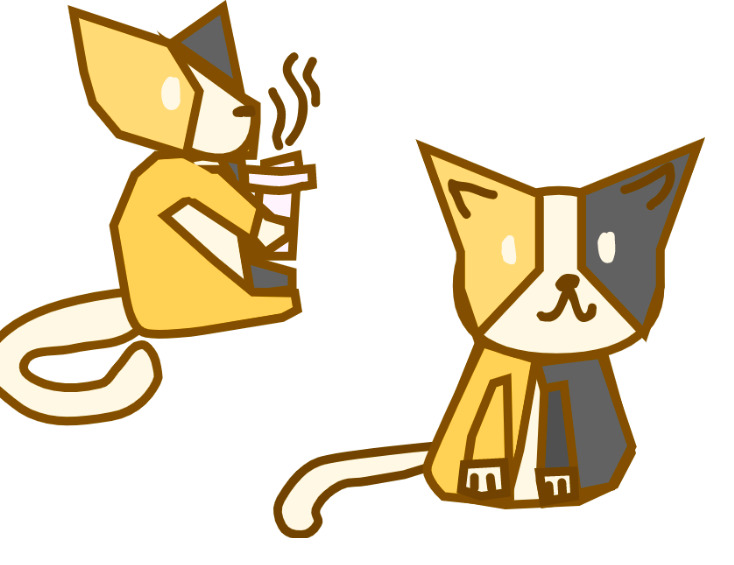
There are two kinds of people in this world: people who have tried to draw their cat, and people whose cat has already walked across the sketchbook and “improved” the composition. Either way, welcome.
Drawing your cat is one of the most entertaining ways to practice observation, character design, and the ancient art of accepting that your subject may suddenly become a fuzzy loaf halfway through the session. Then comes the upgraded challenge: drawing your cat drinking coffee. Not actual coffee, obviously. This is an illustration, a joke, a tiny fictional universe where your cat pays taxes, has a stressful calendar, and needs a latte before answering emails.
This guide will help you create a funny cat drawing that still feels personal. You will learn how to sketch your cat’s shape, capture its weird little attitude, build a convincing coffee cup pose, and turn an everyday pet portrait into a charming cartoon illustration. You do not need expensive supplies, advanced anatomy knowledge, or a degree in Feline Executive Leadership. A pencil, paper, reference photos, and a willingness to draw at least one slightly haunted-looking whisker will do nicely.
Why Drawing Your Cat Is Better Than Drawing a Random Cat
A random cat can be cute. Your cat, however, has a face. Maybe it is a face of judgment. Maybe it is a face that says, “You are late with breakfast, and I will be filing a complaint.” That personality is what makes a pet drawing memorable.
When you draw your own cat, you are not simply copying fur and ears. You are collecting visual clues that make the cat recognizable: the lopsided blaze on its nose, the oversized paws, the dramatic tail, the permanently skeptical eyebrows, or the habit of sitting like a retired landlord inspecting the property.
This is why a simple cat sketch can feel more meaningful than a technically perfect animal illustration. The goal is not to create a museum-ready biological diagram. The goal is to make someone look at the drawing and say, “Yep. That is absolutely your cat.”
Start With a Few Reference Photos
Do not rely entirely on memory unless your cat has an extremely simple shape, such as “black potato with eyes.” Take several photos in good natural light. Capture your cat sitting, stretching, loafing, looking toward a window, or staring at you like it knows what you did in 2017.
Choose one photo that has a clear silhouette. A silhouette is the overall outer shape of the cat. It matters more than tiny details in the early stages. If the body shape, head angle, tail curve, and ear placement look right, the drawing will already feel convincing.
For the coffee illustration, it helps to choose a relaxed pose. A cat sitting upright, leaning against a pillow, or curled on a chair can easily become a tiny coffee-shop regular. A full sprinting pose is harder to adapt unless you are creating a drawing of a cat who has just realized the café is out of oat milk.
How to Draw Your Cat: A Simple Step-by-Step Process
Step 1: Find the Biggest Shapes First
Before drawing individual hairs, whiskers, or eye reflections, simplify your cat into a few basic shapes. Think of the head as a circle or slightly squashed oval. The chest can become a rounded bean shape. The hips may look like another oval. The tail is usually a soft tube, a curved ribbon, or a question mark with a personal agenda.
Use light pencil marks. At this stage, your drawing should look almost embarrassingly simple. That is good. Professional artists often begin with simple forms because simple forms are easier to move, resize, and correct. If the cat’s head is too large, you can fix it now instead of discovering the issue after drawing 800 individual hairs.
Step 2: Establish the Gesture
A gesture is the flow of movement through the body. Even when a cat is resting, there is usually a curve that tells the viewer where the weight is leaning. Look for an S-curve through the spine, a curved tail that balances the pose, or a front paw that points toward something interesting.
Try drawing one long line from the top of the head through the spine and toward the tail. This line does not need to be perfect. It is simply there to stop your cat from looking stiff, flat, or suspiciously like a stuffed animal at a department store.
Step 3: Place the Ears, Eyes, and Nose
Cat faces are wonderfully expressive because small changes can create entirely different moods. Ears that point forward can make the cat look alert or curious. Ears tilted sideways can make it look annoyed, confused, or like it just heard the vacuum cleaner wake up.
Place the eyes on the same curved guideline so they sit naturally on the head. Avoid making both eyes perfectly round unless your cat is shocked by a surprise bill. Most relaxed cat eyes are almond-shaped, slightly angled, and often half-lidded. This sleepy expression works especially well for a coffee-themed cat illustration.
Add the small triangle or rounded shape of the nose. From there, draw a gentle line down toward the mouth. Keep the mouth simple. A tiny curve, a small “w,” or a slightly crooked line can communicate far more personality than a complicated muzzle.
Step 4: Add the Paws and Tail
Paws are often the part that turns a sweet cat drawing into a strange sea creature. The trick is to avoid drawing every toe too early. Begin with mitten-like shapes. Notice where the paw rests and whether it is tucked, stretched, curled, or dramatically reaching toward a forbidden object.
The tail is your secret compositional weapon. It can lead the viewer’s eye around the page, balance the cat’s body, or add humor. A tail wrapped around the paws feels calm. A tail shooting straight upward feels confident. A tail flicking behind a coffee cup suggests that this cat has opinions about the barista’s foam art.
Step 5: Suggest Fur Instead of Drawing Every Hair
You do not need to reproduce every single strand of fur. That way lies madness, hand cramps, and a drawing that looks like it was attacked by a pencil sharpener.
Instead, use short directional strokes in a few important places: around the cheeks, chest, shoulders, tail, and fluffy belly. Keep the marks following the direction the fur grows. Leave smoother areas around the forehead, nose, and paws so the drawing has contrast.
For a cartoon cat drawing, you can simplify even more. Use bold outer lines and only a few fur tufts near the cheeks, chest, and tail. A recognizable pattern or color patch often matters more than realistic texture.
Now Make It Ridiculous: Draw Your Cat Drinking Coffee
Once the regular cat sketch looks recognizable, it is time to introduce the coffee. This is where realism politely leaves the room, puts on a tiny apron, and starts serving espresso.
The funniest version of a cat drinking coffee is not usually the most anatomically accurate. It is the version that feels emotionally true. Maybe your cat looks like a tired office worker on Monday morning. Maybe it is a smug café critic. Maybe it has a tiny mug that says, “Meowcha Latte.” The details are flexible. The attitude is everything.
Choose a Coffee Scene
Before drawing the cup, decide what kind of coffee moment you want. Is your cat taking one polite sip from a ceramic mug? Is it holding an iced coffee through a straw? Is it at a rainy café window with a laptop open to a blank document? Is it sitting at the kitchen table, staring into the middle distance after reading the news?
A simple scene works best. You only need a few props:
- A coffee mug, takeaway cup, or glass tumbler
- A table edge, saucer, or stack of books
- A small pastry, plant, laptop, or newspaper for context
- A steam cloud or heart-shaped foam design for extra comedy
Do not overcrowd the drawing. The cat should remain the star. The coffee is the co-star. The croissant is there purely for union-mandated emotional support.
Make the Cup Large Enough to Read
In a humorous cat illustration, slightly oversized props are your friend. A tiny realistic coffee cup can disappear. A mug that is large enough for the cat to hug, peek over, or grip with both paws immediately makes the idea clear.
Draw the mug as a cylinder. Start with an oval for the top rim, then pull two gentle lines downward for the sides. Add another oval or curved line at the bottom. The handle can be a small loop attached to one side. If your perspective is slightly off, do not panic. Coffee mugs are forgiving. They have seen worse mornings than this.
For a takeaway cup, use a tapered shape: wider near the lid and narrower at the base. Add a sleeve, a logo-like doodle, or a handwritten phrase such as “Purr Over,” “Catpuccino,” or “No Talk Before Tuna.”
Pose the Paws Like They Belong There
A cat does not have human hands, which is inconvenient when it wants to order a double espresso. You have several artistic options.
First, you can draw the cat with both front paws resting around the mug, like it is warming them. This is adorable and simple. Second, you can draw one paw holding a handle while the other supports the cup. Third, you can embrace cartoon logic and give the cat slightly more flexible paws, as long as the overall pose still looks charming.
Keep the paw shapes broad and readable. Avoid adding too many fingers or claws. The illustration should feel playful, not like your cat has secretly been promoted to middle management.
Use Steam to Tell the Story
Steam is one of the easiest ways to make a coffee drawing feel warm and cozy. Use two or three loose, wavy lines rising from the cup. You can shape them into hearts, swirls, tiny fish, or abstract clouds.
For a more expressive cartoon, let the steam curve toward the cat’s face. It can look as though the cat is inhaling the aroma with great seriousness, like a tiny food critic who has flown in from Milan to evaluate your kitchen counter.
Give Your Coffee Cat a Personality
The difference between a generic cat illustration and a memorable funny cat drawing usually comes down to personality. You can create that personality with only a few design choices.
The Sleepy Cat
Draw half-closed eyes, drooping whiskers, and a giant mug held close to the chest. Add a blanket, a small pile of books, or a messy desk. This cat has been awake for nine minutes and has already had enough of the day.
The Fancy Café Cat
Give the cat a scarf, a beret, round glasses, or a tiny tote bag. Place it beside a pastry and a notebook. Add a window with rain lines in the background. This cat knows the difference between espresso and emotional support espresso.
The Overworked Office Cat
Put the cat in front of a laptop with too many sticky notes. Make the mug enormous. Add a calendar in the background with every square crossed out. This version is ideal for greeting cards, social media posts, stickers, and anyone who has ever attended a meeting that should have been an email.
The Chaotic Coffee Cat
Draw wide pupils, crooked ears, exaggerated fur, and coffee splashing slightly out of the cup. Add a vibrating phone, a toppled spoon, or a mouse toy fleeing the scene. This cat has accidentally discovered caffeine and now believes it can reorganize the entire apartment before lunch.
Color, Shading, and Finishing Touches
Whether you use colored pencils, markers, watercolor, or digital brushes, keep your color choices focused. Use your cat’s natural fur colors as the foundation, then choose one or two accent colors for the coffee cup, background, and small props.
Warm colors often make a coffee illustration feel inviting. Soft browns, creams, muted oranges, dusty pinks, and warm grays can create a cozy café mood. Cooler blues and greens can make the scene feel like a rainy afternoon by the window.
For shading, decide where the light comes from. If the light is coming from the upper left, darken the lower right side of the mug, body, and table. Add a small highlight along the rim of the cup and in the cat’s eyes. A few careful shadows can make even a simple cartoon cat look more dimensional.
Do not forget the tiny details that make people smile: a coffee ring on the table, foam shaped like a fish, a mug decorated with paw prints, or a small sign that says “Employees Must Wash Paws.” These details should support the joke instead of distracting from it.
Common Mistakes When Drawing a Cat Drinking Coffee
The good news is that funny art can survive almost any technical mistake. Still, a few common problems are easy to avoid.
- Making the head too large: Cartoon proportions are fine, but compare the head to the body before adding details.
- Forgetting the table surface: A cup needs somewhere to sit. Even one horizontal line can ground the scene.
- Drawing stiff paws: Use rounded mitten shapes and let the paws overlap the mug naturally.
- Adding too much fur texture: Suggest fur in selected areas instead of covering the page with scratchy lines.
- Making the coffee invisible: Use steam, a visible rim, or a recognizable lid so viewers understand the joke immediately.
- Trying to make it too perfect: A slightly awkward expression can be the funniest and most lovable part of the drawing.
Creative Experiences: What Happens When You Actually Try This Prompt
The first time you sit down to draw your cat, you may expect a peaceful art session. You may imagine soft music, a clean desk, and your cat sitting nearby as a cooperative little muse. This expectation is sweet, optimistic, and usually wrong.
Cats have a unique relationship with creativity. The moment you open a sketchbook, they become interested in the sketchbook. The moment you place a pencil on the table, they decide the pencil is suspicious. The moment you finally get a perfect reference photo, they stand up, walk away, and begin licking one shoulder with the commitment of a professional athlete.
That is part of the experience. Drawing your cat is not only about making a finished picture. It is also about noticing the routines that make your pet feel like a tiny roommate with unusual priorities. You start to recognize the head tilt that appears before a jump. You notice the way one ear turns toward a noise while the rest of the body remains completely relaxed. You see that the tail has its own dramatic vocabulary, especially around meal times.
Then you add the coffee cup, and the drawing changes from a pet portrait into a tiny story. Suddenly, your cat is no longer just sitting on a blanket. It is waiting for a meeting to begin. It is reviewing an important spreadsheet. It is wondering why the Wi-Fi is slow. It is deeply disappointed that the local café has run out of salmon-flavored biscotti.
This kind of silly creative prompt is useful because it gives you permission to stop chasing perfection. You are allowed to exaggerate the ears, make the mug too big, give the cat a sweater, or add a tiny laptop with a screen full of nonsense. You can turn your cat into a novelist, a barista, a remote worker, or the exhausted owner of a suspiciously successful small business.
One of the best parts is sharing the drawing with someone who knows your cat. They may not comment on the perspective of the mug or the technical quality of the fur. They will notice that you captured the expression. “That is exactly how she looks when she wants breakfast,” they might say. That reaction is the real reward.
There is also something unexpectedly relaxing about giving your pet a fictional little life on paper. A cat drinking coffee is absurd, but it is harmless absurdity. It is a break from serious tasks. It lets you make something funny without needing a complicated concept or a flawless final result.
And sometimes, the imperfect versions are the best ones. Maybe the first coffee cup looks like a flowerpot. Maybe the paws look like oven mitts. Maybe your cat somehow becomes a raccoon halfway through the sketch. Keep going. Add steam. Add a croissant. Add a tiny sign that says “Do Not Speak to Me Until I Have Had My Tuna Latte.” Suddenly, the drawing has a personality all its own.
That is the secret: your cat does not need to look like a textbook cat. It needs to feel like your cat. A little chaotic, a little dramatic, slightly over-caffeinated in theory, and completely unforgettable.
Final Thoughts
Learning how to draw your cat is a creative exercise in observation, humor, and affectionate exaggeration. Turning that cat into a coffee-drinking character adds storytelling, personality, and a delightful amount of nonsense. Start with simple shapes, keep the pose readable, make the coffee cup obvious, and let your cat’s quirks guide the final details.
Your first drawing does not need to be perfect. It only needs to make you laugh, remind you of your pet, or inspire you to draw another version tomorrow. Give the cat a mug, give it a little attitude, and let it enjoy its completely fictional coffee break.













