
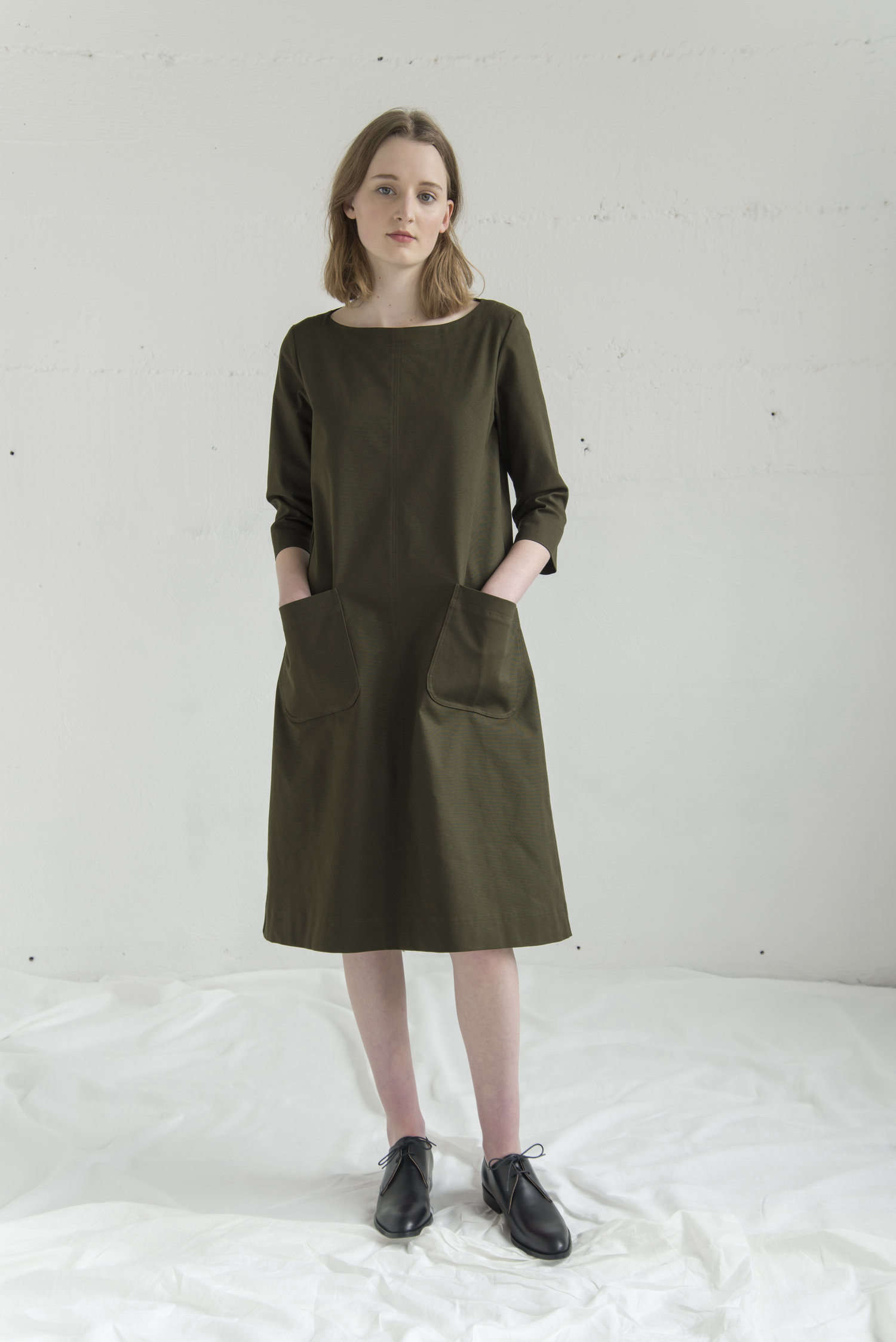
Some dresses are built for compliments. Others are built for life: school runs, coffee meetings, grocery-store detours, long lunches, unexpected rain, and the occasional moment when you need to sit cross-legged on the floor without negotiating with your outfit. The Elliott – Stretch Canvas dress from Frazier & Wing belonged firmly in the second category, which is exactly why it remains interesting long after its original release.
At first glance, Elliott was simple: an A-line silhouette, patch pockets, three-quarter sleeves, and visible topstitching. But simple clothing is rarely actually simple. A good everyday dress must solve several problems at once. It needs enough structure to look intentional, enough comfort to move with the body, enough durability to survive repeat wear, and enough personality to avoid looking like it came from the “I gave up before breakfast” section of the closet.
The Elliott Stretch Canvas dress did that with a quietly clever formula: practical workwear-inspired fabric, a relaxed but shaped fit, and styling flexibility that made it useful across seasons. It was not trying to be flashy. It was trying to be dependable. In fashion, that is often the harder trick.
Note: The original Elliott Stretch Canvas dress from Frazier & Wing has been discontinued. This article examines its design, materials, styling logic, and lasting relevance as a reference for people who appreciate practical, well-designed everyday clothing.
What Is the Elliott Stretch Canvas Dress?
The Elliott Stretch Canvas was a women’s dress designed by Portland-based label Frazier & Wing. Its defining feature was a stretch cotton canvas fabric sourced from Japan. Rather than using a drapey knit or a delicate woven fabric, the dress relied on cotton canvas for shape, texture, and durability.
The silhouette was designed to fit closer through the bust and sleeves before opening into a gentle A-line shape toward the hem. That balance matters. A dress that is fitted everywhere can feel restrictive, while a dress that is loose everywhere can sometimes look like it is waiting for a committee meeting to begin. Elliott sat in the useful middle ground: shaped enough to look polished, relaxed enough to feel wearable.
Its practical details gave it much of its appeal. Patch pockets added function without turning the garment into a costume. Subtle topstitching along the seams, neckline, and hem brought visual structure. Three-quarter sleeves with small slits made movement easier and helped the dress work across changing temperatures. In other words, Elliott was the clothing equivalent of a friend who brings snacks, knows the shortcut, and never makes a big deal about it.
Why Stretch Cotton Canvas Was the Star of the Show
Canvas Gives the Dress Structure
Canvas is known for being sturdier than lightweight shirting fabrics. In clothing, that structure can create a crisp silhouette that does not collapse or cling to every movement. For an A-line dress, this is especially useful because the fabric helps the skirt maintain shape without needing dramatic pleats, stiff lining, or enough volume to qualify as a small tent.
Traditional cotton canvas can be durable but somewhat rigid. Adding stretch changes the equation. Stretch cotton canvas keeps the substantial hand feel of canvas while offering more ease through the shoulders, sleeves, bust, and seated positions. That matters because real people do not stand still all day like department-store mannequins. They reach for shelves, drive cars, carry bags, lean over desks, chase children, and occasionally perform awkward parking-lot yoga while trying to retrieve a dropped phone.
Stretch Creates Comfort Without Losing Shape
The Elliott dress used fabric stretch as a quiet support system. The dress could remain fitted in key areas without becoming restrictive. That is different from a jersey dress, which may stretch easily but can sometimes cling or lose its visual structure after a long day. Stretch canvas gives a more tailored appearance while still allowing the body to breathe and move.
This makes it especially appealing for people who want a dress that feels more put together than a T-shirt dress but less formal than a structured sheath dress. It sits somewhere between utilitarian workwear and minimalist daywear, which is a very comfortable neighborhood to live in.
Japanese Cotton Canvas Adds Character
Japanese cotton fabrics are often appreciated by designers and sewists for their thoughtful weaving, texture, finishing, and durability. In garments like Elliott, the fabric choice helps explain why the dress was more than a basic A-line shape. The material brought depth to the design. Instead of appearing flat or flimsy, the canvas likely gave the dress a tactile, substantial quality that improved with wear.
Canvas also tends to develop personality over time. Slight softening, gentle fading, and natural creasing can make a cotton canvas garment feel more personal rather than more worn out. That is a rare quality in modern clothing. Many garments look tired after a season. Well-made canvas often looks like it has stories.
The Design Details That Made Elliott Feel Useful
The A-Line Shape
An A-line silhouette remains popular because it creates movement without requiring excess fabric. Elliott’s shape was narrower near the upper body and eased outward toward the hem. That design made it easy to wear while walking, sitting, commuting, or layering with tights and boots.
The shape also created an easy visual balance. The fitted upper portion gave the dress definition, while the lower portion offered comfort. It did not rely on a waist seam, belt, or dramatic tailoring to create interest. Instead, it let the fabric and proportion do the work.
Patch Pockets That Were Actually Worth Having
Pockets have become such a beloved feature in women’s clothing that they deserve their own fan club, snack table included. Elliott’s patch pockets supported the dress’s casual utility. They added a slightly workwear-inspired look while giving the wearer a place for small essentials.
Of course, patch pockets are not meant to carry a laptop, a family-sized bag of almonds, and three emotional-support receipts. Their real value is visual as much as functional. They create a relaxed, approachable feeling and reinforce the idea that the dress is made for moving through the day rather than posing beside a decorative ladder.
Topstitching as a Small but Important Detail
Topstitching can look minor on a hanger, but it has a major effect on how a garment reads. On Elliott, visible stitching emphasized the seams and gave the dress a clean, handcrafted feel. It also connected the garment to classic workwear, where seams are often reinforced and made visible rather than hidden away.
That detail helped Elliott avoid looking overly plain. Minimalist clothing works best when the design includes enough texture, stitching, shape, or proportion to make the simplicity feel intentional. Otherwise, minimalism can become “I may have accidentally worn a very expensive sleep shirt.” Elliott had enough construction detail to stay firmly on the stylish side of that line.
How to Style an Elliott Stretch Canvas-Inspired Dress
For a Casual Day Out
Pair a stretch canvas A-line dress with white leather sneakers, ankle socks, and a lightweight crossbody bag. This combination keeps the outfit clean and easy without making it look too sporty. Add sunglasses and a denim jacket when the weather cools down.
The goal is not to make the dress precious. Canvas looks best when it is allowed to be practical. Sneakers, flat sandals, clogs, and low-profile boots all work because they match the grounded, useful character of the fabric.
For Work or Creative Meetings
For a polished office or studio look, wear the dress with leather loafers, a cropped blazer, and a structured tote. Neutral colors such as black, olive, navy, charcoal, tobacco, and deep rust complement canvas especially well. These shades highlight the fabric’s texture while keeping the outfit refined.
A simple necklace, slim watch, or small hoop earrings can add enough polish without competing with the topstitching and pockets. Elliott-style dresses do not need a lot of accessories. They are already doing their job. Let them enjoy their shift.
For Cooler Weather
Layer the dress over opaque tights or slim leggings and add ankle boots or tall boots. A long cardigan, wool coat, or cropped utility jacket can provide warmth while preserving the A-line shape. A scarf adds color and texture, particularly when the dress itself is in a neutral canvas tone.
Because canvas has structure, it works well with substantial outerwear. A soft, flimsy cardigan can still work, but heavier layers often create a more balanced outfit. Think wool, denim, leather, waxed cotton, or textured knitwear.
For Travel
An Elliott Stretch Canvas-inspired dress can be a smart travel piece because it handles multiple settings without requiring a wardrobe committee. Wear it with sneakers for airports, switch to sandals for sightseeing, and add boots or jewelry for dinner. The same dress can move from a museum to a casual restaurant without looking confused about its purpose in life.
For travel, choose darker colors or medium tones that hide minor marks better than bright white or pale beige. Cotton canvas is durable, but it is not magical. A splash of coffee still knows how to find the front of your outfit.
Fit Advice for Stretch Canvas Dresses
The original Elliott was designed to fit more closely through the bust and sleeves while offering ease through the body and hem. That means sizing should focus first on the shoulder, bust, and upper-arm area. The lower half of an A-line dress usually has more flexibility, but the shoulder seam and sleeve fit can determine whether the garment feels comfortable all day.
When shopping for a similar stretch canvas dress, measure your bust, upper arm, and shoulder width rather than relying only on your usual dress size. Different brands use different fit models, and “medium” can mean anything from “perfectly relaxed” to “why does this feel like a polite wrestling match?”
Look for a small amount of stretch in the fabric, especially if the dress has a fitted sleeve or no front opening. Stretch can improve mobility, but it should not be used to compensate for a garment that is too small. A canvas dress should feel comfortably shaped, not like it is preparing to launch you into orbit.
How to Care for Stretch Cotton Canvas
The original Elliott care guidance called for cold machine washing, hang drying, and warm ironing. That approach makes sense for cotton canvas because high heat can encourage shrinkage, fade darker colors, and reduce the garment’s useful life over time.
Wash the dress inside out in cold water with similar colors. Use a mild detergent and avoid overloading the machine, which can create excess rubbing and visible wear. If there is a small stain, treat it early rather than sending it on a long-term lease in the fibers.
Hang drying is especially helpful for canvas garments. It reduces heat exposure and helps the dress keep its intended shape. Smooth the seams, pockets, and hem while the garment is damp, then allow it to air-dry naturally. A warm iron can restore a crisp finish, especially around the collar, hem, and pocket edges.
For long-term storage, hang the dress on a sturdy hanger or fold it carefully without placing heavy items on top. Avoid leaving cotton garments in strong direct sunlight for extended periods, since repeated exposure can fade color and weaken fibers over time.
Why Elliott Still Matters in a Fast-Fashion World
The Elliott Stretch Canvas dress is a useful reminder that good design does not need to scream. It can simply solve everyday problems well. A durable fabric, thoughtful fit, functional pockets, careful stitching, and flexible styling can create a garment that earns repeat wear for years.
This is also why discontinued pieces continue to inspire searches and conversations. People are not always hunting for a specific label. Often, they are looking for a feeling: a dress that is easy but not sloppy, comfortable but not shapeless, simple but not boring.
That is the lasting appeal of Elliott. It captured the idea that everyday clothes can be practical, beautiful, and quietly memorable. No sequins required. No emergency shapewear required either, which may be the greater achievement.
How to Find a Modern Alternative to Elliott Stretch Canvas
Since the original dress is discontinued, shoppers looking for a similar piece should focus on construction and fabric rather than trying to find an exact duplicate. Search for terms such as stretch cotton canvas dress, A-line utility dress, Japanese cotton workwear dress, canvas shift dress, or minimalist pocket dress.
Look for these features:
- A woven cotton canvas or twill fabric with a small amount of stretch.
- A close but comfortable fit through the shoulders and bust.
- A-line shaping that allows movement without looking oversized.
- Patch pockets or side-seam pockets for practical utility.
- Visible topstitching, reinforced seams, or workwear-inspired construction.
- Three-quarter sleeves, short sleeves, or sleeveless layering potential.
- Care instructions that support cold washing and air drying.
It is also worth considering secondhand marketplaces, resale platforms, vintage clothing stores, and independent makers. A garment inspired by Elliott does not need to be identical to deliver the same value. The real goal is to find a dress that makes getting dressed easier without making personal style disappear.
Experiences Related to Elliott – Stretch Canvas: What Everyday Wear Can Feel Like
The strongest appeal of an Elliott Stretch Canvas-style dress is not that it creates one perfect outfit. It is that it can support many imperfect, ordinary, occasionally chaotic days. Imagine putting it on during a busy weekday morning when your brain has already made seventeen decisions and none of them involved fashion. The dress offers a small relief: shoes, bag, maybe a jacket, and you are finished. No complicated layering. No waistband negotiations. No need to stand in front of the mirror wondering whether the outfit has become “too much” or somehow “not enough.”
In a work setting, a stretch canvas dress can feel reassuring because it holds its shape. You may spend hours sitting at a desk, standing in a meeting, walking across town, or carrying a laptop bag, yet the outfit still looks composed. The fabric does not behave like a delicate blouse that wrinkles dramatically after one serious conversation. Instead, it develops soft creases that fit its workwear character. A little lived-in texture is part of the charm.
For parents, caregivers, teachers, artists, and anyone whose day requires a surprising amount of bending, reaching, and carrying, the stretch element becomes especially useful. You can crouch to pick something up, reach for a high shelf, or sit on the floor without feeling like the dress is filing a formal complaint. The A-line shape gives enough room through the lower body, while the more fitted upper portion keeps the overall look intentional.
On weekends, the same dress can become a uniform in the best sense of the word. It works for browsing a farmers market, meeting friends for brunch, taking a long walk, visiting a bookstore, or wandering into a home-goods store where you absolutely did not plan to buy another ceramic bowl. Add sneakers and it feels casual. Add clogs and it looks artsy. Add leather boots and a coat and suddenly it has opinions about coffee beans and independent magazines.
There is also something satisfying about a garment that improves through repetition. Stretch cotton canvas can soften with careful washing and wearing, gradually becoming more comfortable while keeping its structure. The pockets become familiar. The fabric starts to move with the body. The dress stops feeling like an item you own and starts feeling like a reliable part of your routine.
That experience is increasingly valuable in a market full of clothing designed for a single photo, a single season, or a single mildly dramatic dinner reservation. An Elliott-inspired dress offers the opposite mindset. It is not asking for special treatment. It is asking to be worn, washed, styled differently, packed for trips, and reached for again when you need something that works.
Ultimately, the experience of wearing an Elliott Stretch Canvas-style dress is about ease with dignity. It is the feeling of being comfortable without looking unfinished, practical without looking dull, and dressed without feeling dressed up. That may sound modest, but for everyday clothing, modest victories are often the ones that last.
Conclusion
The Elliott – Stretch Canvas dress remains a compelling example of thoughtful everyday fashion. Its A-line fit, patch pockets, topstitching, three-quarter sleeves, and Japanese stretch cotton canvas created a garment designed for movement, comfort, and repeat wear. Although the original Frazier & Wing version has been discontinued, the ideas behind it remain highly relevant.
When searching for a replacement, focus on the essentials: structured cotton fabric, a little stretch, practical pockets, durable construction, and a shape that feels polished without feeling precious. The best everyday dress should not demand attention. It should quietly make your day easier, then accept a compliment when it comes.














