
Note: This article is for educational purposes only and does not replace medical advice, diagnosis, or treatment from a qualified healthcare professional. If pelvic pain, heavy bleeding, painful sex, bowel symptoms, or infertility are affecting your life, talk with an OB-GYN or a clinician experienced in pelvic pain.
What Is Endometriosis?
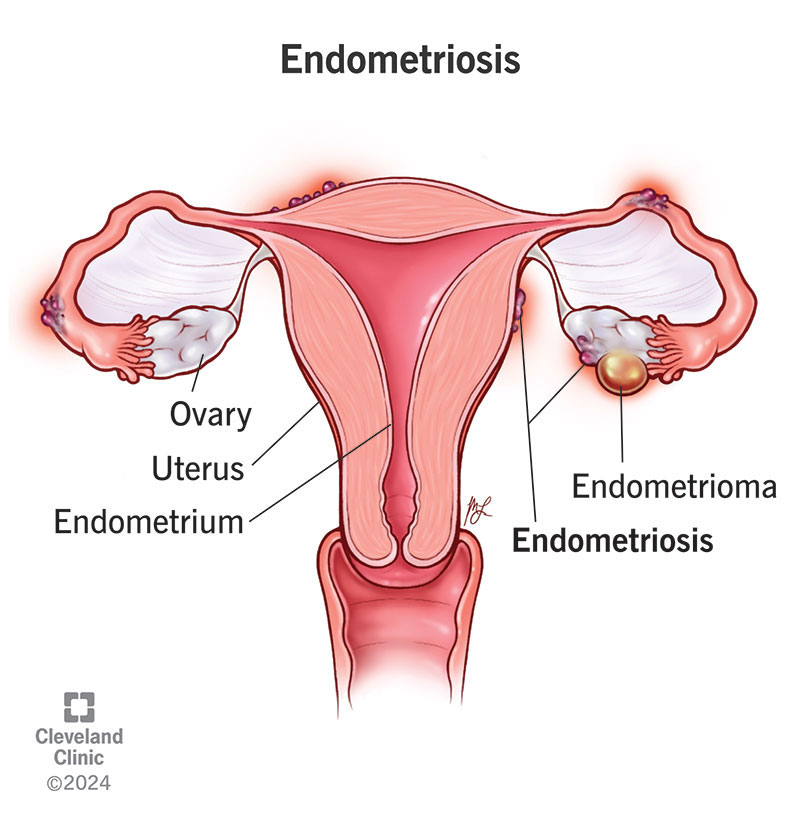
Endometriosis is a chronic condition in which tissue similar to the lining of the uterus grows outside the uterus. That tissue may show up on the ovaries, fallopian tubes, the lining of the pelvis, the bladder, the bowel, or, rarely, other parts of the body. It behaves like an unwelcome houseguest: it reacts to hormones, causes inflammation, and may leave behind scar tissue or adhesions. Unfortunately, it does not bring snacks.
The most common endometriosis symptoms include pelvic pain, painful periods, pain during sex, pain with bowel movements or urination, heavy menstrual bleeding, fatigue, bloating, and difficulty getting pregnant. Some people have severe symptoms with only small lesions, while others have extensive disease and surprisingly little pain. In other words, endometriosis does not always read the medical textbook before causing trouble.
Endometriosis can affect teenagers, adults in their 20s and 30s, and anyone who menstruates. It is especially important to understand that severe period pain is not something people should simply “power through” with a heating pad, three ibuprofen, and a motivational quote. Pain that interrupts school, work, relationships, sleep, or daily routines deserves medical attention.
Common Causes and Risk Factors of Endometriosis
The exact cause of endometriosis is still not fully understood. Researchers believe it is a complex condition influenced by hormones, genetics, immune system activity, inflammation, and possibly the way certain cells move or transform in the body.
Possible Causes
Retrograde menstruation is one theory. This means menstrual blood flows backward through the fallopian tubes into the pelvic cavity instead of leaving the body. However, this does not explain every case, because many people experience retrograde menstruation without developing endometriosis.
Cell transformation is another theory. Some cells outside the uterus may change into endometrial-like cells under certain hormonal or inflammatory signals. Think of it as the body’s version of a bad career pivot.
Immune system differences may also play a role. If the immune system does not recognize and remove misplaced endometrial-like tissue, that tissue may continue to grow and trigger inflammation.
Genetics matter too. A family history of endometriosis, especially in a mother, sister, or daughter, can increase risk. Endometriosis is not guaranteed to run in families, but it can definitely show up to the family reunion uninvited.
Risk Factors
Several factors are associated with a higher risk of endometriosis, including starting periods at an early age, having short menstrual cycles, having heavy or long periods, having a close family member with endometriosis, and never having given birth. These are not personal failures or lifestyle mistakes. They are biological clues that may help a clinician decide whether endometriosis should be considered.
Endometriosis Symptoms: What to Watch For
Endometriosis symptoms vary widely, which is one reason diagnosis can take years. Some symptoms are clearly linked to the menstrual cycle, while others may happen throughout the month.
Pelvic Pain
Pelvic pain is the signature symptom. It may feel like cramping, stabbing, burning, pressure, or deep aching. Pain may begin before a period, worsen during bleeding, and continue after the period ends. Normal cramps usually improve with basic care and do not shut down your life. Endometriosis pain may laugh at ordinary cramps and then steal their lunch money.
Painful Periods
Painful periods, also called dysmenorrhea, are common in endometriosis. The pain may become worse over time and may come with nausea, diarrhea, constipation, back pain, leg pain, or overwhelming fatigue.
Pain During Sex
Deep pain during or after sex can be a sign of endometriosis, especially when lesions affect areas behind the uterus or near pelvic nerves. This symptom is often underreported because it can feel embarrassing, but it is a valid medical concern.
Bowel and Bladder Symptoms
Endometriosis can irritate the bowel or bladder, causing painful bowel movements, constipation, diarrhea, bloating, painful urination, or symptoms that seem similar to irritable bowel syndrome. Symptoms may flare around the menstrual cycle, which is an important clue.
Heavy Bleeding or Spotting
Some people experience heavy menstrual bleeding or spotting between periods. Heavy bleeding is not always caused by endometriosis, so clinicians may also check for fibroids, adenomyosis, hormonal disorders, bleeding disorders, or other gynecologic conditions.
Infertility
Endometriosis may make it harder to get pregnant. Scar tissue, inflammation, ovarian endometriomas, and changes in the pelvic environment can affect egg release, fertilization, embryo implantation, or movement through the fallopian tubes. Some people discover they have endometriosis only after seeking help for infertility.
Why Endometriosis Is Often Misdiagnosed
Endometriosis can mimic several other conditions, including irritable bowel syndrome, pelvic inflammatory disease, ovarian cysts, urinary tract problems, interstitial cystitis, adenomyosis, fibroids, and even musculoskeletal pain. That overlap can turn diagnosis into a medical detective show, minus the dramatic soundtrack.
Another problem is normalization. Many people are told that painful periods are simply part of life. But pain that causes vomiting, fainting, missed work, missed school, or fear of each monthly cycle is not “just being dramatic.” It is a red flag wearing a neon jacket.
Diagnostic delays may also happen because symptoms are invisible from the outside. A person may look fine while dealing with severe internal pain, fatigue, digestive symptoms, and emotional stress. Endometriosis requires careful listening, not dismissive shrugging.
How Endometriosis Is Diagnosed
Diagnosis usually begins with a detailed medical history. A clinician may ask when symptoms started, how they relate to the menstrual cycle, where the pain occurs, whether sex, bowel movements, or urination are painful, and whether pregnancy has been difficult.
Pelvic Exam
A pelvic exam may help identify tenderness, cysts, scar tissue, or limited movement of pelvic organs. However, a normal pelvic exam does not rule out endometriosis. Small lesions can hide very well, like tiny villains in a medical mystery.
Ultrasound
Ultrasound, especially transvaginal ultrasound, can help detect ovarian endometriomas and some signs of deep endometriosis. It may not find superficial lesions, but it is a useful, noninvasive first step.
MRI
Magnetic resonance imaging, or MRI, may be used when deep endometriosis is suspected or when surgery is being planned. MRI can help map disease involving the bowel, bladder, ovaries, or deeper pelvic tissues.
Laparoscopy
Laparoscopy is a minimally invasive surgery that allows a surgeon to look inside the pelvis and remove or biopsy suspicious lesions. For many years, laparoscopy with biopsy was considered the gold standard for confirming endometriosis. Current clinical thinking increasingly supports making a clinical diagnosis based on symptoms and imaging when appropriate, so treatment does not always have to wait for surgery.
Endometriosis Treatment Options
There is currently no universal cure for endometriosis, but treatment can reduce pain, improve quality of life, protect fertility goals, and manage complications. The best plan depends on symptoms, age, severity, pregnancy goals, medical history, medication tolerance, and personal preferences.
Pain Relief Medications
Nonsteroidal anti-inflammatory drugs, such as ibuprofen or naproxen, may help reduce cramps and inflammation. They work best when taken early in the pain cycle, but they are not enough for everyone and can have side effects, especially with frequent use.
Hormonal Therapy
Hormonal treatments aim to reduce or suppress the hormonal stimulation that can worsen endometriosis symptoms. Options may include combination birth control pills, progestin-only pills, hormonal IUDs, implants, injections, and other medications that reduce estrogen activity.
Some people do very well on hormonal treatment. Others experience side effects such as mood changes, irregular bleeding, headaches, hot flashes, or bone-density concerns with certain medications. This is why treatment should be individualized rather than copied from someone’s cousin’s roommate’s TikTok routine.
GnRH Agonists and Antagonists
Gonadotropin-releasing hormone medications can lower estrogen levels and reduce endometriosis pain. These treatments may be used for moderate to severe symptoms, but they require careful monitoring because low estrogen can cause menopause-like symptoms and affect bone health. Add-back therapy may be used to reduce side effects.
Surgery
Surgery may be recommended when pain is severe, imaging shows endometriomas or deep disease, organs are affected, fertility is a concern, or medical treatment does not help. Excision surgery removes lesions and scar tissue. In skilled hands, it may improve pain and anatomy, but recurrence can happen.
Hysterectomy is sometimes discussed for severe cases, especially when other conditions such as adenomyosis are present. However, it is not a simple cure-all and is not appropriate for everyone, particularly those who want future pregnancy. Ovarian removal has major hormonal consequences and requires careful discussion.
Fertility Treatment
For people trying to conceive, treatment may include surgery, ovulation support, intrauterine insemination, in vitro fertilization, or other assisted reproductive technologies. The right path depends on age, ovarian reserve, partner factors, fallopian tube status, pain level, and previous treatment history.
Lifestyle and Supportive Care
Lifestyle changes do not cure endometriosis, but supportive care can help reduce symptom burden. Heat therapy, gentle movement, pelvic floor physical therapy, stress management, sleep support, and nutrition adjustments may be useful as part of a broader treatment plan.
Pelvic floor physical therapy is especially helpful for people whose muscles tighten in response to chronic pain. When the pelvis has been bracing for months or years, it may need retraining. The body is not being “difficult”; it is trying to protect itself, just with the subtlety of a car alarm at 2 a.m.
Some people notice that certain foods worsen bloating, constipation, or inflammation-like symptoms. Keeping a symptom diary can help identify patterns. However, restrictive diets should be approached carefully, ideally with professional guidance, because nutrition should support healing rather than become another source of stress.
When to See a Doctor
Make an appointment with a healthcare provider if period pain interferes with daily life, pain gets worse over time, sex becomes painful, bowel or bladder symptoms flare around periods, bleeding is very heavy, or pregnancy is not happening after months of trying. Seek urgent care for sudden severe pelvic pain, fainting, fever, heavy bleeding, or possible pregnancy-related complications.
Before the visit, track symptoms for one to three cycles. Write down pain location, timing, bleeding level, bowel and bladder symptoms, medications used, and how symptoms affect work, school, sleep, exercise, relationships, or mood. This information gives your clinician better evidence than “it hurts a lot,” although that statement is also completely valid.
Living With Endometriosis: Real-World Experiences and Practical Lessons
Living with endometriosis is not only a medical experience. It is also a scheduling experience, a relationship experience, a work experience, and sometimes a “why is my heating pad my closest emotional support appliance?” experience. Many people describe endometriosis as unpredictable. One month may be manageable, and the next may feel like the pelvis has filed a formal complaint against the rest of the body.
A common experience is learning to advocate for yourself. Patients often say they had to explain that their pain was not normal, not mild, and not fixed by “just relaxing.” Self-advocacy may mean bringing a written symptom diary, asking directly whether endometriosis could be considered, requesting referral to a gynecologist or pelvic pain specialist, and seeking a second opinion when symptoms are dismissed. Being polite is fine, but being clear is essential. Pain should not need a public relations campaign to be believed.
Another shared experience is the emotional toll. Chronic pelvic pain can affect mood, sleep, intimacy, body image, and confidence. People may feel guilty for canceling plans, anxious before their period, or frustrated when tests look normal despite very real symptoms. Support groups, therapy, trusted friends, and compassionate clinicians can make a major difference. Validation is powerful medicine, even when it does not come in a bottle.
Work and school can become complicated. Some people plan important tasks around their cycle, keep spare medication or heat patches nearby, or talk with supervisors about flexible scheduling. Others hesitate to disclose anything because menstrual pain is still treated awkwardly in many workplaces. The practical goal is not to make endometriosis the center of life, but to create systems that reduce chaos when symptoms flare.
Relationships may also need honest communication. Pain during sex, fatigue, or frequent cancellations can create misunderstandings if nobody talks about what is happening. A supportive partner should understand that endometriosis is not rejection, laziness, or exaggeration. It is a chronic inflammatory condition that can turn ordinary activities into negotiations with pain. Intimacy can still exist, but it may require patience, creativity, and medical support.
Many people also learn that treatment is a process, not a single magic button. One medication may help but cause side effects. Surgery may improve symptoms but require recovery time and long-term planning. Pelvic floor therapy may feel strange at first but become a turning point. The most successful care usually involves shared decision-making: the patient brings lived experience, and the clinician brings medical expertise. Both matter.
The biggest lesson from real-world endometriosis experiences is simple: do not minimize symptoms that are changing your life. If pain is making decisions for you, it is time to ask for help. Endometriosis may be stubborn, but with the right diagnosis, treatment plan, and support system, many people regain control, reduce symptoms, protect fertility goals, and build a life that is much bigger than their diagnosis.
Conclusion
Endometriosis is a complex, chronic condition that can cause pelvic pain, painful periods, painful sex, bowel or bladder symptoms, fatigue, heavy bleeding, and infertility. Its exact cause is still under investigation, but hormones, genetics, inflammation, immune function, and cellular changes may all play a role.
The good news is that endometriosis is treatable. Diagnosis may involve symptom review, pelvic exam, ultrasound, MRI, and sometimes laparoscopy. Treatment may include pain relievers, hormonal therapy, GnRH medications, surgery, fertility care, pelvic floor physical therapy, and lifestyle support. The best care plan is personalized, because endometriosis does not behave the same way in every body.
If your period pain feels extreme, keeps getting worse, or disrupts your life, do not accept “that is just how periods are” as the final answer. Your body is not being dramatic. It is sending a message. The right clinician can help you translate it and build a plan that actually works.










