
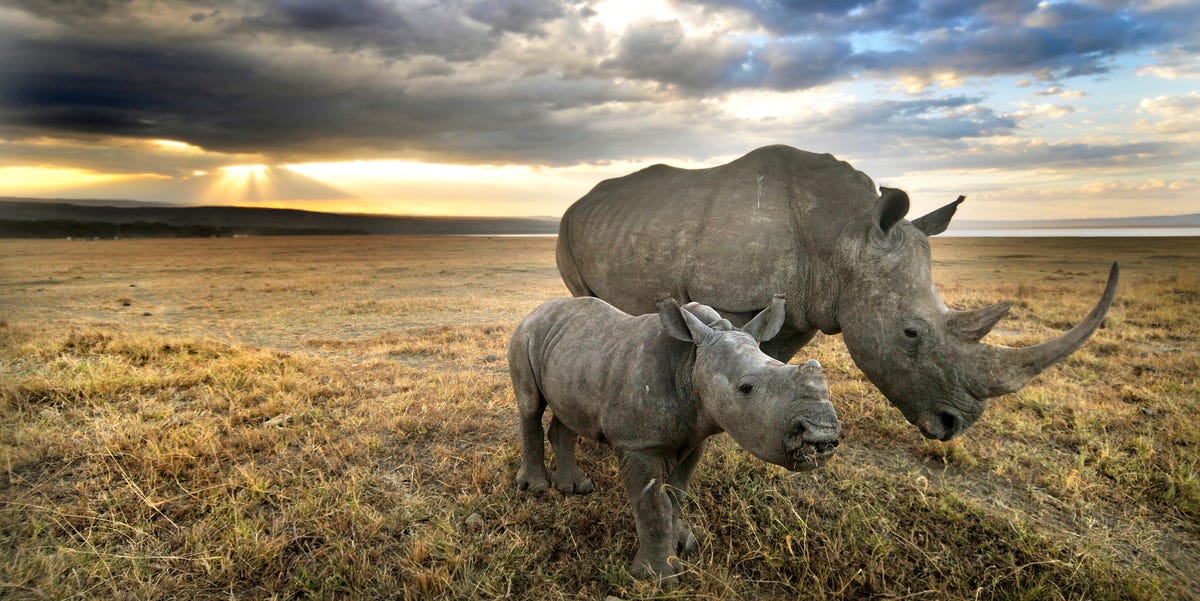
Rhinos look like they were designed by a committee made up of a tank engineer, a lawn-care expert, and a medieval armorer. They are huge, wrinkled, famously horned, and somehow both intimidating and oddly adorable. But the real story of rhinos is bigger than their dramatic profile. These animals are ancient, ecologically important, biologically fascinating, and deeply tied to one of the biggest conservation battles on Earth.
If you have ever thought, “A rhino is just a giant gray animal with a horn,” buckle up. That is like saying a smartphone is just a glowing rectangle. Technically true. Wildly incomplete. The facts about rhinos are far more interesting once you dig into their species differences, behavior, diet, communication, reproduction, and the fight to keep them on the planet.
The Big Picture: Rhinos Are Not One-Size-Fits-All
One of the most important rhino facts is that there are five living species of rhino, not one generic “rhino.” Two live in Africa and three live in Asia. The African species are the black rhino and the white rhino. The Asian species are the greater one-horned rhino, the Javan rhino, and the Sumatran rhino.
That matters because each species has its own body shape, habitat, diet, conservation status, and personality. White rhinos are the biggest and most social of the bunch. Black rhinos are more solitary and equipped with a hooked lip for browsing shrubs and trees. Greater one-horned rhinos look like they are wearing natural body armor. Javan rhinos are so rare and elusive that spotting one in the wild is basically the wildlife equivalent of winning a cosmic lottery. Sumatran rhinos are smaller, hairier, and among the most threatened of all.
In other words, “rhino” is not a single story. It is a whole family drama with different characters, different settings, and unfortunately, a lot of danger from humans.
Fact 1: Rhinos Have Been Around for a Very Long Time
Rhinos are part of an ancient lineage. Their ancestors walked the Earth tens of millions of years ago, and the rhino family tree once included many more species than the five that survive today. That deep evolutionary history is part of what makes them so remarkable. Rhinos are not some new branch of the mammal world. They are living remnants of a much older one.
That ancient background also helps explain why they seem a little mythical in real life. Standing near one, even in a managed zoo habitat or on a protected savanna, feels like seeing a creature that missed the memo about modern times and just kept going anyway.
Fact 2: Black Rhinos and White Rhinos Are Both Gray
Yes, this is the fact that confuses everybody. Despite their names, black rhinos and white rhinos are both basically gray to brownish-gray. The name difference is not really about color at all. A more useful way to tell them apart is by looking at their mouths.
Black rhino vs. white rhino
Black rhinos have a pointed, hooked upper lip. That lip works like a built-in grabbing tool, helping them pull leaves and branches from bushes and trees. They are browsers.
White rhinos have a broad, square mouth that is perfect for grazing on grasses. They are built for mowing the savanna the way a giant, horned lawnmower might, if a lawnmower also weighed several thousand pounds and could ruin your afternoon with one irritated snort.
That lip difference is not just a cute field-guide detail. It reflects how each species fits into its habitat and how it shapes the landscape around it.
Fact 3: A Rhino’s Horn Is Not Bone
Rhino horn is one of the most misunderstood structures in the animal kingdom. It is made primarily of keratin, the same protein found in human hair and fingernails. It does not have a bony core like the horns of cattle or antelope.
That means the horn is biologically impressive, but not magical. It can wear down, sharpen through use, and even grow back over time if broken. What it absolutely does not have is proven medicinal power. That myth has fueled poaching for decades, with devastating consequences for rhino populations.
So, one of the most important facts about rhinos is also one of the most frustrating: people continue killing them for a body part made of the same basic material as a very expensive manicure.
Fact 4: Rhinos Are Herbivores, but They Do Not All Eat the Same Way
All rhinos are herbivores, but their menus vary more than many people realize.
White rhinos are grazers
White rhinos feed mostly on grasses. Their broad mouths and massive heads are ideal for spending long stretches with their noses close to the ground, trimming vegetation in open habitats.
Black rhinos are browsers
Black rhinos prefer leaves, shoots, branches, and shrubs. Their prehensile upper lip helps them strip plant material with surprising precision. Think less “field mower,” more “selective salad thief.”
Asian rhinos have their own feeding styles
The greater one-horned rhino is largely a grazer but also eats leaves, fruit, and aquatic plants. Javan rhinos are browsers and are known to eat a wide variety of plant species. Sumatran rhinos also browse heavily in forest habitats.
Because rhinos eat so much vegetation, they help shape plant communities, create openings, and influence how other animals use the landscape. That is why conservationists often describe them as ecosystem engineers.
Fact 5: Rhinos Help Their Ecosystems More Than People Realize
Rhinos are not just charismatic megafauna with great branding potential. They are functional parts of their ecosystems. By grazing or browsing, they change vegetation patterns. By moving through habitats, they create pathways. By using wallows and water sources, they influence areas that other animals also depend on.
Large herbivores like rhinos can help maintain open grasslands, support biodiversity, and even contribute to local economies through wildlife tourism. Protecting rhinos does not just save rhinos. It can also protect wider habitats, other species, and conservation livelihoods in the same landscape.
That is part of what makes rhino conservation so important. Saving them is not a side quest. It is connected to the health of entire ecosystems.
Fact 6: Rhinos Love Mud, and It Is Not Just for Fun
Rhinos spend a lot of time wallowing in mud, and this behavior is more than a spa day with lower standards. Mud helps cool their bodies, protects their skin from sun exposure, and may help reduce irritation from insects and parasites.
This makes perfect sense when you remember that rhinos have thick skin but surprisingly sensitive skin surfaces. Their folds and armor-like appearance can make them look indestructible, yet they still need relief from heat, bites, and harsh conditions. Mud is practical. Mud is protection. Mud is rhino sunscreen with attitude.
Greater one-horned rhinos especially lean into that armored look, with deep skin folds that make them resemble prehistoric war elephants who decided to specialize in grass.
Fact 7: Rhinos Can Be Fast
A lot of people assume rhinos are slow because they are huge. That is a risky assumption. Some rhinos, especially black rhinos, can run at speeds up to around 40 miles per hour. They may not be built for graceful figure skating, but they are absolutely built for explosive movement.
That speed, combined with size and poor eyesight but strong hearing and smell, is why rhinos can sometimes seem unpredictable. If a rhino feels threatened and cannot clearly identify what is nearby, it may investigate or charge. In the wild, that is a reminder to respect distance. In a zoo or sanctuary setting, it is a reminder that even the calmest-looking giant herbivore is still a giant herbivore.
Fact 8: Rhinos Communicate in Some Very Weird and Effective Ways
Rhinos are not silent loners wandering around with no social system. They communicate through sound, scent, body language, and one especially memorable method: dung piles called middens.
White rhinos in particular use communal dung sites almost like an information board. Chemical signals in feces can communicate age, sex, reproductive status, and other details to visiting rhinos. It is not glamorous, but it is efficient. Humans have social media. Rhinos have scent-based bulletin boards.
They also vocalize in various ways, from grunts to squeals and snorts, especially between mothers and calves or during social interactions. So while rhinos are not exactly chatty in the way parrots are, they are far from socially clueless.
Fact 9: Rhino Reproduction Is Slow, Which Makes Recovery Hard
Another crucial rhino fact is that they do not reproduce quickly. Many rhino pregnancies last around 15 to 16 months, and females typically give birth to a single calf. Calves stay with their mothers for a long time, and the interval between births can be years.
That slow reproductive pace is one reason poaching is so damaging. When adult rhinos are killed faster than calves can be born and raised, populations struggle to recover. Even with strong protection, rebuilding numbers can take decades.
It also explains why every healthy birth matters so much in rhino conservation programs. One calf is not just cute. One calf can be a meaningful win for a species under pressure.
Fact 10: Some Rhino Stories Are Hopeful
Not all rhino news is doom and gloom. In fact, one of the best facts about rhinos is that conservation can work when governments, scientists, rangers, and local communities stay committed.
The southern white rhino is the classic example. It was once reduced to fewer than a hundred animals in the late 19th century, then recovered through protection and management into the tens of thousands. That is one of conservation’s most famous comeback stories.
The greater one-horned rhino also rebounded from roughly 200 animals at the start of the 20th century to around 4,000 today. That did not happen by accident. It took habitat protection, anti-poaching work, and serious long-term effort.
These recoveries do not mean the crisis is over. They do prove something important: rhinos can come back when people stop treating extinction like an acceptable side effect.
Fact 11: Other Rhino Stories Are Urgent and Fragile
Some species remain in extremely dangerous territory. The Javan rhino survives only in Indonesia’s Ujung Kulon National Park. The Sumatran rhino survives in very small, fragmented populations. The black rhino has recovered from historic lows but remains critically endangered. And the northern white rhino is down to just two living individuals, both female.
That last fact is one of the starkest examples of how close humans can push a subspecies to disappearance. The northern white rhino is now the subject of advanced reproductive science, including IVF-based efforts that recently reached a major milestone. It is a remarkable example of how far science may go to repair damage humans caused in the first place.
Still, no lab breakthrough can fully replace strong habitat protection, anti-poaching enforcement, and long-term political will. Science can buy a second chance. It cannot manufacture common sense on its own.
Fact 12: Rhinos Matter Emotionally, Ecologically, and Culturally
People care about rhinos because they are iconic, but their importance goes beyond symbolism. They influence landscapes. They attract tourism. They inspire scientific research. They can become rallying points for conservation action across continents. And on a basic emotional level, they make people feel something immediate and real.
Maybe it is their size. Maybe it is the horn. Maybe it is the strange contrast of brute strength and vulnerable future. Whatever the reason, rhinos tend to stay in your head. That emotional impact matters because people protect what they cannot stop thinking about.
Experiences Related to Rhinos: Why Seeing One Changes the Way You Think
Reading facts about rhinos is one thing. Experiencing a rhino, even from a safe and respectful distance, is something else entirely. Whether that happens in a well-managed zoo, a wildlife reserve, or on a protected safari, the feeling is usually the same at first: disbelief. They are bigger than most people expect, quieter than expected, and somehow more complicated than the cartoon version stored in your brain.
The first thing many people notice is the sound. A rhino does not need to roar to command attention. The shuffle of enormous feet, the scrape of a horn against the ground, the forceful snort from a body built like a boulder with lungsthose sounds land differently when you are actually there. They make the animal feel less like a fact from a textbook and more like a presence.
Then there is the skin. From far away, it can look like gray armor. Up close, it has texture, folds, scars, dust, dried mud, and life written all over it. You start to understand why so many descriptions compare some rhinos to armored vehicles or prehistoric beasts. But what surprises many people is not just how tough they look. It is how alert they are. The ears swivel. The nose works constantly. The animal may look still, but it is gathering information the whole time.
Seeing a rhino calf near its mother changes the experience again. Suddenly the giant beast story becomes a family story. The calf stays close, often tucked near the adult body like a shadow with tiny horns in progress. That image makes the conservation crisis feel personal. You are not just thinking about “species loss” in an abstract way. You are thinking about whether that calf gets to grow up in a world that still has room for rhinos.
Even zoo experiences can shift perspective when they are done well. Good rhino exhibits do more than display an animal. They help visitors notice behavior: grazing, wallowing, scent-marking, resting, interacting with keepers through protected care routines, or simply existing with astonishing calm. Those moments can be powerful because they replace stereotype with detail. A rhino stops being “that huge animal with the horn” and becomes an individual with habits, preferences, and a future worth protecting.
On safari or in conservation landscapes, the emotional effect can be even stronger. Seeing a rhino in open habitat, often with birds nearby and dust rising around its feet, creates a sense of scale that photos rarely capture. The surrounding grassland or forest suddenly feels like part of the rhino’s story, not just background scenery. You realize the animal needs all of it: the food, the space, the water, the protection, and the absence of people who want to turn a living creature into contraband.
That is why rhino experiences linger. They combine awe with discomfort, wonder with responsibility. You admire the animal, but you also feel the weight of what humans have done to it. And maybe that is the most important experience related to rhinos of all: the moment when fascination turns into concern, and concern turns into the belief that conservation is not optional. Once a rhino feels real to you, protecting rhinos feels real too.
Conclusion
Rhinos are far more than giant mammals with dramatic noses. They are ancient survivors, major plant-eaters, ecosystem shapers, and conservation symbols rolled into one extraordinary package. The facts about rhinos reveal a world of diversity: five species, different feeding styles, complex communication, slow reproduction, and conservation stories that range from hopeful to heartbreaking.
If there is one takeaway worth remembering, it is this: rhinos are still here, but not by accident. Their future depends on protection, science, habitat conservation, and public willingness to care about something larger than convenience, fashion, or fantasy medicine. They have survived for millions of years. The least humans can do is stop making the modern era their hardest test.














